



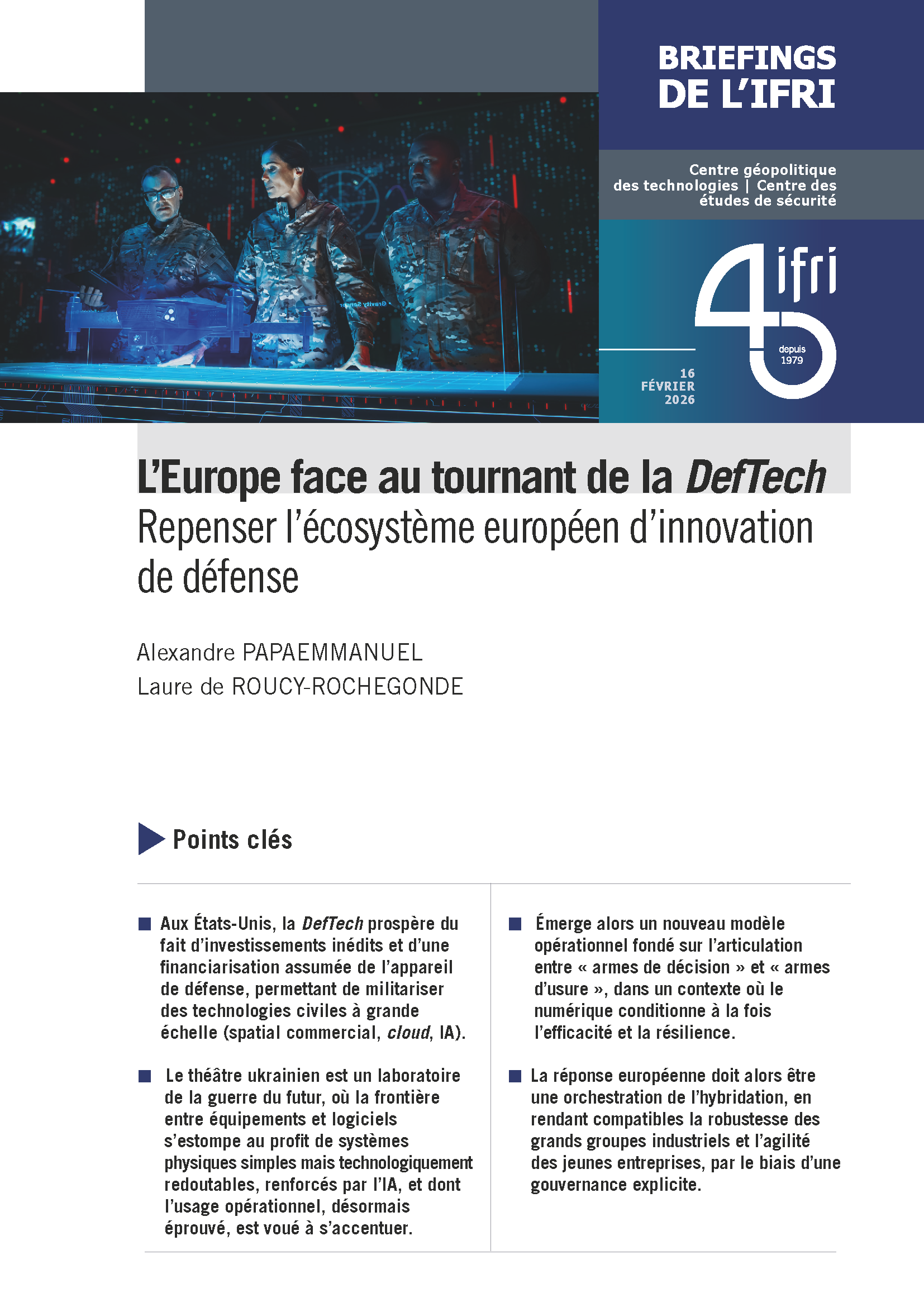
Europe at the Crossroads of DefTech: Rethinking the European Defense Innovation Ecosystem
“The way I look at Iron Dome is as the ultimate manifestation of the future of the United States’ role in future conflicts, which is not to be the world police, but to be the world gun store,” said Palmer Luckey in November 2023. Luckey is the founder of Anduril, one of the most prominent DefTech companies. The ambition is clear: to participate in global rearmament by capitalizing on the quality of American innovations and to dominate the arms market—at least in the West—through technological mastery.
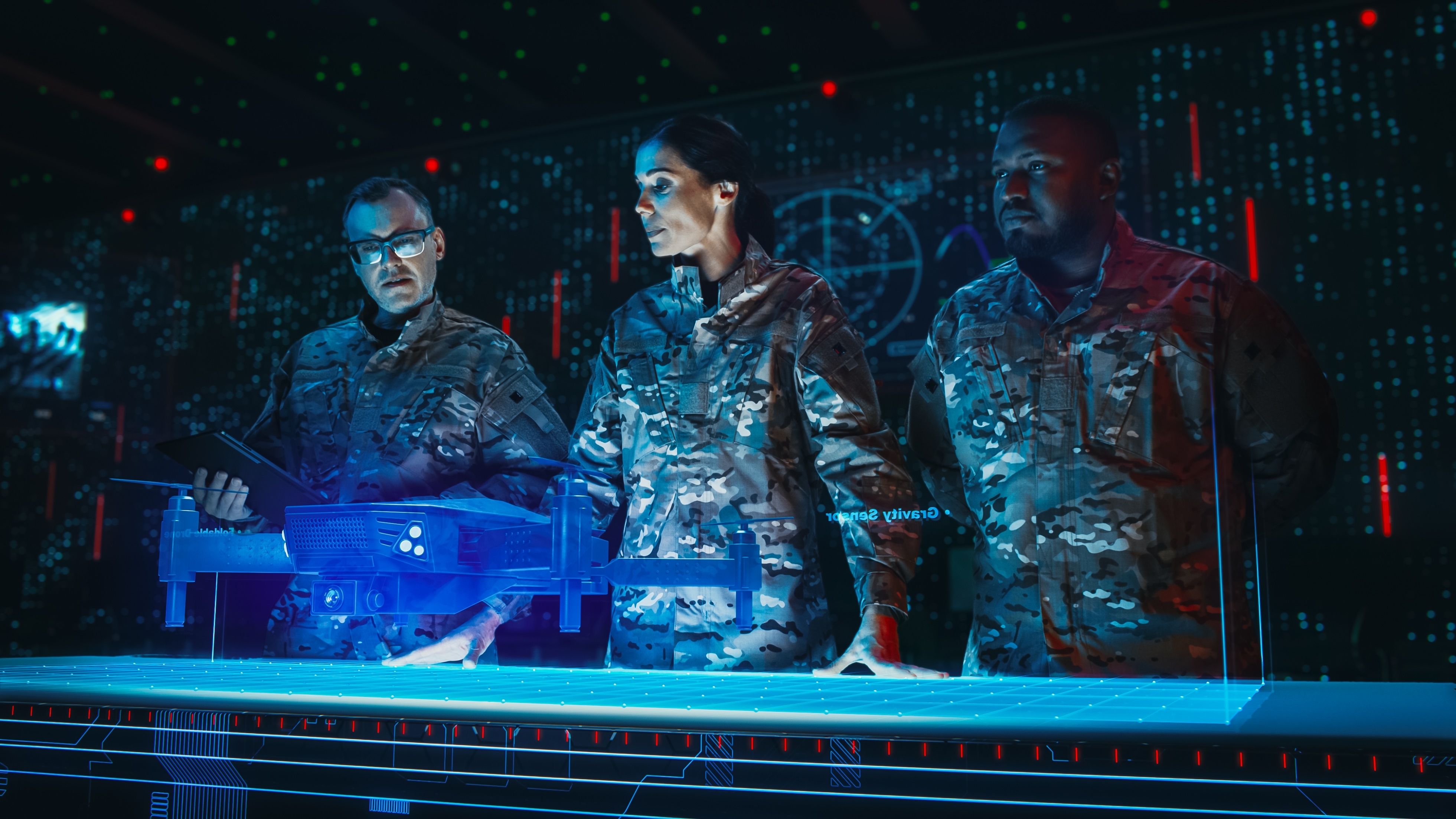
Titre
Key takeaways
In the United States, DefTech is thriving thanks to unprecedented investments and the openly embraced financialization of the defense apparatus, enabling the large-scale militarization of civilian technologies (commercial space, cloud computing, AI).
The Ukrainian theater is a testing ground for the wars of the future, where the line between hardware and software is increasingly blurred in favor of simple yet technologically impressive physical systems, enhanced by AI, whose operational use—now battle-tested—is bound to increase.
A new operational model is thus emerging, based on the interplay between “decision-making weapons” and “attrition weapons,” in a context where digital technology determines both effectiveness and resilience.
The European response must therefore be to orchestrate this hybridization, ensuring that the robustness of large industrial groups and the agility of startups are compatible through explicit governance.
As operations increasingly rely on data and artificial intelligence (AI) and weapons systems become “software-defined,” the advantage no longer lies solely in the design of platforms—fighter jets, tanks, submarines—but also in the mastery of information architecture—collection, fusion, computation (cloud/edge), interoperability—and in the ability to innovate very rapidly. War, in the age of AI, is therefore not solely the domain of states. It is an industrial and logistical matter, but also a financial one. In this post-Westphalian framework, sovereignty is expressed less in laws than in lines of code. Power is measured in APIs server latency, and the ability to fuse sensors and payloads.
The industrial partnership formed between Anduril and Palantir in December 2024 is emblematic of this shift. These two companies, whose CEOs come from the tech sector and have no roots in the United States (U.S.) defense industrial and technological base, are now at the forefront of AI applications for national security, placing them at the heart of U.S. operational power. This agreement comes at a time when tech companies are attempting to capture a larger share of the colossal U.S. defense budget—estimated at $900 billion for 2026, and which Donald Trump aims to increase to $1.5 trillion by 2027—at the expense of traditional industry players such as Lockheed Martin, Raytheon, or Boeing. Even more striking is that while the Anduril/Palantir consortium is open to “other industry players” such as SpaceX, OpenAI, or Scale AI, the “Primes” are not always invited.
Europe is experiencing a similar trend, driven by the rise of startups operating in the most advanced technology sectors. As in the U.S., however, collaboration between these new entrants and established companies in the European defense industrial base remains complex. The terms of the relationship between these two worlds—agile innovation based on data on one side, established, equipment-focused structures on the other—remain largely undefined, and models for partnership, governance, and industrial integration have yet to be devised. How, then, can these forces be brought together to build a credible European capability in defense AI?

Available in:
Themes and regions
ISBN / ISSN
Share
This page contains only a summary of our work. If you would like to have access to all the information from our research on the subject, you can download the full version in PDF format.
Europe at the Crossroads of DefTech: Rethinking the European Defense Innovation Ecosystem


Laure de ROUCY-ROCHEGONDE
Director, Center for Geopolitics of Technology, Ifri


Center for Geopolitics of Technology
Artificial intelligence (AI), 5G, cybersecurity, robotics, semiconductors, space…Technologies—particularly digital technologies—now profoundly affect all human activities and, by extension, international relations. The political, strategic, economic, and social stakes that arise from them are expressed across multiple political levels, involving states, international organizations, and private companies alike. International dynamics of competition and cooperation are being reshaped as a result. To address these challenges, Ifri launched its Geopolitics of Technology Center in 2020, offering a distinctly European perspective on the international issues surrounding so-called critical technologies.
Security Studies Center
Heir to a tradition dating back to the founding of Ifri, the Security Studies Center provides public and private decision-makers as well as the general public with the keys to understanding power relations and contemporary modes of conflict as well as those to come. Through its positioning at the juncture of politics and operations, the credibility of its civil-military team and the wide distribution of its publications in French and English, the Center for Security Studies constitutes in the French landscape of think tanks a unique center of research and influence on the national and international defense debate.
Europe Facing the Quantum Challenge: From Ambitions to Action
The nomination of researchers Alain Aspect and Michel Devoret for the 2022 and 2025 Nobel Prizes in Physics, for their work in quantum physics, attests to the enduring vitality of French and European research in this field. While the deployment of technologies stemming from the second quantum revolution is still in its infancy, one might think that strategic patience is called for, and that we must wait for the proliferation of basic research to give way to innovations ready for deployment. That would be a serious mistake, given that the potential for profound transformation inherent in the quantum sector is directly linked to states and organizations’ strategic autonomy.
How Technology Is Reshaping the World Order
The central role of technology in the competition between the major powers is fueling an ever-more intense rivalry. Artificial intelligence is enabling large corporations to accrue unprecedented power, with consequences for states and even for international conflict. However, states do have tools at their disposal to regulate these developments. In this international competition, Europe has a strong hand, but must be prepared to play its cards in order to create a new kind of international cooperation.
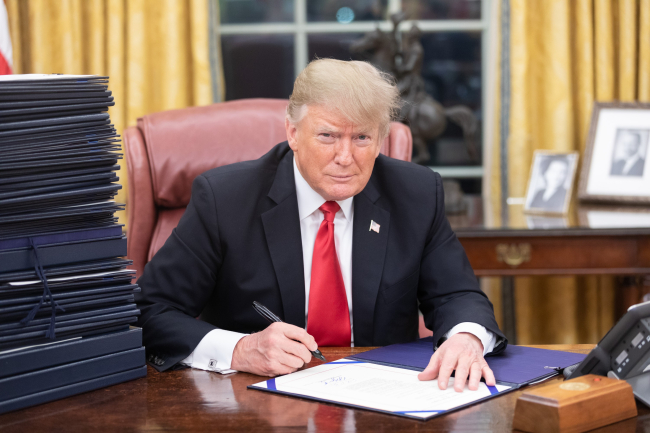
Trump II vs. Digital Governance: A Crusade in the United States and Europe
Since taking office, the Trump II administration has waged a systematic deregulation campaign targeting the tech sector in both the United States and Europe. How can Europe maintain dialogue while preserving its governance framework?
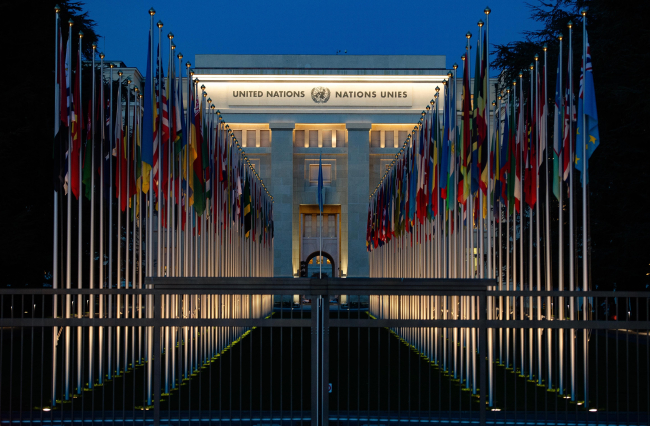
Regulatory Dynamics and Tensions in the Space Sector: Towards and Americanization of Space Law?
The development of space law has gradually evolved from a top-down normative dynamic dominated by the founding impetus of the UN to a bottom-up normativity driven by national and industrial practices. This evolution is now accompanied by growing normative competition, raising the risk of an Americanization of space law and prompting the question of a European response.