


Southeast Asia’s Search for Energy Security Amidst Geopolitical Shocks
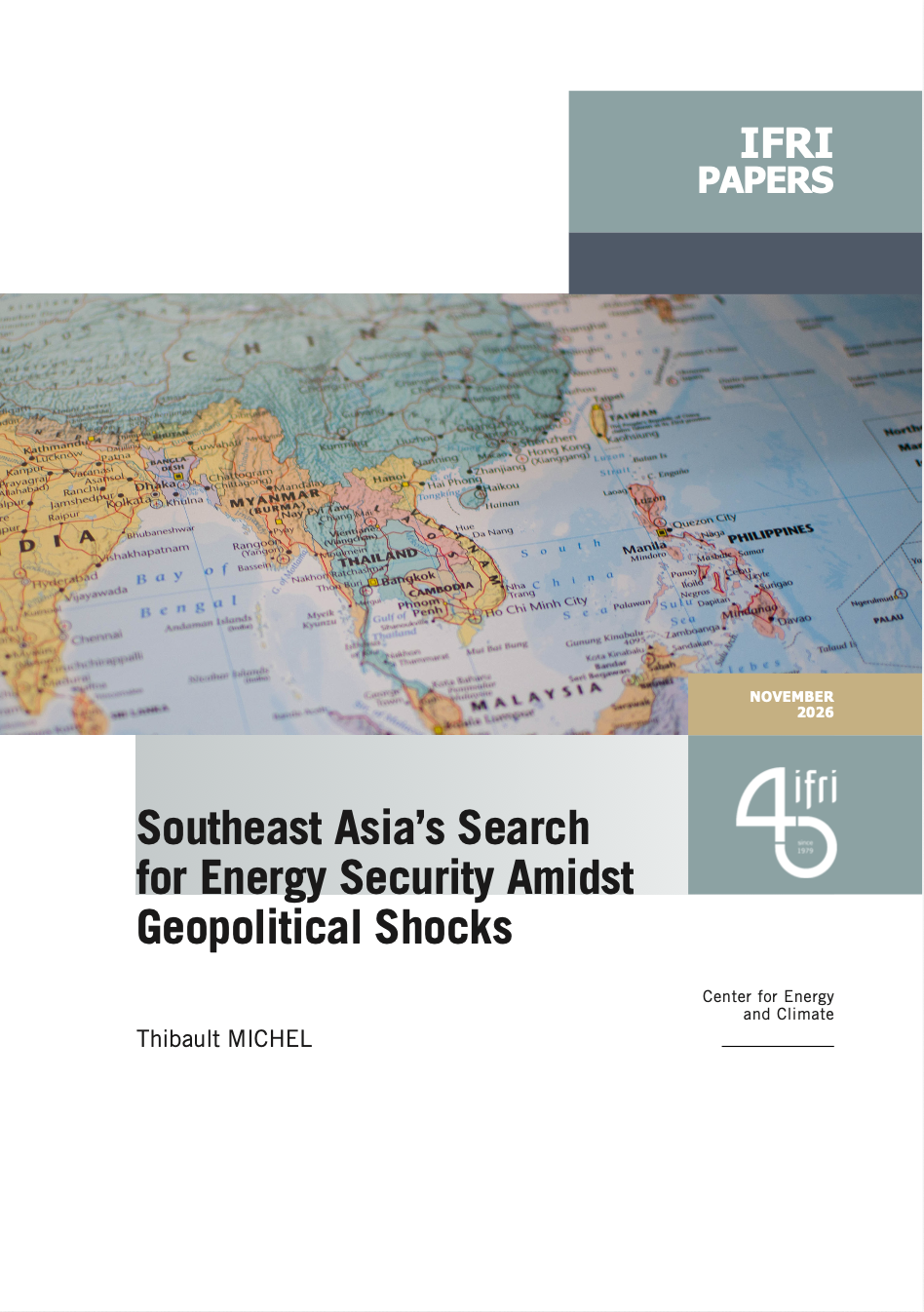
Following the Hormuz disruption, energy security is now at center stage for the Association of Southeast Asian Nations (ASEAN) countries. Maintaining coal’s importance at its current level in power systems appears unlikely in Malaysia and Thailand, possible in Vietnam (which faces a sharp rise in electricity demand), whereas Indonesia and the Philippines—the countries with the highest levels of dependence on this energy source—have not yet initiated concrete planning to limit coal consumption’s growth.
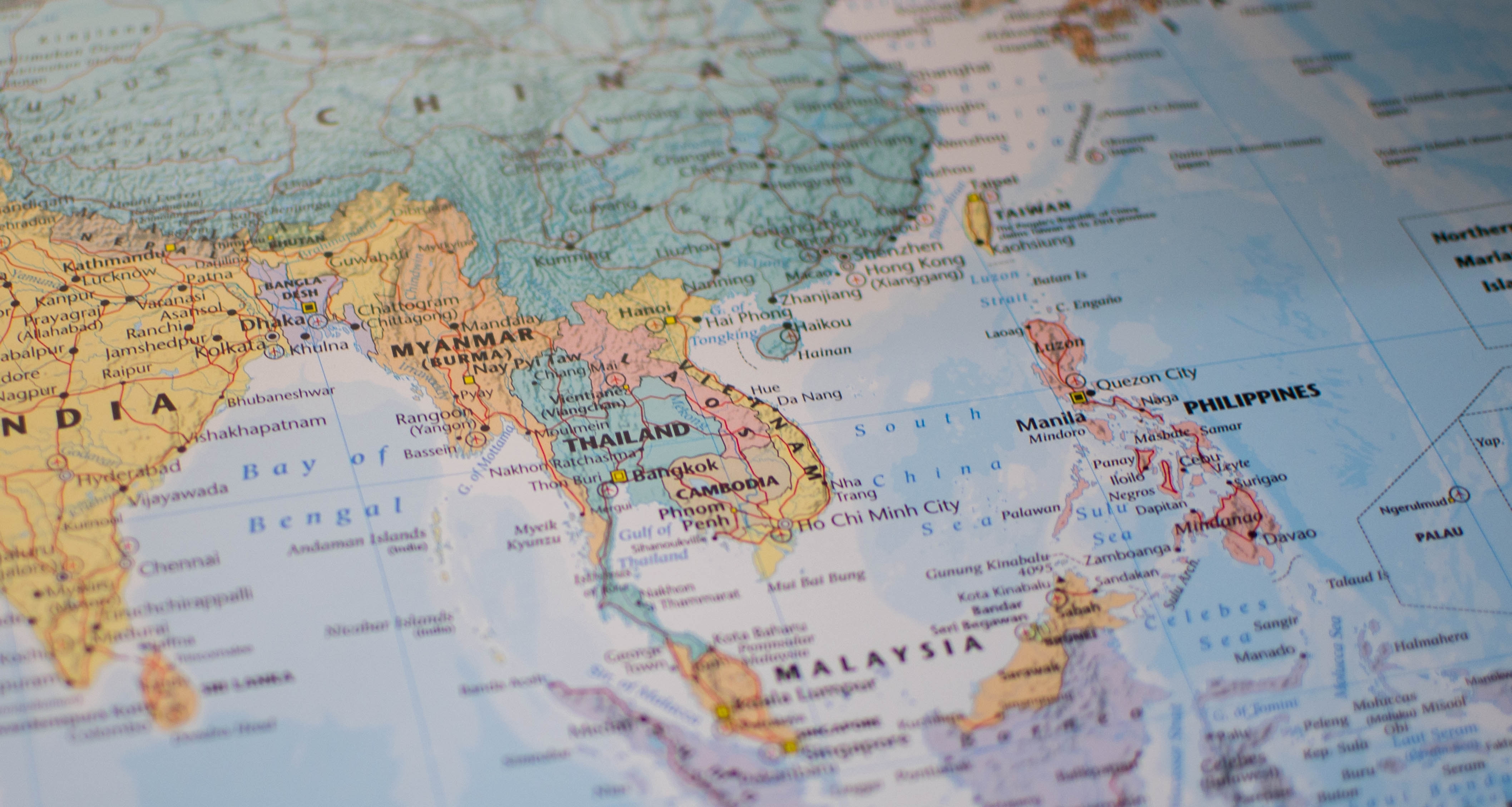
The Hormuz crisis exposed the fragility of several liquefied natural gas (LNG)-related infrastructure projects (natural gas-fired power plants and import terminals), notably in Vietnam and the Philippines. There is a high number of projects being canceled or shelved, such as 5.9 gigawatts (GW) of gas-fired capacity in the Philippines between January and August 2026.
Thailand, Indonesia, and especially Malaysia have shown greater resilience (partly due to their domestic production). Despite cancellations, the project pipeline remains substantial. The 2026 crisis is thus prompting countries in the region to adjust their trajectories and reduce their exposure—notably through supply diversification and renewable energy capacity development— without fundamentally modifying the momentum of their transition toward an increased role for natural gas.
Countries in the region have developed ambitious Power Development Plans (PDPs) that place strong emphasis on solar photovoltaics (PV), natural gas, and Battery Energy Storage Systems (BESS), as well as, to a lesser extent, wind and hydroelectric power. However, realizing these ambitions faces several obstacles: high capital costs (particularly in Indonesia and Vietnam); the need for electricity market reforms to encourage private investment (Indonesia, Malaysia, Thailand, and Vietnam operate under a single buyer model for their electricity system); political instability; and undersized power grids. Regarding the latter, the ASEAN Power Grid project holds clear potential, yet its development remains hampered by financing issues and, above all, governance and planning challenges. Singapore’s chairmanship of ASEAN in 2027 is a strong window of opportunity for this initiative.
Economic growth in the region has slowed but remains resilient, particularly in Malaysia, Indonesia, and—most notably—Vietnam. Value chains’ integration—especially in sectors of the energy and digital transitions —remains a key objective. However, the region’s economies face vulnerabilities beyond the 2026 crisis, notably pressures stemming from the United States–China rivalry (abandonment of certain projects, tariffs, fierce competition and deindustrialization). This situation makes diversifying trade and investment relationships increasingly critical—as seen, for instance, in Indonesia’s move to join the BRICS; Indonesia and Thailand’s Organisation for Economic Co-operation and Development (OECD) accession process; the European Union (EU)–Indonesia and EU–Philippines trade agreements, and ongoing discussions with Malaysia and even more so Thailand.
This diversification also requires adapting to rising environmental standards in export markets (such as the EU Carbon Border Adjustment Mechanism, CBAM), a primary driver of corporate decarbonization. ASEAN exports of steel and aluminum CBAM-covered items to the EU have grown sixfold over the last decade, and the EU market represents up to one quarter of total exports for Thai and Vietnamese steel items. Some investments in decarbonizing the steel industry are visible, but projects betting on process electrification to cut emissions will need substantial volumes of low-carbon electricity.
Decarbonization strategies are also elaborated by state-owned oil and gas companies (Pertamina, Petronas, PTT, PetroVietnam), which are expanding into new businesses such as Carbon Capture and Storage (CCS) and biofuels, including Sustainable Aviation Fuel (SAF). SAF production is progressing since 2025, while Indonesia, Malaysia, and Thailand—recognizing the economic and energy security potential of biofuels—are seeking to foster these segments. However, Singapore remains the only country with a significant active SAF mandate currently in place. The main challenge lies in scaling up projects and pilot sites into full-scale industrial facilities, particularly for CCS and, even more so, for low-carbon hydrogen.

Available in:
Themes and regions
ISBN / ISSN
Share
This page contains only a summary of our work. If you would like to have access to all the information from our research on the subject, you can download the full version in PDF format.
Southeast Asia’s Search for Energy Security Amidst Geopolitical Shocks


Thibault MICHEL
Research Fellow, Center for Energy & Climate, Ifri

Center for Energy & Climate
Ifri's Energy and Climate Center carries out activities and research on the geopolitical and geoeconomic issues of energy transitions such as energy security, competitiveness, control of value chains, and acceptability. Specialized in the study of European energy/climate policies as well as energy markets in Europe and around the world, its work also focuses on the energy and climate strategies of major powers such as the United States, China or India. It offers recognized expertise, enriched by international collaborations and events, particularly in Paris and Brussels.
EU-UK Summit: The Need for a Reset
Since Brexit officially entered into force in 2020, the United Kingdom (UK) has worked to forge a new partnership with the European Union (EU). Serving its interests has meant getting closer to the EU in several economic sectors, without ever officially working towards EU reaccession.
Strategic Redundancy beyond Hormuz: Alternative Oil and Gas Corridors and Türkiye’s Emerging Role
The central question raised by the present crisis in the Gulf and the disruption of navigation through the Strait of Hormuz is not simply how quickly and lastingly normal flows can be restored, but whether the regional energy architecture can continue to rely so heavily upon a single maritime corridor.
Mining Nationalism and Export Restrictions: The Challenges of Economic Development
Since the end of the 2000s and especially the 2010s, resource nationalism has been on the rise.

Solar Radiation Management: A Climate Tool with Geopolitical Implications
The Paris Agreement (2015) aims to keep global warming below 2 °C, preferably 1.5 °C, above pre-industrial levels. Mitigation (reducing greenhouse gas emissions) remains the core tool for reaching net carbon neutrality by mid-century. However, a temperature overshoot is anticipated. The United Nations Environment Programme (UNEP) forecasts that the 1.5 °C threshold will be exceeded in the coming years, with warming potentially peaking between 2.2 °C and 3.6 °C this century. Against this backdrop, three trends characterize the climate policy debate.