




213 publications for "geopolitical"

European Startups and Generative AI: Overcoming Big Tech Dominance
Europe is at a crossroads. Faced with the domination of American Big Tech across the entire generative Artificial Intelligence (AI) value chain, from foundation models to cloud infrastructure, distribution channels, and open source, it risks long-term technological and economic decline. Yet generative AI also represents a major opportunity for economic transformation, with a potential value estimated at 1.5 times France’s gross domestic product (GDP). To turn it into a driver of renewal, Europe must move beyond the illusion of total technological independence and instead build an ecosystem that leverages Big Tech resources while strengthening its own innovation capabilities.

Manufacturing Risk: Geopolitical Doxa and the Corporate World
The evolving power dynamics between the United States, China, and Russia are creating new geopolitical realities that businesses can no longer evade. Geopolitical risk has become unavoidable, yet many companies remain unprepared to navigate its complexities. Corporate leaders can no longer afford to overlook its implications.
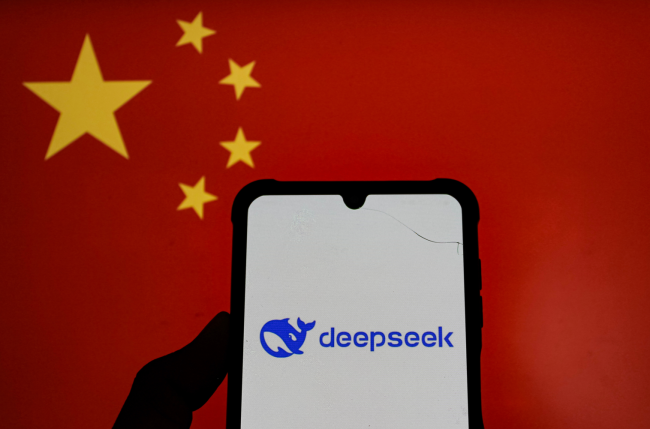
A "DeepSeek Moment"?
DeepSeek, hailed as a champion of Chinese AI, represents less a revolution than a significant optimization of existing technologies. Doubts remain regarding the figures put forward by the start-up, inviting a more measured response to the media hype surrounding China’s technological catch-up. Nonetheless, DeepSeek signals the need to question an economic model based solely on the race for computational power. By betting on open innovation, Europe can carve out its own path in a competition that is far from being a zero-sum game.

The European Space Model: Renewing Ambition in a Changing Strategic Landscape
The European space model, based on science, cooperation and trade, is now being undermined by changes in international relations and the economic upheavals brought about by New Space. In light of the war in Ukraine and American disengagement, Europe needs to rethink its strategy by adding a fourth pillar dedicated to defense, in order to strengthen its sovereignty and deter possible aggression against the continent.
The China-led AIIB, a geopolitical tool?
The establishment of the Asian Infrastructure Investment Bank (AIIB) in 2016, on a Chinese initiative, constituted an attempt to bridge the gap in infrastructure financing in Asia. However, it was also perceived in the West as a potential vehicle for China’s geostrategic agendas, fueling the suspicion that the institution might compete rather than align with existing multilateral development banks (MDBs) and impose its own standards.

A Transatlantic Defense Industrial Base? Two Contrasting Views
The evolving landscape of global defense cooperation has brought the transatlantic relationship between the United States (US) and Europe into sharp focus. As geopolitical tensions rise and the threat environment becomes more complex, the question of how Europe can best ensure its security while navigating its relationship with the United States has become paramount. This double feature report offers two contrasting views on the dynamics of US-Europe defense industrial relations, highlighting the challenges and opportunities that lie ahead for both parties.

When City Diplomacy Meets Geopolitics: A Framework to Help Cities Navigate Geopolitical Risk
Crises and the increasing polarization of international relations make political risk analysis an indispensable resource for internationally active public and private entities.
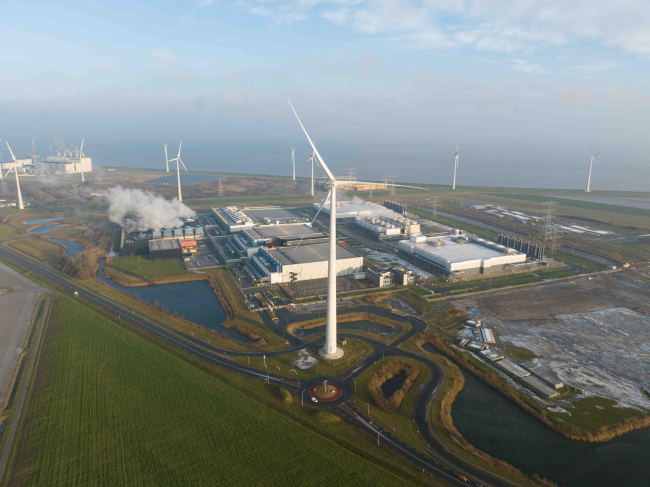
AI, Data Centers and Energy Demand: Reassessing and Exploring the Trends
The information and communication technologies sector today accounts for 9% of global electricity consumption, data centers for 1-1.3%, and artificial intelligence (AI) for less than 0.2%. The growing energy demands of cloud services first, and now AI workloads (10% of today’s data centers electricity demand), have exacerbated this trend. In the future, hyperscale data centers will gain shares amongst all kinds of data centers and AI will probably account for around 20% of data centers electricity demand by 2030.