


213 publications for "geopolitical"

The Influence of Strategic Subnational Diplomacy in International Relations
The international engagement of cities and local governments has increased and diversified recently. Mainly understood by the public as the cultural and academic ties cultivated within the sister-city framework, these connections now bear deeper and more strategic implications.

Between „Strategic Autonomy” and „Zeitenwende”: The Importance of Trade Between The EU and Mercosur
This policy paper analyses the geopolitical and economic significance of the EU-Mercosur agreement for the European Union (EU) in the context of the EU’s new European Economic Security Strategy.
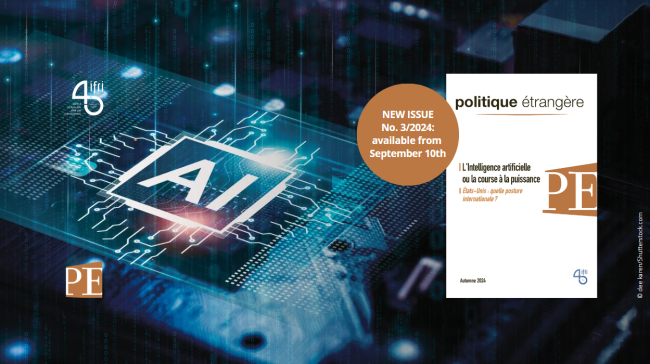
Artificial Intelligence, or The Race for Power
Artificial intelligence (AI) is here to stay, and its use is spreading at a rate that is difficult to comprehend.

From Ukraine to Gaza: Military Uses of Artificial Intelligence
The wars in Ukraine and Gaza show us the extent to which artificial intelligence (AI) has become integral to battlefield operations.

Gulf States: A Paradoxical Economic Lifeline for Sudan
For decades, Gulf states have provided crucial financial assistance to Sudan. Gulf interest in Sudan is driven by economic benefits and geopolitical competition, though each country has its own interests and approach.
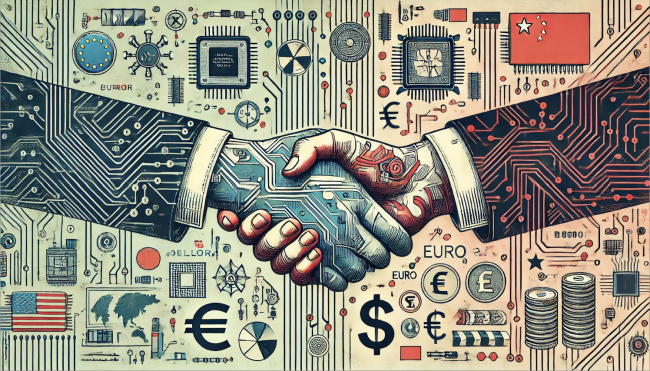
Funding A Rival: When the United States and Europe Invest in Chinese Tech
Outbound investments into rival powers are receiving increasing political attention on both sides of the Atlantic, as competition between the United States and China intensifies. The concern lies with American and European investments in certain Chinese technologies - such as artificial intelligence, biotechnology, semiconductors, or quantum computing - which could enable China to enhance its military capabilities and thus may pose risks to national and international security.

Groundbreaking Chip Sovereignty: Europe’s Strategic Push in the Semiconductor Race
The EU Chips Act’s enactment in September 2023 marks a major policy shift that revitalizes industrial policy in Europe. By allowing state subsidies for semiconductor projects, it has the potential to secure Europe’s supply chain security and technological autonomy in an industry dominated by the US and East Asia.
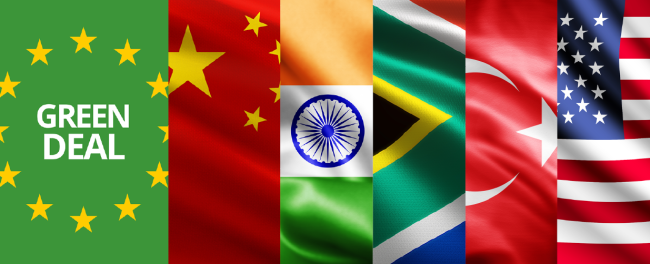
The EU Green Deal External Impacts: Views from China, India, South Africa, Türkiye and the United States
Ahead of June 2024 European elections and against the backdrop of growing geopolitical and geoeconomic frictions, if not tensions, between the EU and some of its largest trade partners, not least based on the external impacts of the European Green Deal (EGD), Ifri chose to collect views and analyses from leading experts from China, India, South Africa, Türkiye and the United States of America (US) on how they assess bilateral relations in the field of energy and climate, and what issues and opportunities they envisage going forward.