

United States of America
Despite polarized domestic politics and social tensions, the United States remains a major player in international relations, on the economic, military and diplomatic levels.
Related Subjects

AI showcase pays off for France, but US tech scepticism endures
France is staking its claim as an AI powerhouse. At the AI Action Summit in Paris this week, global leaders, tech innovators, and policymakers converged to chart the future of artificial intelligence - backed by major investments and bold ambitions for Europe’s leadership in the field. RFI breaks down the key takeaways.
Replay - The European Union in Competition with the United States and China. How to Balance Free Trade, Competitiveness and Economic Security?
Video replay from Ifri's conference, on December 3, 2024. As the geopolitical context has changed, so has the approach to international economic relations and the rules-based multilateral framework. Covid and Russia’s war against Ukraine have exposed the risks of extended supply chains and of having become dependent on a single supplier.
Taiwan's Security: Challenges Ahead and the Impact of a Trump Administration
An interview with I-chung Lai, President, Prospect Foundation, in which he explains how Taiwan's security environment has evolved and what to expect from the next Trump administration.
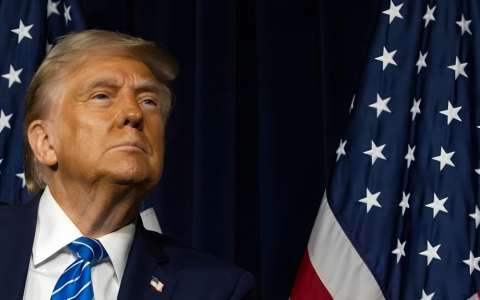
Trump’s Indo-Pacific and European Strategies: Change or Continuity?
An interview with Kelly Grieco, Senior Fellow at the Stimson Center, in which she explains what changes and continuities might the future Trump administration bring to U.S. alliances and Indo-Pacific strategy.
NATO: 75 Years of Strategic Solidarity (replay)
The war in Ukraine, burden-sharing between Allies, U.S. disengagement from Europe, new areas of conflict... At a time when the Alliance has just celebrated its 75th anniversary and the Stoltenberg era is drawing to a close after ten years at the head of the organization, NATO's agenda bears witness to the diversity of its areas of action, as well as to the different perceptions of the Allies on these issues.
In the wake of the Washington summit, this conference of diplomats, military officers and researchers aims to analyze the short- and medium-term prospects for the Atlantic Alliance.
2024 Election: What's Next for U.S. International Economic Policy?
An interview with Emily Blanchard, Tuck School of Business at Dartmouth College and CEPR.
How does she see the prospects for U.S. international economic policy, depending on who wins the election in November 2024?
Can U.S. Export Controls Stop China’s Tech Rise?
An interview with Kevin Wolf, Partner, Akin, led at Ifri on September 24, 2024. For years, Kevin Wolf has played a key role elaborating and implementing export controls within the U.S. administration. How does he evaluate the efficiency of these controls? Are they likely to reach the stated objective of maintaining the biggest lead possible between the U.S. and China, particularly for semiconductors? How could existing controls and regulations be altered to improve their efficiency?
'Joe Biden's economic record is not a good enough argument for the Democrats to win the next election'
As the incumbent US president prepares to run for a second term, Americans are not convinced that the Biden administration has improved their lives, despite flattering macroeconomic data, Stéphane Lauer writes.
How Rwanda Became Africa’s Policeman
From Benin to Mozambique, President Paul Kagame is flexing his small country’s military muscle—and transforming the continent’s security landscape.
Support independent French research
Ifri, a foundation recognized as being of public utility, relies largely on private donors – companies and individuals – to guarantee its sustainability and intellectual independence. Through their funding, donors help maintain the Institute's position among the world's leading think tanks. By benefiting from an internationally recognized network and expertise, donors refine their understanding of geopolitical risk and its consequences on global politics and the economy. In 2025, Ifri supports more than 80 French and foreign companies and organizations.