


Europe
Europe is described here in a geographical sense. It is not limited to the European Union, and includes, for example, the United Kingdom and the Balkans. It remains central to international relations.
Related Subjects
Opening up the G7 to South Korea to Address Contemporary Global Challenges
The G7’s global influence has diminished as powers like China reshape international governance through initiatives such as BRICS and the Shanghai Cooperation Organisation (SCO). With the G7 now representing just 10 per cent of the world’s population and 28 per cent of global GDP, its relevance is increasingly questioned.
Ukraine: Between Two Peaces?
We have reentered the world of war. In its first special report, Politique étrangère offers a range of in-depth analyses of the military and political dynamics at work in a Europe that has just woken up from its dream of enduring peace. The direct confrontation between Ukraine and Russia has pitted two military and defense systems against each other, whose asymmetrical logics, strengths, and weaknesses we are discovering as the conflict unfolds.
Rapprochement in Times of Crisis: War in Ukraine and the EU-Japan Partnership
The war in Ukraine has shaken the foundations of European security and of the global rules-based order. In many ways, Russia’s aggression has been a wake-up call for the EU, adding a sense of urgency to its ongoing transformation to becoming a stronger geopolitical actor, materialised by the recent publication of its Strategic Compass – its first-ever white paper for security and defence.
What Role Should Southern Europe Play After the Pandemic and the War in Ukraine? Towards a Shared Agenda for EU Reform
Relations between southern European member states have often been marked by a loose cooperation or, worse, by logics of competition. Precisely when regional groupings within the European Union are increasingly shaping the agenda, these dynamics have hindered the capacity of France, Greece, Italy, Portugal, and Spain to pursue shared interests and objectives, while acting as a force for good for the European integration project. Recent events such as the post-pandemic recovery or the war in Ukraine show that, when cooperation occurs, positive results can be achieved.
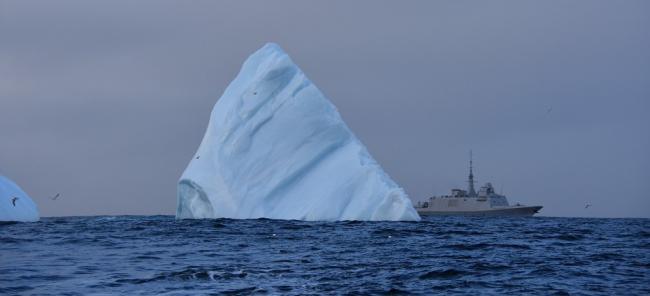
Arctic: Toward the End of the Exception? Strategic, Nuclear and Maritime Issues in the Region
Through multiple international initiatives, including the creation of the Arctic Council at the end of the Cold War in 1996, the Arctic appears to be one of the last areas of peaceful cooperation in the world. This “Arctic exception” is also devoid of any serious territorial dispute between the neighboring countries, some of which are nevertheless great powers: Russia, the United States, Canada, but also Sweden, Norway, Denmark (via Greenland), Iceland and Finland.

Dependence in Europe's Relations with China: Weighing Perceptions and Reality
The idea that Europe has grown dependent on China is now a common refrain, but just how is this notion understood in capitals across the continent?
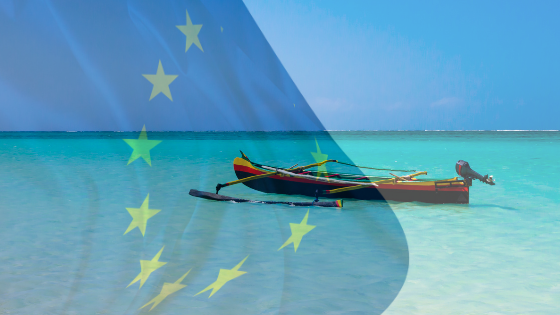
Two Shades of Blue: Europe and the Pacific Islands, Strategic Partners in the Indo-Pacific Era
In recent years, France and the European Union (EU) have published their respective Indo-Pacific strategies and a Ministerial Forum was held in Paris on February 22, 2022, bringing together over 60 foreign affairs ministers from European and Pacific Island countries.
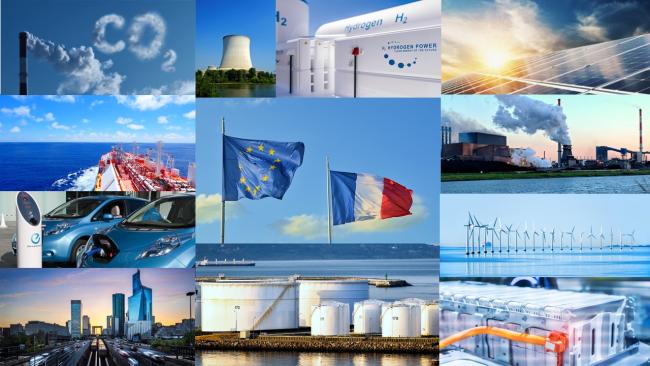
Accelerating the energy transition in France: drawing inspiration from best practice in our European neighbours
The success of energy transition is first and foremost a question of good governance, which must be based on expertise and collective deliberation.
Europe’s Quest for Technological Power
Computing power plays a key role in enabling data analytics and machine learning, in cybersecurity, for scientific research, and in military domains like nuclear warhead design and detonation simulation.
The Space Downstream Sector: Challenges for the Emergence of a European Space Economy
As the commercial anchor of the space sector, the downstream sector plays an essential role in Europe where industry focuses mainly on application markets and where socio-economic considerations have become the main driver of space policy.
The Sino-Lithuanian Crisis: Going beyond the Taiwanese Representative Office Issue
The year 2021 marked the 30th anniversary of the establishment of diplomatic relations between China and Lithuania. Instead of commemorative events and customary lofty rhetoric, the bilateral relationship rapidly plunged to a level rarely seen in either country’s foreign policies since the end of the Cold War.
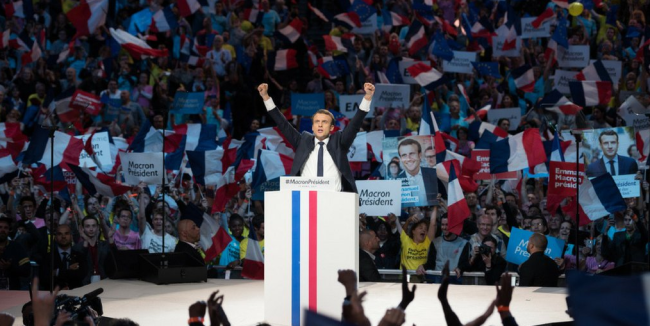
Meeting Macron in the Middle. How France and Germany Can Revive the EU
Macron's presidency offers a rare chance to revive the French-German relationship just when Europe needs it most.

Making Sense of Europe’s Southern Neighbourhood: Main Geopolitical and Security Parameters
Europe’s southern neighbourhood is a diverse but interlinked geopolitical ensemble, whose specificities need to be carefully assessed before Europeans devise dedicated security strategies, divide responsibilities and make policy decisions.
The EU and Innovation: When Business Meets Politics
Innovation, entrepreneurship, growth and competitiveness go hand in hand. This short paper looks at two areas where the EU plays a role to help drive innovation: regulation and financing.
France: the tale of disenchantment, ambiguity and ambition on the EU
France may be ready to take the initiative again in the EU, but it does not know where to press on.
CETA: the Making of the Comprehensive Economic and Trade Agreement Between Canada and the EU
Once ratified, the Comprehensive and Economic Trade Agreement (CETA) could ultimately eliminate all tariff barriers between the European Union and Canada. CETA is also a new generation Free-Trade Agreement: it includes the opening of public procurement, the facilitation of cross investments and cooperation in the area of regulation. Its long negotiation process illustrated important changes that are happening in the way trade agreements are negotiated, both in Canada and in the EU.

Malta: No Bridge is "A Bridge Too Far"
Malta as an isolated country saw relations with the EU as a bridge building effort with the peoples of the European Continent, which would also secure supplies, open markets, help obtain energy and strengthen security.
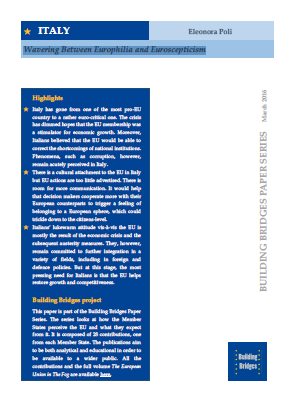
Italy: Wavering Between Europhilia and Euroscepticism
Italy has gone from one of the most pro-EU country to a rather euro-critical one. The crisis has dimmed hopes that the EU membership was a stimulator for economic growth. Moreover, Italians believed that the EU would be able to correct the shortcomings of national institutions. Phenomena, such as corruption, however, remain acutely perceived in Italy.
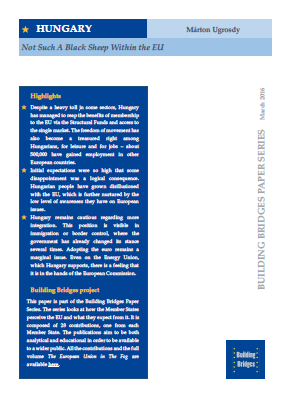
Hungary: Not Such a Black Sheep Within the EU
Despite a heavy toll in some sectors, Hungary has managed to reap the benefits of membership to the EU via the Structural Funds and access to the single market. The freedom of movement has also become a treasured right among Hungarians, for leisure and for jobs – about 500,000 have gained employment in other European countries.

Bulgaria: The Spectre of a Two-Speed Europe
One of Bulgaria’s paradoxes is that 25 years after the collapse of communism and almost ten years of EU membership, it seems to be quite unhappy with the transition but rather happy with its EU membership. In this way, the EU continues to be a beacon outside rather than the reality inside the country.
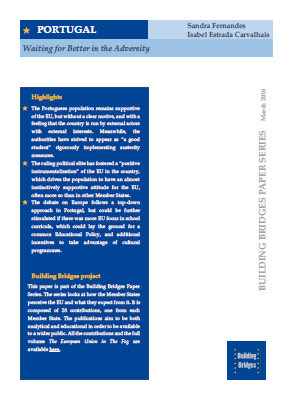
Portugal: Waiting for Better in the Adversity
The Portuguese population remains supportive of the EU, but without a clear motive, and with a feeling that the country is run by external actors with external interests. Meanwhile, the authorities have strived to appear as “a good student” rigorously implementing austerity measures.
Support independent French research
Ifri, a foundation recognized as being of public utility, relies largely on private donors – companies and individuals – to guarantee its sustainability and intellectual independence. Through their funding, donors help maintain the Institute's position among the world's leading think tanks. By benefiting from an internationally recognized network and expertise, donors refine their understanding of geopolitical risk and its consequences on global politics and the economy. In 2025, Ifri supports more than 80 French and foreign companies and organizations.
Related centers and programs
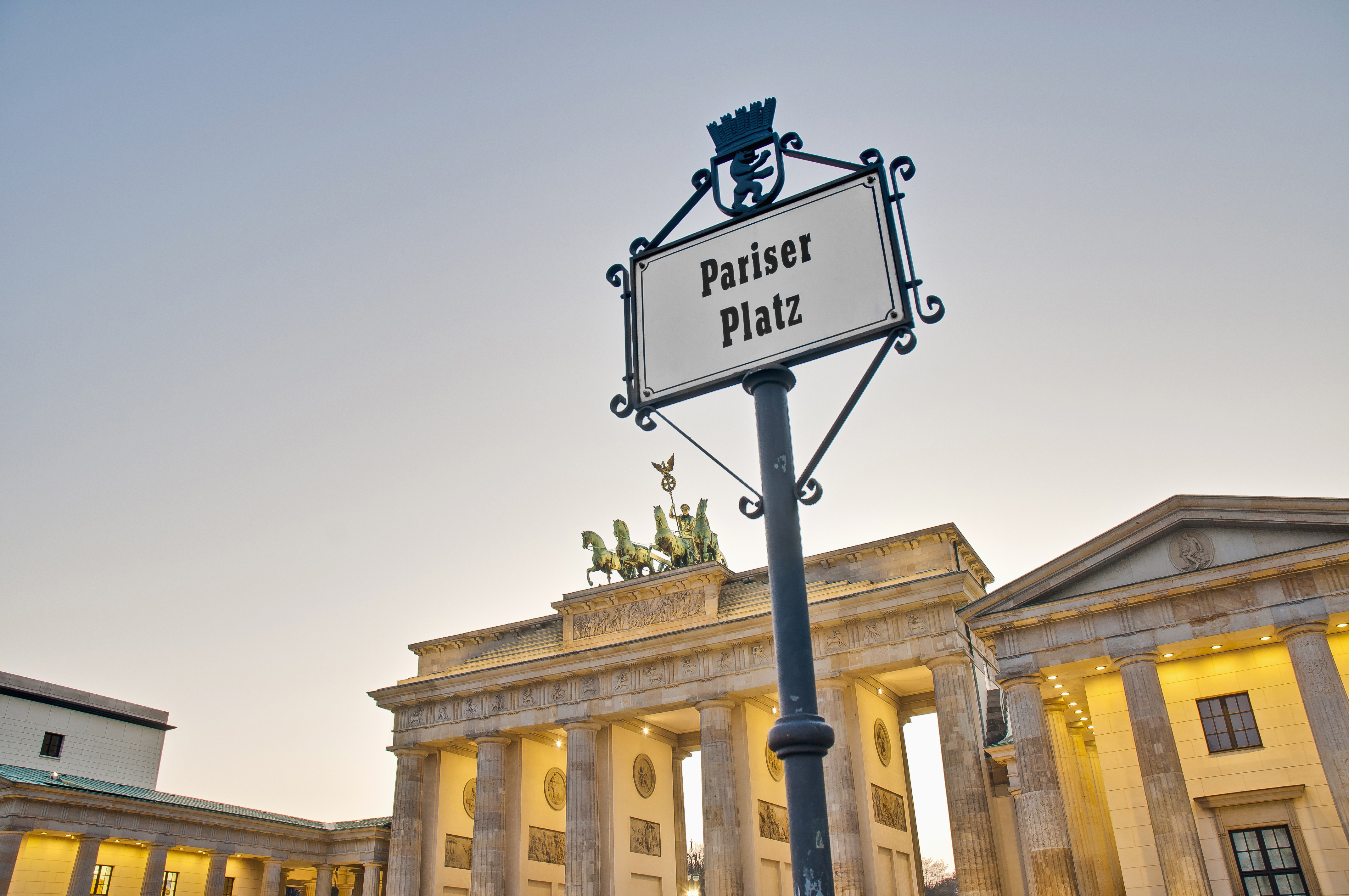
The Study Committee on Franco-German Relations (Cerfa)
The Study Committee on Franco-German Relations (Cerfa) was created in 1954 by an inter-governmental agreement between the Federal Republic of Germany and France, in order to raise awareness of Germany in France and analyze Franco-German relations, including in their European and international dimensions. In its conferences and seminars, which bring together experts, political leaders, senior decision-makers and representatives of civil society from both countries, Cerfa develops the Franco-German debate and stimulates political proposals. It regularly publishes studies through two collections: Cerfa notes and studies as well as Franco-German visions.
Cerfa maintains close relations with the network of German foundations and think tanks. In addition to its research and debate activities, Cerfa promotes the emergence of a new Franco-German generation through original cooperation programs. This is how in 2021-2022, Cerfa led a program on multilateralism with the Konrad Adenauer Foundation in Paris. This program is aimed at young professionals from both countries interested in the issues of multilateralism in the context of their activities. It covered a wide range of themes relating to multilateralism, such as international trade, health, human rights and migration, non-proliferation and disarmament. Previously, Cerfa had participated in the Franco-German future dialogue, co-led with the DGAP from 2007 to 2020, and supported by the Robert Bosch Foundation and the Daniel Vernet group (formerly the Franco-German Reflection Group) which was founded in 2014 upon the initiative of the Genshagen Foundation.
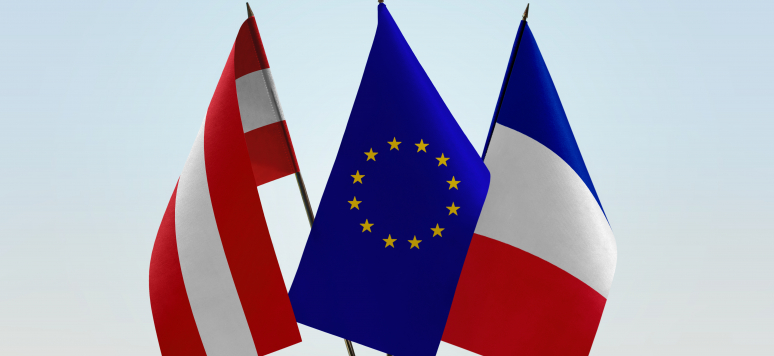
Austro-French Centre for Rapprochement in Europe (ÖFZ)
The Austro-French Centre for Rapprochement in Europe (ÖFZ/CFA) is a Franco-Austrian intergovernmental organization, initiated in 1976 by Prime Minister Jacques Chirac and Federal Chancellor Bruno Kreisky, in order to develop economic relations between Western and Eastern Europe, contributing to the creation of a Europe of peace.
After the fall of the Berlin Wall, the ÖFZ/CFA refocused its action on the problems following the enlargement of the European Union, and integrated the following countries in its field of activities : Hungary, Poland, Czech Republic, Slovak Republic, Slovenia, the Baltic countries, Romania and Bulgaria. ÖFZ/CFA's vocation, as a space for reflection and exchange, is in fact reinforced by the need to support the new member countries of the Union in their integration process. Since 2004, the ÖFZ/CFA has also turned towards the Union's new neighbors, in particular towards the countries of the Western Balkans, which perceive their future from a European perspective.
The ÖFZ/CFA strives to place all of its exchanges in a global perspective concerning the future of our continent. Today it centers its activities around three directions: the Franco-Austrian bilateral dialogue, the future of the European Union, the future recomposition of the continent.
Reports of all events organized by the ÖFZ/CFA are available on its website (http://oefz.at). The ÖFZ/CFA's budget is provided by the French and Austrian foreign ministries. Depending on the themes addressed, the ÖFZ/CFA calls on European public and private institutions to help finance its meetings. The CFA's orientations benefit from the recommendations of an Orientation Council, approved by a Board of Directors, which elects from among its members a president and a secretary general.