






The European Biomethane Sector at a Critical Juncture: Stronger Policy Alignment Will Matter
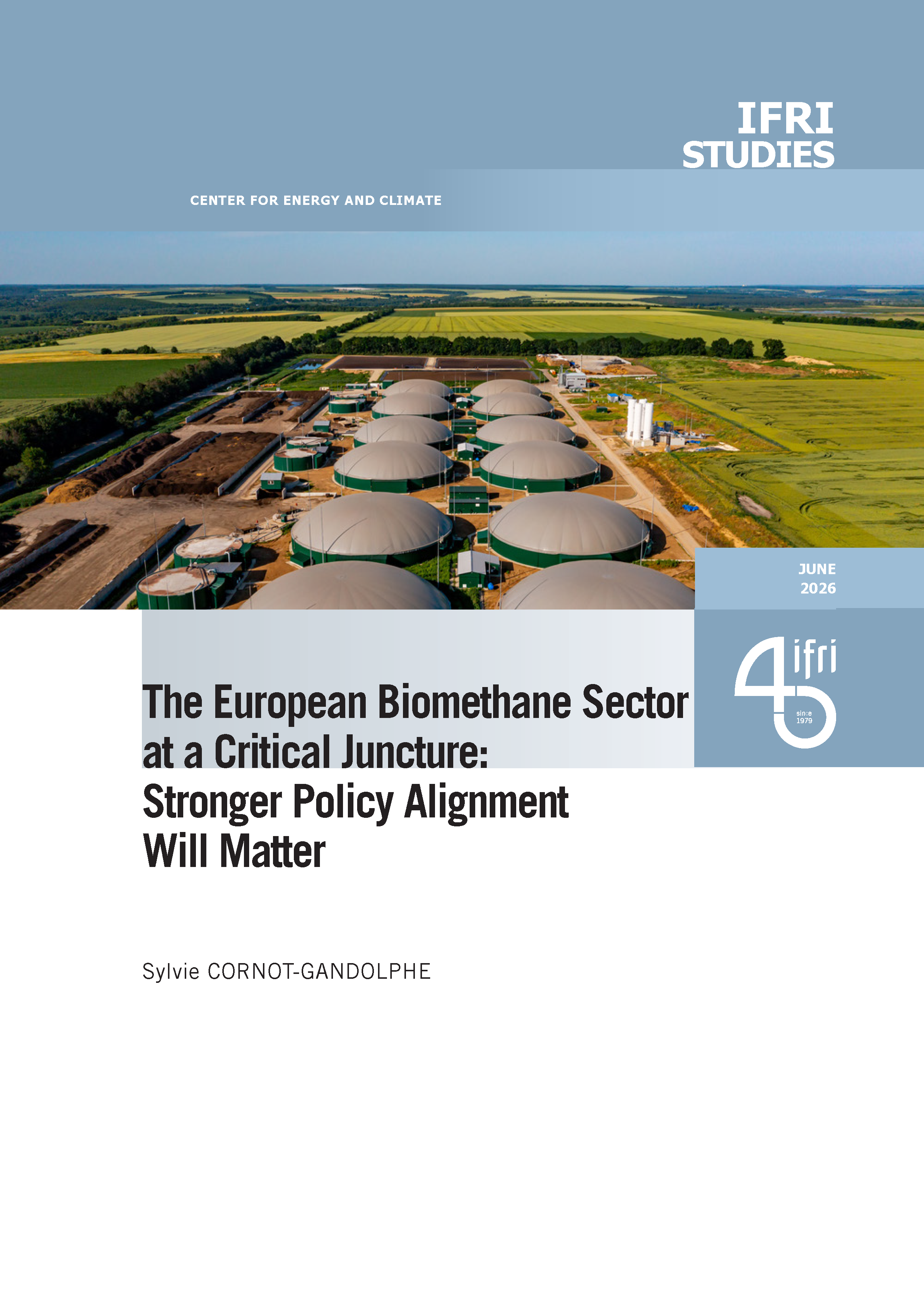
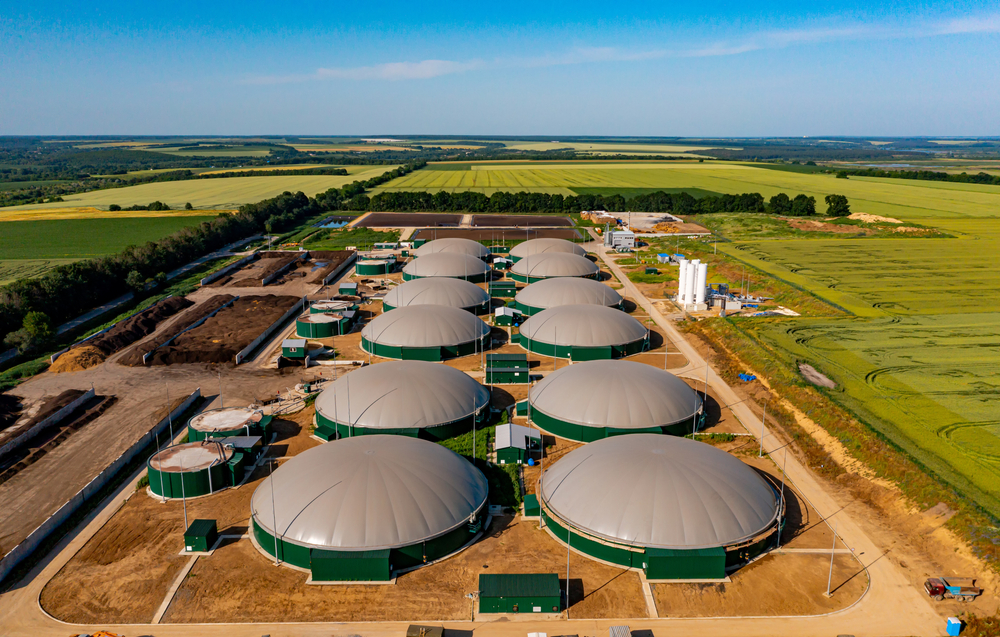
The European biomethane sector is at a critical juncture.
Since Ifri published its first biomethane assessment in 2019, the industry has undergone a rapid transformation driven by European Union (EU) decarbonization objectives, security-of-supply concerns, methane reduction policies, and rising pressure to produce low carbon energy domestically. These structural policy drivers have made biomethane a strategic asset for the European energy transition. It is a dispatchable, storable, domestically produced drop-in substitute for natural gas. It is the only renewable gas that can be immediately deployed at scale, using existing infrastructure. Biomethane delivers deep—sometimes negative—emissions reductions while providing system-wide socioeconomic and local benefits. It can help reduce dependence on imported fertilizers.
European biomethane production has more than doubled since 2019, reaching 5.2 billion cubic meters (bcm) in 2024, including 4,3 bcm in the EU. Europe leads global biomethane production, accounting for half of the global output. Total planned investment by investors and project developers rose to €28 billion as of June 2025, an increase of €1 billion compared with the previous year, reflecting confidence in the sector’s long-term potential. These investments are projected to deliver an additional 7.3 bcm/y of biomethane capacity to Europe by 2030, lifting EU’s production to 10 bcm. Only 15 Member States have clear, quantified national biomethane targets for 2030, which add up to 17.1 bcm. Considering the National Energy and Climate Plans (NECPs) targets, when explicitly mentioned, and making some assumptions for countries with no specific targets, EU biomethane production could reach 21 bcm in 2030.
The potential for European biomethane is even higher. Sustainable feedstocks could supply up to 35 bcm by 2030, with much larger volumes by 2040–2050 (up to 205 bcm/y in 2050). This growth would be mostly driven by anaerobic digestion, supplemented by gasification technology and e-methane after 2030. However, competition is growing between end-use sectors as the pressure to decarbonize the entire economy intensifies. In addition, competition for some feedstocks will increase as other bioenergy sectors, particularly sustainable aviation fuel (SAF), tap into the same biomass resources as biomethane based on thermal gasification. Nevertheless, the consensus is that the overall potential remains high and largely untapped.
Costs remain a central challenge. After early declines, there has been no sustained EU wide reduction in biomethane production costs since the late 2010s due to inflation, higher operational expenditure (OPEX), and rising project complexity. Biomethane production costs can vary significantly depending on feedstock, location and, above all, the plant size. European current production cost is estimated at €75-80/MWh on average. Economies of scale, technological innovation/yield improvement, industrialization of equipment manufacturing, and standardization are essential to future cost reductions.
To offset the higher cost of biomethane compared to natural gas, subsidies for biomethane production were crucial for the initial growth of the market, and they are still necessary for new European biomethane markets. However, policy frameworks are shifting from subsidy-based models to market-driven mechanisms to reduce pressure on national budgets. Demand-side obligations in transportation, such as the greenhouse gas (GHG) quota in Germany, and biomethane blending mandates for gas suppliers, create a large market in which the environmental value of biomethane is recognized through certificates. In these compliance-driven markets, consumers bear the cost premium of biomethane instead of all taxpayers. Biomethane purchase agreements (BPAs) are also emerging as a new merchant model, providing developers with financial certainty and enabling off-takers (primarily hard-to-abate industries) to decarbonize their operations and fulfill their sustainability commitments.
Biomethane has significant positive externalities, meaning its true value goes beyond energy substitution. Monetizing these benefits via biomethane certificates is crucial for competitiveness. These certificates can be very valuable, especially for low-carbon intensity biomethane, sometimes exceeding full-production costs. But their prices can be highly volatile. Biomethane by-products are increasingly valorized. Biogenic CO₂ is captured and sold for industrial applications, and more and more as an input for e-fuels production. Nutrient-rich digestate, when rightly controlled, is gaining recognition as a biofertilizer, enhancing soil health, reducing imports of synthetic fertilizers, and improving agricultural circularity.
Given competition for sustainable feedstocks, national policies should prioritize biomethane deployment in applications where other decarbonization alternatives are not viable within a reasonable timeframe, or technically unfeasible, and where biomethane delivers the greatest system value and emissions reduction impact. Across multiple European analyses, four priority applications emerge, where biomethane is often the only immediately deployable solution capable of delivering deep emissions:
- For buildings where electrification is not feasible due to technical or financial constraints, biomethane offers a practical decarbonization solution. It leverages existing gas networks’ ability to manage peak and seasonal demand.
- High temperature industrial heat processes and chemical feedstock.
- Heavy-duty road transport and maritime transport via bio liquefied natural gas (LNG).
- Flexible, dispatchable power generation.
Biomethane injection into the grid is a no-regret option for delivering renewable, flexible, dispatchable, storable energy at scale and enabling cross-sector decarbonization. As 2030 decarbonization targets approach —and with high compliance costs looming under the EU Effort Sharing Regulation—, the decarbonization of transport and buildings has become a top priority for national policymakers. For the biomethane use hierarchy, this clearly points to transport and buildings as the immediate priority —the sectors where decarbonization has lagged and where biomethane can deliver rapid, high-value emissions reductions. In the longer term, biomethane’s end-use versatility and storability allow it to adapt to the needs of a fully decarbonized energy system, including supporting clean hydrogen production and balancing variable renewable generation.
Despite strong structural drivers, the sector is still held back by inconsistencies in European Commission (EC) regulations and several persistent barriers. These include regulatory fragmentation, permitting delays, grid congestion, challenges in feedstock sourcing, a lack of market harmonization, and financial constraints. Under current policies, the EU is unlikely to meet its ambition of producing 35 bcm of biomethane by 2030. Yet the EU’s biomethane production could reach 21 bcm in 2030, taking into account the targets specified in the NECPs and making assumptions for countries without specific targets.
The full potential of the sector can only be realized if policymakers address the barriers restraining the rapid deployment of biomethane. The analysis of national biomethane markets in the seven countries with the highest biomethane production potential shows that in most of the countries where biomethane deployment had stalled or lagged expectations, a wave of regulatory reforms introduced since early 2026 is now unlocking investment, easing permitting and grid access, and positioning the sector for faster scale up through the decade.
With coherent political direction, harmonized rules, and effective support, biomethane can become one of Europe’s most powerful tools for cost effective decarbonization of the hardest-to-abate end-use applications and for providing the flexibility essential to a decarbonized energy system. It is time for EC policymakers to provide a level playing field for biomethane, a no regret option that strengthens Europe’s resilience, strategic autonomy and decarbonization.

Available in:
Themes and regions
ISBN / ISSN
Share
This page contains only a summary of our work. If you would like to have access to all the information from our research on the subject, you can download the full version in PDF format.
The European Biomethane Sector at a Critical Juncture: Stronger Policy Alignment Will Matter


Sylvie CORNOT-GANDOLPHE
Associate Research Fellow, Energy and Climate Center, Ifri

Center for Energy & Climate
Ifri's Energy and Climate Center carries out activities and research on the geopolitical and geoeconomic issues of energy transitions such as energy security, competitiveness, control of value chains, and acceptability. Specialized in the study of European energy/climate policies as well as energy markets in Europe and around the world, its work also focuses on the energy and climate strategies of major powers such as the United States, China or India. It offers recognized expertise, enriched by international collaborations and events, particularly in Paris and Brussels.
27 Plans for 2027: Turning the Electrification Action Plan into National Action
With the aim of structurally reducing the European economy’s dependence on fossil fuel imports and accelerating the energy transition, the European Commission has opted for electrification.
How to Make European e-SAF Production under RefuelEU Aviation Fly?
Three and a half years before the scheduled entry into force of the European regulation ReFuelEU Aviation (RFEUA), which requires aviation fuel suppliers at Union airports to offer a sustainable synthetic alternative (e-SAF), no sizeable commercial production unit (greater than 10,000 tons per year) is active within Europe yet, nor has it even passed the Final Investment Decision (FID). Is a major step in the European Union (EU) plans for decarbonizing air transport at risk of not happening, or at least being postponed for several years? Is Europe losing its bet to create a market for e-SAF? Under what conditions can this bet still be won? Could sovereignty and energy security preoccupations unlock necessary public support and help to overcome economic, financial, logistical or administrative obstacles?
Europe’s Power Grid Challenge: A Make-or-Break for Accelerating Electrification
In April 2023, The Economist published an article pointing to the vast amounts of electricity infrastructure needed to reach energy transition goals.
Germany Maintains Its Single Electricity Price Zone: Implications
In December 2025, Germany refused to split its bidding zone despite recommendations from ENTSO-E, in order to preserve its federal unity, market liquidity, and the competitiveness of its industry, at the cost of persistent North-South imbalances.