



Norway’s Energy Policy Dilemmas and Debates: In or Out?
2026 may prove to be the end of the Norwegian exception. Norway has long prided itself on the successful combination of fossil fuel extraction with a strong social democracy.
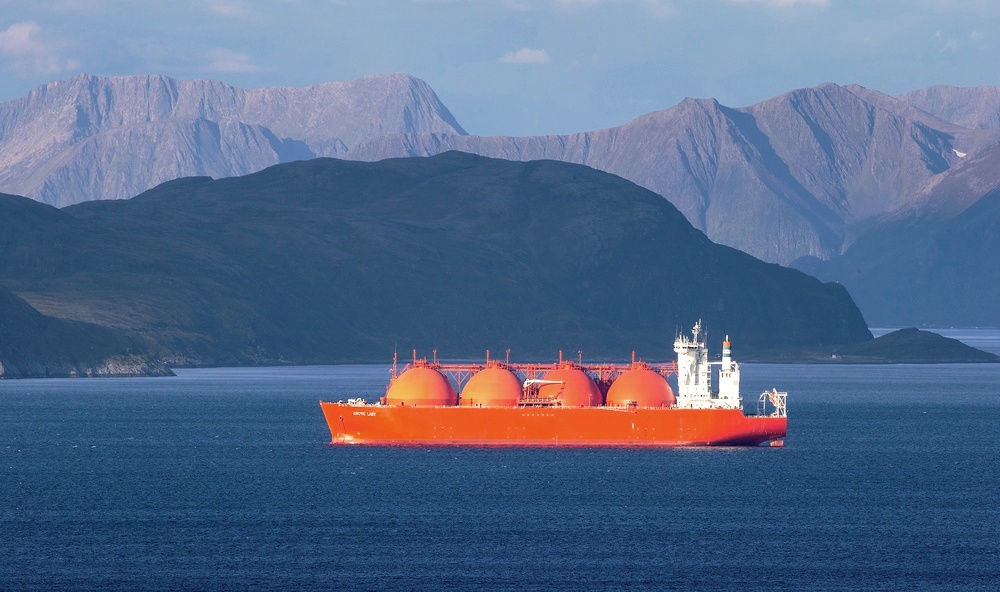
Until recently, Norway could enjoy many of the advantages of European Union (EU) membership without giving up autonomy. It had neutralised the rise of the far right and maintained political stability. Despite these successes, Norway now finds itself in an increasingly vulnerable position. Its new role as Europe’s main supplier of natural gas may provide some leverage, but it does not shield it from EU countermeasures in response to aggressive American trade policies. The populist movement has made a comeback with the Progress Party (Frp) taking second place in the September 2025 parliamentary election. Increasing polarization threatens the long-standing bipartisan consensus on issues such as the use of oil and gas revenues to sustain welfare provisions and membership in the European Economic Area (EEA).
The elections in early September 2025 revealed a split electorate. The Labour Party won 28% of the vote and decided to continue on as a minority government under Prime Minister Jonas Gahr Støre. At the start of 2025, Labour was struggling with low favourability ratings and disagreements with its coalition partner, the Centre Party. In hindsight, the Centre Party’s exit from the coalition in January of last year allowed Labour to clarify its own position. The return of the popular ex-Prime Minister and recent Secretary General of the North Atlantic Treaty Organisation (NATO), Jens Stoltenberg (Labour), to the role of Finance Minister provided additional momentum. Labour must nevertheless rely on the smaller parties in parliament, including Socialist Left (5.6%), the socialist party Rødt (5.3%), and the Greens (4.7%). It will face strong opposition from the Progress Party, which received nearly 24% of the vote.
Titre
Key takeaways
The Russia-Ukraine war has turned Norway into Europe’s largest supplier of natural gas and increased the asymmetry between the country’s offshore hydrocarbon economy and the largely renewables-based mainland economy
Record-high oil and gas revenues have raised discussions of the country’s status as a ‘war profiteer’ and the sovereign wealth fund’s investments predominantly in the United States.
Some political parties have raised the possibility of Norway joining the EU as a full member. Rising pro-European sentiment is challenged by the agrarian Centre party aiming to end Norway’s participation in the EU electricity market and the European Economic Area.
As fossil fuel production is set to decline due to depletion, the country finds itself split between those seeking to continue investing in exploration and extraction and those calling for a controlled phase-out of oil and gas.

Available in:
Themes and regions
ISBN / ISSN
Share
This page contains only a summary of our work. If you would like to have access to all the information from our research on the subject, you can download the full version in PDF format.
Norway’s Energy Policy Dilemmas and Debates: In or Out?

Center for Energy & Climate
Ifri's Energy and Climate Center carries out activities and research on the geopolitical and geoeconomic issues of energy transitions such as energy security, competitiveness, control of value chains, and acceptability. Specialized in the study of European energy/climate policies as well as energy markets in Europe and around the world, its work also focuses on the energy and climate strategies of major powers such as the United States, China or India. It offers recognized expertise, enriched by international collaborations and events, particularly in Paris and Brussels.
China’s Hydrogen Economy Five Years On
China’s hydrogen sector is not new. It is the world’s largest industrial hydrogen system, rooted in ammonia, methanol, refining, coal chemicals and by-product gas streams.
27 Plans for 2027: Turning the Electrification Action Plan into National Action
With the aim of structurally reducing the European economy’s dependence on fossil fuel imports and accelerating the energy transition, the European Commission has opted for electrification.
How to Make European e-SAF Production under RefuelEU Aviation Fly?
Three and a half years before the scheduled entry into force of the European regulation ReFuelEU Aviation (RFEUA), which requires aviation fuel suppliers at Union airports to offer a sustainable synthetic alternative (e-SAF), no sizeable commercial production unit (greater than 10,000 tons per year) is active within Europe yet, nor has it even passed the Final Investment Decision (FID). Is a major step in the European Union (EU) plans for decarbonizing air transport at risk of not happening, or at least being postponed for several years? Is Europe losing its bet to create a market for e-SAF? Under what conditions can this bet still be won? Could sovereignty and energy security preoccupations unlock necessary public support and help to overcome economic, financial, logistical or administrative obstacles?
The European Biomethane Sector at a Critical Juncture: Stronger Policy Alignment Will Matter
The European biomethane sector is at a critical juncture.