






Energy-Climate
In the face of the climate emergency and geopolitical confrontations, how can we reconcile security of supply, competitiveness, accessibility, decarbonization and acceptability? What policies are needed?
Related Subjects
The US’s Critical Mineral Offensive Strategy: How Can Europe Step Up?
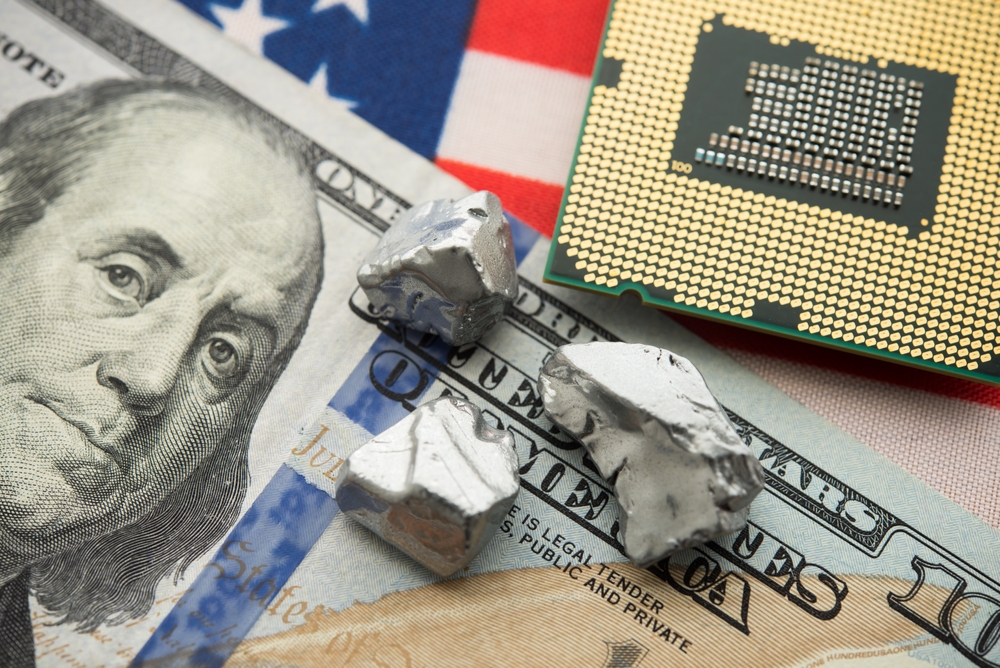
As Organization for Economic Co-operation and Development (OECD) economies are confronted with mounting threats to critical raw materials (CRM) supplies, resolute interventionist policies are needed to build resilient value chains.

OPEC: It Is about More Oil - Not Quotas
OPEC has certainly gone out of its way to show how little relevance it has in today’s oil market. It has successfully imported all the political rhetoric and malaise of some of its most unstable members.
What's in a Name? Market-based Instruments for Biodiversity
The use of Market-based Instruments (MBIs) for the management of biodiversity and ecosystem services - carbon trading schemes, payment for ecosystem services, mitigation banking, etc. - is currently booming. But the definition and underpinning theory of these tools remain unsettled. It is therefore necessary to advance in the definition, theory and consistent classification of these instruments.
Protecting Nuclear Installations: The difference between industrial safety and national security
There is a gritty public debate going on in Europe about what threats should be considered in conducting stress tests on existing nuclear power plants or in establishing safety criteria for new build nuclear power.
German Nuclear: Green Is Good Politics
In polarized politics, the voter must take on faith the wisdom inherent in the principled political position. Who cannot be impressed by the nuclear catastrophe at Fukushima, especially after living through the fallout from Chernobyl? But is it reasonable to send the voter to the booth with only half the information? Does the German voter have any idea what it means to shut down its nuclear power in just ten years? Have German politicians made any effort to tell them?
Political Oil Prices: A Measured Response if Any
Oil prices are becoming an increasingly worrisome factor in today’s economies. They have risen dramatically over the past 6 or 7 months and are now driving inflation in many economies and acting as a drag on nearly all. They are not at these levels because markets are fundamentally out of balance.
Fukushima and Democracy
The double disaster of Fukushima, a natural disaster comprising an earthquake and a tsunami and a large-scale industrial nuclear disaster, behoves all countries to consider the lessons which they can draw from it.
Gas Pains: What to Do About France's Shales
Like other countries in Europe, France has the potential to produce both oil and gas from shale. In the Paris Basin, where oil has been exploited for decades, oil shale quite similar to the Bakken play in North America has considerable promise due to new drilling and exploitation techniques. The potential for shale gas in the South east is less well known and needs to be assessed.
Obama Remarks on Energy: Ball in Congressional Court
President Obama has made clear that in the 2012 election, he intends to defend his record on energy from the middle.
The Governance of Energy Poverty in Southeastern Europe
This report presents the outcomes of a recently-completed research project1 aimed at uncovering the different ways in which energy poverty – understood as a condition wherein the domestic energy services available to a household are below socially and materially necessitated levels – is produced by, and mitigated through, the interaction of relevant decision-making institutions in the energy, social welfare, health and housing domains. The project focused on conditions in Southeastern Europe, where energy prices have been recently on the rise despite falling incomes and poor access to efficient and adequate energy services.
The Water in a Cup of Tea - a Water and Energy Primer
Ever give a thought to how much water there is in your cup of tea? I know the volume in the cup is about 8 ounces - but it is hot - hopefully around 100 degrees Celsius or 212 Farenheit. So you had to heat it up one way or another to make tea.
European Energy Policy: Energy Savings Glass 2/3 Empty
Summing up Europe’s climate policies suggests we still haven’t grasped the full potential for energy savings. We act as if we were living in a system with infinite resources easily exploited by human innovation and ingenuity. We focus on the efficiencies we can gain from components of our system, but not on the system as a whole and we do not consider how the other billions of people on earth can achieve our level of comfort with a resource or carbon-constrained future and with aspirations that necessarily imply sharply growing energy consumption.
Japan's Nuclear Crisis: A Time for Support
These are terrifying moments. No one could ever have imagined that the Japanese nuclear sector could fall victim to such a seismic event.
Rising (Oil-linked) Gas Prices: A Message from Shale Gas
One benefit that should flow soon from large new sources of shale gas that have been and will be unleashed into world markets - is the realization that gas prices linked to oil prices don’t make sense any more.
The Effects of Baghdad Politics on Kurdistani Gas Prospects
This paper examines the effects of internal Iraqi politics on the potential for exporting Kurdistani natural gas. It examines Baghdad’s policy with regards to both oil and gas, and predicts what effects it will have on Kurdistan’s gas prospects.
Energy Efficiency: The Commission's Complicated Calculations
Who hasn’t heard of the 3x20, those pillars of European energy policy? And yet who is able to give their exact definition?
Renewables in Transport: Directive 2009/28/EC - Devils in its Details
This Actuelle precedes a longer and more exhaustive paper on Electric Vehicles, under the title "The Electric Vehicle in the Climate Change Race: Tortoise, Hare or both?" by Maïté de Boncourt.
As part of the 3*20 targets reached in December 2008, the EC decided that the EU should, by 2020, source 20% of its Final Energy Consumption (FEC) renewably.
Will there ever be a European Gas and Electricity Market ?
A year ago, I would have responded to this question rather positively. Nowadays, I am not so sure. My relative optimism before was based on the replacement of a group of monopoly-holding (at least regionally) national operators, by an oligopoly of operators with a sizeable proportion of their activity outside of their countries of origin. These included EON, EdF, RWE, ENEL, GDFSuez, IBERDROLA, VATTENFALL and others.
Arctic Solutions: The Frozen (Thawing) Relations of the High North
It’s cold, inhospitable and deadly. The image of the Arctic in years past is one of bewilderment, ignorance and awe. How the image of the Arctic has changed in recent years can be directly linked to our recognition that the Arctic has a great deal to offer in meeting the basic needs of future generations.
EU Council Feb 4: Strength in Unity
Community officials and heads of EU states and governments will meet this Friday February 4, 2011, at a Council called by President Herman VAN ROMPUY, to address energy security. There are many critical topics that could be on the table, but there is some considerable risk that the events in Lebanon, Yemen, Egypt, Tunisia and now Jordan could hijack the agenda. That would be unfortunate, as the problems in those countries are precisely why the Council should stay focused on energy and the growing European vulnerability to what happens in world energy markets.
The Electric Vehicle in the Climate Change Race: Tortoise, Hare or Both?
Europe is seeking ways to decrease the growing negative impact of passenger cars on climate, currently responsible for up to 12% of total EU CO2 emissions. After biofuels in the nineties and hydrogen in 2000, the new answer to climate change appears to be electric. But contrary to many marketing messages, electric cars are not zero emissions cars. They will not necessarily contribute to actual CO2 emission reductions before 2020 and even then, not in every country.
The Outlook for Nuclear Energy in the United States: Dark Ages, Renaissance, or Age of Enlightenment?
Iran in the European Gas Market: a Russian Point of View
International Thoughts for the Energy Experts Contribution to the G8
Ifri, a foundation recognized as being of public utility, relies largely on private donors – companies and individuals – to guarantee its sustainability and intellectual independence. Through their funding, donors help maintain the Institute's position among the world's leading think tanks. By benefiting from an internationally recognized network and expertise, donors refine their understanding of geopolitical risk and its consequences on global politics and the economy. In 2026, Ifri partners with over 90 French and international companies and organizations.

Ifri's Energy and Climate Center carries out activities and research on the geopolitical and geoeconomic issues of energy transitions such as energy security, competitiveness, control of value chains, and acceptability. Specialized in the study of European energy/climate policies as well as energy markets in Europe and around the world, its work also focuses on the energy and climate strategies of major powers such as the United States, China or India. It offers recognized expertise, enriched by international collaborations and events, particularly in Paris and Brussels.