




Energy-Climate
In the face of the climate emergency and geopolitical confrontations, how can we reconcile security of supply, competitiveness, accessibility, decarbonization and acceptability? What policies are needed?
Related Subjects
The US’s Critical Mineral Offensive Strategy: How Can Europe Step Up?

As Organization for Economic Co-operation and Development (OECD) economies are confronted with mounting threats to critical raw materials (CRM) supplies, resolute interventionist policies are needed to build resilient value chains.

EU GHG Emission Targets: "Mind the gap"
While the actual price of carbon emissions in the EU market is at the extremely low level of €6 per tonne, it is crucial to track European emission trends and to compare them with the commitments of the EU-15 under the Kyoto Protocol and the targets set by the EU-27 for 2020.
China and Cleaner Coal: A marriage of necessity destined for failure?
For China, coal is a crucial source of abundant, indigenous and affordable energy and is a pillar of economic and social stability. From a logic of energy security, and because the industry itself maintains a formidable political presence through the sheer fact of its history and size, this resource will continue to play a central role in the country’s energy mix. But in order to respond to the growing need to reduce the burden of coal use on the environment and the Chinese population, and to prevent catastrophic climate change, both Chinese leaders and the industry itself have faced a certain reality - coal must become cleaner.
Gas Routes to Europe: Real Needs and Political Jockeying
The Energy Roadmap 2050 released by the Commission in December 2011 says it all: we will need more gas until 2030. Gas represents the default solution for a transition to an energy system with less GHG emissions. It also has great value as a back-up for intermittent renewable power generation. Therefore, stating that Europe still needs large quantities of gas means checking if supply volumes are available to satisfy growing demand.
February Gas Pains in Europe - Coping Is Not Managing: the Italian Response to the Gas Crisis
The recent cold spell that gripped much of Europe was a test for the European gas network. In many countries temperatures fell dramatically to -10°C during the first week of February, even dropping a bone chilling - 22°C in some places.
As the European Commission(s Director General for Energy Philippe Lowe said during a speech at our Annual Conference last Thursday (February 16) in Brussels, Europe(s gas network was able to respond to the sharp increase in demand despite a simultaneous drop in supply from Gazprom.
Libya: Old or New Picture? Risks of political uncertainty for the gas and oil business
Libya has an opportunity to get back on track. The end of embargoes and sanctions after the conclusion of the “February Revolution” is favoring a fast production growth.
The U.S. Oil and Gas Boom
A funny thing happened in the last few years when no one was paying attention. J.R. Ewing, the legendary Texas oilman, and his wife Sue Ellen sold Southfork, their ranch near Dallas, and moved to a new home in Pennsylvania (Northfork?). JR immediately began buying subsurface mineral rights for acres of land above the Marcellus and Utica shale formations in the Appalachian Basin.
Gas Exports in Turkmenistan
The Caspian region has been at the center of attention since Europe began seeking alternative routes to natural-gas resources. Turkmenistan has the potential to become an important gas exporter to Europe.
Russian Gas: Reminder of Yesterday Presaging Tomorrow?
One can’t help but be struck by the irony earlier this week of Russian President (ad-interim) Medvedev celebrating the landing of gas in Lubmin Germany from the Nordstream gas pipeline from Russia while Former President and President-in-waiting Putin welcomes Chinese Premier Wen Jiabao to seek a deal to send Russian gas east to Chinese markets.
Gazprom and the EU: Raiding the Gas Companies
It was a matter of time before the Commission competition authorities looked into the business arrangements between Gazprom and its European partners. Some would ask why it took so long.
Commission Communication of the EU Energy External Policy: Was There an Alternative?
EU is the world’s largest net energy importer and consumer, so why do its Members continue to negotiate individually with the rest of the world rather than as one big market with a big voice?
Trans Caspian Gas: A Worthy Teething Ring for Europe's Energy Diplomats
As an early task in its efforts to build a common external energy policy, the Commission has announced it will turn its attention to bringing the vast gas resources of Turkmenistan to European consumers. This will be an excellent place for the Commission to test its ability to speak with one voice for its polyglot constituency. First, their task may be facilitated by the fact that on this topic, no European voices are yet particularly audible.
Energy Efficiency versus the EU ETS: Counterproductive Tribalism in the Commission
On 22 June 2011, a proposal for increased Energy Efficiency was presented by the European Commission. The energy efficiency directive was intensely negotiated and faced strong internal opposition from a number of players. DG Climate officials have shared their concerns with the public.
IEA Crisis Management: Evolving with the Risks
Last week the IEA chose not to renew its June strategic stock release. It was the right decision. The volumes of strategic crude and product taken up by the market will be reaching refineries now and incremental volumes produced in the Arabian Gulf will be steaming towards markets.
A Look at the IEA 2011 Release of Strategic Oil Reserves
This paper examines the motivations and the potential consequences of the International Energy Agency’s coordinated action to release petroleum stocks on June 23, 2011.
Kanal Istanbul: Pipedream or Politics ?
This paper examines Kanal Istanbul, a plan proposed by recently re-elected Turkish Prime Minister Recep Tayyip Erdogan to bypass the Bosphorus Strait by creating a canal west of Istabul.
A Tragic Tale of Corn and Congress
Ever since Iowa landed the privilege of holding the first Presidential primary, no candidate has the political courage to confront the $11 billion subsidy price tag of US corn ethanol. Everyone agrees we need to dilute our supply and price vulnerability in transportation fuels and everyone agrees we need to decarbonize the transport sector. But surely not this way.
Unconventional Gas: A Game Changer for Transport Too?
A new technology trend, the development of natural gas vehicles, is emerging in the transport sector.
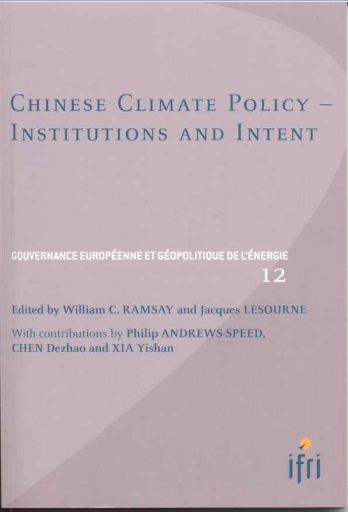
Chinese Climate Policy: Institutions and Intent
Until the late 1990s, the balance of Chinese energy production and consumption was treated by the rest of the world as a net figure. No one knew what was going on inside the Chinese economy - it was a black box. As far as anyone was concerned, the Chinese would not soon be a major factor in world energy markets.
The EU internal market - a stake or a tool in European-Russian gas relations. The case of new member states gas policy
Since 2010 we have observed a new quality in EU energy policy. It is related to the European Commission’s more or less direct engagement in the bilateral gas relations of a part of the new member states - Poland, Bulgaria and Lithuania - with Russia.
OPEC: It Is about More Oil - Not Quotas
OPEC has certainly gone out of its way to show how little relevance it has in today’s oil market. It has successfully imported all the political rhetoric and malaise of some of its most unstable members.
Getting Carbon Out: Tougher Than it Looks. An Assessment of EU, US & Chinese Pledges
This paper intends to examine the emissions trajectories of the three largest emitters, China, the US and the European Union through the optics of indicators and assess the feasibility of their targets for 2020.
The Institutions of Energy Governance in China
International collaboration, in any form, requires trust, and such trust is built on understanding. In the case of collaboration in the field of energy, potential partners need to have an appreciation of frameworks for energy governance in each others’ countries. Only then can they accurately interpret the data, the statements and the declared commitments provided by other parties. Nowhere is this ignorance of greater relevance to today’s challenges than the case of China.
Oil Markets Range-bound?
We have heard admonitions about peak oil and that we have already passed the geologic peak of world oil production capacity. On the other hand, the IEA warns that if we continue our present patterns of energy consumption, we will need the equivalent of four Saudi Arabia’s in new oil production capacity by 2030 - seemingly at ease that the oil is geologically out there.
Implementing the EU Climate and Energy Package with the Economic Crisis
Ukraine - A Transit Country in Deadlock? Four Scenarios
Should we consider Ukraine a transit country in deadlock, and reduce its energy role just to that of a transit country? Definitely not, because Ukraine is at once a large gas consumer and producer, and possesses massive storage capacity. But the economic and political situation of the country is alarming, even without considering the possibility of another gas crisis Without such a crisis, however, the event of Ukrainian bankruptcy would attract less broad international attention simply because it would not have direct impact on European gas consumers.
US, European and Chinese proposals for Copenhagen : looking behind the numbers
The Outlook for Nuclear Energy in the United States: Dark Ages, Renaissance, or Age of Enlightenment?
Ifri, a foundation recognized as being of public utility, relies largely on private donors – companies and individuals – to guarantee its sustainability and intellectual independence. Through their funding, donors help maintain the Institute's position among the world's leading think tanks. By benefiting from an internationally recognized network and expertise, donors refine their understanding of geopolitical risk and its consequences on global politics and the economy. In 2026, Ifri partners with over 90 French and international companies and organizations.

Ifri's Energy and Climate Center carries out activities and research on the geopolitical and geoeconomic issues of energy transitions such as energy security, competitiveness, control of value chains, and acceptability. Specialized in the study of European energy/climate policies as well as energy markets in Europe and around the world, its work also focuses on the energy and climate strategies of major powers such as the United States, China or India. It offers recognized expertise, enriched by international collaborations and events, particularly in Paris and Brussels.