Political Systems
At the end of the Cold War, the idea spread that liberal democracy was going to take over the world. In reality, authoritarian regimes have resisted, and political systems remain varied.

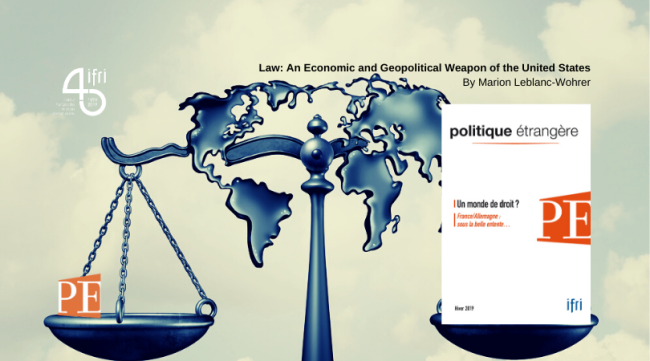
Law: An Economic and Geopolitical Weapon of the United States
From the 2000s, the United States has developed an extraterritorial legal policy that began with fighting corruption but has since broadened considerably.

South Africa, A Fragile Democratic Model?
South Africa held general elections in May 2019. The African National Congress (ANC) emerged victorious, but failed to win over a majority of registered voters.

Armed Violence in the Sahara. Are We Moving From Jihadism to Insurgency?
While everyone is questioning the effectiveness of the anti-terrorist response in the Sahel, the first challenge is to ensure that the jihadist phenomenon in the Sahel is fully understood.
The 2020 Campaign and the Impeachment Process. Conference video
The Democratic Party primary campaign is in full swing and the Impeachment inquiry against Donald Trump proceeds speedily. What is the state of American public opinion less than a year before the elections? How are conservative and progressive media lining up to cover the event?
U.S. Foreign Policy in the Age of Trump
Despite a very particular style, the Trump administration's foreign policy continues on many points the American withdrawal from World affairs which had started under Barack Obama. The main trends of thought of American foreign policy show this evolution, with the resurgence of non-interventionist and even nationalist ideas amongs DC think-tankers.
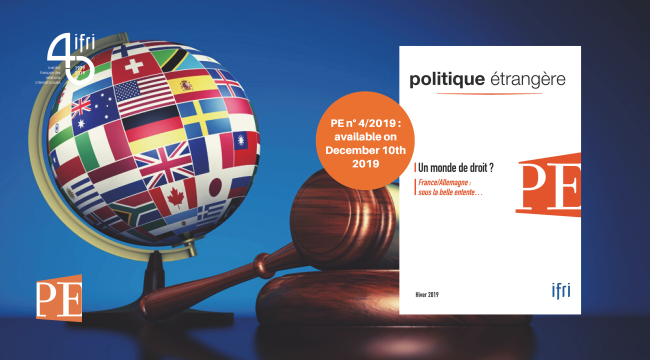
A World of Law? / France and Germany: What's Behind the Mask
What is the role of law in international relations today that increasingly seem to favour assertions of power?
Does the conservative media unanimously support Trump's 2020 bid?
From the 1920s to the 1980s, the American press followed strict discursive practices based on objectivity and fairness. Starting in the 1930s, the country's political center of gravity was on the liberal side and there were few overtly conservative media.
What Is a Think Tank?
When I was laying the foundations for the French Institute of International Relations (Ifri)1 in 1978 and 1979, only a select few in France were familiar with the English term “think tank” and had at least an approximate idea of what it covered.
This term has become fashionable but still has no consensual definition.
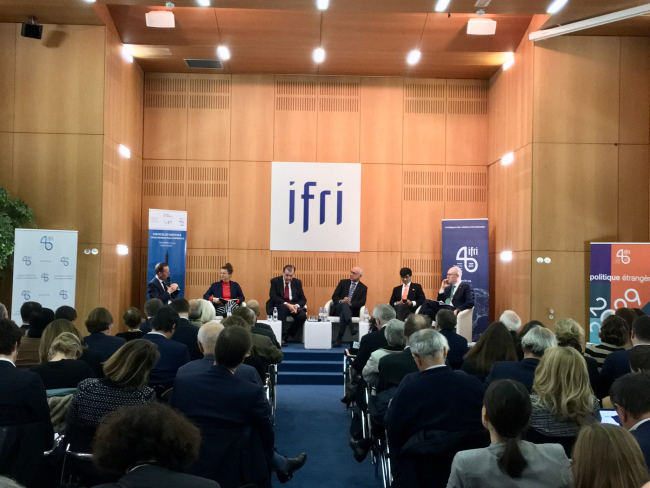
Ten Years Ahead: Insights Into the Agendas of International Think Tanks
A panel with Michael Fullilove, executive director, Lowy Institute (Australia), Rohinton P. Medhora, president, Centre for International Governance Innovation (Canada), Samir Saran, president, Observer Research Foundation (India), Patrycja Sasnal, head of research and senior fellow for the Middle East, Polish Institute of International Affairs (Poland), and Carlos Ivan Simonsen Leal, president, Getulio Vargas Foundation (Brazil), moderated by Thomas Gomart, director, French Institute of International Relations (France) as part of the 12th regional conference of Council of Councils (CoC), which unfolded from November 17 to 19, 2019 at Ifri.
French Foreign Policy in the Age of Polycrisis
Under the presidency of Emmanuel Macron, France has set itself the goal of strengthening its international presence, being more proactive and defining the European reform agenda. However, the French room for manoeuver is limited.
The Changing Political Agenda and Role of Think Tanks in the Next Decade. Video
A debate in the framework of the 12th regional conference of Council of Councils (CoC) in Paris between Thierry de Montbrial, Executive Chairman of Ifri and Richard N. Haass, President of Council on Foreign Relations (CFR). Moderator: Sophie Pedder, Paris Bureau Chief, The Economist.
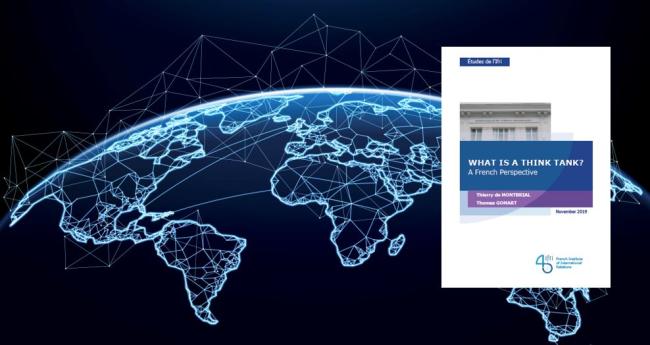
What Is a Think Tank? A French Perspective
The French Institute of International Relations (Ifri) celebrated its 40th anniversary in the spring of 2019, in a completely different environment to when it was founded, which was dominated by the competition between the two “superpowers” of the time, the United States and the Soviet Union (USSR).
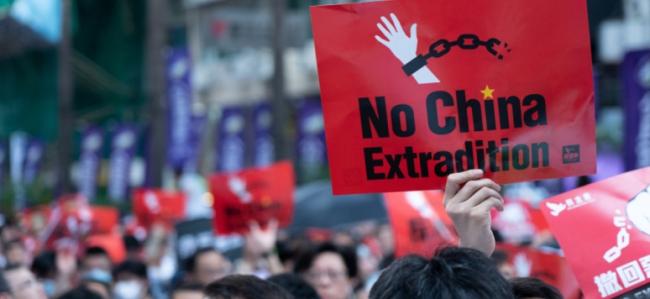
Hong Kong : The 2019 Protest Movement and the Future of Autonomy
The current protest movement in Hong Kong, which began with the proposed extradition law in June 2019 that would have considerably weakened the judicial border between Hong Kong and Mainland China, has set itself apart from the city’s numerous movements in recent years by its massive following. The protestors, who employ original strategies (online organization, absence of clear leadership, use of digital tools), achieved an initial success with the suspension of the proposed law in September. But even after the law’s withdrawal, massive protests and increasing acts of violence continued to grip the territory. Demands now center around an independent investigation into acts of police violence and on the revival of democratic reforms.


“It is Easier to Change Your Mind in Small Communities” – Resettling Refugees in Rural Areas in France
Smaller municipalities and rural areas can be places where refugees are welcomed and where they can integrate more easily. People living in rural areas are very proud of their towns and often make an effort to mobilize and include newcomers in their communities.
Integrating refugees: are small towns inventing a model for tomorrow?
Matthieu Tardis, Research Fellow at the Centre for Migration and Citizenship at the French Institute for International Relations (Ifri), describes how small towns and rural areas are welcoming refugees and enabling them to settle.
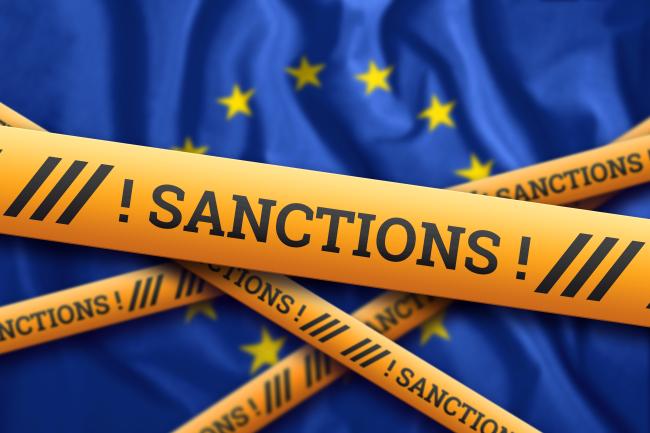
The Sanctions Policy of the European Union: Multilateral Ambitions Versus Power Politics
Restrictive measures are a major instrument of the European Union (EU)’s external action, which has emerged as one of the world’s leading sanctions emitters. The EU has thus leveraged the size of its market and its economic and financial clout (trade relations, aid policy and bilateral agreements).
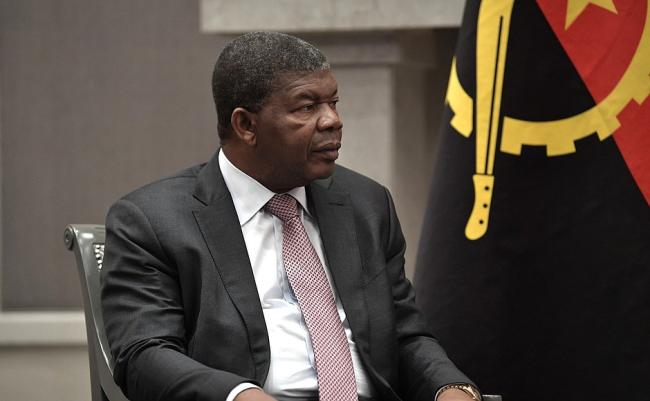
Angola under Joao Lourenço: Who Are the New Players of MPLA State?
In 2017, the coming to power of João Lourenço put an end to nearly four decades of rule by the former head of state, José Eduardo Dos Santos.
Is the EU Better Prepared for the Next Migration Challenges?
The European Union did respond to the massive influx of migrants in 2015, but with short-term measures, which have widened the divisions between member states.

Battered by trade war, Merkel begins controversial China trip
Critics fear Germany could put European unity on the line. Angela Merkel will have to tread carefully on her visit to China this week to avoid tripping over Hong Kong and stepping on Germany’s car industry. Angela Merkel will have to tread carefully on her visit to China this week to avoid tripping over Hong Kong and stepping on Germany’s car industry.
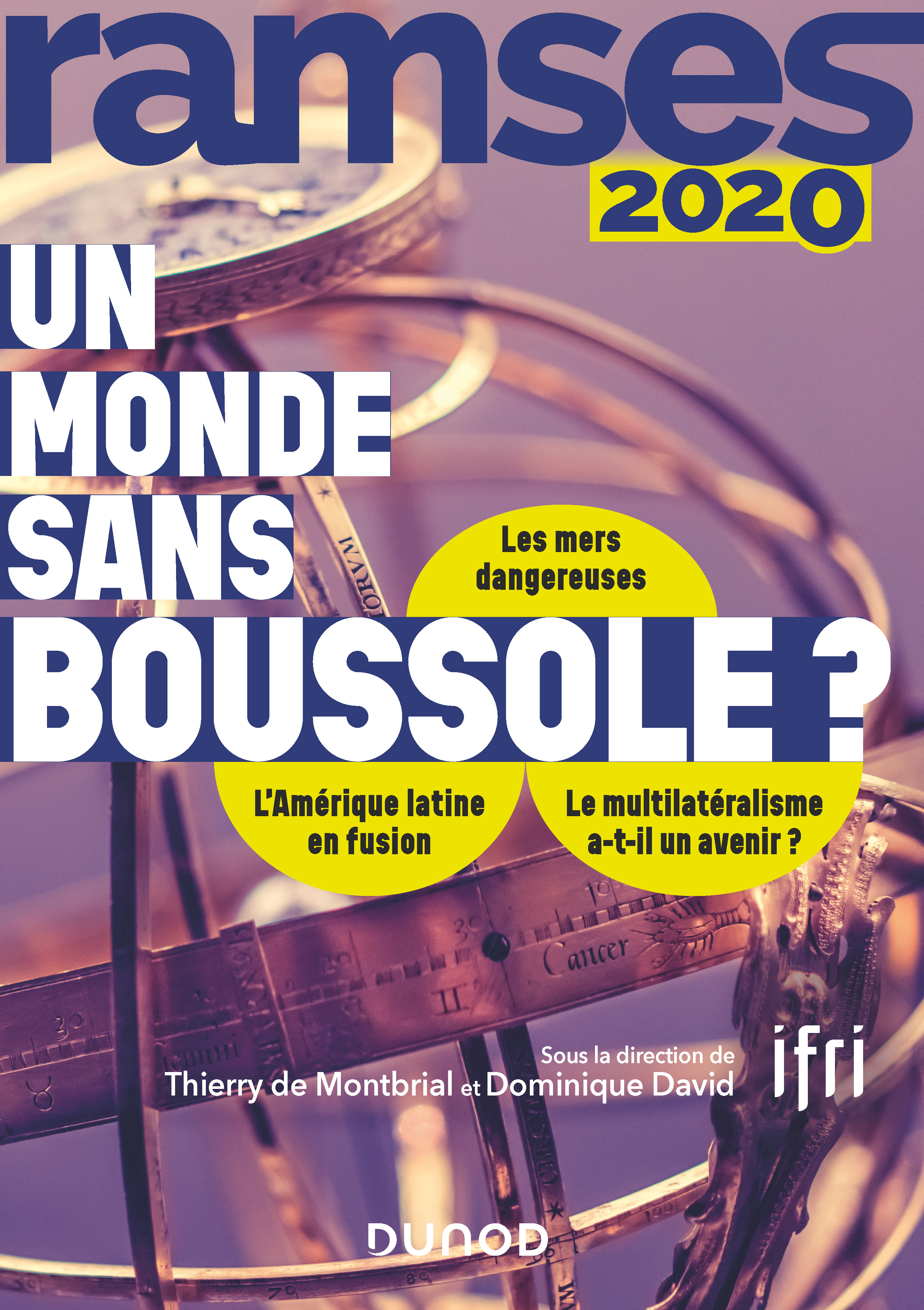
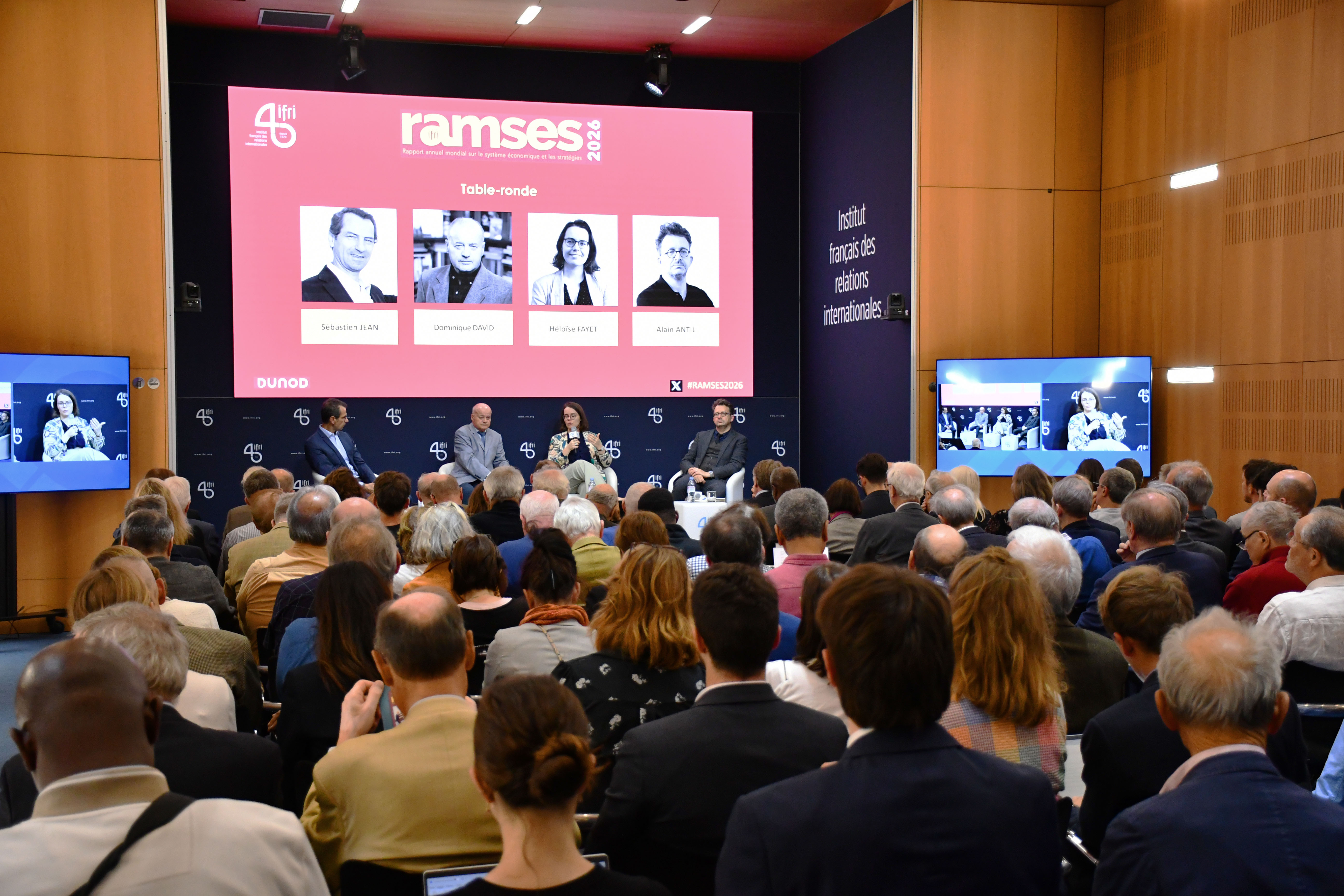
RAMSES 2020. A World without a Compass?
RAMSES 2020. A World without a Compass?, written by Ifri's research team and external experts, offers an in-depth and up-to-date analysis of geopolitics in today’s world.
Libya: Old or New Picture? Risks of political uncertainty for the gas and oil business
Libya has an opportunity to get back on track. The end of embargoes and sanctions after the conclusion of the “February Revolution” is favoring a fast production growth.
Is Turkey an Economic Exception?
This roundtable dealt with the specificities of Turkey"s economy, which is completing major economic achievements in particularly difficult times. François Faure analyzed the risks of an economic backlash following the European crisis; Turkey appears indeed in a weaker position than in 2008 and difficult times could lie ahead. Esen Çağlar pointed out how Turkey progressed from a low-technology to medium-technology economy, thus ensuring considerable levels of growth. Yet, a renewed reform agenda is needed if Turkey wants to maintain its economic performance. Deniz Ünal addressed the issue of economic governance under the AKP and the consistency of their economic policy agenda. In any case, Europe will most certainly play a role in the country"s economic future. According to Rémi Bourgeot, the Middle East cannot provide an alternative to European markets even if it offers interesting opportunities for the Turkish South East. Turkey"s future growth will also depend on its capacity to impose itself as a corridor between Europe and its neighbours energy resources.
Innovation Policy Challenges for Japan: An Open and Global Strategy
Productivity is increasingly important in the Japanese economy as an aging and shrinking population is expected to constrain labor input. Thus, the creation of innovation is critical for realizing economic growth and maintaining Japan's international competitiveness. Specifically, emerging countries such as China and South Korea are quickly catching up on Japan's level of technological prowess in electronics and other high-tech industries. For that reason, continual investment in R&D and provision of products and services that are competitive in the global market are crucial for Japan's international competitiveness.
U.S.-Moroccan Relations: How Special?
U.S.-Moroccan ties have sometimes been described as a "special relationship." This paper explores the bilateral relationship to investigate how special it really is.
European Task Force on Irregular Migrations - Country Report: Germany
From a European comparative perspective, Germany represents the case of a highly restrictive migration control regime. Between 400,000 and 600,000 migrants live in the country without legal resident status. Their access to social rights such as health care and education is severely restricted, and individual or collective regularization channels do not exist.
European Task Force on Irregular Migrations - Country Report: Italy
In order to understand the present configuration of immigration policies in Italy, it is necessary to follow a path of double logic at every step of the analysis. On one side, the study will identify consistent trends in the country’s “immigration history” that continue to shape the main features of the reality of immigration today (see §§ 2.1 and 2.2). On the other side, the study will focus on major changes in the regulation of immigration and the policies addressing undocumented migrants that occurred in more recent times (see § 2.3.).
Toward the End of Force Projection? II. Operational Responses and Political Perspectives
For more than a decade, US defense circles have been concerned about the emergence of capabilities and strategies, which, as they spread, risk imperiling the United States" position in the world by their ability to disrupt or prevent force projection operations. Though most of the literature on such “anti-access” strategies focuses on the military aspects of the threat, this Focus stratégique - the second and last part of a two-part study - adopts a different perspective.
European Task Force on Irregular Migrations - Country Report: France
Looking back since the end of the 1970’s, French immigration policy has been characterised by an increased toughening, both on the outside, through greater border control and an increasingly strict asylum policy, and on the inside, with a progressive criminalisation of irregularity.
European Task Force on Irregular Migrations - Country Report: Spain
Spain represents in many ways an exceptional case study for research on immigration and especially irregular immigration.
European Task Force on Irregular Migrations - Country Report: United Kingdom
Irregularity of status, or „illegal‟ migration, has become a significant issue of public interest over the last 10 years. It is argued that the numbers game and moral panic shifted from black communities in the early 1980s to „bogus‟ asylum seekers in the early 1990s, and to irregular migrants in the late 1990s (Clandestino 2008: 18). We argue that public concern over irregular migration results from the tension between the needs of the UK economy for labour migration and the attempts of successive governments to convince voters that they are in control of immigration, and that they only allow inflows beneficial to the country. This situation generates loud and tough discourses on asylum and irregular migration, which remain closely related issues in Britain today.
Ifri, a foundation recognized as being of public utility, relies largely on private donors – companies and individuals – to guarantee its sustainability and intellectual independence. Through their funding, donors help maintain the Institute's position among the world's leading think tanks. By benefiting from an internationally recognized network and expertise, donors refine their understanding of geopolitical risk and its consequences on global politics and the economy. In 2026, Ifri partners with over 90 French and international companies and organizations.