Political Systems
At the end of the Cold War, the idea spread that liberal democracy was going to take over the world. In reality, authoritarian regimes have resisted, and political systems remain varied.

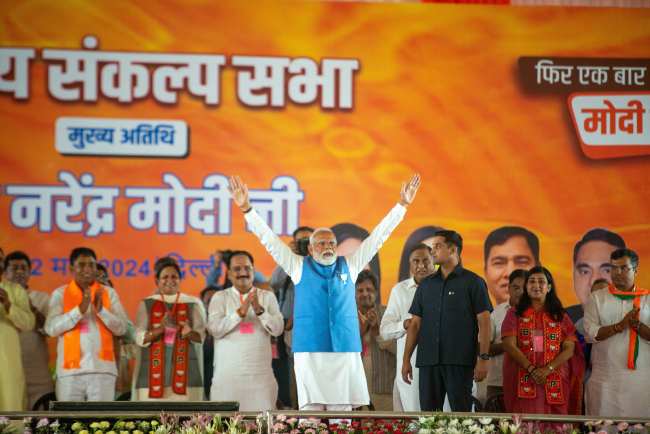
Foreign Policy Issues in the BJP 2024 Election Campaign: Boosting National Pride and Glorifying a Strong Government
While election campaigns in India traditionally focus on domestic issues above all, the Bharatiya Janata Party’s (BJP) campaign for the 2024 general elections placed a strong emphasis on foreign policy. It emphasized how, under the leadership of Prime Minister Narendra Modi, India has strengthened its diplomatic role and achieved international economic success.

France's Indo-Pacific strategy
This article has been extracted from the magazine Question internationales - n°118 - Avril-mai 2023.
The Indo-Pacific, a new theater of strategic rivalry between China and the United States, is of growing interest to France, where it defends its interests related to its vast maritime territory by promoting multilateralism and forging multiple partnerships in the region.
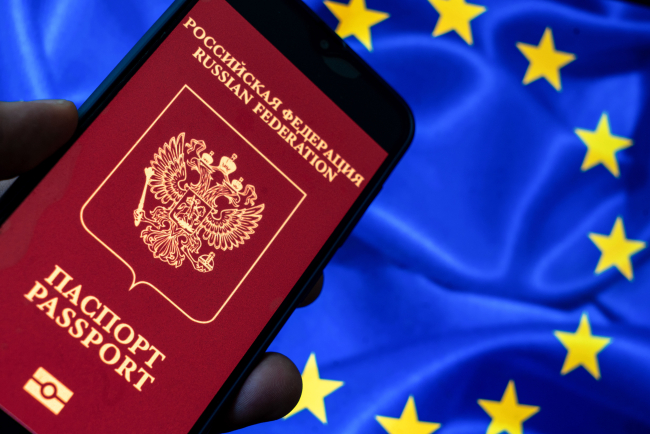
The New Russian Diaspora: Europe’s Challenge and Opportunity
This report assesses both the scale and the roots of the outward migration from the Russian Federation coinciding with Putin’s turning of Russia into an aggressive authoritarian state.

Populism and International Relations
Populism is flourishing, in Europe and elsewhere: a populist holds power today in Argentina and perhaps tomorrow in the United States. What does its spread say about our societies? And how is it shaping them, where populists rule? Do their economic policies stand any chance of success? Do their foreign policies have a greater impact on the world around them or at home? If “Trump 2.0” comes to be, will he have a free hand? If so, what can we expect?
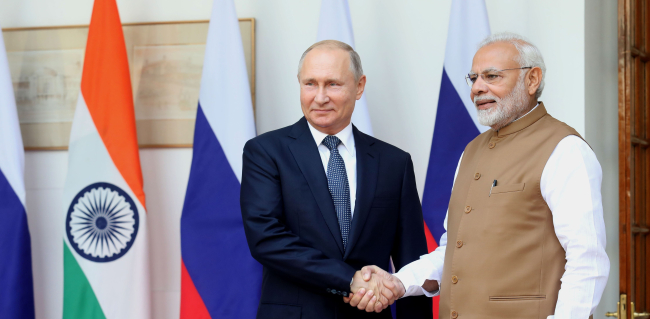
India-Russia Relations in Troubled Times: Steady but Stagnating
This paper examines the trajectory of India-Russia relations post-February 2022. The war in Ukraine emerged as a significant challenge for bilateral ties, presenting new obstacles to political and diplomatic relations and intensifying the previous difficulties in developing economic cooperation.

Paris Olympics may face security contractor shortage
PARIS — Three months before an Olympics that presents unprecedented security challenges at a globally tense time, French officials are facing a potential shortfall of qualified private contractors to help protect the Games.
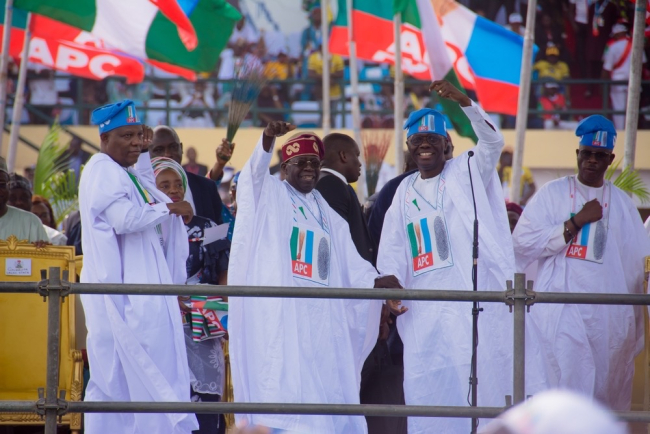
The Major Challenges of Ahmed Bola Tinubu's Nigerian Administration
Voter turnout for Nigeria's presidential elections in February-March 2023 has never been so low since the country's return to democracy in 1999. Nigeria's new president, Ahmed Bola Tinubu, must now reassure voters that Africa's leading economy is capable of putting the lie to a persistent image of a country in decline.

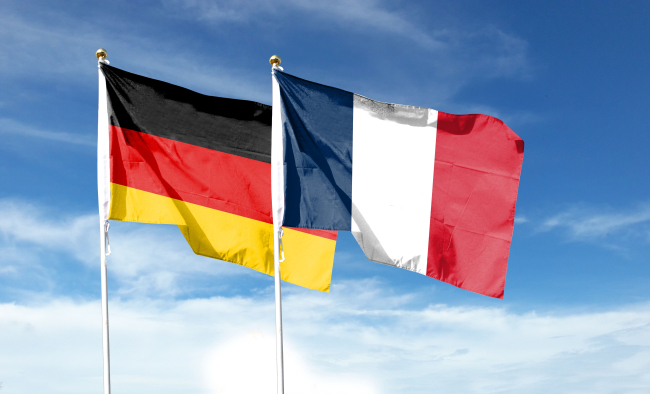
How Macron and Scholz broke the Franco-German alliance at the heart of the EU
Breakdown of continental partnership is a threat to Europe – and could be catastrophic for Ukraine. It was meant to be a patching up of the notoriously fraught Macron-Scholz relationship, a “reset”, to borrow Hillary Clinton’s expression.
AfD’s Foreign Policy Between Disengagement in the West and Partnership in the East
The Alternative for Germany (AfD) was formed in 2013 in the context of the currency crisis as an “alternative” to the Merkel government’s policy of rescuing the euro. Since then, the party’s platforms for the European elections in 2014, 2019 and 2024 have become increasingly radical.
The World Through the Lens of Ukraine
This issue of Politique étrangère looks at three conflicts currently unfolding around the world.

A Splintered Internet? Internet Fragmentation and the Strategies of China, Russia, India and the European Union
From the Covid-19 pandemic to the ramifications of Russia’s full-scale invasion of Ukraine, international events are fueling fears of an accelerated fragmentation of the global Internet.
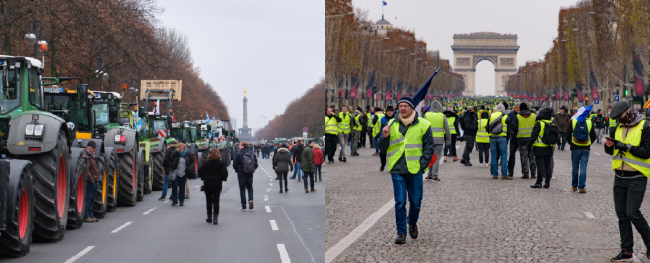
‘‘Jusqu’ici, tout va bien’’ ? A Cross-Analysis of Protest Cultures in France and Germany
The influence of different protest cultures on democracy in Germany and France is complex. The protest takes various forms, serves as political representation, and contributes to the formation of political opinion.

First Year of Lula: Overview of the Political Situation in Brazil
This Briefing offers an analysis of Brazil's political and economic situation and prospects at the end of 2023. It also examines Brazil's position on certain international relations issues, thirteen months after Lula's election.
The South versus the West?
In 2023, forums that amplify the voice of the “Global South” have proliferated and grown louder. As contradictory and divided as they may be, these forums (BRICS+, Shanghai Cooperation Organization (SCO), G20, the Group of 77, the European Silk Road Summit…) attest to the emergence of new power relations, and especially new directions in foreign policy, with states rejecting alignment with the dominant powers of the past in favor of putting their own interests first. A new world is taking shape, with changeable, still uncertain, contours.

Impossible Decoupling, Improbable Cooperation: Economic Interdependencies in the Face of Power Rivalries
Export restrictions, economic and financial sanctions, politicization of monetary and financial choices, screening of inward and outward foreign direct investments, exceptional customs duties, and state interventions in sectors deemed strategic: the political vise is tightening around international economic and financial relations.
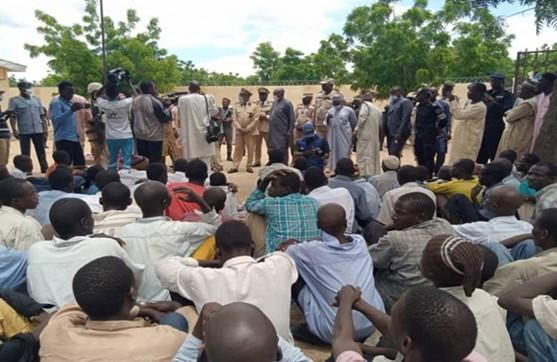
The national DDR policy for Boko Haram ex-combatants in the Extreme North of Cameroon. Issues, challenges and limits
Surprised and harassed by Boko Haram’s atrocities from mid-2013, the Cameroonian authorities initially responded with strong military and judicial responses that helped to contain the threat and regain control of the situation.
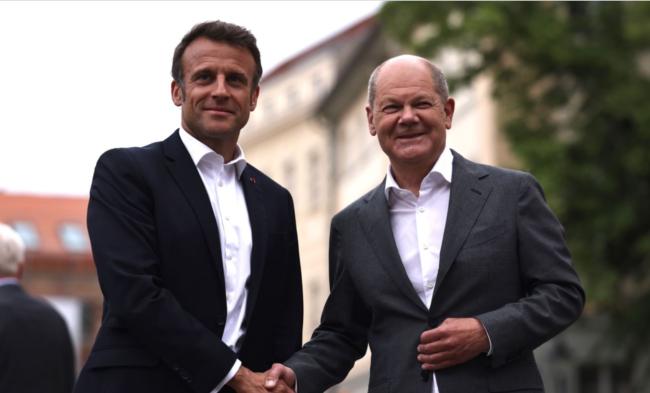
New Impulses for Stagnant Relationships - German-French Ministerial Council Meets in a New Format
As the doors of the illustrious Hôtel Beauharnais on Rue de Lille 78 swung open on the evening of 4 October, and the masses streamed into the German Embassy in Paris to celebrate German Unity Day, the reports of the currently strained state of Franco-German relations seemed almost surreal.
A Palestinian Perspective on the Oslo Accords
The Oslo Agreement of 1993 was a declaration of principles that later needed to be clarified through further negotiations.

Thirty Years on from the Oslo Accords: An Israeli Perspective
The Oslo agreements signed in 1993 raised high hopes for peace in the Middle East. But appraising the state of affairs, thirty years on, the picture is bleak.

Ethics and Responsibility in Space Exploration: The Rise of Soft Law to Regulate New Practices

When City Diplomacy Meets Geopolitics: A Framework to Help Cities Navigate Geopolitical Risk
Crises and the increasing polarization of international relations make political risk analysis an indispensable resource for internationally active public and private entities.
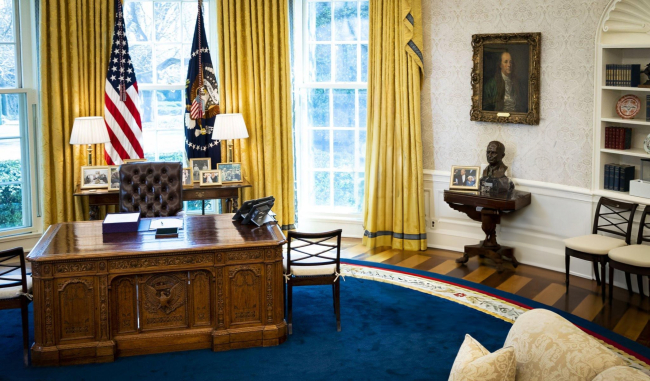
Will Trumpian Authoritarianism Lead to a Constitutional Crisis?
Since his return to the White House on January 20, 2025, President Donald Trump has signed around sixty executive orders to implement his political agenda. Numerous other measures have also been introduced by the White House and the new Department of Government Efficiency (DOGE) as part of these orders.
Taking the Pulse: Has Political Deadlock in Member States Become a Strategic Problem for the EU?
At a pivotal moment for the EU, several of its member states are experiencing domestic political and economic crises. Is this hindering collective EU action in response to the challenges posed by Russia, China, and Trump’s administration?

From Conservative Nationalists to Tech-Libertarians: Far-Right Ideologies in the Trump 2 Administration
The officials and advisers of the Trump 2 administration represent diverse ideological currents, some of which are relatively new to Washington.
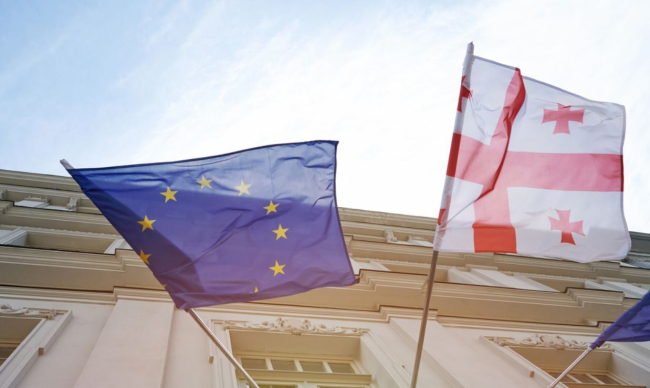
The European Union's Strategic Test in Georgia
The political crisis brewing in Georgia is of an existential nature for the country. What is at stake is Georgia's future as a democratic and sovereign European nation (EU).

Out of Thin Air but More than a Mirage: The Politics of Saudi Arabia's Nascent Music Industry
This study critically examines Saudi Arabia’s nascent music industry, which is promoted as a key element of Vision 2030, Crown Prince Mohammed bin Salman’s strategic framework to diversify the kingdom’s economy. It explores how state-led investments in music and entertainment intersect with authoritarian governance. The author neither dismisses these investments as conspicuous spending nor reproduces an alarmist narrative of impending cultural imperialism. The article takes a political sociology approach to understand how Saudi entertainment plans consolidate domestic power and reshape regional cultural landscapes.
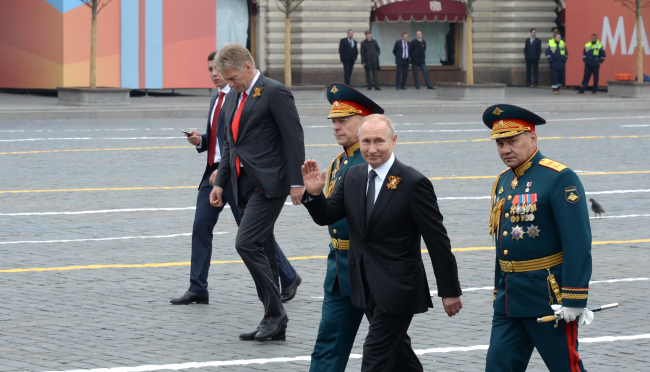
Commanders of Putin's Long War: Purged, Reshuffled and Disgruntled
The trend of reshuffling the Russian top military command in the course of a fast-evolving and far from successful war has progressed unevenly both across the Armed Forces’ structures and in time. The rationale for and timing of the abrupt cadre decisions made by Commander-in-Chief Putin often defy logical explanation, and the rare official clarifications are no more informative than the usual information blackout.
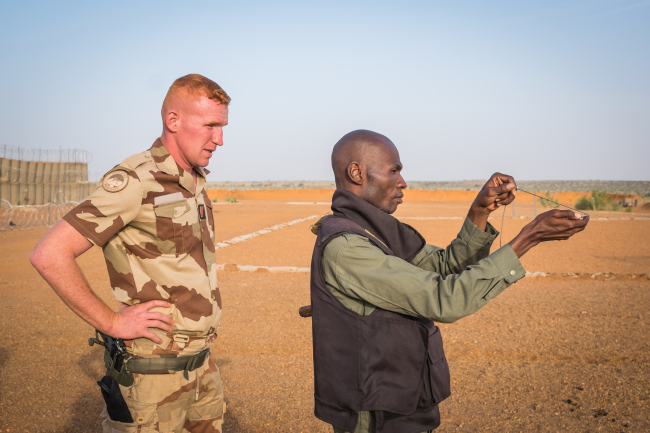
The dilemma of the Franco-African military relationship: reinvent or turn the page?
The origins of military presence and cooperation in Africa can be traced back to the tacit decolonization pact between the countries of French-speaking Africa. This cooperation led to the creation of African armies in the former colonies, as part of a project to prevent the spread of communism and maintain France's influence in the newly independent countries.
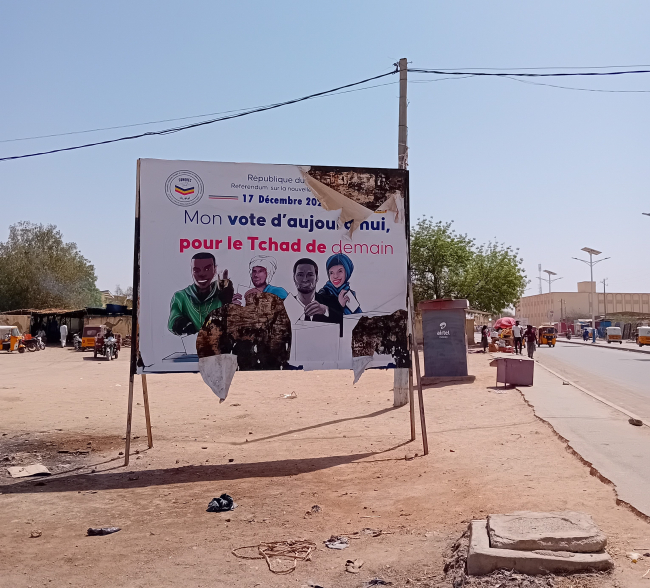
Chad: from Deby to Deby. Recipes for a successful succession (2021-2024)
As in Togo and Gabon, the transition that took place in Chad from 2021 to
2024 resulted in a dynastic succession. Mahamat Idriss Deby succeeded his
father, Idriss Deby Itno, who was President of Chad from 1996 to 2021. While
the majority of Chadians were hoping for a change of government, the “Deby
system” has managed to hold on.
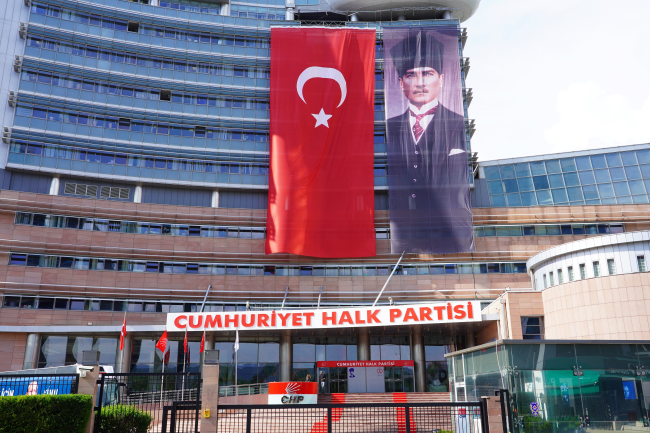
Is the Republican People’s Party (CHP) Rising from the Ashes?
The victory of the CHP [Cumhuriyet Halk Partisi, Republican People’s Party] in the Turkish municipal elections of March 2024 firmly established it as the leading party of opposition to the Islamic-conservative AKP [Adalet ve Kalkınma Partisi, Justice and Development Party], which has been in power since 2002.
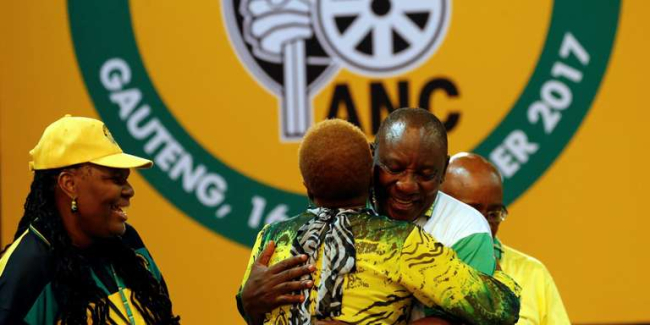
Day zero for Zuma? South Africa's president negotiates departure
It's a watershed moment for South Africa and the party of Nelson Mandela. The leadership of the African National Congress is expected to force out Jacob Zuma. Will the president go quietly? Can he negotiate a deal in the face of long-looming corruption allegations?
Tough Balancing Act for Japan’s Abe in Second Meeting With Trump
Japanese Prime Minister Shinzo Abe was the first foreign leader to meet with U.S. President-elect Donald Trump after his election. On Friday, Feb. 10, he will meet with President Trump, before spending the weekend at Mar-a-Lago in Florida.

Angola awaits successor to long-ruling leader Dos Santos
Angola is expected to formally announce the end of President Jose Eduardo Dos Santos' controversial 37-year rule Saturday, and name a successor to lead the ailing African oil-producing country.
Calais Migrant Crisis: Refugees Risk Their Lives To Leaves France For UK
The distance between Dover, England, and Calais, France, is only 30 miles. For migrants and refugees trying to cross from France to Britain through a tunnel underneath the English Channel, however, that short distance represents a dangerous journey and a risk of deportation, grave injury and even death.
Ifri, a foundation recognized as being of public utility, relies largely on private donors – companies and individuals – to guarantee its sustainability and intellectual independence. Through their funding, donors help maintain the Institute's position among the world's leading think tanks. By benefiting from an internationally recognized network and expertise, donors refine their understanding of geopolitical risk and its consequences on global politics and the economy. In 2026, Ifri partners with over 90 French and international companies and organizations.