




Washington-Téhéran : l'élection de Joe Biden change-t-elle la donne ?
The recent assassination of Mohsen Fakhrizadeh, the father of Iran's nuclear program, echoes that of Qassem Soleimani in January 2020 and illustrates the policy of "maximum pressure" which has prevailed these past four years. In this context, Joe Biden's election gives rise to high expectations for the appeasement of U.S.-Iran relations.
The European Equation of Nuclear Deterrence, Variables and Possible Solutions
Ever since nuclear weapons were developed by the United States and the Union of Socialist Soviet Republics, Europe has lived under the nuclear shadow. A major direct confrontation between “the West” and “the East” could have very likely resulted in the detonation of nuclear weapons on the continent. As the Cold War ended, massive reductions in the US and Soviet arsenals (from 70,300 in 1986 to 13,890 in 2019) and a new security architecture radically transformed the European security environment.
Nuclear Multipolarity: Myths and Realities of Competition
The term “arms race” does not accurately reflect the events of the Cold War, let alone the multipolar logics that have followed it.
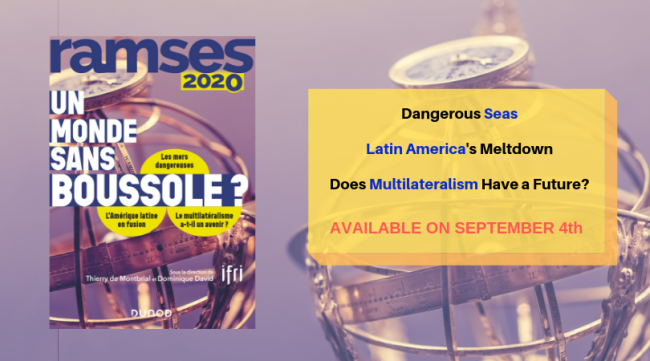
RAMSES 2020. A World without a Compass?
RAMSES 2020. A World without a Compass?, written by Ifri's research team and external experts, offers an in-depth and up-to-date analysis of geopolitics in today’s world.
The Franco-German Tandem: Bridging the Gap on Nuclear Issues
The Franco-German couple has long been characterized by divergent trajectories on nuclear matters, and antagonist historical decisions still frame the current relationship.
The Erosion of Strategic Stability and the Future of Arms Control in Europe
The instruments of cooperative security created during and since the Cold War to foster mutual confidence and reduce the risks of war, inadvertent escalation, and arms races, in and around Europe, have come under increasing strain.
The US Oil Embargo on Iran: A New Oil Shock?
The 14 July 2015 Vienna agreement on Iran’s nuclear activities (Joint Comprehensive Plan of Action – JCPoA) was a game changer on the geopolitics in the Middle East and for the oil market. The oil sanctions were lifted and Iran increased significantly its production and exports. On 8 May 2018, President Trump announced that the United Stated (US) would withdraw from the agreement. Financial sanctions were reintroduced. From 5 November 2018 onwards, further sanctions will be re-imposed more specifically on petroleum related transactions, including the purchase of petroleum, petroleum products and petrochemical products. What could be the impact of this new embargo? Is there a risk of a new oil supply and price shock?
Tailored Assurance: Balancing Deterrence and Disarmament in Responding to NATO-Russia Tension
The 2018 Nuclear Posture Review (NPR) called for tailoring assurance across America’s allies, including NATO, as part of an overall deterrence and assurance strategy.
America Is More Than Trump. Europe Should Defend the Iran Deal without Burning Bridges to the US
US President Donald Trump’s decision to withdraw from the 2015 Iran nuclear deal, known as the Joint Comprehensive Plan of Action (JCPOA), will severely degrade regional and global security. His decision has increased the risk of war and a nuclear arms race in the Middle East and beyond.

Missiles of March: A political means of last resort for Putin
President Vladimir Putin’s extra-heavy emphasis on new strategic missile systems in his March 1 address to parliament was quite unexpected and rather out of character.
The Strategic Role of Land Forces: A French Perspective
Although the first and foremost domain in the history of warfare, Land power has been dissociated from the concept of “strategic forces” for some time now, as these generally referred to long-range and/or high-yield strike capabilities, above all nuclear weapons.
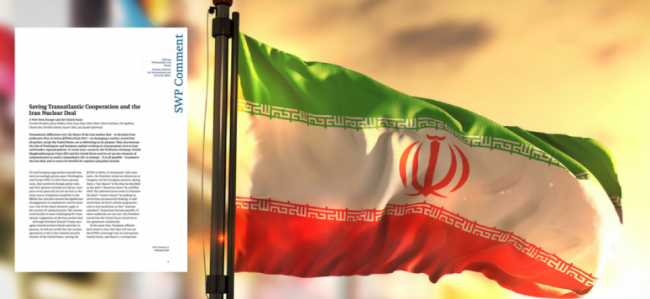
Saving Transatlantic Cooperation and the Iran Nuclear Deal. A View from Europe and the United States
Transatlantic differences over the future of the Iran nuclear deal – or the Joint Comprehensive Plan of Action (JCPOA) of July 2015 – are damaging a nuclear accord that all parties, except the United States, see as delivering on its purpose. They also increase the risk of Washington and European capitals working at cross-purposes vis-à-vis Iran and broader regional policies. To avoid such a scenario, the E3 (France, Germany, United Kingdom)/European Union (EU) and the United States need to set up new channels of communication to avoid a transatlantic rift, to attempt – if at all possible – to preserve the Iran deal, and to secure its benefits for regional and global security.
North Korea-US: How Far Will the Confrontation Go?
Since Kim Jong-Un came to power, the North Korean regime has significantly strengthened its nuclear and ballistic capabilities.
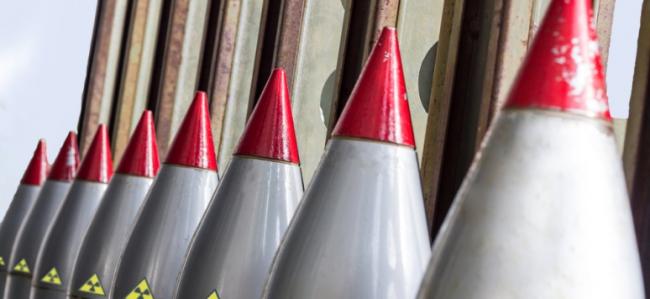
La guerre nucléaire limitée : un renouveau stratégique américain
Over the past few years, a debate on possible scenarios of limited nuclear weapons use has surfaced again in the United States. Russian nuclear saber-rattling since 2014 and the growing tensions in the Korean peninsula have led Washington to reassess its own ability to deter, or respond to, such a limited use of nuclear weapons.
Where is the U.S. nuclear arsenal headed?
An interview with Jon WOLFSTHAL, nonresident scholar, Nuclear Policy Program, Carnegie Endowment for International Peace
France's Nuclear Arsenal: What Sort of Renewal?
Over the course of the next few years, France will have to renew its nuclear arsenal to ensure that it remains a credible dissuasion in the eyes of its potential enemies.
North Korea's Nuclear Posture: an Evolving Challenge for U.S. Deterrence
A more capable, nuclear-armed, North Korea will pose very substantial challenges to the U.S. deterrence posture.
The NPT and the Origins of NATO’s Nuclear Sharing Arrangements
Russia has recently accused the United States and NATO Allies of violating the Treaty on the Non-Proliferation of Nuclear Weapons (NPT) by arguing that NATO's nuclear sharing arrangements are not permitted under the Treaty.
The Future Middle East Strategic Balance. Conventional and Unconventional Sources of Instability
This paper seeks to analyze the future Middle Eastern military balance of power, in a time horizon of five to ten years.
The Challenges of Maintaining Nuclear Cultures : US and UK perspectives
After the world entered the nuclear age, civilian and military organizations have witnessed the slow emergence of nuclear cultures, defined as the set of values and knowledge, shared among the national security community, about the relative importance of nuclear weapons in the country’s defense posture, the distinctive features of nuclear weapons in terms of security, safety and operational requirements, and the workings of deterrence.
The European Equation of Nuclear Deterrence, Variables and Possible Solutions
Ever since nuclear weapons were developed by the United States and the Union of Socialist Soviet Republics, Europe has lived under the nuclear shadow. A major direct confrontation between “the West” and “the East” could have very likely resulted in the detonation of nuclear weapons on the continent. As the Cold War ended, massive reductions in the US and Soviet arsenals (from 70,300 in 1986 to 13,890 in 2019) and a new security architecture radically transformed the European security environment.
The Franco-German Tandem: Bridging the Gap on Nuclear Issues
The Franco-German couple has long been characterized by divergent trajectories on nuclear matters, and antagonist historical decisions still frame the current relationship.
The Erosion of Strategic Stability and the Future of Arms Control in Europe
The instruments of cooperative security created during and since the Cold War to foster mutual confidence and reduce the risks of war, inadvertent escalation, and arms races, in and around Europe, have come under increasing strain.
The US Oil Embargo on Iran: A New Oil Shock?
The 14 July 2015 Vienna agreement on Iran’s nuclear activities (Joint Comprehensive Plan of Action – JCPoA) was a game changer on the geopolitics in the Middle East and for the oil market. The oil sanctions were lifted and Iran increased significantly its production and exports. On 8 May 2018, President Trump announced that the United Stated (US) would withdraw from the agreement. Financial sanctions were reintroduced. From 5 November 2018 onwards, further sanctions will be re-imposed more specifically on petroleum related transactions, including the purchase of petroleum, petroleum products and petrochemical products. What could be the impact of this new embargo? Is there a risk of a new oil supply and price shock?
Tailored Assurance: Balancing Deterrence and Disarmament in Responding to NATO-Russia Tension
The 2018 Nuclear Posture Review (NPR) called for tailoring assurance across America’s allies, including NATO, as part of an overall deterrence and assurance strategy.
North Korea's Nuclear Posture: an Evolving Challenge for U.S. Deterrence
A more capable, nuclear-armed, North Korea will pose very substantial challenges to the U.S. deterrence posture.
The NPT and the Origins of NATO’s Nuclear Sharing Arrangements
Russia has recently accused the United States and NATO Allies of violating the Treaty on the Non-Proliferation of Nuclear Weapons (NPT) by arguing that NATO's nuclear sharing arrangements are not permitted under the Treaty.
The Future Middle East Strategic Balance. Conventional and Unconventional Sources of Instability
This paper seeks to analyze the future Middle Eastern military balance of power, in a time horizon of five to ten years.
The Primacy of Alliance: Deterrence and European Security
Since the end of the Cold War, the international security environment has been transformed and nuclear weapons have been marginalized in the West. However, the NATO security policies remain almost unchanged: deterrence is still considered as a principle guiding the Atlantic Alliance, even though the actual policy statements lack target, direction and urgency.
Command and Control in a Nuclear-Armed Iran
In the long standoff regarding its nuclear ambition, Iran has cultivated ambiguity and been loath to reliably assure the international community of its ultimate intentions, complicating Western efforts to understand, let alone constrain, Tehran’s endeavors.
Ifri, a foundation recognized as being of public utility, relies largely on private donors – companies and individuals – to guarantee its sustainability and intellectual independence. Through their funding, donors help maintain the Institute's position among the world's leading think tanks. By benefiting from an internationally recognized network and expertise, donors refine their understanding of geopolitical risk and its consequences on global politics and the economy. In 2026, Ifri partners with over 90 French and international companies and organizations.
