



Stability under Pressure. A Pakistani View on Nuclear Deterrence after Pahalgam
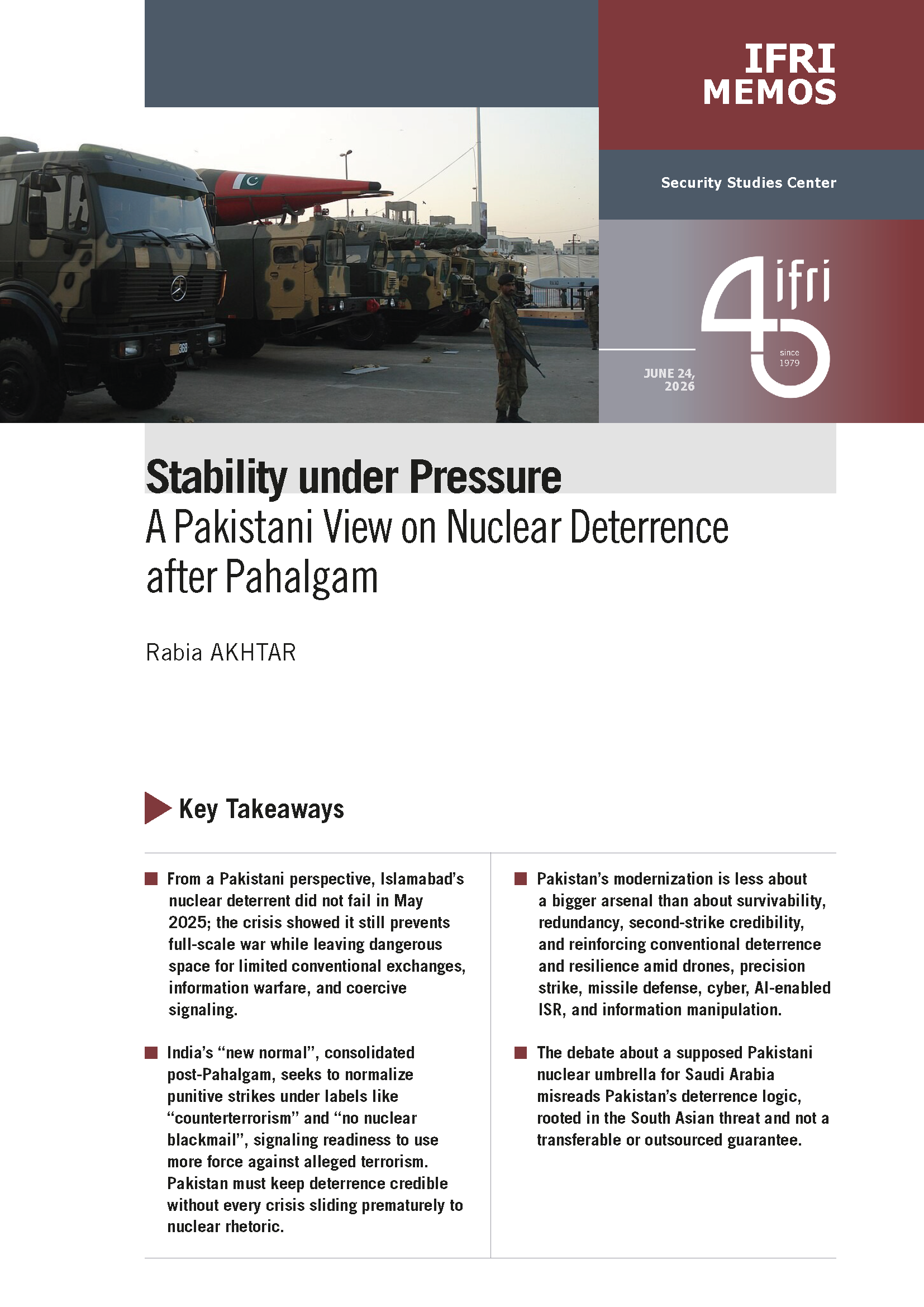
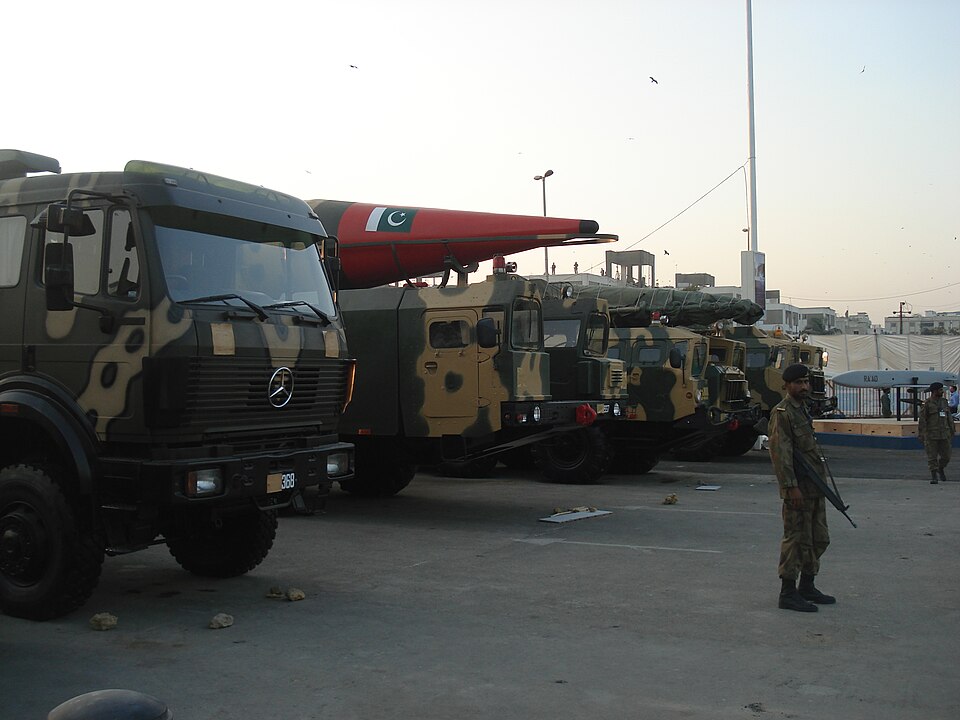
The May 2025 India-Pakistan crisis after the Pahalgam attack has generated a familiar but incomplete debate: did nuclear deterrence work, or did it merely allow both sides to fight a limited war under the nuclear shadow? The better answer is that deterrence worked at the level at which it was designed to work. It prevented a general war and an uncontrolled vertical escalation, and kept nuclear weapons in the background. But it did not prevent India from attempting to carve out space for conventional action, nor did it prevent Pakistan from responding conventionally to restore deterrence credibility.
Titre
Key Takeaways
From a Pakistani perspective, Islamabad’s nuclear deterrent did not fail in May 2025; the crisis showed it still prevents full-scale war while leaving dangerous space for limited conventional exchanges, information warfare, and coercive signaling.
India’s “new normal”, consolidated post-Pahalgam, seeks to normalize punitive strikes under labels like “counterterrorism” and “no nuclear blackmail”, signaling readiness to use more force against alleged terrorism. Pakistan must keep deterrence credible without every crisis sliding prematurely to nuclear rhetoric.
Pakistan’s modernization is less about a bigger arsenal than about survivability, redundancy, second-strike credibility, and reinforcing conventional deterrence and resilience amid drones, precision strike, missile defense, cyber, AI-enabled ISR, and information manipulation.
The debate about a supposed Pakistani nuclear umbrella for Saudi Arabia misreads Pakistan’s deterrence logic, rooted in the South Asian threat and not a transferable or outsourced guarantee.
This distinction matters for European audiences because Pakistan’s nuclear doctrine is often read through alarmist shortcuts: tactical nuclear weapons, crisis instability, command-and-control anxieties, and, more recently, speculation about a Pakistani nuclear umbrella for Saudi Arabia. The strategic reality, however, is far less hysterical: Pakistan’s nuclear capability emerged to offset an enduring asymmetry with India. Its purpose is defensive, India-specific, and tied to the prevention of a major war in South Asia. The Pahalgam crisis began after the April 22, 2025, attack in Indian-occupied Jammu and Kashmir, which killed 26 people. India accused Pakistan and launched strikes on May 7 against alleged terrorist infrastructure across the international border. Pakistan denied involvement and responded as the confrontation expanded into missiles, drones, artillery, and cross-border shelling on May 10, followed by a ceasefire reached through a DGMO-level contact and facilitated primarily by the United States’ (US) diplomacy.

Available in:
Themes and regions
ISBN / ISSN
Share
This page contains only a summary of our work. If you would like to have access to all the information from our research on the subject, you can download the full version in PDF format.
Stability under Pressure. A Pakistani View on Nuclear Deterrence after Pahalgam

Security Studies Center
Heir to a tradition dating back to the founding of Ifri, the Security Studies Center provides public and private decision-makers as well as the general public with the keys to understanding power relations and contemporary modes of conflict as well as those to come. Through its positioning at the juncture of politics and operations, the credibility of its civil-military team and the wide distribution of its publications in French and English, the Center for Security Studies constitutes in the French landscape of think tanks a unique center of research and influence on the national and international defense debate.
Deterrence and Proliferation
The conflicts in Europe, Asia and the Middle East demonstrate a return of nuclear power to the balance of power. Arsenals are being modernized and expanded, while arms control is collapsing. This research program aims to analyze these phenomena.

Toward Space-Based Intelligence for All? The Case of the Spring 2026 Iranian Strikes
The conflict in the Middle East has highlighted the effectiveness of Iranian strikes in identifying targets and conducting precision strikes. This raises the question: which capabilities enabled the Islamic Revolutionary Guard Corps (IRGC) to achieve these results?

Confronting Russia’s High-Velocity Arsenal: European Challenges and Solutions
Since February 2022, Russian missile and long-range drone strikes against Ukraine have served as near-daily reminders of what European states could face in a war with Russia. The same weapon systems battering Ukrainian infrastructure and population centers would be directed against European military and civilian targets in any confrontation between Russia and NATO. As Russian missile production expands and its arsenal diversifies, Europe must confront an uncomfortable question: how to deter, and if push comes to shove, fight Russia's long-range strike arsenal?

The War on Terrorism: Global Experts Reflect on Lessons Learned Twenty-Five Years After 9/11
Twenty-five years ago, the September 11 attacks prompted the invention of new security architectures that shaped the war on terrorism. Sixteen think tank experts from fifteen countries reflect on the successes, failures, and missed opportunities in the fight against terrorism—a fight that is still ongoing.
From Corsairs to Private Military Contractors. Nonmilitary Maritime Actors and the Historical Continuities of Naval Warfare
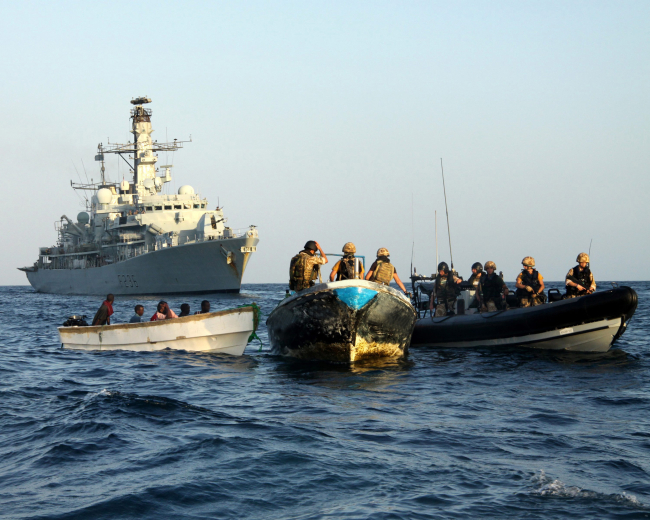
Since late 2023, several Houthi attacks on commercial shipping have involved privately contracted armed teams conducting defensive engagements and coordinating immediate response efforts, often in the relative absence of regular naval forces during the immediate hostilities at sea. These cases highlight a strategic tension that increasingly confronts modern navies. On the one hand, they are expected to conduct persistent, low-intensity maritime security tasks such as counterpiracy, maritime policing, and the protection of commercial shipping. On the other hand, they face renewed pressure to prepare for high-intensity conflict against peer and near-peer adversaries amid the return of great power competition.