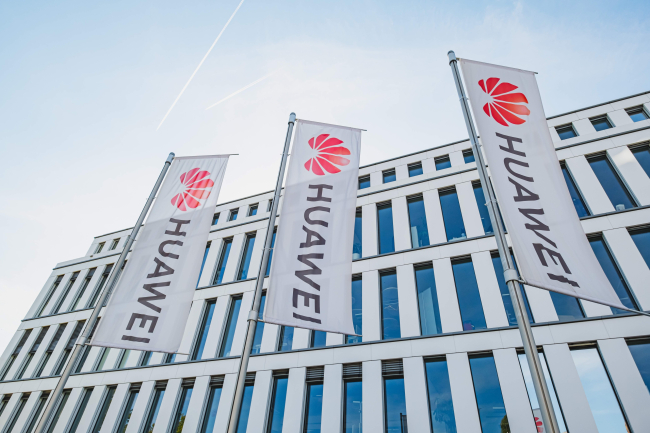
The “Huawei Saga” in Europe Revisited: German Lessons for the Rollout of 6G
While the European Union attempted to coordinate a collective response through its 5G Toolbox in Europe’s 5G infrastructure, member states diverged significantly in balancing political, economic, and technological considerations. Germany, despite its economic ties to China and status as Europe’s largest telecom market, only reached a tentative agreement in July 2024—one that appears largely symbolic.

“There is, however, a real sense of urgency,” around the Franco-German relationship, says Marie Krpata, a researcher at the French Institute of International Relations (IFRI) and member of its Franco-German Relations Committee.
“Emmanuel Macron has only two years left to make progress on European files, while the far right lurks in the wings – in both Paris and Berlin.”

quoted by Laurent Geslin in Euractiv
Can France and Germany’s new love-fest survive their lingering differences?
Paris and Berlin have been at loggerheads for years, but things are at last looking up.
Germany 'back on track' says Merz, unveiling new coalition
Yinka Oyetade speaks to Jeanette Süß, Research Fellow on the Study Committee on Franco-German Relations at the French Institute of International Relations about the German coalition and the challenges faced by the new government.
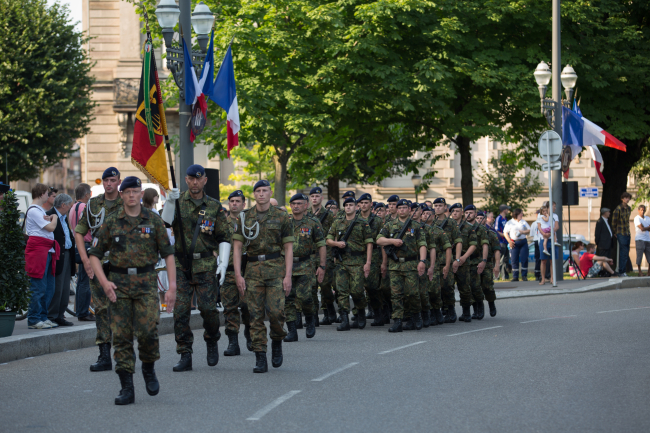
The Franco-German Brigade and the Revival of European Defense
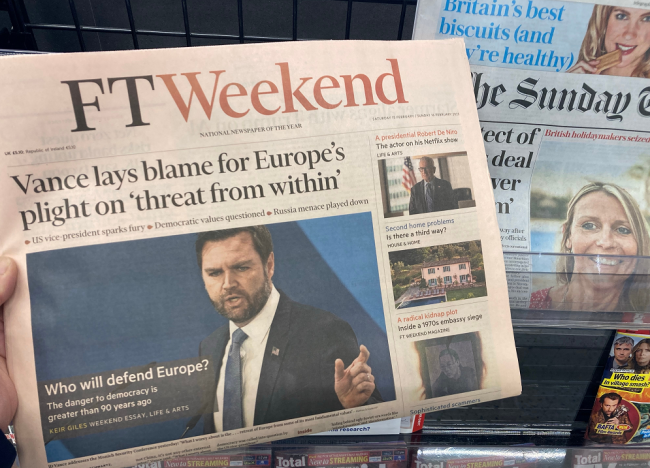
One thing has been clear since Donald Trump's return to the White House: the very existence of the European unification project is threatened. Unless it develops a sovereign defense policy to counter the war in Ukraine and the weakening of American security guarantees, the European Union will continue to see its internal cohesion and external attractiveness wane.
Friedrich Merz and the Zeitenwende 2.0. A “New Era” for Transatlantic Relations?
On February 23, 2025, almost 60 million voters were called upon to elect a new Bundestag. These elections will also give rise to a new government in Europe's largest economy.
After the Elections: Germany in Search of Shaken Stability?
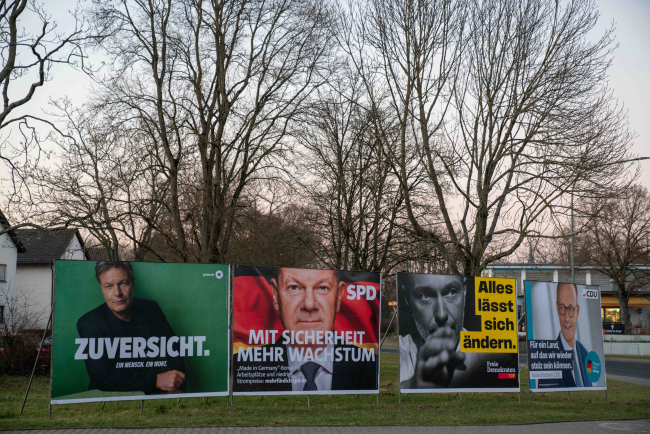
With a voter turnout of 82.5%, Germany recorded its highest participation since 1987—an increase of 6.1 percentage points compared to 2021. As in the previous election, the high turnout particularly benefited the Alternative for Germany (AfD), which was able to mobilize many former non-voters. Many voters sought to punish the outgoing government with their ballots, as its approval rating had dropped to just 14% before the coalition broke apart in November 2024. Germany is now very likely heading toward a grand coalition between the CDU/CSU and the SPD, with exploratory talks having begun on February 28.

Europe’s wake-up call
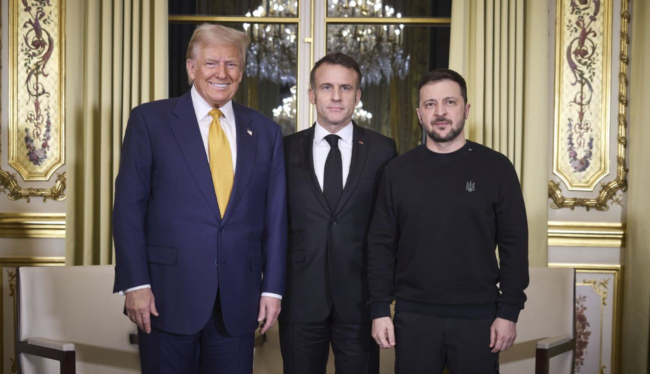
Internal disagreements are just as serious a problem as external pressure from the US and Russia
The German Greens as an Alliance Party: The End of an Illusion?
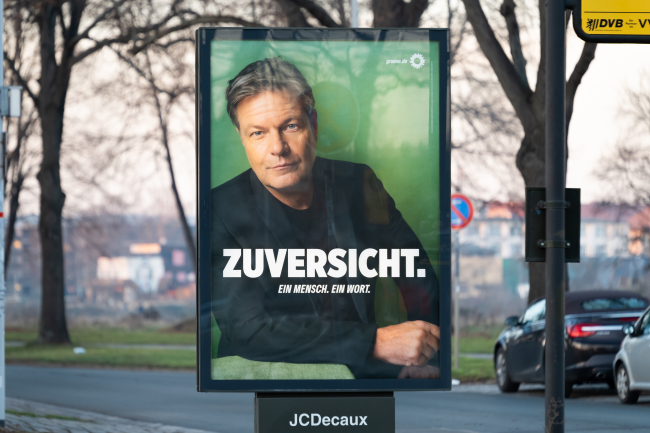
At the Wiesbaden Congress in November 2024, Robert Habeck, currently Minister for the Economy and Climate, was nominated as the Green Party’s candidate for the Chancellorship in the early parliamentary elections on February 23, 2025. The party, founded 45 years ago, is now firmly established in the German political landscape. Wishing to turn the page on an unloved ‘‘traffic light’’ coalition, the party is banking on a personal campaign and an optimistic discourse based on the energy transition and social justice.

The Rise of the AfD and the Choice of Radicalism
Founded in 2013, the Alternative für Deutschland (AfD) has become increasingly radical as crises have unfolded. Since 2015-2016 and the massive influx of immigrants into Germany, it has positioned itself as a virulently anti-migrant party and continues to consolidate its foothold in the German political system, particularly in parliaments. While its roots are very strong in the eastern regions, where its main strongholds are located, it is also attracting more and more voters in the west, against an overall backdrop of normalization of the far right and a national context marked by strong economic and political destabilization.
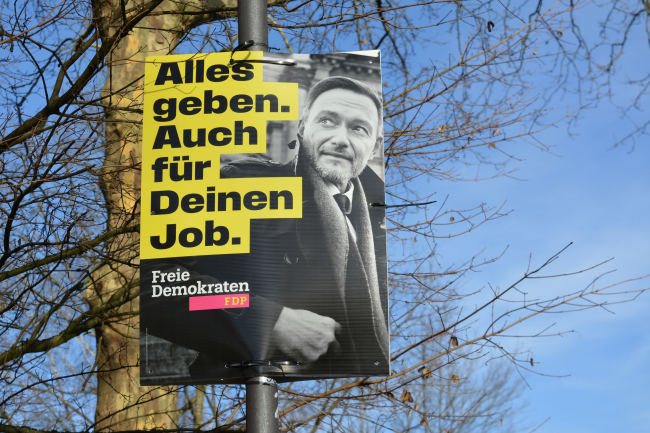
The Liberal Democrats in the German Federal Elections: A Party Fighting for Survival
The Free Democratic Party FDP, in great difficulty ahead of the early elections in 2025, is trying to recover after the collapse of the coalition with the Social Democratic Party of Germany (SPD) and the Greens. Its wavering position between government and opposition has undermined its credibility, and it is struggling to surpass the 5% threshold.
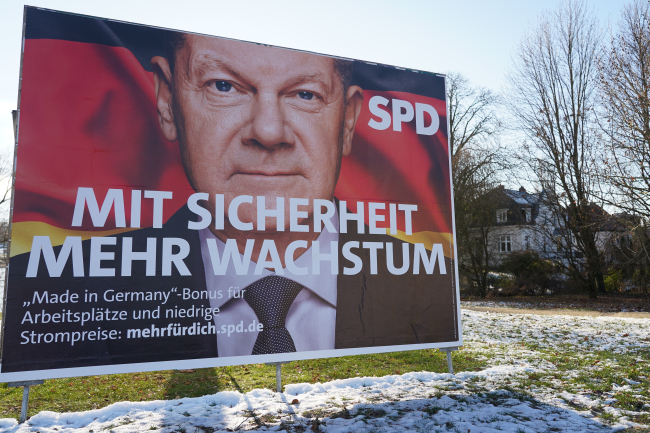
The SPD in the Run-Up to the 2025 General Election: from Chancellor's Party to Junior Coalition Partner?
The 20th legislative period (2021-2024) came to an abrupt end in the Federal Republic, following the dismissal of Finance Minister and Vice-Chancellor of the Liberal Democratic Party FDP, Christian Lindner, by Chancellor Olaf Scholz, due to deep political disagreements, in November 2024.
Taking the Pulse: Has Political Deadlock in Member States Become a Strategic Problem for the EU?
At a pivotal moment for the EU, several of its member states are experiencing domestic political and economic crises. Is this hindering collective EU action in response to the challenges posed by Russia, China, and Trump’s administration?
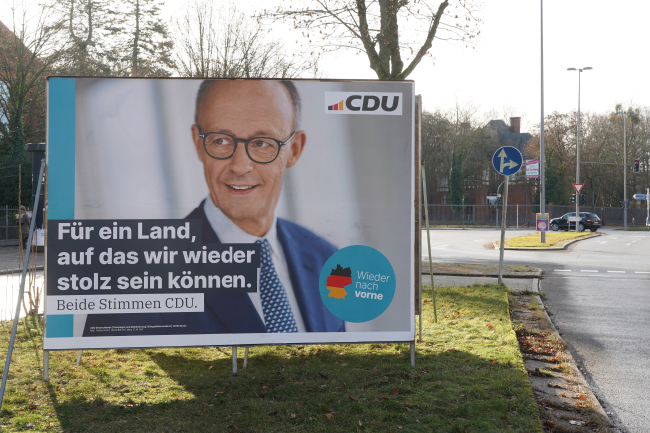
The CDU in the 2025 Elections: A Road to the Chancellery, Paved with Challenges
After a legislative session in the opposition, the Christian Democratic Union/Christian Social Union (CDU-CSU) looks set to win the snap elections in February 2025. It is very likely that the country’s future chancellor will be Friedrich Merz.
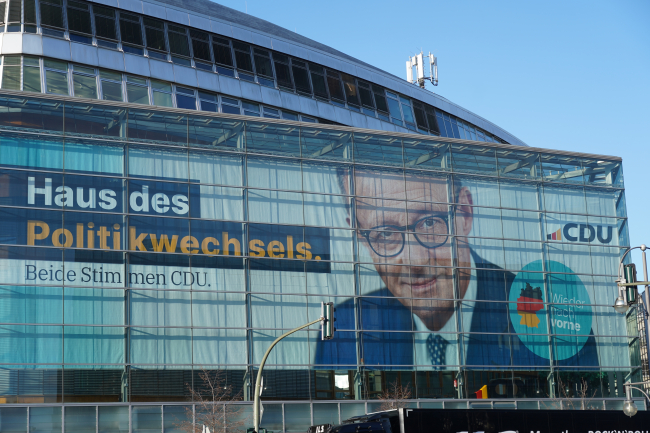
Germany in the Electoral Campaign to the Early Elections on February 23 - The Challenges of a high-risk Voting
One month before the early Federal Elections in Germany, which will take place on February 23, 2025, after the "Traffic light coalition" imploded on November 6, 2024, the political landscape in Germany appears to be relatively stable despite the rise of the far-right Alternative for Germany (AfD).

70th Anniversary of the Study Committee on Franco-German Relations (Cerfa). Genesis, History and Visions for Franco-German relations
The Study Committee on Franco-German Relations (Cerfa) was created in 1954 by an inter-governmental agreement between the Federal Republic of Germany and France, in order to raise awareness of Germany in France and analyze Franco-German relations, including in their European and international dimensions.
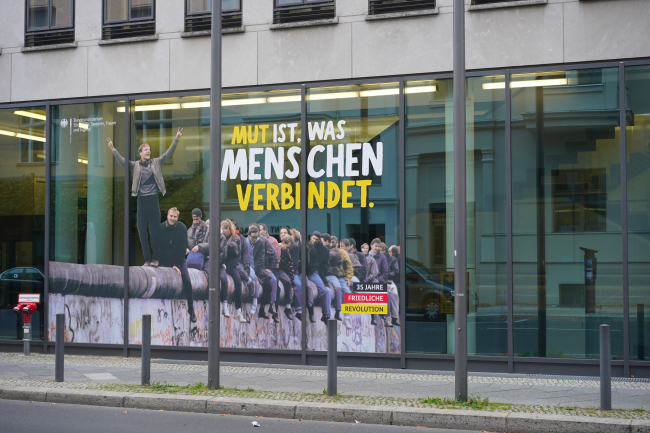
Thirty-five years after the fall of the Berlin Wall: what’s new in the East?
As we celebrate the 35th anniversary of the fall of the Berlin Wall on November 9, 2024, let’s start from the premise that the Berlin Wall did not “fall” on the night of November 9, 1989.
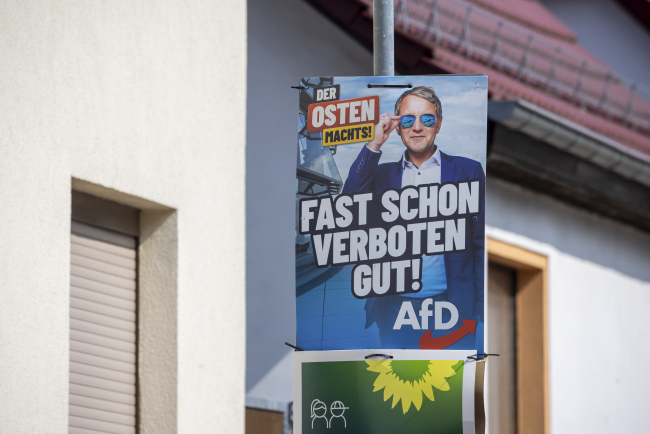
State Elections in Thuringia, Saxony and Brandenburg - Extreme Parties on the Rise?
The Alternative for Germany (AfD) became Germany's strongest political force in the regional elections in Thuringia and Saxony.
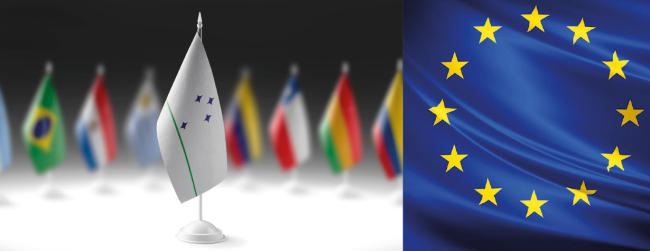
Between „Strategic Autonomy” and „Zeitenwende”: The Importance of Trade Between The EU and Mercosur
This policy paper analyses the geopolitical and economic significance of the EU-Mercosur agreement for the European Union (EU) in the context of the EU’s new European Economic Security Strategy.
Ensuring a Fair Green Transition
“Humanity has opened the gates of hell”, stated UN Secretary-General António Guterres at the Climate Ambition Summit in September 2023, emphasising that we are currently on a path of global warming above 2.4°C or even 2.9°C.
Ensuring a Fair Green Transition
“Humanity has opened the gates of hell”, stated UN Secretary-General António Guterres at the Climate Ambition Summit in September 2023, emphasising that we are currently on a path of global warming above 2.4°C or even 2.9°C.
Between „Strategic Autonomy” and „Zeitenwende”: The Importance of Trade Between The EU and Mercosur
This policy paper analyses the geopolitical and economic significance of the EU-Mercosur agreement for the European Union (EU) in the context of the EU’s new European Economic Security Strategy.
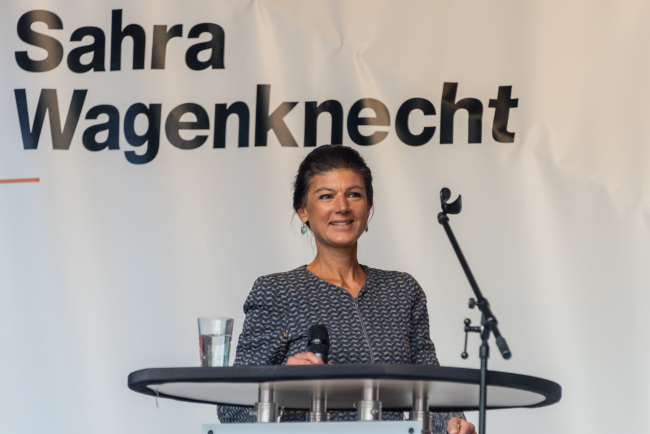
Neither Left nor Right, but Both? The Sahra Wagenknecht Alliance (BSW) in the Wake of European Elections
The 2024 European elections not only provided the occasion for a new German party, the “Bündnis Sahra Wagenknecht” (BSW), to emerge but also to obtain 6.2% of the vote.
France's Partner on a Pedestal: A View Driven by Pragmatism and Envy
This paper brings together contributions from a cross-section of EU member states and the Gallup World Poll survey on the question of how Germany is being viewed at this time of economic and political crisis.
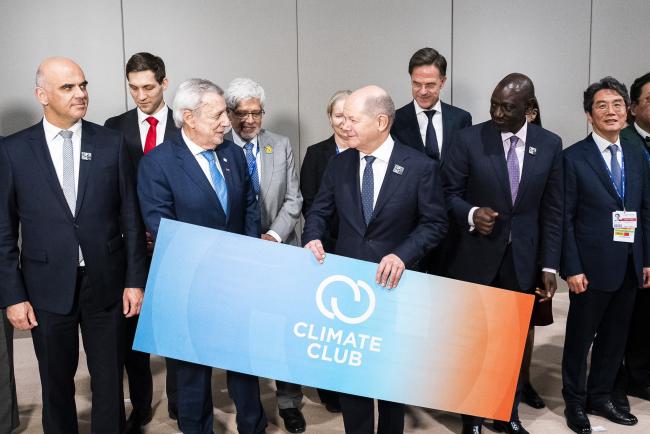
Germany’s Strategy on Climate Foreign Policy: Balancing Sustainable Development and Energy Security
With the war in Ukraine, Germany’s “traffic light” coalition government has had to adapt its climate policy to the upheavals caused by this war, which has turned its economic, energy, and military model upside down. Against a backdrop of high energy costs and increasing calls for reshoring in Europe, German industry is looking at how to maintain its competitiveness while decarbonizing its industry.
How Can the Green Deal Adapt to a Brutal World?
The European Green Deal has not been planned for the current extraordinarily deteriorated internal and external environment. Russia’s war in Ukraine, higher interest rates, inflation, strained public finances, weakened value chains, and lack of crucial skills pose unprecedented challenges.
Thorns and Alliances. German, French and European Agricultural Policy Between Food Safety and Respect for the Environment
Influences and developments within German agricultural policy have undergone significant transformations over the past 70 years, especially in the context of the dynamic Franco-German relations and the pivotal role both nations play in shaping the European Union’s Common Agricultural Policy (CAP).
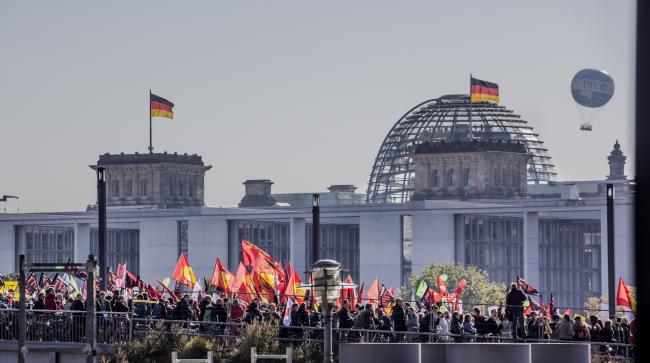
The End of a Happy Parenthesis. How the War in UkraineI Is Forcing Germany to Rethink Its Model
The period of peace, economic prosperity, and political stability that Germany has experienced since the end of the Cold War ends with the Ukrainian war. The shock wave of this conflict particularly hit its economy and thereby undermines the foundations on which Germany had based its power, its international influence and established its identity.
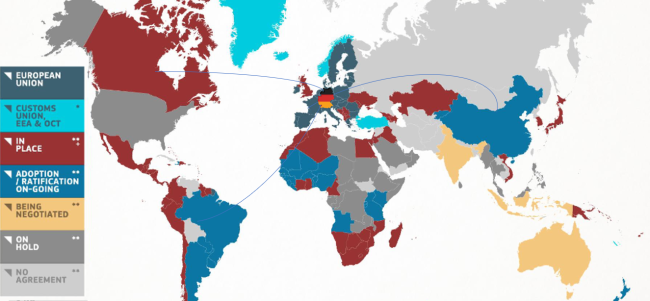
Towards a New European Trade Strategy in Times of Geopolitical Upheaval: The German Perspective
As one of the most successful trading blocs, the EU sees itself confronted with the erosion of the global rules-based trading system and trade becoming increasingly weaponized.

Between Inertia and Openness. Germany Reforms Its Labor Immigration System
With its new Skilled Immigration Act (Fachkräfteeinwanderungsgesetz) of 23 June 2023, Germany aims to become the country with "the most modern immigration law in Europe". A new points system and new entry rules for experienced workers having a degree from their home country demonstrate the willingness of the German government to open up its labor market to third-country nationals. While immigration law was already the subject of a previous reform in 2020, the new law is a real paradigm shift in Germany’s migration policy.
European and Japanese Soft Power Signal Renewed Influence of G7
The G7 summit in Hiroshima showcased a new international order in the making: in a world where security is indivisible, the priority should be to uphold a collectively shaped rules-based order and find a modus vivendi with China. The G7 can work toward this by taking into account the diverse perspectives of industrialized countries and the Global South, which prioritizes multi-alignment and autonomy. Japan and Europe played a critical role in this process.
Higher Renewable Energy Targets in Germany: How Will the Industry Benefit?
“Deutschland – Einstieg in die Deindustrialisierung?” – “Germany, the beginning of deindustrialisation?” asked the German economic newspaper Handelsblatt in the context of the spike in energy prices that has put at risk thousands of companies across Germany in 2022. Whereas some sectors such as steel, glass and chemicals have been seriously hit, the manufacturing industries operating in the areas linked to the energy transition (such as renewable energies and hydrogen production) should benefit from decisions taken to reach climate neutrality.
Attention to the Periphery? Germany and the Pacific Island States
In September 2020, Germany adopted policy guidelines for the Indo-Pacific that comprehensively set out its approach towards this increasingly important region, seeking to diversify partnerships beyond China.
The European Union Industrial Strategy: Reconciling Competition and Geoeconomic Challenges
The EU’s basic assumptions, on which it grounds its economic and trade power, are being steadily cast into doubt. The EU’s main trade partners, the US and China, increasingly set their sights on securing their supply chains, which may further a potential decoupling.
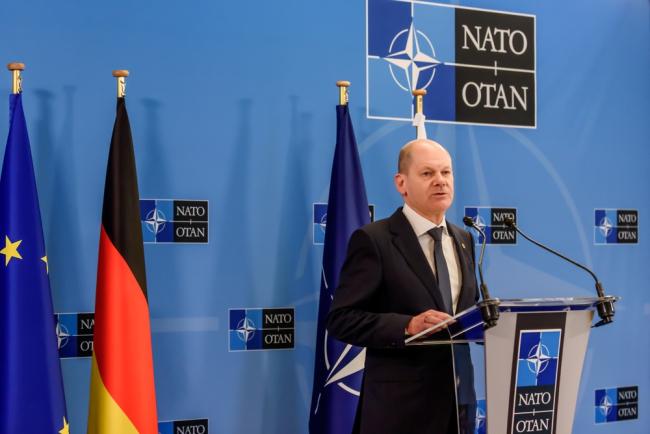
Germany, the “Zeitenwende” and the Future of NATO
Franco-German Civil Society: Object and Actor of Bilateral Relations. Balance and Perspectives after the Signing of the Treaty of Aachen
The treaty signed by France and Germany in Aachen on January 22, 2019 highlights the role of civil society in bilateral cooperation and aims to contribute to "bringing societies [and citizens in both countries] closer together".
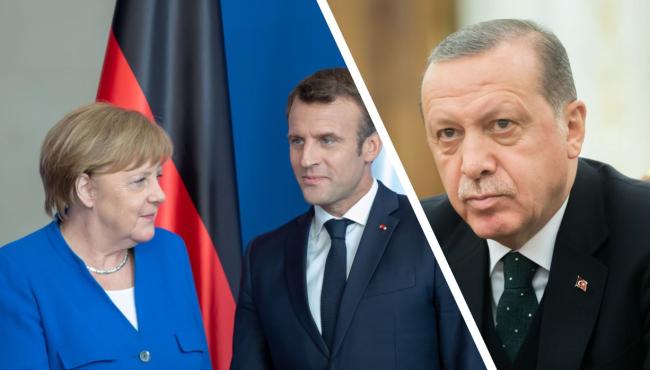
Conflicts in the EastMed: From Germany’s and France’s Conflicting Strategies to a Dual Approach
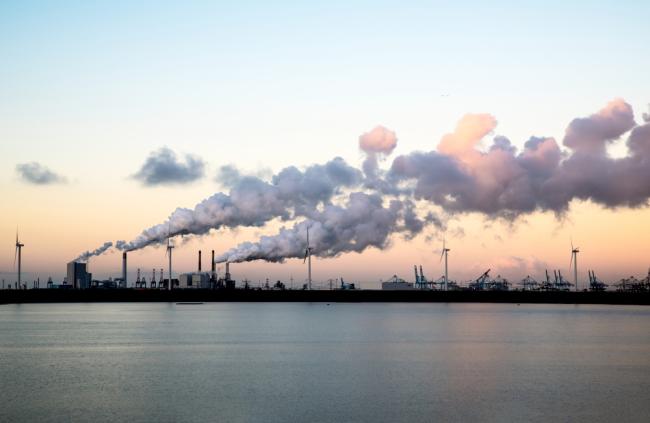
CCUS in Europe: A New Role and Implications for France and Germany
A second wave of carbon capture, utilization and storage (CCUS) projects is under development, and it is much different from the 2000 wave. While Norway, the United Kingdom and the Netherlands are at its forefront, France and Germany have major competencies, and many projects could be carried out in these countries.
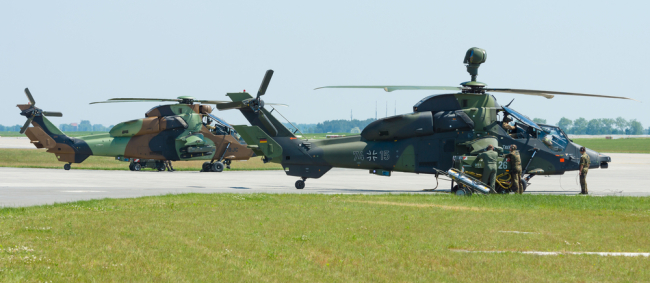
The Franco-German Armaments Cooperation. An Impossible Agreement?
In the Aachen Treaty in 2019, Germany and France agree to deepen their "common program in defense matters" and to pursue a common vision in terms of arms export. These are the preconditions that will help consolidate a culture of common armed forces, common interventions, and European defense industry.
The Karlsruhe Court Judgment: A Thunderclap from a Clear Sky?
In its judgment of 5 May 2020, the German Federal Constitutional Court in Karlsruhe questioned the conditions under which the European Central Bank (ECB) had adopted a Public Sector Purchase Programme (PSPP), thus contradicting the position taken by the Court of Justice of the European Union in the same case.
Ifri, a foundation recognized as being of public utility, relies largely on private donors – companies and individuals – to guarantee its sustainability and intellectual independence. Through their funding, donors help maintain the Institute's position among the world's leading think tanks. By benefiting from an internationally recognized network and expertise, donors refine their understanding of geopolitical risk and its consequences on global politics and the economy. In 2026, Ifri partners with over 90 French and international companies and organizations.