





Europe
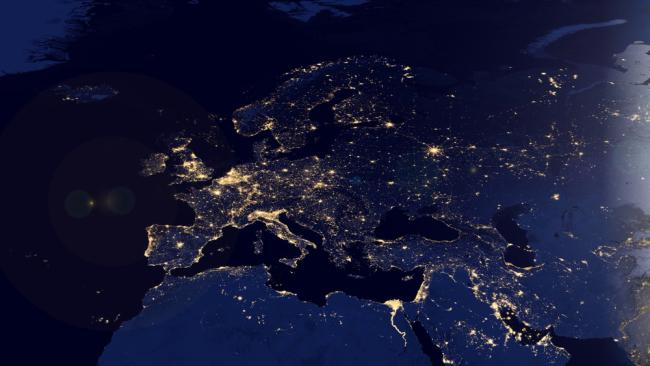
Europe is described here in a geographical sense. It is not limited to the European Union, and includes, for example, the United Kingdom and the Balkans. It remains central to international relations.
Related Subjects


World’s Rich Nations Jostle to Lead Globalization Clubhouse
The race to fill a role at the heart of world economic policy making is turning into a new battleground for the future of globalization.
The American Elections and Beyond
The next few years will be tumultuous ones in the United States. The dependency of foreign policy on domestic policy is unlikely to diminish. Whether in the rivalry with China or the predominance of Israeli interests in Middle East policy, for example, it is hard to imagine Biden taking a big step backward. Many Europeans want to believe that a victory by Obama’s former vice president will signal a return to the good old days of transatlantic consultation and multilateralism.
Towards Tougher Bilateral Relations Between EU and China
When politics catches up to the economy. In the wake of the EU-China summit, what can we expect from the bilateral relations? 2020 was supposed to be the year of EU-China relations. However, the Covid-19 pandemic has quickly disrupted the positive expectations.
Europe beyond COVID-19
The recovery plan agreed upon by European Union leaders in July 2020 is unprecedented: for the first time, it creates a common debt that will help revive the economies impacted by the pandemic.
Shaping the future of the EU: reviving the Europeanisation process
More than ten years after joining the European Union (EU), the Central and Eastern European countries (CEECs) exhibit a puzzle of attitudes and conceptions regarding the EU.
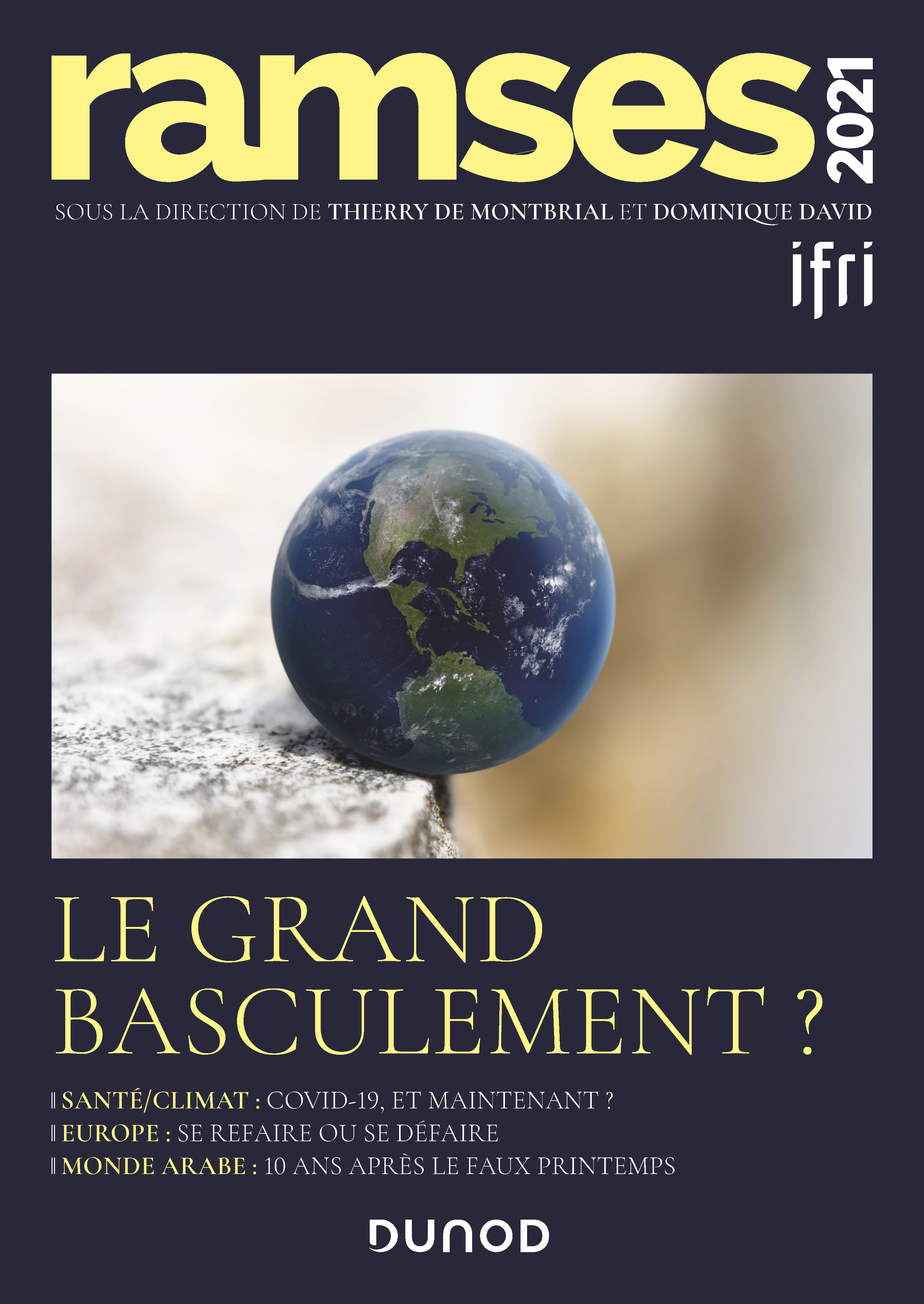
RAMSES 2021. At the Edge?
RAMSES 2021. At the Edge?, written by Ifri's research team and external experts, offers an in-depth and up-to-date analysis of geopolitics in today’s world.
The European Equation of Nuclear Deterrence, Variables and Possible Solutions
Ever since nuclear weapons were developed by the United States and the Union of Socialist Soviet Republics, Europe has lived under the nuclear shadow. A major direct confrontation between “the West” and “the East” could have very likely resulted in the detonation of nuclear weapons on the continent. As the Cold War ended, massive reductions in the US and Soviet arsenals (from 70,300 in 1986 to 13,890 in 2019) and a new security architecture radically transformed the European security environment.
The Post-Coronavirus World Is Already Here
The unforeseeable COVID-19 crisis raises fundamental questions on a number of levels.
U.S. Allies Look on in Dismay While U.S. Rivals Rejoice
Trump’s failure to convene a G-7 meeting is only the latest blow to America’s crumbling prestige in the face of nationwide unrest. When German Chancellor Angela Merkel last week declined an invitation to join U.S. President Donald Trump in Washington for a star-crossed meeting of the G-7, and then British Prime Minister Boris Johnson rebuffed Trump’s plans to bring Russia back into the group, it underscored how profoundly U.S. allies and partners have soured on American leadership amid a mishandled pandemic and a violent crackdown on protesters.
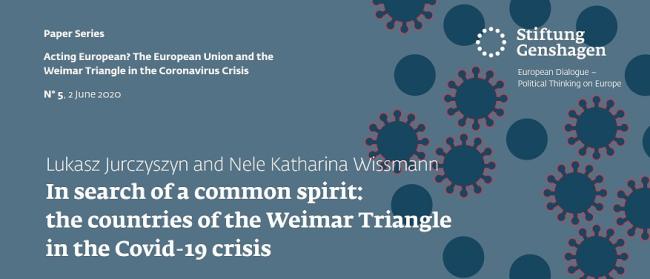
In search of a common spirit: the countries of the Weimar Triangle in the Covid-19 crisis
The coronavirus crisis has affected the countries of the Weimar Triangle to varying degrees. Bilateral relations between Germany and Poland as well as Germany and France have been strongly influenced by border closures, which have led to tensions between the countries.
Allies despair as Trump abandons America's leadership role at a time of global crisis
The United States has scaled back its role on the world stage, taken actions that are undermining efforts to battle the coronavirus pandemic and left the international community without a traditional global leader, according to experts, diplomats and analysts.

Europe’s relationship with China is now one of mistrust and hostility
At the start of the pandemic, Europe and China helped one other. Then the mood changed.

Covid-19 in Europe-China Relations: A country-level analysis
Analysis from 19 countries reveals the complexities of Europe’s relations with China amid the Covid-19 crisis.
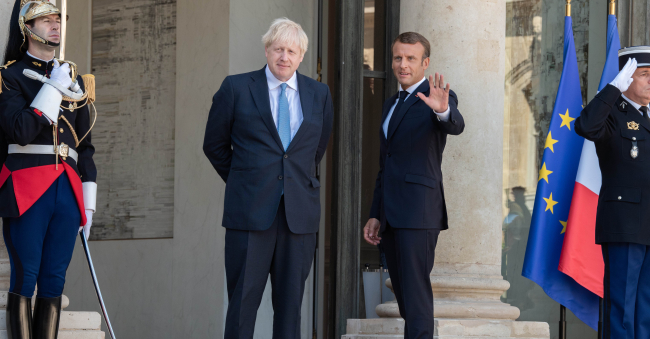
Complementarity or Competition? Franco-British Cooperation and the European Horizon of French Defense Policy
What does future hold for the Franco-British defense partnership after Brexit?

Accelerating the Energy Transition: The Role of Green Finance and its Challenges for Europe
Green finance has been a burgeoning sector since the Paris Agreement and is at the crossroads of financial, socio-economic and environmental challenges. It is hybrid in nature: it uses financial instruments and focuses on environmental issues, while coming under the wider field of so-called “sustainable” finance that assumes a broader approach with the inclusion of socio-economic and governance challenges. It is a catalyst as it facilitates and accelerates the transition to a low-carbon economy. It also includes an increasing range of instruments. From green bonds to green indices, green loans and capital raising activities, the sector is growing both quantitatively and qualitatively. So-called “green” issuance debt alone increased fivefold in nearly three years to reach US $ 257 billion in 2019, emphasizing its on-going innovation and attractiveness.
Green finance embraces the various objectives of public and private actors. It also raises major questions about the future of our societies: choosing to finance only sectors that are already “green” entails significant socio-economic risks, such as job losses in high-emitting (brown) sectors and stranded assets. Adopting a sequenced approach potentially amounts to locking in polluting activities in the long term and not achieving the Paris Climate Agreement’s objectives (lock-in effect).
In view of the physical risks of climate change (devastation and disasters) and those related to energy transition (stranded assets), climate change is now generally considered as a systematic risk. Public and private actors– institutional investors, banks, regulators, central banks, insurers, credit rating agencies, states, multilateral organizations – are taking action both to better understand the risks posed by climate change, and to capitalize on opportunities in this growing field. Green finance provides the financial sector with instruments to effectively reorient capital towards the low-carbon transition. Against a background of uncertainty about the effects of climate change,[1] green finance also reduces the information asymmetry about risks related to major ecosystem disruptions. The structuring and distribution of “green” products are important growth drivers for many stakeholders and in a wide variety of sectors.
However, many risks and challenges remain: financial risks, specifically related to high levels of subsidies for the production and use of fossil fuels, and the lack of a single carbon price; structural risks, which hamper the economic attractiveness of sustainable activities, particularly in terms of profitability; and unclear political signals, notably resulting in regulatory uncertainty. Furthermore, the language of green finance remains fragmented and is still relatively vague: there are many reporting frameworks and taxonomies, preventing easy and uniform ownership by stakeholders. Standardized methodologies, requirements and disclosures are critically needed. A common language is required, not only among Europeans but worldwide, to ensure that financing the ecological transition is genuinely effective.
The quality and comparability of non-financial reporting must be significantly improved to ensure its effectiveness. The principle of double materiality of information – financial and non-financial – is crucial. Green finance provides the entire financial system with instruments to accomplish its transition. It also avoids both a “niche” and a lax approach that are conducive to greenwashing and damaging to the sector growth, and, ultimately, to the transitional objective of green finance. As a source of systemic risk, and in view of the challenges of financing the transition, the aim is to ensure that the concept of sustainable finance remains purposeful by integrating environmental, social and governance (ESG) “filters” into the overall operation of capital markets.
There are many risks of intentional or unintentional greenwashing for market actors: making wrong investment choices, because they are ill-informed about the real nature of sustainability; seeing their reputation discredited in their clients and fund managers’ eyes; undermining trust and the fundamentals of green finance.
The European Union (EU) has taken the lead on these issues. The European Commission’s (EC) Action Plan on Financing Sustainable Growth of March 2018 aims to reorient capital flows towards a more sustainable economy, integrate sustainability into financial institutions’ risk management and promote transparency and long-term awareness within financial institutions. This Action Plan includes numerous instruments, such as an Ecolabel for financial products, the development of a European standard for green bonds, a so-called “Disclosure” regulation legislating on non-financial reporting by market actors, and the clarification of banking and investment advisors’ duties in terms of integrating ESG factors and incorporating sustainability into prudential requirements for banks and insurers. One of the main instruments is the European “taxonomy” for sustainable economic activities, which is intended to establish a common language for greening the financial sector by covering a wide range of actors and activities, at least on a voluntary basis. This future taxonomy has major global potential that could boost the EU’s normative power. Consequently, these challenges are now the focus of the G20 and its Financial Stability Board (FSB), and that of the United Nations.
The EU’s sustainable finance strategy is over the long term, striving to take as comprehensive a view as possible of financial regulation and climate change, and therefore fully redirect capital flows towards financing the transition. The next few months will be critical for the future of the sector, with work continuing on the European taxonomy, the preparation of delegated acts subsequent to the final recommendations prepared by the EU’s Technical Expert Group on Sustainable Finance (TEG), and the implementation of the European Green Deal.
[1]. “Scientific Uncertainty”, Nature Climate Change, Vol. 9, No. 797, October 29, 2019, available at: www.nature.com; M. L. Weitzman, “Fat-Tailed Uncertainty in the Economics of Catastrophic Climate Change”, Review of Environmental Economics and Policy, Vol. 5, No. 2, 2011, pp. 275-292, available at: https://doi.org.

COVID-19: The Price of Negligence
It is not easy to step back and gain perspective on a battle that is raging on the home front for all of us and has not yet reached its peak. However, I do want to share some of my thoughts on the COVID-19 pandemic, especially its context.
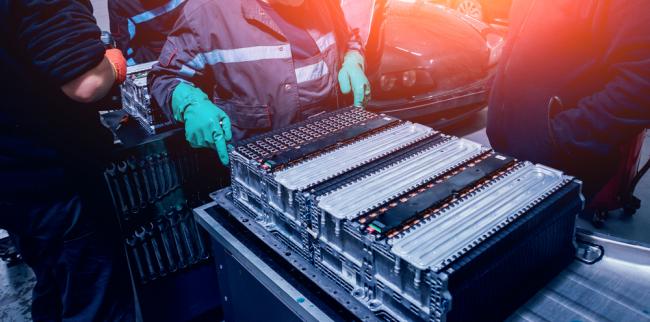
The Recycling of Lithium-Ion Batteries: A Strategic Pillar for the European Battery Alliance
Although it is still marginal, the market for electric vehicles (EVs) is growing. According to the French Institute of Petroleum and Renewable Energies (IFPEN, Institut Français du Pétrole et des Énergies Renouvelables), EVs accounted for a little more than 2% of the light vehicle market in 2019. This was up by 54% compared to 2018, but EVs still only represent 0.8% of the global car fleet. That said, the International Energy Agency (IEA) estimates EVs could make up between 15% and 30% of vehicle sales in 2030.
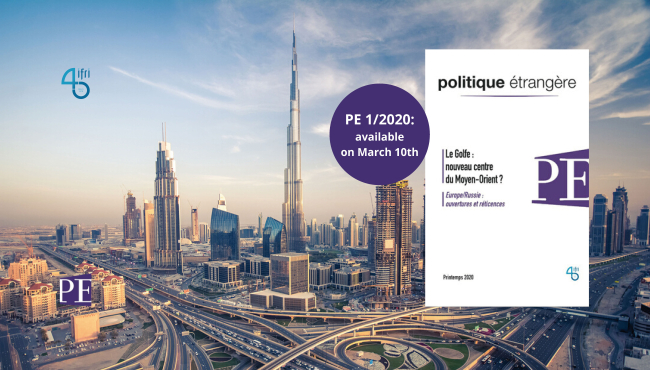
The Gulf: New Center of the Middle East?
Amid the shift in major powers, the Persian Gulf is asserting its position at the heart of the Middle East.
The Green Deal’s External Dimension. Re-Engaging with Neighbors to Avoid Carbon Walls
The European Union (EU)’s Green Deal is a game changer with attention so far focused on forthcoming actions plans, the Climate Law, financial resources, the revision of the 2030 targets and of the emissions trading system (ETS).

France to spell out post-Brexit nuclear weapons strategy
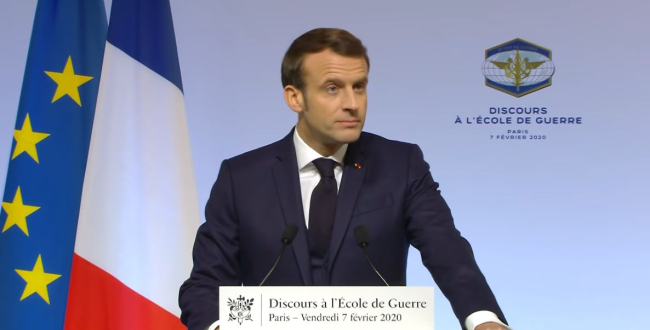
France, the European Union's sole nuclear power since Britain's exit from the bloc, will unveil Friday how it intends to use its atomic arsenal as a deterrent in an increasingly unstable world.
Ifri, a foundation recognized as being of public utility, relies largely on private donors – companies and individuals – to guarantee its sustainability and intellectual independence. Through their funding, donors help maintain the Institute's position among the world's leading think tanks. By benefiting from an internationally recognized network and expertise, donors refine their understanding of geopolitical risk and its consequences on global politics and the economy. In 2026, Ifri partners with over 90 French and international companies and organizations.

The Study Committee on Franco-German Relations (Cerfa) was created in 1954 by an inter-governmental agreement between the Federal Republic of Germany and France, in order to raise awareness of Germany in France and analyze Franco-German relations, including in their European and international dimensions. In its conferences and seminars, which bring together experts, political leaders, senior decision-makers and representatives of civil society from both countries, Cerfa develops the Franco-German debate and stimulates political proposals. It regularly publishes studies through two collections: Cerfa notes and studies as well as Franco-German visions.
Cerfa maintains close relations with the network of German foundations and think tanks. In addition to its research and debate activities, Cerfa promotes the emergence of a new Franco-German generation through original cooperation programs. This is how in 2021-2022, Cerfa led a program on multilateralism with the Konrad Adenauer Foundation in Paris. This program is aimed at young professionals from both countries interested in the issues of multilateralism in the context of their activities. It covered a wide range of themes relating to multilateralism, such as international trade, health, human rights and migration, non-proliferation and disarmament. Previously, Cerfa had participated in the Franco-German future dialogue, co-led with the DGAP from 2007 to 2020, and supported by the Robert Bosch Foundation and the Daniel Vernet group (formerly the Franco-German Reflection Group) which was founded in 2014 upon the initiative of the Genshagen Foundation.
The Austro-French Centre for Rapprochement in Europe (ÖFZ/CFA) is a Franco-Austrian intergovernmental organization, initiated in 1976 by Prime Minister Jacques Chirac and Federal Chancellor Bruno Kreisky, in order to develop economic relations between Western and Eastern Europe, contributing to the creation of a Europe of peace.
After the fall of the Berlin Wall, the ÖFZ/CFA refocused its action on the problems following the enlargement of the European Union, and integrated the following countries in its field of activities : Hungary, Poland, Czech Republic, Slovak Republic, Slovenia, the Baltic countries, Romania and Bulgaria. ÖFZ/CFA's vocation, as a space for reflection and exchange, is in fact reinforced by the need to support the new member countries of the Union in their integration process. Since 2004, the ÖFZ/CFA has also turned towards the Union's new neighbors, in particular towards the countries of the Western Balkans, which perceive their future from a European perspective.
The ÖFZ/CFA strives to place all of its exchanges in a global perspective concerning the future of our continent. Today it centers its activities around three directions: the Franco-Austrian bilateral dialogue, the future of the European Union, the future recomposition of the continent.
Reports of all events organized by the ÖFZ/CFA are available on its website (http://oefz.at). The ÖFZ/CFA's budget is provided by the French and Austrian foreign ministries. Depending on the themes addressed, the ÖFZ/CFA calls on European public and private institutions to help finance its meetings. The CFA's orientations benefit from the recommendations of an Orientation Council, approved by a Board of Directors, which elects from among its members a president and a secretary general.