




Energy-Climate
In the face of the climate emergency and geopolitical confrontations, how can we reconcile security of supply, competitiveness, accessibility, decarbonization and acceptability? What policies are needed?
Related Subjects
The US’s Critical Mineral Offensive Strategy: How Can Europe Step Up?

As Organization for Economic Co-operation and Development (OECD) economies are confronted with mounting threats to critical raw materials (CRM) supplies, resolute interventionist policies are needed to build resilient value chains.
India’s Approach to Climate Negotiations: From the South to the North?
India’s approach to climate negotiations results from the interplay of two distinct logics, an external one and an internal one. While the external logic is derived from quantitative attributes at the aggregate level, such as the overall size of India’s economy, the internal logic is derived from qualitative attributes at the individual level such as per person incomes and productivity. For three decades, from the early 1970s to the early 2000s, India’s internal and external logics overlapped.
The Paris Agreement. Article from "RAMSES 2016"
To avoid the pitfalls of historic divisions, climate negotiators decided to go down the self-differentiation route and leave legal matters to be resolved during the last steps of the process. The national contributions drafted by each party provide a robust basis for discussion, but we still need to ensure that these are appropriate and also monitor their implementation. The credibility of the Paris Agreement will be determined by these final procedural trade-offs.
Adapting to the Effects of Global Warming. Article from "RAMSES 2016"
Adaptation issues started to gain momentum from the Copenhagen conference in 2009. Up until then, international negotiations had focused on mitigation policies. However, the increase in weather events and the inadequate efforts to hold back global warming now make adaptation a key issue in discussions around the Paris agreement.
Water and Energy in the GCC: Securing Scarce Water in Oil-Rich Countries
Water scarcity in the Gulf Cooperation Council (GCC) states has traditionally been addressed by finding new ways of producing water. The high costs of desalinated water production are borne by the State through subsidies. As this trend is not environmentally or economically sustainable, new strategies are now giving priority to cost recovery and efficient resource management.
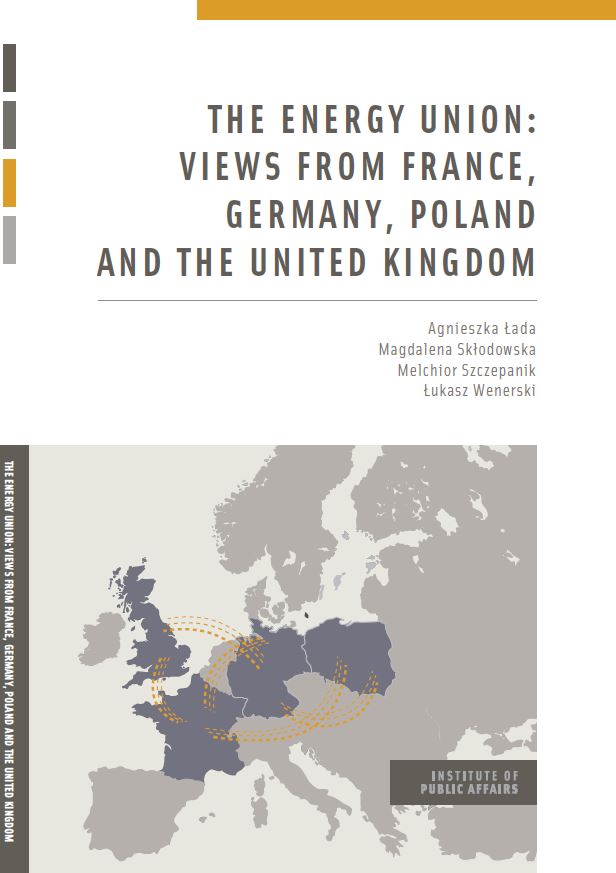
The Energy Union: Views from France, Germany, Poland and the United Kingdom
Report published by Instytut Spraw Publicznych (ISP) and presented at the 1-2 July 2015 conference organised by ISP, Stiftung Genshagen and Ifri: "Energy Union - Germany, France and Poland between common European goals and divergent national approaches". Melchior Szczepanik (ISP) and Carole Mathieu (Ifri Centre for Energy) co-authored the chapter dedicated to the French perspective on the Energy Union.
Self-consumption of electricity from renewable sources
A report released by Insight_E, the European energy consortium specialised on energy policy research and analysis
Lead author: Joris Dehler (KIT). Authoring team: Dogan Keles (KIT), Thomas Telsnig (IER), Benjamin Fleischer (IER), Manuel Baumann (KIT), David Fraboulet (KIC-IE/CEA), Aurélie Faure (IFRI), Wolf Fichtner (KIT). Reviewer: Paul Deane (UCC), Volker Stelzer (KIT)
Quantifying the "merit-order" effect in European electricity markets
A report released by Insight_e, the European energy consortium specialised on energy policy research and analysis.
Lead author: Paul Deane (UCC). Authoring team: Sean Collins, Brian O'Gallachoir (UCC), Cherrelle Eid (Ifri), Rupert Hartel, Dogan Keles, Wolf Fichtner (KIT). Reviewer: Alberto Ceña (Kic)
Electric Networks and Energy Transition in Europe
After a century of close development between power generation facilities and networks, the liberalisation of the electricity sector has broken this link in Europe. Long-distance transmission networks now play a key role in stimulating competition between generators by giving consumers access to remote power generation facilities.
Looking Ahead to COP21: What Korea has done and what Korea should do
Korea is the world’s 14th largest economy but the 8th largest emitter of CO2 as of 2013, due largely to an energy-intensive industry structure. Although it has continuously reduced its dependency on petroleum since it introduced the Energy Master Plan in 2008, the relative portion of non-fossil fuel sources, such as renewable energy, is still marginal at best (representing less than 10 percent of the total energy portfolio). In particular, it is difficult for Korea to increase the portion of renewables for various reasons. In this context, Korea has tried to find an adequate role in fighting against climate change.
East-Mediterranean Gas potential: Opportunities and Barriers
A report released by Insight_e, the European energy consortium specialised on energy policy research and analysis
Lead authors: Constantinos Taliotis (KTH) and Maïté de Boncourt (Ifri), Authoring team: Kimon Keramidas (Enerdata), Reviewer: Paul Deane (UCC)
The New Dimensions of Geopolitics
Editor: Deborah Sherwood, published by Cligendael International Energy Program (CIEP) and Institut français des relations internationales (Ifri)
International Law and the Use of Maritime Hydrocarbon Resources
Editor: Deborah Sherwood, published by Clingendael International Energy Program (CIEP)
Local Content Strategies in the Oil and Gas Sector: How to Maximise Benefits to Host Communities
Editor: Deborah Sherwood, published by Institut francais des relations internationales (Ifri)
Is Natural Gas Green Enough for the Environment and Energy Policies?
Editor: Deborah Sherwood, published by Clingendael International Energy Program (CIEP) and Institut français des relations internationales (Ifri)
Climate: Injustice for the South
While climate change is already producing devastating effects, climate negotiations so far have been largely unsuccessful.
COP21: What Are the Odds for Success?
Since Copenhagen, negotiations have been in stalemate. Progress can only be made if there is a significant attempt to create a transnational carbon market.
Japan's Energy and Climate Policy: Towards Dispelling the Uncertainties
Four years after the Great East Japan Earthquake and a few months before the opening of the Paris Climate Conference, Japan is about to clarify its energy and climate policy.

DRC’S Regional Positioning, in Between the African Great Lakes and Southern Africa
How transparent are the Democratic Republic of Congo’s regional strategies?
Financing Nuclear Power Plant Projects: a New Paradigm?
Considerable investment will be needed in order to meet increasing world-wide demand for energy and replace ageing existing plants. In a context where struggling against climate change is a widely shared objective, a sizeable portion of the $16000Bn future investment in electricity generation should be made in low-CO2 sources of energy - renewables and nuclear power generation facilities.
IEA Crisis Management: Evolving with the Risks
Last week the IEA chose not to renew its June strategic stock release. It was the right decision. The volumes of strategic crude and product taken up by the market will be reaching refineries now and incremental volumes produced in the Arabian Gulf will be steaming towards markets.
A Look at the IEA 2011 Release of Strategic Oil Reserves
This paper examines the motivations and the potential consequences of the International Energy Agency’s coordinated action to release petroleum stocks on June 23, 2011.
Kanal Istanbul: Pipedream or Politics ?
This paper examines Kanal Istanbul, a plan proposed by recently re-elected Turkish Prime Minister Recep Tayyip Erdogan to bypass the Bosphorus Strait by creating a canal west of Istabul.
A Tragic Tale of Corn and Congress
Ever since Iowa landed the privilege of holding the first Presidential primary, no candidate has the political courage to confront the $11 billion subsidy price tag of US corn ethanol. Everyone agrees we need to dilute our supply and price vulnerability in transportation fuels and everyone agrees we need to decarbonize the transport sector. But surely not this way.
Unconventional Gas: A Game Changer for Transport Too?
A new technology trend, the development of natural gas vehicles, is emerging in the transport sector.
Chinese Climate Policy: Institutions and Intent
Until the late 1990s, the balance of Chinese energy production and consumption was treated by the rest of the world as a net figure. No one knew what was going on inside the Chinese economy - it was a black box. As far as anyone was concerned, the Chinese would not soon be a major factor in world energy markets.
The EU internal market - a stake or a tool in European-Russian gas relations. The case of new member states gas policy
Since 2010 we have observed a new quality in EU energy policy. It is related to the European Commission’s more or less direct engagement in the bilateral gas relations of a part of the new member states - Poland, Bulgaria and Lithuania - with Russia.
OPEC: It Is about More Oil - Not Quotas
OPEC has certainly gone out of its way to show how little relevance it has in today’s oil market. It has successfully imported all the political rhetoric and malaise of some of its most unstable members.
Protecting Nuclear Installations: The difference between industrial safety and national security
There is a gritty public debate going on in Europe about what threats should be considered in conducting stress tests on existing nuclear power plants or in establishing safety criteria for new build nuclear power.
German Nuclear: Green Is Good Politics
In polarized politics, the voter must take on faith the wisdom inherent in the principled political position. Who cannot be impressed by the nuclear catastrophe at Fukushima, especially after living through the fallout from Chernobyl? But is it reasonable to send the voter to the booth with only half the information? Does the German voter have any idea what it means to shut down its nuclear power in just ten years? Have German politicians made any effort to tell them?
Ifri, a foundation recognized as being of public utility, relies largely on private donors – companies and individuals – to guarantee its sustainability and intellectual independence. Through their funding, donors help maintain the Institute's position among the world's leading think tanks. By benefiting from an internationally recognized network and expertise, donors refine their understanding of geopolitical risk and its consequences on global politics and the economy. In 2026, Ifri partners with over 90 French and international companies and organizations.

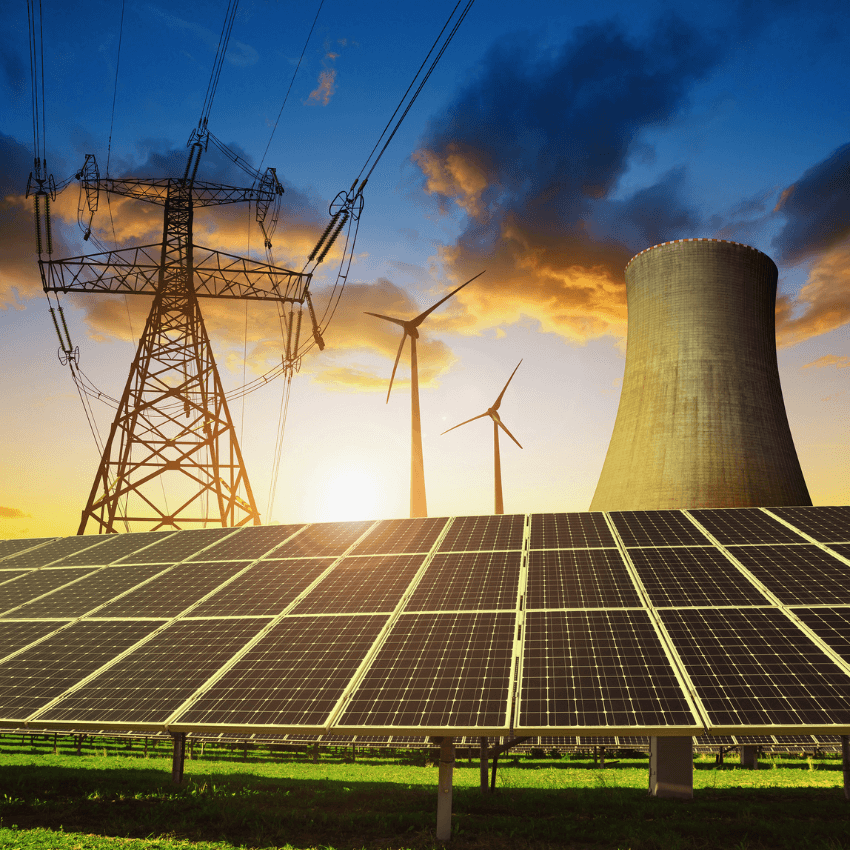
Ifri's Energy and Climate Center carries out activities and research on the geopolitical and geoeconomic issues of energy transitions such as energy security, competitiveness, control of value chains, and acceptability. Specialized in the study of European energy/climate policies as well as energy markets in Europe and around the world, its work also focuses on the energy and climate strategies of major powers such as the United States, China or India. It offers recognized expertise, enriched by international collaborations and events, particularly in Paris and Brussels.