







Energy-Climate
In the face of the climate emergency and geopolitical confrontations, how can we reconcile security of supply, competitiveness, accessibility, decarbonization and acceptability? What policies are needed?
Related Subjects
The US’s Critical Mineral Offensive Strategy: How Can Europe Step Up?

As Organization for Economic Co-operation and Development (OECD) economies are confronted with mounting threats to critical raw materials (CRM) supplies, resolute interventionist policies are needed to build resilient value chains.
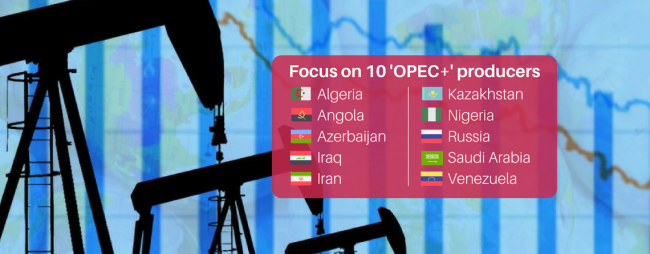
Navigating the Storm: ‘OPEC+’ Producers Facing Lower Oil Prices
On 22 June 2018, “OPEC+” oil Ministers (Organisation of Petroleum Exporting Countries members and an ad hoc alliance with several non-OPEC producers, notably with Russia, Kazakhstan and Azerbaijan) will gather in Vienna to discuss the status and future of their production limitation agreement which was initiated in November 2016 and runs until the end of December 2018.
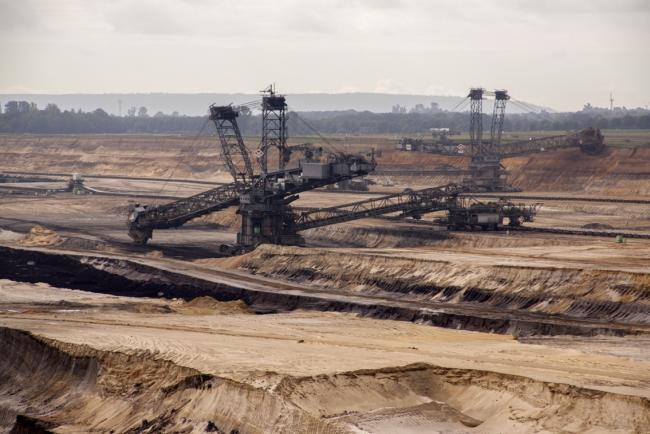
Coal Exit or Coal Expansion? A Review of Coal Market Trends and Policies in 2017
Coal in the power sector is the principal focus of climate-related policies due to its high carbon intensity, making CO2 emissions from coal a leading contributor to climate change.
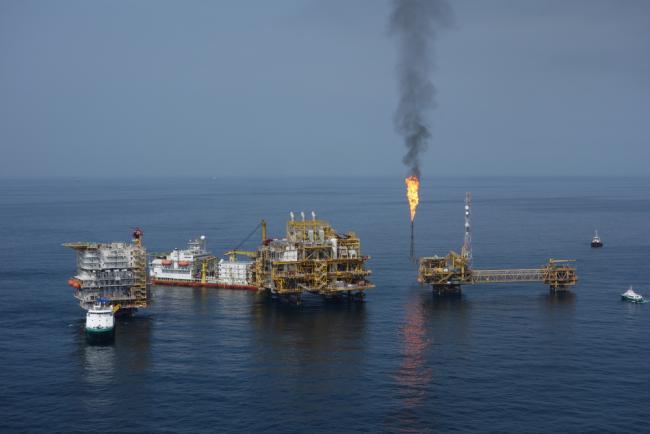
Oil Exploration and Production in Africa since 2014. Evolution of the Key Players and their Strategies
The fall in oil prices, which began in fall 2014, had a significant influence on the strategies of the key players in the oil industry in Africa.


Wind of change as France faces end of era
A few months ago French environment minister Nicolas Hulot took the trip of almost 100m to the top of a wind turbine funded partly by a co-operative of poultry farmers. Back on the ground, he found the right analogy to tell his audience why the country needs plenty more of the same.
More renewables in the European Union? Yes, we can
The European Union is about to adopt new renewable energy targets for 2030. While going beyond the initially-planned 27% is absolutely feasible, the EU strategy can only be credible if it is based on a good mix between performance and effort obligations, and also includes possible review clauses.
China’s National Carbon Market: a Game Changer in the Making?
As 2017 drew to close, China officially approved plans for its long-awaited national Emission Trading Scheme (ETS) and the National Development and Reform Commission (NDRC) outlined some of the implementation details[1]. Though it will be limited to the power sector (and combined heat and power, or CHP) at first, it will nevertheless be the world’s largest carbon market. It is expected to cover 1,700 companies representing approximately 30% of China’s total greenhouse gas (GHG) emissions. China’s CO2 emissions from fuel combustion amounted to approximately 8,796 metric tonnes of CO2 equivalent (MtCO2Eq.) in 2016, and seem to remain stable since 2014, though they appear to increase again in 2017[2]. Shanghai should host the national market exchange, which will be jointly owned by the governments of other provinces while Hubei should host the registry[3].

Trump's Tax Reform and Trade Policy: Renewables Spared, Oil Industry Wins
The energy sector is one where the break between the Trump and Obama administrations is the most pronounced. The three officials in charge, Rick Perry at the Department of Energy (DoE), Scott Pruitt at the Environmental Protection Agency (EPA) and Ryan Zinke at the head of the Department of the Interior (DoI), share the same indifference to the issue of climate change, the same will to encourage oil and gas production in the USA in order to bring an era of American “energy dominance”, the same desire to promote the extraction of “beautiful, clean coal”, to paraphrase President Trumps’s State of the Union address, and the same deep mistrust of renewable energies such as wind and solar.
The Gazprom-Naftogaz Stockholm Arbitration Awards: Time for Settlements and Responsible Behaviour
The signing in January 2009 of the gas supply and transit contracts between Gazprom and Naftogaz marked a turning point in Russian-Ukrainian gas relations: yearly intergovernmental, last minute and non-transparent winter deals were replaced by a predictable, long term commercial relationship.
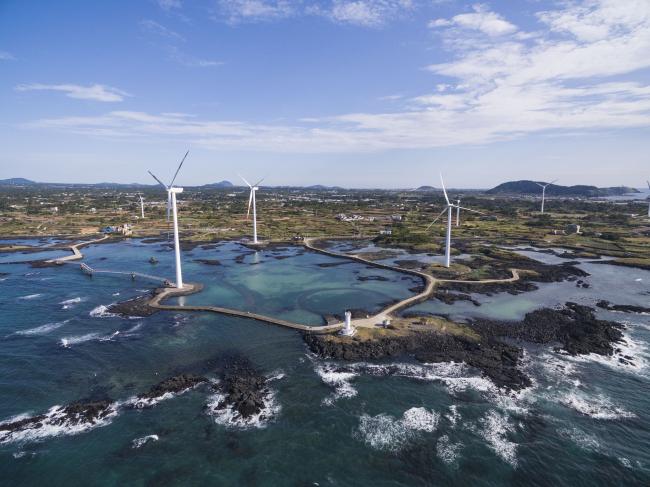
South Korea's New Electricity Plan. Cosmetic Changes or a Breakthrough for the Climate?
Shortly after his inauguration in May 2017, the President of South Korea, Moon Jae-In, announced a major policy shift away from nuclear and coal power, and toward renewables and gas. This would have meant a complete U-turn from previous policies, considering that nuclear and coal produced 40% and 30% respectively of Korea’s total electricity in 2016.
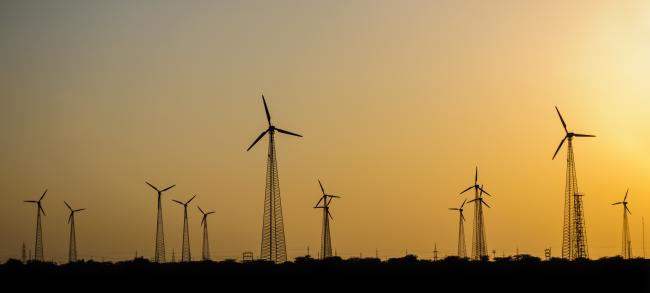
Renewable Energy in India: Solutions to the Financing Challenge
India has committed to ambitious action on climate change, but financing its renewable energy goals remains a significant challenge.

The Challenge of Urban Mobility. A Case Study of Addis Ababa Light Rail, Ethiopia
In September 2015, Addis Ababa introduced the first Light Rail Transit system (LRT) in sub-Saharan Africa. This tram, a symbol of Ethiopian renewal, was nevertheless barely used by the capital’s residents during the first few months. However, at the time of our research trip in April 2017, access to the tram during rush hour was difficult and the trams were overcrowded.

Cybersecurity in the Energy Sector: a Comparative Analysis between Europe and the United States
The acceleration of the digitization of energy infrastructure has brought many economic benefits, including greater efficiency in the rationalization of energy consumption. However, this has also increased the risk of cyberattacks, where malicious software is able to take advantage of the increasing digitization of energy equipment.
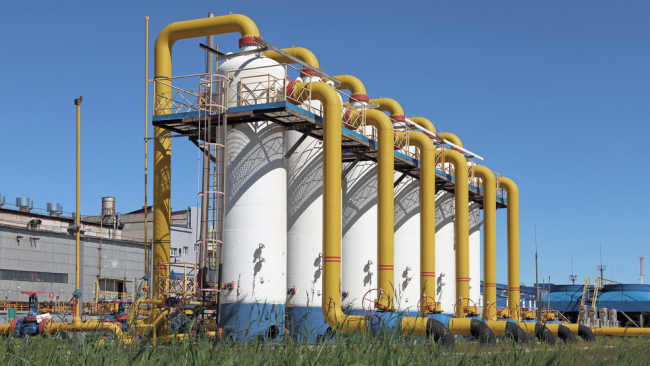
The Role of Gas in the European Energy Transition: Challenges and Opportunities
Following difficult years for the European gas industry, natural gas is back to the front stage.
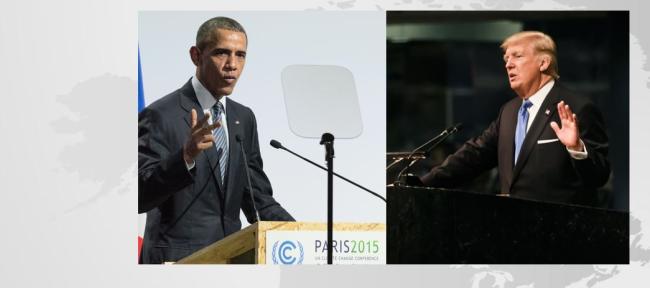
US Energy and Environmental Policies. From Obama to Trump. Continuities and Divergences
President Trump’s administration is characterized by its systematic denial and repealing of measures from his predecessor, be it in foreign policy or domestic policy. This is particularly the case for the energy and environmental policies. There is however a continuity from one administration to another: the steady rise of US hydrocarbon production and the development of the US as a global leader in oil and gas production and in the near future, their exports to global markets.
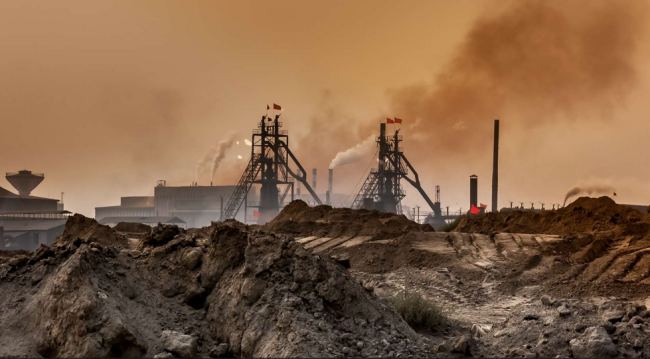
The Energy Transition and the Challenge of Critical Raw Materials
The geopolitical analyses of energy markets are traditionally focused on fossil fuels, and less on renewable energy sources.
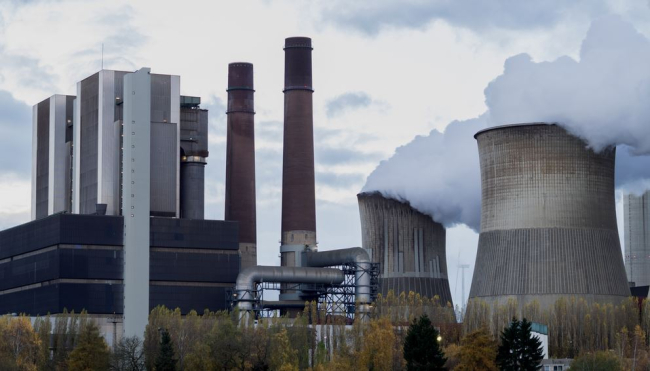
Decarbonizing Germany’s Power Sector: Ending Coal with a Carbon Floor Price?
Germany has a long tradition of climate policy programmes with ambitious greenhouse gas emission reduction targets and comprehensive climate and energy policy packages.
This target-driven policy approach is, however, increasingly facing challenges due to the lack of progress on greenhouse gas emission reductions in key sectors, i.e. the power, the transport and the building sector.

France’s Macron takes lead in climate change battle, with the U.S. absent
PARIS — The United States may have withdrawn from the Paris climate change accord, but on Tuesday dozens of world leaders and philanthropists met to find solutions to the swiftly warming planet — and send a message of resolve to the White House. More symbolic than policy-driven, Tuesday’s summit comes two years after the landmark COP21 conference in Paris, when 196 participating countries — including the United States — vowed to keep this century’s global temperature increase below 3.6 degrees Fahrenheit. In one of the most controversial moments of his young presidency, President Trump announced in June that the United States would leave the Paris accord.
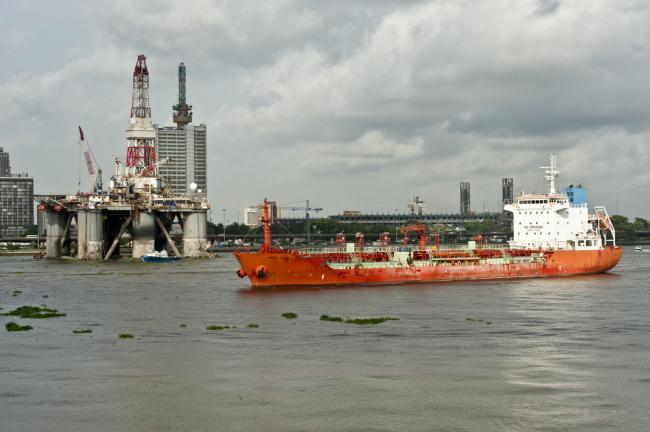
Strategies of African national oil companies
The study and comparison of different National Oil Companies (NOC) help understanding the political history of Algeria, Nigeria and Angola. The NOC’s role and activities depend on several economic and political aspects. For example, Angolan Sonangol has been the coffer for the Popular Movement of Liberation of Angola (MPLA) party to fund its struggle against the National Union for the Independence of Angola (UNITA) party during civil war.
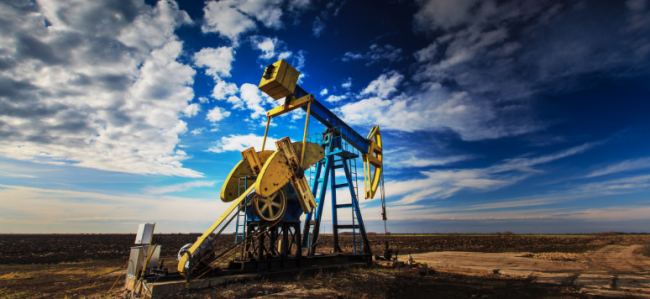
The Resurgence of Shale Oil
This study addresses the resilience factors of the American production of light tight oil, in particular regarding the evolution of the financial model, and the regulatory changes with the authorisation of exports for crude oil. The paper also evaluates the development perspectives of the production on the medium and long term.
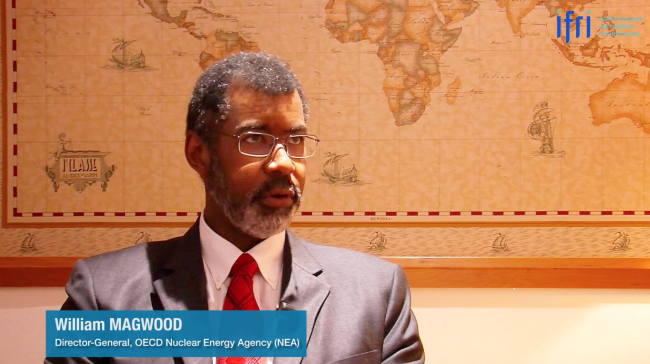
Nuclear Energy in the United States: an Appraisal
An interview with William D. Magwood, IV, Director-General of the OECD Agency for Nuclear Energy
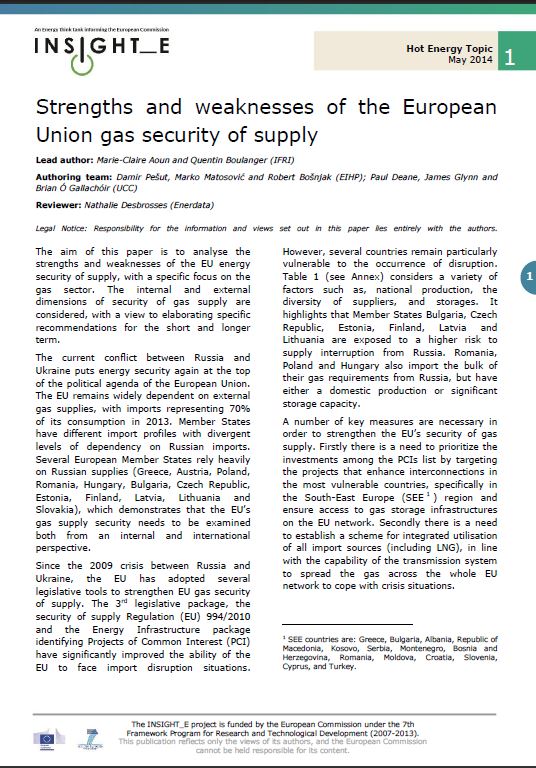
Strengths and weakness of the European Union gas security of supply
Lead Authors: Marie-Claire Aoun and Quentin Boulanger (IFRI); Authoring Team: Damir Pešut, Marko Matosović and Robert Bošnjak (EIHP); Paul Deane, James Glynn and Brian Ó Gallachóir (UCC); Reviewer: Nathalie Desbrosses (Enerdata)
Coal and Climate Change: the "Chinese Way" ?
This article, issued after Asia Center and ASEF's international conference on coal issues in China (26th and 27th of June 2014 in Beijing), tackles the challenges the country is facing in restructuring its coal industry, in a context of severe and recurrent air, soil and water pollution outbursts.
The European Energy Policy: Building New Perspectives
“After 17 years of supranationality, we are still seeking how to define a common energy policy and what it might be. [...] Could we have done more in one generation? Or were goals only established to achieve a political balance which it was explicitly agreed to ignore, once the machinery began to operate? Historians will have a hard task to distinguish between excessive ambitions and national hypocrisies”.
Raising the Costs to President Putin
-by building dissonance within. Some like to remember fondly the call by Ronald Reagan for Gorbachev “to tear down this wall”. The United States “Won the Cold War” said George Bush Senior in his State of the Union Address. We need to step back and recognize with some humility that the Soviet Union fell largely of its own weight rather than as a result of external pressure. Again today Russia is economically weak. It has become an exporter of raw materials, its industrial sector is weak, and its revenues are already falling. Conditions now offer the opportunity to aggravate Russia’s economic frailty – let’s focus on that.
Middle East Oil and Gas Producers: Soon to Be Back in the Lead?
The World Energy Outlook 2013 published by the IEA confirms that despite the rise of unconventional fuels in particular in the US, Middle East will by the mid-2020s retake its place as the world major oil and gas supplier, providing most of the increase in global supplies. Well, there are some big ifs.
Ukraine: Is Europe Ready for Another Gas Cut?
The turmoil in Ukraine is now putting one question on everyone mouth: what if Russian gas transiting through Ukraine was cut once again? Today, Ukrainian gas pipelines still carry around 60% of the Russian gas intended for the European Union; i.e. around 16% of the EU final gas consumption.
Reading Rouhani Right
Poll numbers are the life blood of politics these days. Anything expressed in digits has a claim to truth that assertions without digits cannot make. They inspire confidence - especially among those aspiring to public office - that they actually understand what public sentiment is. If you lived between nuclear-armed Israel and Pakistan and had as many world class enemies as Iran has accumulated - would you give up your pursuit of a nuclear weapon?
The Impact of the Development of Shale Gas in the United States on Europa's Petrochemical Industries
The shale gas revolution has led to strong falls in energy prices, reducing significantly the raw material costs of the US petrochemical industry. Between 2008 and 2012, US gas prices fell by two thirds.
The Vegetation Programme
Under human pressure, many changes are taking place in the resources and the environment of Earth. An increasing global population fuels the need for food, natural resources and land. Consequently, the need for maintaining a capacity to observe and understand the Earth system and the biophysical processes has become a key element for the sustainable management of the planet’s natural resources. The SPOT-Vegetation instruments have significantly contributed to reach this goal.
Dynamics and drivers of shale gas development in three European countries: can a European policy be imagined?
The European Commission introduced in its Work Programme 2013 an action regarding “Environmental climate and energy assessment framework to enable safe and secure unconventional hydrocarbon extraction”.
Ifri, a foundation recognized as being of public utility, relies largely on private donors – companies and individuals – to guarantee its sustainability and intellectual independence. Through their funding, donors help maintain the Institute's position among the world's leading think tanks. By benefiting from an internationally recognized network and expertise, donors refine their understanding of geopolitical risk and its consequences on global politics and the economy. In 2026, Ifri partners with over 90 French and international companies and organizations.

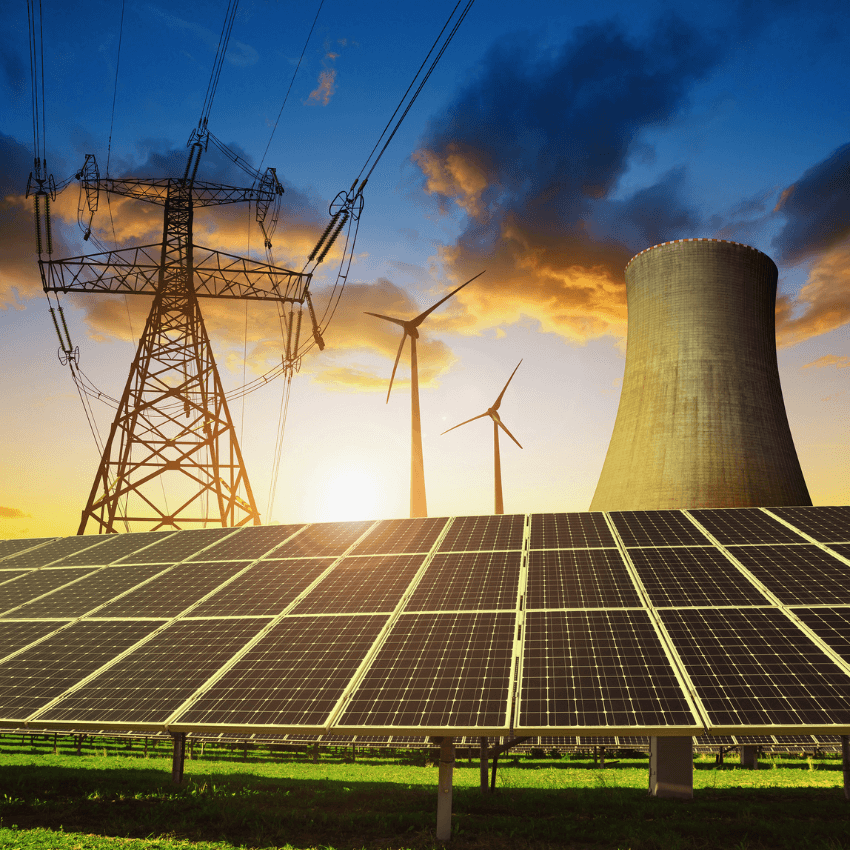
Ifri's Energy and Climate Center carries out activities and research on the geopolitical and geoeconomic issues of energy transitions such as energy security, competitiveness, control of value chains, and acceptability. Specialized in the study of European energy/climate policies as well as energy markets in Europe and around the world, its work also focuses on the energy and climate strategies of major powers such as the United States, China or India. It offers recognized expertise, enriched by international collaborations and events, particularly in Paris and Brussels.