Defense Policy and Armed Forces
As military competition increases, nations are adapting their defense policies and transforming their armed forces. Doctrine, organization, equipment and training are key to understanding the evolution of land, air and naval forces.
Related Subjects
In France, are soldiers outside the Eiffel Tower and the Louvre really worth it?
Sentinel represents a watershed development in French military operations. For the first time since the end of the Cold War, the number of French army soldiers actively deployed in metropolitan France roughly equals that of overseas operations. But the military establishment here is far from unified on the value of an operation often seen as a costly and superficial means of reassuring civilians and tourists at the expense of substantive improvement to national security.
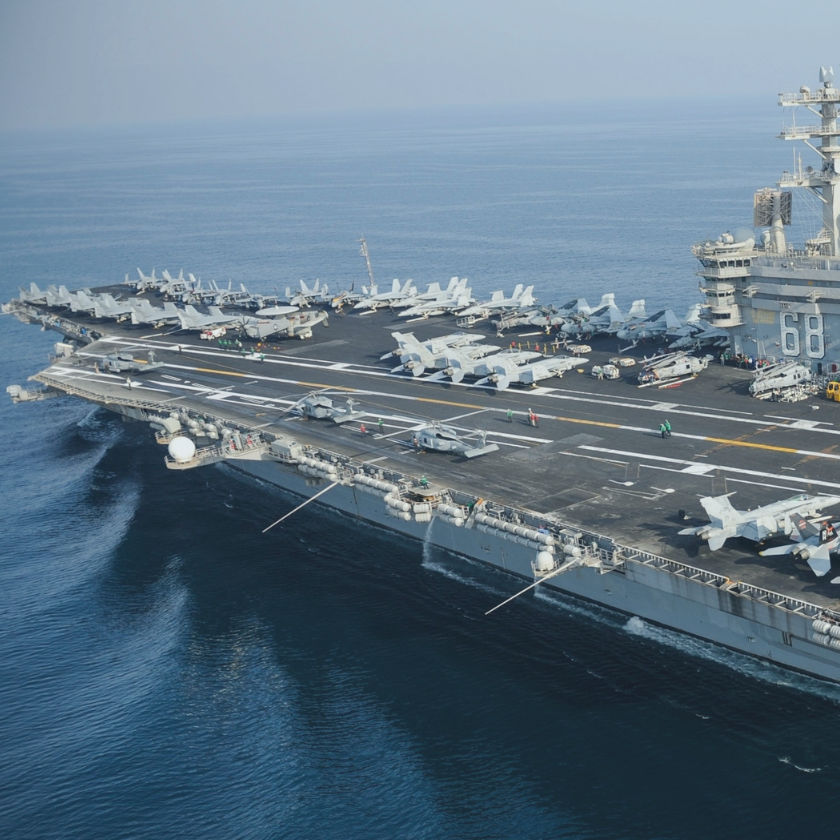
NATO wrestles with internal divisions ahead of Warsaw summit
The alliance is struggling to assemble four battalions to safeguard its eastern flank from a possible Russian attack. In addition, many member states are falling short of their financial commitments to the alliance.
Cooperation Despite Frictions in Northeast Asia
Despite the political tensions that oppose Japan, China and South Korea, recent months have seen a certain rapprochement between Tokyo, Seoul and Beijing. The first trilateral summit in three years was held in November 2015.
Cooperation Despite Frictions in Northeast Asia
The ASEAN Community: The Reality of a Vision
On December 31, 2015, ASEAN launched its long-anticipated Community with relatively little fanfare. This low-profile attitude surprised many observers: announced as a milestone and the signal of the member-states determination to bring regional cooperation “to a higher plane,” the launch was indeed modest, even imperceptible.
(Dis)integrating Asia? - Interview with GVC Naidu
GVC Naidu is a Professor of International Relations at the Jawaharlal Nehru University in New Delhi.
How Asia is transforming geopolitical situation and it is most affecting Taiwan today? Interview with Francis Yi-hua Kan
Francis Yi-hua Kan is an Associate Research Fellow at the Institute of International Relations, National Chengchi University.
(Dis)integrating Asia? - Interview with Wook Chae
Wook Chae is a professor at the Graduate School of Pan-Pacific International Studies of Kyung Hee University and the former President (2008-2013) of the Korea Institute for International Economic Policy (KIEP).
What is China's vision in shaping cooperative frameworks? Interview with Richard W.X. Hu
Richard W.X. Hu, Professor in the Department of Politics and Public Administration at the University of Hong Kong, analyzed China's role in the regional economic integration process.
- What is China’s vision in shaping cooperative frameworks?
- What is China’s rationale behind setting up the Asian Infrastructure Investment Bank?
- What is your prognosis for the future of a China-Japan-Korea cooperative framework?
Click here to read the program of the conference.
Support independent French research
Ifri, a foundation recognized as being of public utility, relies largely on private donors – companies and individuals – to guarantee its sustainability and intellectual independence. Through their funding, donors help maintain the Institute's position among the world's leading think tanks. By benefiting from an internationally recognized network and expertise, donors refine their understanding of geopolitical risk and its consequences on global politics and the economy. In 2025, Ifri supports more than 80 French and foreign companies and organizations.