





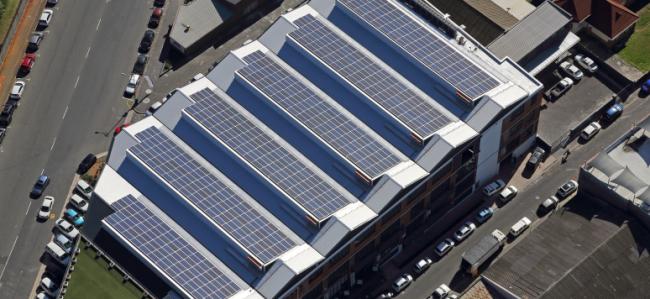
Booming Decentralized Solar Power in Africa’s Cities. Satellite Imagery and Deep Learning Provide Cutting-Edge Data on Electrification
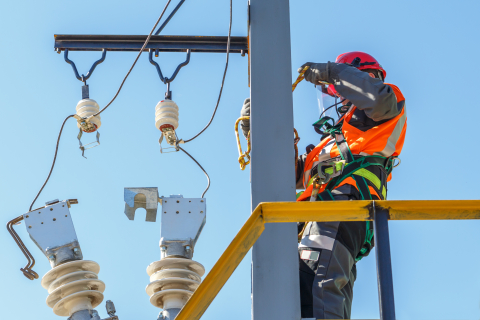
The market for decentralized solar systems first developed in rural Africa, and today it is expanding to the continent’s cities, though these areas are already covered by each country’s central network.
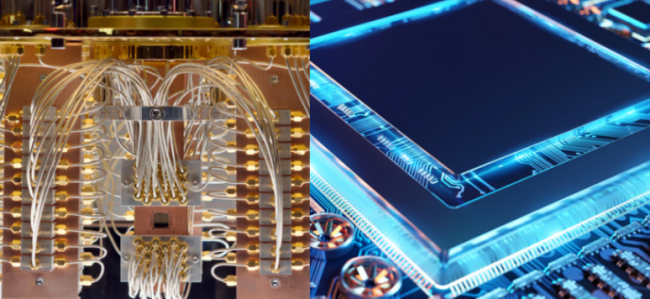
Strategic Calculation: High-Performance Computing and Quantum Computing in Europe’s Quest for Technological Power
Computing power plays a key role in enabling machine learning, for scientific research, and in the military domain. Therefore, the race for computing power has become a key element of the US-China technological competition, and it is also a strategic priority for Europe.

Human Machine Teaming and the Future of Air Operations
The increasing autonomy and digitization of battlefields implies a re-examination of Man Machine Teaming (MMT). While Artificial Intelligence (AI) has significant benefits, the human cognitive system remains unique until this day. Nonetheless, as demonstrated by the “centaur” approach, man-machine teaming offers even greater potentials than the two working separately.


E.U.’s Top Drug Regulator Says It’s ‘Fully Functional’ After Cyberattack
The European Union’s top drug regulator, whose approval is necessary for countries of the bloc to begin rolling out the coronavirus vaccine, has begun an investigation after it was hit by a cyberattack, the head of the agency said on Thursday.
The Outsider: Russia in the Race for Artificial Intelligence
When analyzing the global state of play around artificial intelligence (AI), Russia so far looks like an “outsider” compared to the two technological leaders, the United States and China.
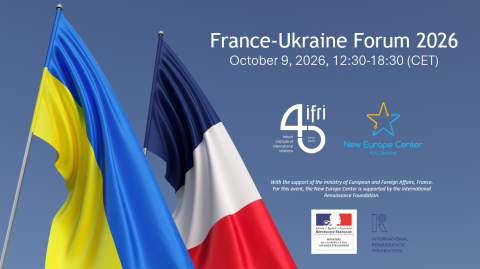
Bavaria and France. Preparing the Future together
France and Bavaria have a longstanding close and solid partnership. However, the relationship between France and Bavaria is not only marked by a common history and by the structures created over the decades.

What Is Digital Power?
Digital power refers to any actor’s ability to exploit digital data to help influence the behavior of other actors on the international stage and to achieve its own ends. It is about understanding how it influences events in the real world, despite its “intangible” nature.

Between Concentration and Dispersion: A Promising Future for Power Relations
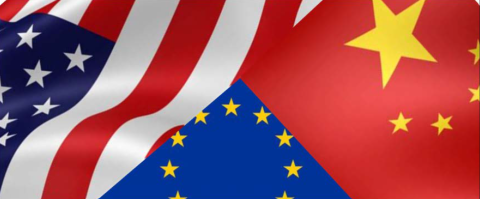
The notion of power has long been a topic of study in international relations. In the coming decade, the evolution of power will be characterized by the dynamics of concentration and dispersion. On the one hand, the global system will be marked by the clash of two superpowers, the United States and China. On the other hand, capacity for individual action will proliferate through information and communication technologies.
Will Artificial Intelligence Revolutionize the Art of War?
Despite the development of artificial intelligence (AI) only being in its early stages, it has already had an impact on armed forces.
Intelligence artificielle : vers une nouvelle révolution militaire ?
Artificial Intelligence (AI) is a priority defense issue for the military powers of the 21st century. Unsurprisingly, the United States and China are currently at the forefront of this new digitalized arms race.
The Geopolitics of Artificial Intelligence: The Return of Empires?
Artificial intelligence (AI) is swiftly moving forward and becoming a real tool of power.
French thinking on AI integration and interaction with nuclear command and control, force structure, and decision-making
This paper analyses the French literature on France’s perception of military AI, especially its consequences on strategic systems and competition, and nuclear deterrence.
Between Concentration and Dispersion: A Promising Future for Power Relations
The notion of power has long been a topic of study in international relations. In the coming decade, the evolution of power will be characterized by the dynamics of concentration and dispersion. On the one hand, the global system will be marked by the clash of two superpowers, the United States and China. On the other hand, capacity for individual action will proliferate through information and communication technologies.
Ifri, a foundation recognized as being of public utility, relies largely on private donors – companies and individuals – to guarantee its sustainability and intellectual independence. Through their funding, donors help maintain the Institute's position among the world's leading think tanks. By benefiting from an internationally recognized network and expertise, donors refine their understanding of geopolitical risk and its consequences on global politics and the economy. In 2026, Ifri partners with over 90 French and international companies and organizations.
