



Imaginary and Reality of the Franco-German border: a Laboratory for Europe of tomorrow
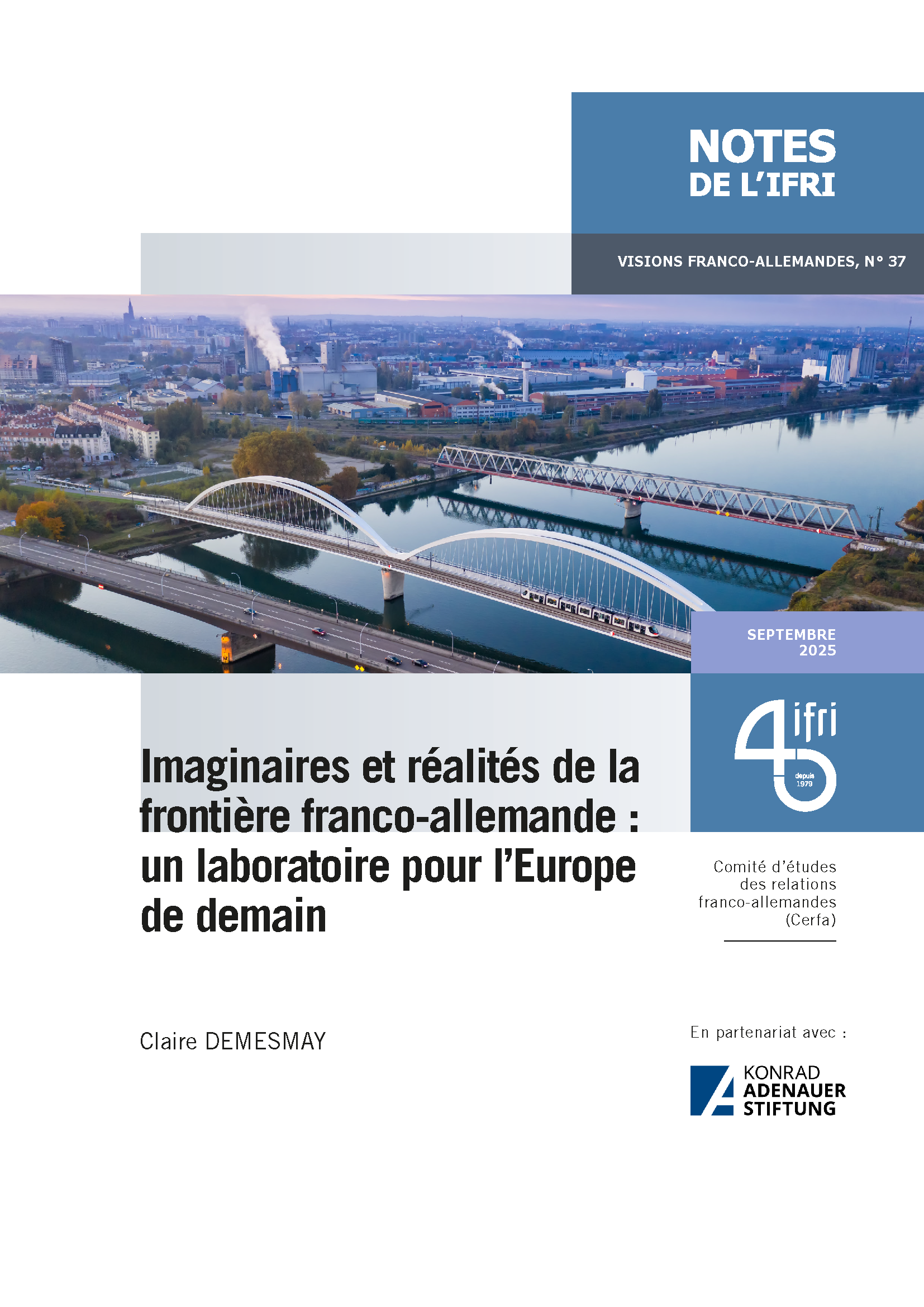
In Europe, the question of borders is a central issue. According to the European Parliament, border regions cover around 40% of the European Union (EU) territory, concentrate 30% of its population and produce nearly a third of its gross domestic product.

These areas, long regarded as marginal, are now recognized as strategic, both for their economic importance and for the social, cultural, and political issues they raise. Once perceived as a strictly local or regional reality, life on the border is becoming a real subject of European policy. While situations vary from one border to another, they often highlight the structural challenges of integration: recognition of professional qualifications, cross-border access to social rights, and management of multilingualism.
It is from this perspective that the article addresses the border issue, focusing as much on concrete realities as on the imaginaries that traverse them. It first looks back at the gradual erasure of the materiality of internal borders, once lines of separation between states and symbols of sovereignty, which have been progressively reconfigured as spaces for cooperation within the European project. Driven by the ideal of unity, this process has transformed borders from obstacles into places of exchange and movement – at least in pro-European discourse. However, this symbol of integration is being undermined by a trend toward isolationism. While some borders are fading, others are being reinforced: external borders are becoming increasingly important. In contrast, internal borders remain benchmarks in the management of public policy and the structuring of national democracies.
Claire Demesmay is an expert in Franco-German cooperation and Director of the Institut français in Bonn. She held the Alfred Grosser Chair at Sciences Po Paris in 2024-2025 and is an associate researcher at the Marc Bloch Center in Berlin. Her research focuses on Franco-German cooperation in Europe, French and German European and foreign policy, as well as the attitudes of young people and the role of civil society in international relations.
This publication appears in cooperation with the Konrad Adenauer Foundation (KAS).
This publication is available:
French: Imaginaires et réalités de la frontière franco-allemande : un laboratoire pour l’Europe de demain, Visions franco-allemandes, No. 37, Ifri, September 2025 (PDF).
German: Zwischen Vorstellung und gelebter Realität: die deutsch-französische Grenze als europäisches Zukunftslabor, Visions franco-allemandes, Nr. 37, Ifri, September 2025 (PDF).

Available in:
Themes and regions
DOI
Visions franco-allemandes, No. 37, Ifri, September 2025
Share

The Study Committee on Franco-German Relations (Cerfa)
The Study Committee on Franco-German Relations (Cerfa) was created in 1954 by an inter-governmental agreement between the Federal Republic of Germany and France, in order to raise awareness of Germany in France and analyze Franco-German relations, including in their European and international dimensions. In its conferences and seminars, which bring together experts, political leaders, senior decision-makers and representatives of civil society from both countries, Cerfa develops the Franco-German debate and stimulates political proposals. It regularly publishes studies through two collections: Cerfa notes and studies as well as Franco-German visions.
Cerfa maintains close relations with the network of German foundations and think tanks. In addition to its research and debate activities, Cerfa promotes the emergence of a new Franco-German generation through original cooperation programs. This is how in 2021-2022, Cerfa led a program on multilateralism with the Konrad Adenauer Foundation in Paris. This program is aimed at young professionals from both countries interested in the issues of multilateralism in the context of their activities. It covered a wide range of themes relating to multilateralism, such as international trade, health, human rights and migration, non-proliferation and disarmament. Previously, Cerfa had participated in the Franco-German future dialogue, co-led with the DGAP from 2007 to 2020, and supported by the Robert Bosch Foundation and the Daniel Vernet group (formerly the Franco-German Reflection Group) which was founded in 2014 upon the initiative of the Genshagen Foundation.
Franco-German Relations Through the Lens of Donald Trump’s Second Term: Between Strategic Realignments, European Sovereignty, and the Enduring Transatlantic Bond
Donald Trump’s return to the presidency of the United States in 2025 acts as a powerful catalyst for the Franco-German relationship. Faced with growing uncertainty over the reliability of US security guarantees, Germany, more directly affected by the questioning of the transatlantic relationship, is gradually moving closer to the French position in favor of strengthening European strategic sovereignty.
MAGA and AfD: Toward a Transatlantic Alliance of Nationalist Right-Wing Parties
The rapprochement between Donald Trump’s MAGA movement and Germany’s AfD has accelerated significantly since Trump’s return to the White House.
VW, Mercedes, and BMW in the Face of Donald Trump—A Tightrope Walk Between Investing in the U.S., Maintaining Operations in Europe, and Catching Up in Electric Mobility
The German automotive industry faces a threefold challenge: competition from China; a difficult transition to electric vehicles; and US tariffs.
A Partnership Built on Security: Post-Brexit Rapprochement between Germany and the United Kingdom
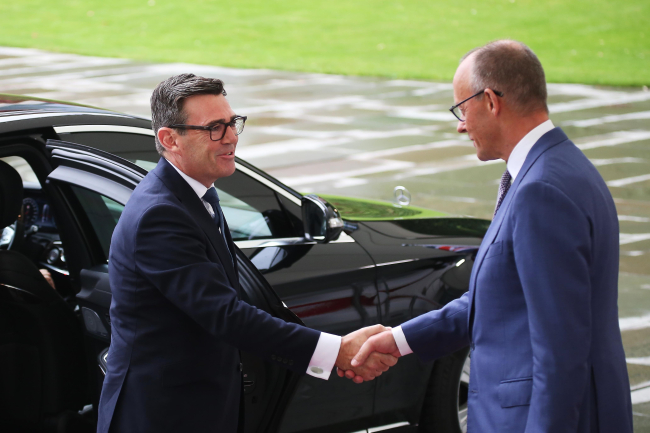
Since the UK’s withdrawal from the EU, UK-German relations have undergone a remarkable transformation: from Berlin’s deliberate distancing from London during the Brexit negotiations, when Germany consistently prioritised EU-27 unity over bilateral arrangements, to a gradual rapprochement, culminating, for the time being, in the 2025 Kensington Treaty of Friendship.