



Placing the EU on a Warfare Footing: Energy and Raw Materials Priorities for 2026
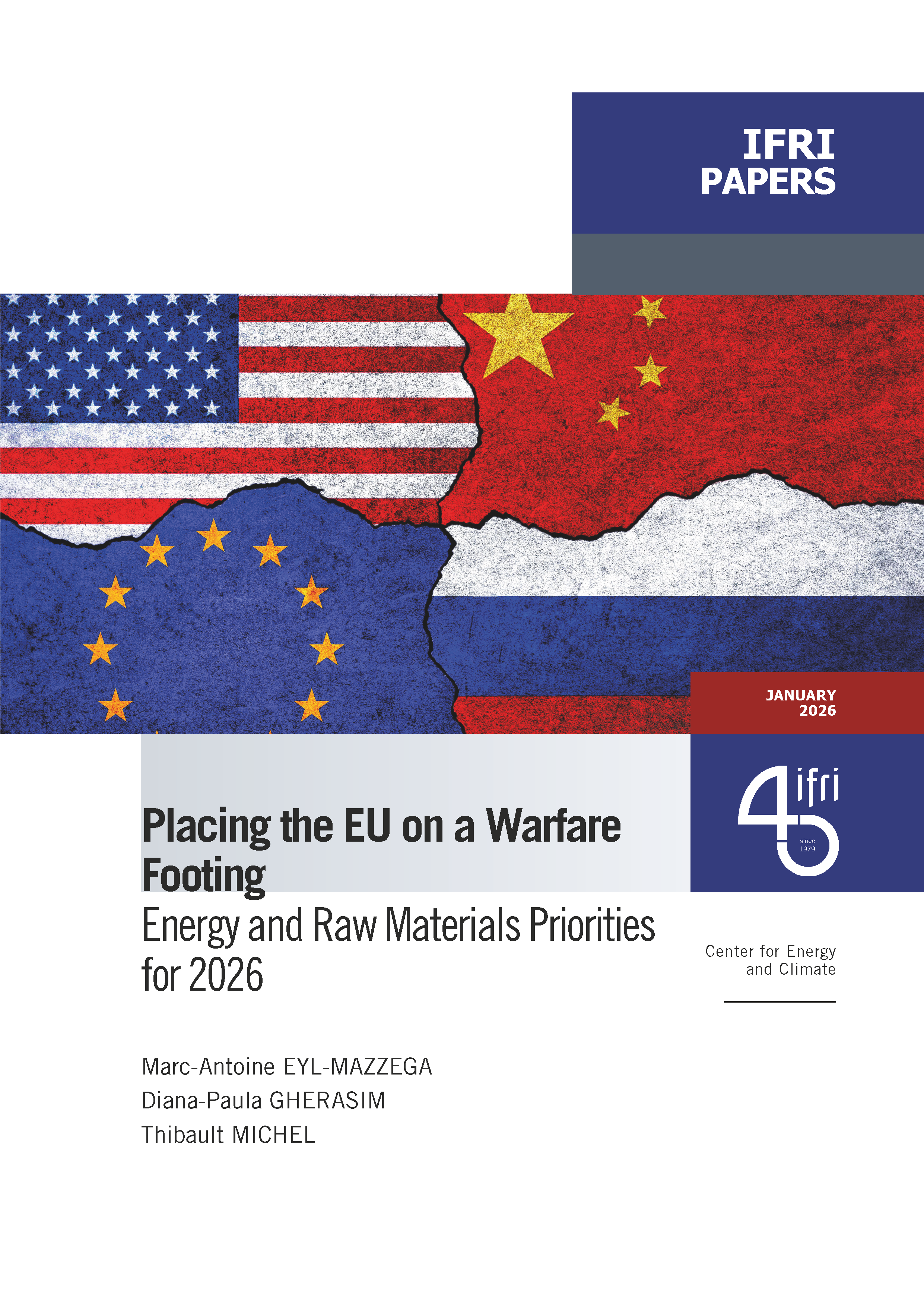
The year 2025 has confirmed that one must prepare for much worse in the field of geopolitics and geoeconomics as the intensity and frequency of shocks increase and as the European Union (EU) has no more stable flanks now that crises with the United States (US) become so frequent and reveal a systemic rift. In the world, barriers to trade multiply and dependencies are weaponized.
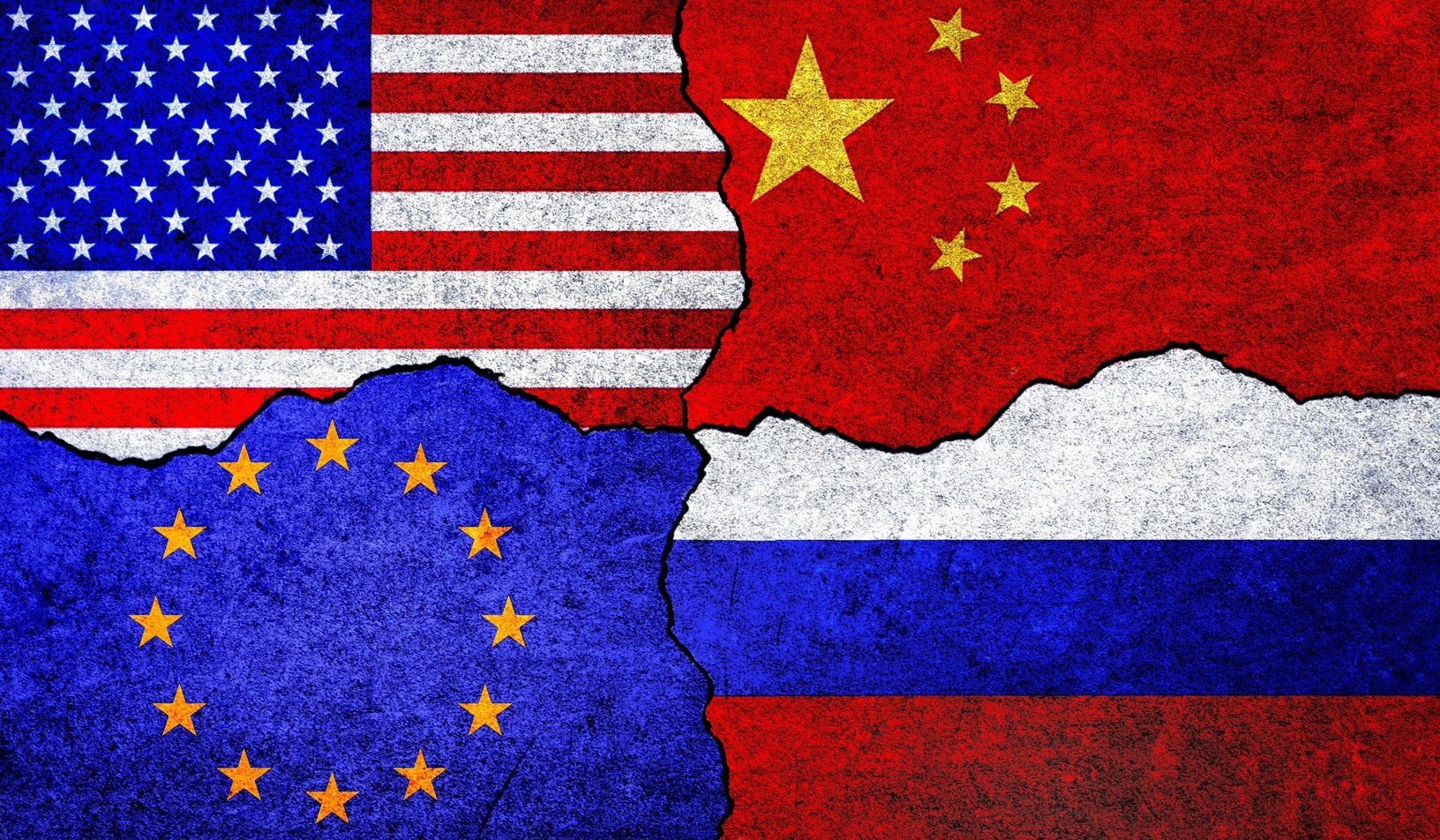
The EU must continue to step up its game and move to strategic action and planning with adjusted and reinforced policy instruments, new approaches and methods, as peace time objectives and policies cannot deliver for warfare times.
In the energy and raw materials field, the European Commission (EC) has been very active in 2025, with several key legislative proposals and plans, notably the Clean Industrial Deal, the Affordable Energy Action Plan, the Grids package, RESourceEU, more flexibility for the 2035 automotive targets, accelerated permitting, CBAM adjustments, nuclear energy no more entirely sidelined, and specific proposals as part of the next Multi-annual financial framework (MFF).
Several priorities in the field of energy and economic security are singled out in this note, as follows:
- First, for all sensitive energy and economic sectors, Member States (MS) need fully operational, capable and competent sectoral points of contact in place that can rapidly meet and prepare policy responses to crises. [...]
- Moreover, the EU’s short and long-term planning should now decisively include severely degraded scenarios that test resilience and policies in situations that no one would have thought likely, a few years or months ago, but which are now entirely possible. [...]
- As the energy security framework is being revised and a Grids package proposed, action should focus on diversifying gas supplies and contract/pricing types, reinforcing network codes and various standards to avoid cyber-attacks on electricity systems and support Made in Europe power electronics, not least also by streamlining efforts on standardization. [...]
- The EU urgently needs to lay the conditions for an electrification breakthrough in 2026. Urgent actions are needed, such as on taxation policy, funding in the next MFF, European Investment Bank (EIB) involvement, deployment of individual and industrial heat pumps and priority grid connections/expansions. [...]
- The EU must gradually expand the scope of the CBAM to include more downstream products. Announcements have been made by the EC to this effect and are a welcome step forward. As the CBAM mechanism is broad and necessarily complex, its implementation is likely to reveal “loopholes” affecting the competitiveness of certain specific sectors. In this regard, part of the revenue generated by the CBAM could be used to support sectors affected by these “loopholes”, once they have been identified by industries and the EC. [...]
- “Made in Europe” requirements should be based on environmental and resilience criteria and be progressive to give sufficient time to value chains to adapt and avoid a significant rise of prices. They should take into account gaps across the value chain and the need for investment in strategic capacities beforehand, with the support of the EIB. [...]
- The EU’s strategy to secure critical raw material value chains has been progressing, but needs to be further stepped up strategically. The US financial mobilization is between 1 and 5, and up to 1 and 8, compared with the EU one. [...]

Available in:
Themes and regions
ISBN / ISSN
Share
This page contains only a summary of our work. If you would like to have access to all the information from our research on the subject, you can download the full version in PDF format.
Placing the EU on a Warfare Footing: Energy and Raw Materials Priorities for 2026


Marc-Antoine EYL-MAZZEGA
Director, Center for Energy & Climate, Ifri

Diana-Paula GHERASIM
Former Research Fellow, Head of European Energy and Climate Policies, Energy and Climate Center, Ifri

Thibault MICHEL
Research Fellow, Center for Energy & Climate, Ifri



Center for Energy & Climate
Ifri's Energy and Climate Center carries out activities and research on the geopolitical and geoeconomic issues of energy transitions such as energy security, competitiveness, control of value chains, and acceptability. Specialized in the study of European energy/climate policies as well as energy markets in Europe and around the world, its work also focuses on the energy and climate strategies of major powers such as the United States, China or India. It offers recognized expertise, enriched by international collaborations and events, particularly in Paris and Brussels.
China’s Hydrogen Economy Five Years On
China’s hydrogen sector is not new. It is the world’s largest industrial hydrogen system, rooted in ammonia, methanol, refining, coal chemicals and by-product gas streams.
27 Plans for 2027: Turning the Electrification Action Plan into National Action
With the aim of structurally reducing the European economy’s dependence on fossil fuel imports and accelerating the energy transition, the European Commission has opted for electrification.
How to Make European e-SAF Production under RefuelEU Aviation Fly?
Three and a half years before the scheduled entry into force of the European regulation ReFuelEU Aviation (RFEUA), which requires aviation fuel suppliers at Union airports to offer a sustainable synthetic alternative (e-SAF), no sizeable commercial production unit (greater than 10,000 tons per year) is active within Europe yet, nor has it even passed the Final Investment Decision (FID). Is a major step in the European Union (EU) plans for decarbonizing air transport at risk of not happening, or at least being postponed for several years? Is Europe losing its bet to create a market for e-SAF? Under what conditions can this bet still be won? Could sovereignty and energy security preoccupations unlock necessary public support and help to overcome economic, financial, logistical or administrative obstacles?
The European Biomethane Sector at a Critical Juncture: Stronger Policy Alignment Will Matter
The European biomethane sector is at a critical juncture.