




China
China's diplomatic, military, economic and technological assertiveness, as well as its growing rivalry with the United States, raise certain apprehensions among its neighbors and Europeans alike.
Related Subjects
Replay - The European Union in Competition with the United States and China. How to Balance Free Trade, Competitiveness and Economic Security?
Video replay from Ifri's conference, on December 3, 2024. As the geopolitical context has changed, so has the approach to international economic relations and the rules-based multilateral framework. Covid and Russia’s war against Ukraine have exposed the risks of extended supply chains and of having become dependent on a single supplier.

Deep Precision Strikes: A New Tool for Strategic Competition?
Reaching deep into the enemy’s system to weaken it and facilitate the achievement of operational or strategic objectives is a key goal for armed forces. What capabilities are required to conduct deep strikes in the dual context of high-intensity conflict and strengthened enemy defenses?
AI and Technical Standardization in China and the EU: Diverging priorities and the need for common ground
Given the highly disruptive potential of AI, global cooperation on AI safety and governance is imperative, and yet the deeply transformational potential of AI also ensures that a high level of competition and systemic rivalry is likely unavoidable. How can the EU best manage its complex relationship with China in the field of AI so as to ensure a necessary level of cooperation in spite of competition and rivalry?
China’s Quest for a Quantum Leap
The global race to harness quantum science is intensifying. Recognizing the strategic potential of quantum technology for economic, military, and scientific advancement, China is focusing on quantum breakthroughs as a way to shift the balance of power, especially in its competition with the United States. President Xi Jinping has emphasized the importance of scientific innovation, particularly in quantum fields, to fuel national development and ensure security.

Japan: Deciphering Prime Minister Ishiba’s Strategic Vision. Toward an Asian version of NATO?
On Tuesday, October 1, Shigeru Ishiba was sworn in as Prime Minister of Japan. His proposal to revise the security alliance with the United States and create an Asian version of the North Atlantic Treaty Organization (NATO) attracted attention and sparked lively debate.
China’s Mature Node Overcapacity: Unfounded Fears
China is decoupling from, not flooding, the global mature-node semiconductor market. As China increasingly pursues industrial policies encouraging domestic chip production, its own growing chip demand will prevent a direct flood of cheap Chinese chips on foreign shores. However, as Beijing achieves its goal of decreasing the reliance of domestic downstream manufacturers on foreign chips, European and American mature-node semiconductor companies will feel the ripple effects of an increasingly “involuted” Chinese chip ecosystem.

Critical Raw Materials, Economic Statecraft and Europe's Dependence on China
As China tightens export controls on critical minerals, it is important to put Beijing's policies in perspective and analyse how Europe can respond.

Sat-to-Cell: Towards Universal Connectivity?
Sat-to-Cell is a new type of service that connects smartphones directly to satellites. It has recently enabled innovative applications such as emergency text messaging via satellite. The technology is developing rapidly, and many questions are now being raised about its potential impact.
Can U.S. Export Controls Stop China’s Tech Rise?
An interview with Kevin Wolf, Partner, Akin, led at Ifri on September 24, 2024. For years, Kevin Wolf has played a key role elaborating and implementing export controls within the U.S. administration. How does he evaluate the efficiency of these controls? Are they likely to reach the stated objective of maintaining the biggest lead possible between the U.S. and China, particularly for semiconductors? How could existing controls and regulations be altered to improve their efficiency?
Getting China Onboard a Global Debt Governance System
China has become the number one provider of development finance in the world. Because of its significant share in Low and Middle Income Countries’ (LMICs) external debt, China should take up responsibilities and cooperate with traditional development finance providers, but its particular lending style and distinct approach to debt management pose many challenges and do not make international cooperation straightforward.

Deployment of the French Frigate Bretagne in the Indo-Pacific: Implementing French Strategy in the Region
The deployment of the French Navy’s multi-mission frigate (FREMM) Bretagne in the Indo-Pacific in recent months demonstrates France’s capability to project power far from the mainland and solidifies its Indo-Pacific strategy.
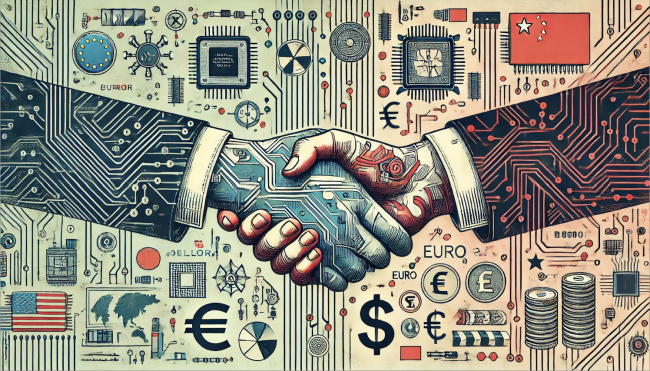
Funding A Rival: When the United States and Europe Invest in Chinese Tech
Outbound investments into rival powers are receiving increasing political attention on both sides of the Atlantic, as competition between the United States and China intensifies. The concern lies with American and European investments in certain Chinese technologies - such as artificial intelligence, biotechnology, semiconductors, or quantum computing - which could enable China to enhance its military capabilities and thus may pose risks to national and international security.

France Adapts to an Era of Strategic Competition With China
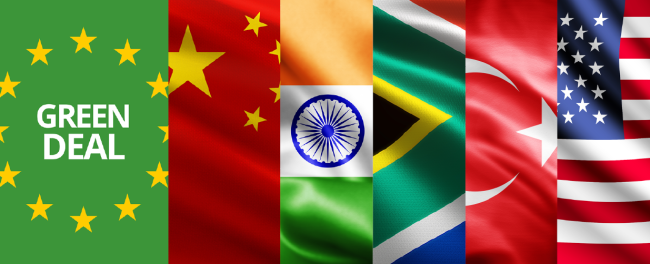
The EU Green Deal External Impacts: Views from China, India, South Africa, Türkiye and the United States
Ahead of June 2024 European elections and against the backdrop of growing geopolitical and geoeconomic frictions, if not tensions, between the EU and some of its largest trade partners, not least based on the external impacts of the European Green Deal (EGD), Ifri chose to collect views and analyses from leading experts from China, India, South Africa, Türkiye and the United States of America (US) on how they assess bilateral relations in the field of energy and climate, and what issues and opportunities they envisage going forward.
Macron’s China Policy: Dropping Illusions and Bringing Back Realpolitik
One may regret that France has not upgraded its China policy sooner, but it seems that the French president is now clear-eyed that it is not enough to only have a good relationship with Beijing, it is also necessary to reinstate the balance of power.
Fumio Kishida's Visit to Paris. The France-Japan Relation Deserves Better
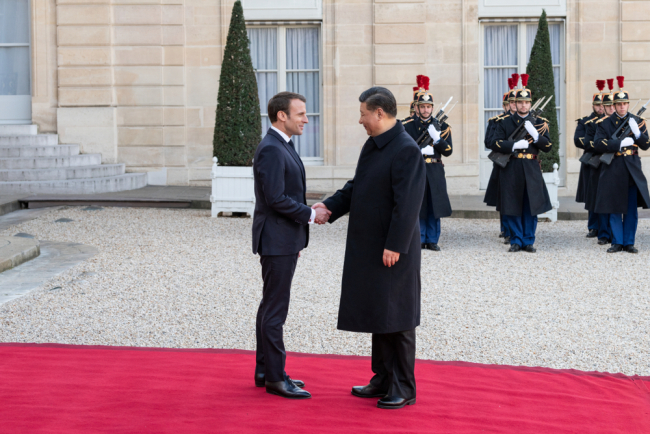
Chinese President Xi Jinping's state visit to France hit the headlines. President Macron rolled out the red carpet to welcome his guest, hoping to convince China to limit its support for Russia and respect fair trade rules.
Europe faces up to China's EV dominance as carbon-zero targets loom
As Xi travels through EU this week, automakers weigh whether to fight or team up with cheaper Chinese rivals.

Critical Raw Materials: What Chinese Dependencies, What European Strengths?
In adapting to growing geopolitical competition over digital technology, the EU and the UK are striving for economic security and technological sovereignty. European policies focus on reducing critical over-dependencies on China. This de-risking is a necessary process of adaptation to the new geopolitical realities.

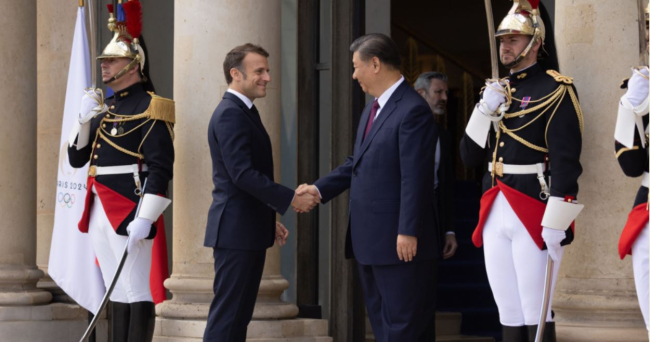
Macron accused of rolling out red carpet for ‘dictator’ Xi
Critical Raw Materials: What Chinese Dependencies, What European Strengths?
In adapting to growing geopolitical competition over digital technology, the EU and the UK are striving for economic security and technological sovereignty. European policies focus on reducing critical over-dependencies on China. This de-risking is a necessary process of adaptation to the new geopolitical realities.
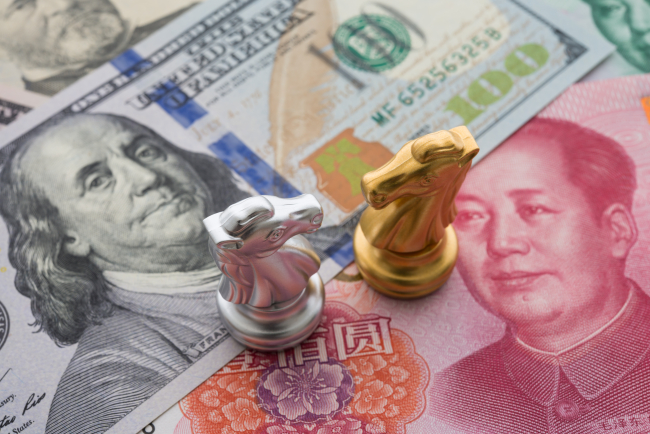
Power and Financial Interdependence
The link between financial self-reliance and geopolitical power has long been debated. The unbalanced Sino-American trade relationship has created asymmetric financial ties which generate potential sources of leverage for both parties and will not quickly disappear. Absent a clarifying major crisis, it will be difficult to definitively determine which party has greater leverage.
China, technical standardization, and the future of globalization
As the global economy sits at a crossroad between connectivity-driven globalization and strategic decoupling, technical standardization provides a valuable measure of where we are headed.
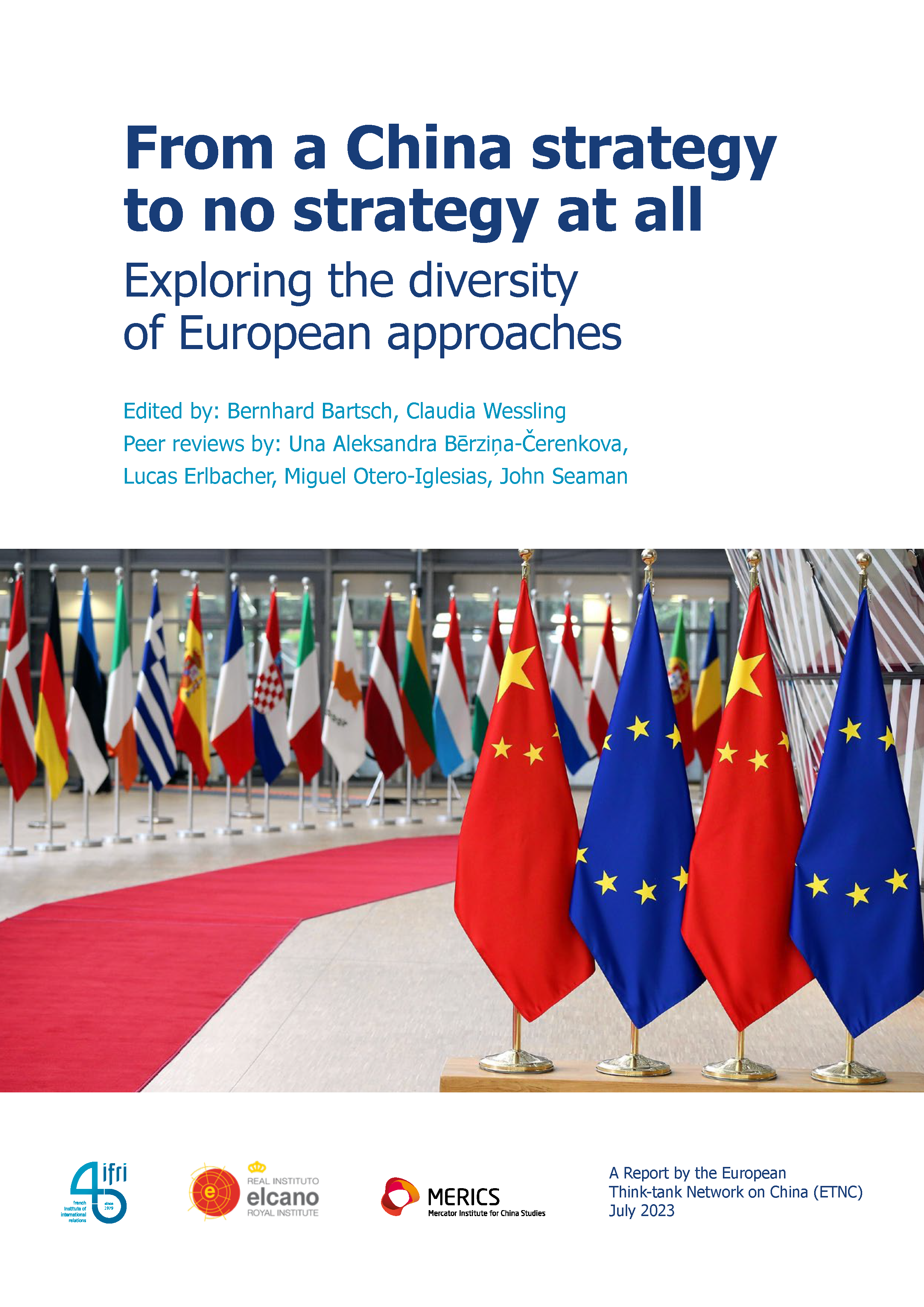
From a China strategy to no strategy at all: Exploring the diversity of European approaches
While there is now new momentum in the relationship between Europe and China, considerable variation remains in approaches across the continent, from clear-cut strategies to more ambiguous policies, complicating a common European position.
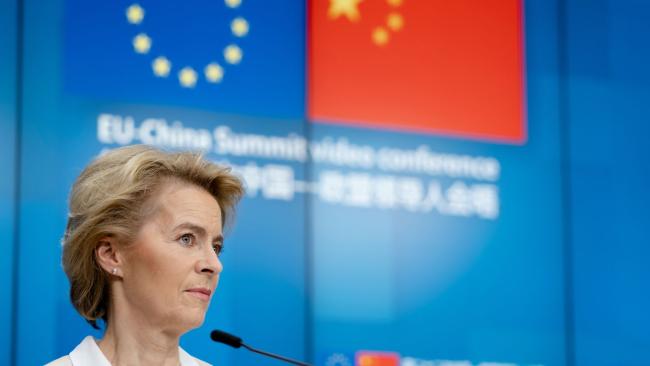
EU's China policy staying on track despite intensifying debate
While French President Emmanuel Macron’s state visit to China is viewed by some to be an exercise in stirring the pot, this does not mean that the European boat has veered off course. The EU is used to robust debate among and within member states, and can take this as another opportunity to affirm their stance on China.

China in the Race to Low Earth Orbit: Perspectives on the Future Internet Constellation Guowang
In April 2021, the Chinese government officially, but rather quietly, established a new state-owned enterprise (SOE) named China SatNet. Its mission: build out China’s “mega-constellation” program for low Earth orbiting internet satellites, known as Guowang (“national network”).
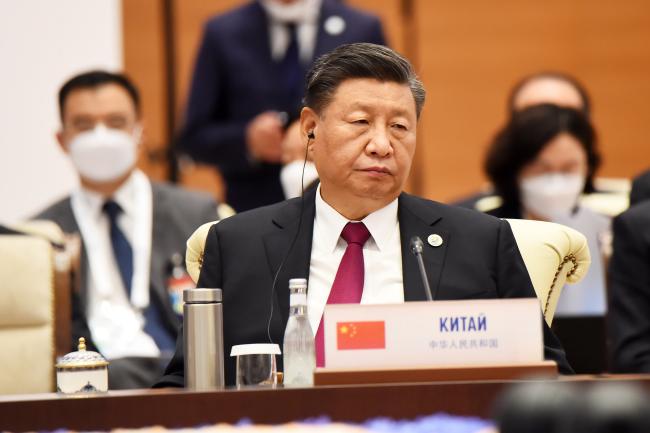
Whither China After 10 Years of Economic Policies Guided by Xi?
As the 20th national congress of the Chinese Communist Party (CCP) draws closer, this is an opportune moment to appraise China’s economic achievements over the past decade under President Xi Jinping’s guidance and to identify the challenges the country will have to address during the next five years.
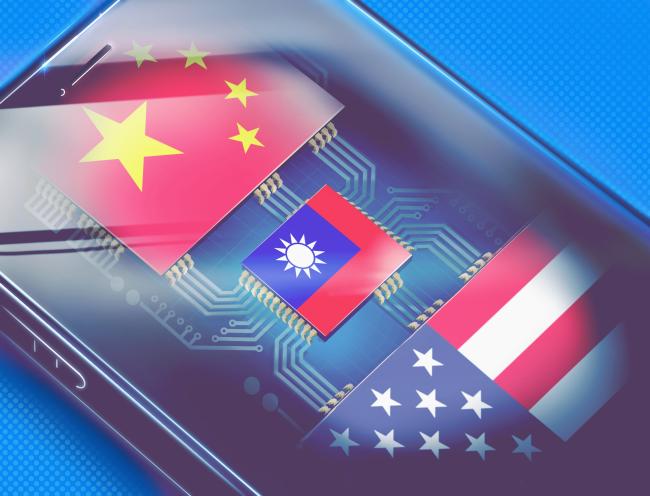
Implications of the Global Supply Chain Reform: A Taiwanese Perspective
How have both the private and public sectors in Taiwan sought to mitigate the challenges posed by the reform agenda for global supply chains (GSCs)?
Towards a more China-centred global economy? Implications for Chinese power in the age of hybrid threats
An era of hyper globalization is giving way to an age of geoeconomics wherein China seeks a decisive seat at the table.
France, China and the BRI: The challenge of conditional engagement
Moving away from its traditional low-profile attitude, China has gradually shifted to a muscular foreign policy in the wake of the 2008 global financial crisis and the resulting change in the global balance of power.
Xi Jinping’s Conquest of China’s National Security Apparatus
One indisputable trend of Xi Jinping’s leadership since taking up the reins of government in 2012 has been the reaffirming of the Party’s control over the state, the army, society, and the economy. To this aim, establishing heightened control over the national security apparatus has been his means as much as an end. Xi has thus strengthened the Party’s overall security authority through major institutional and legal reforms.

A Rough Year Ahead for the China-France Strategic Partnership
2020 has been a challenging year for the world economy. Although the magnitude of the shock triggered by the COVID-19 pandemic differed widely from one country to another, no economy was left unscathed.
France’s incoherent China policy confuses partners
On 21 July 2020, French Minister of Economy and Finance Bruno Le Maire participated remotely in the High Level Economic and Financial Dialogue with Chinese Vice Premier Hu Chunhua.
Ambitious New Climate Goals Shouldn't Let China off the Hook
Xi Jinping’s announcement of carbon neutrality is impeccably timed, but the hard part lies ahead.
The Belt and Road: China's "Community of Destiny" for Southeast Asia?
As a frontline zone and a pivot, Southeast Asia is both a testing ground and a showcase of China’s ambitions in developing a grand cooperative scheme. Creating mutually positive linkages is crucial for both partners, if not for the same reasons.
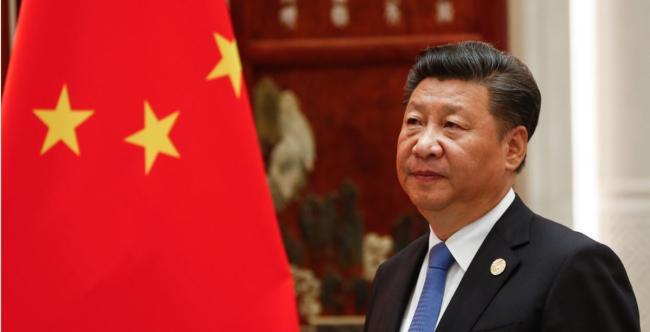
Economy and Diplomacy: China’s two Challenges in the Post-Covid-19 World
Will China rise stronger from the pandemic? A flow of media reports and op-eds have recently flourished, forecasting the decline of the West and the triumph of China on the world stage amid the COVID-19 pandemic. Some have declared the dawn of a “post-Western world”.
The Future of Think Tanks
In this special issue of Politique étrangère devoted to the proceedings of the conference organized by Ifri on April 10, 2019, in the Grand Amphitheater of the Sorbonne, on the occasion of its fortieth anniversary, discover the debate moderated by Bassma Kodmani between Thomas Bagger, Thomas Gomart, Robin Niblett, and Daniela Schwarzer.
The World of Yesterday and Tomorrow
In this special issue of Politique étrangère devoted to the proceedings of the conference organized by Ifri on April 10, 2019, in the Grand Amphitheater of the Sorbonne, on the occasion of its fortieth anniversary, discover the speech by Thierry de Montbrial, Founder and Executive Chairman of Ifri.
The Future of Europe in the Context of Sino-American Competition - Foreword
In this special issue of Politique étrangère devoted to the proceedings of the conference organized by Ifri on April 10, 2019, in the Grand Amphitheater of the Sorbonne, on the occasion of its fortieth anniversary, discover the speech by Bruno Le Maire, Minister of Economy and Finance.
The Future of Europe in the Context of Sino-American Competition - Foreword
In this special issue of Politique étrangère devoted to the proceedings of the conference organized by Ifri on April 10, 2019, in the Grand Amphitheater of the Sorbonne, on the occasion of its fortieth anniversary, discover the speech by Bruno Le Maire, Minister of Economy and Finance.
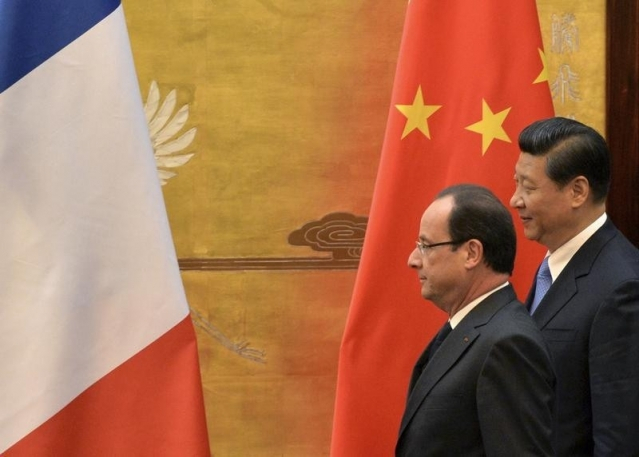
Partout la Chine
Dans 3D dimanche, partout la Chine, désormais 1ère puissance économique mondiale devant les Etats-Unis selon le FMI (Fonds Monétaire International). Or, l'Histoire démontre que pouvoir politique et militaire ont toujours dépendu de la puissance économique.
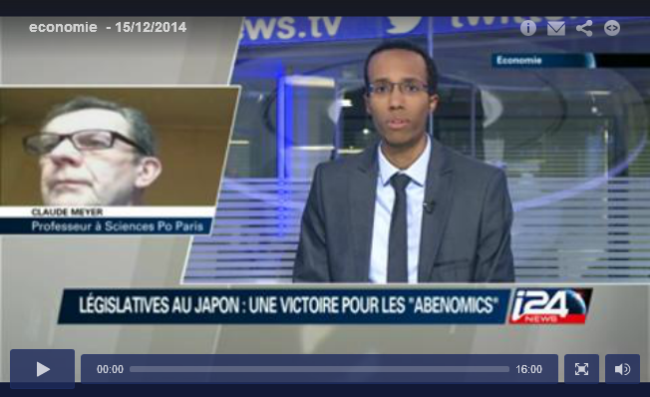
Économie mondiale : la Chine passe devant les États-Unis
Pour la première fois depuis 1872, les États-Unis ne sont plus, en 2014, la première puissance économique mondiale. La Chine les a dépassé et représente aujourd'hui 16,5 % de l'économie mondiale, en terme de pouvoir d'achat réel, devant les 16,3 % américains. Mais que signifient ces chiffres ? Induisent-ils la fin de près de deux siècles de suprématie économique américaine ? Surtout, ce rapport de force est-il parti pour durer ?

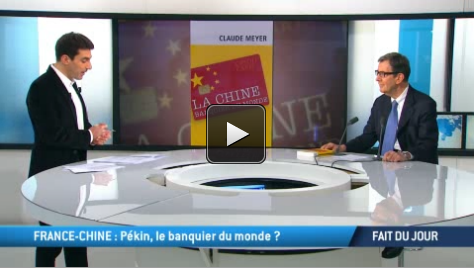
La Chine est-elle le banquier du monde ?
Auteur de "La Chine, banquier du monde", Claude Meyer est l'invité de Mohamed Kaci dans le 64' de TV5MONDE. Docteur en économie et ancien dirigeant de banque, Claude Meyer enseigne à Sciences-Po. Chercheur associé au CERI et au GEM, il a publié de nombreux ouvrages et articles sur l’Asie.
Chine. Les handicaps majeurs de l’économie chinoise
Le fait de chausser les seules lunettes de l’économie pour étudier la Chine peut conduire à des erreurs de perspective.
Et encore, dans ce cas-là, il ne s’agit souvent que du commerce extérieur chinois.
Or, le pays non seulement voit des formes de contestation interne à la fois se multiplier et se diversifier, mais ses responsables politiques devront affronter des défis internes considérables.
On connaît les grands chantiers, actuels ou à venir : laissés pour compte du développement, gestion des mégapoles, natalité, vieillissement de la population, systèmes de retraite, corruption, violences sociétales, liberté d’expression, etc.
Comment donc réduire toutes ces vulnérabilités ?
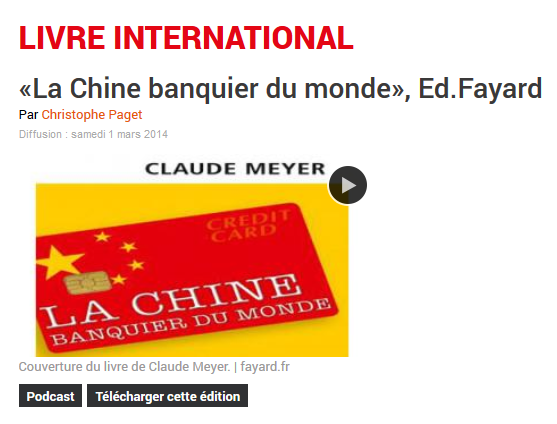
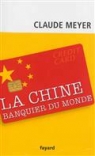
La Chine banquier du monde
Cette semaine, le livre international est planétaire, puisqu’on va parler de La Chine banquier du monde. Qu’est-ce que la Chine achète, qu’est-ce que la Chine finance, d’où vient cet argent chinois qui semble inépuisable ? Réponses avec l’auteur de ce livre, Claude Meyer, docteur en économie, enseignant à Sciences Politiques.
Chine-France, mariage forcé ?
Notre invité est :
Claude Meyer
Economiste, ancien dirigeant de banque et enseignant à Sciences–Po.
Chercheur associé au CERI (Centre d'études et de recherches internationales) et au GEM (Groupe d’économie mondiale)
Il publie La Chine, banquier du monde aux éditions Fayard.

La Chine, banquier du monde ?
Après le tsunami des exportations, voilà la déferlante chinoise sur la finance. A l’instar des autres grandes puissances économiques de la planète, la Chine dispose aujourd’hui de multiples canaux d’influence issus de son pouvoir économique. Les utilise-t-elle pour servir ses propres intérêts géopolitiques ? Y parvient-elle ? La Chine superpuissance mondiale… à quelle échéance ? Et avec quel régime politique ?
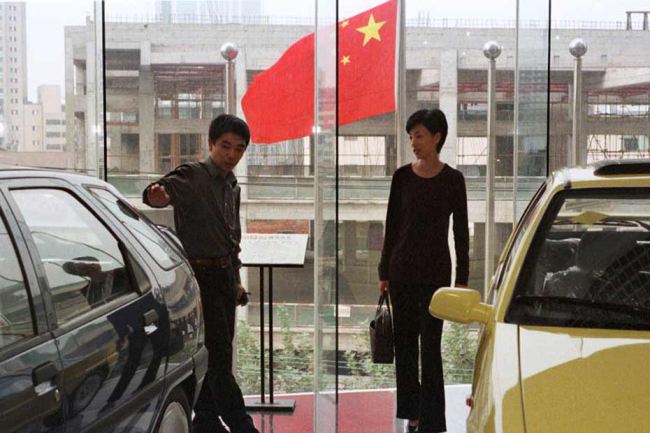
Le modèle chinois "est à bout de souffle"
TROIS QUESTIONS A - Claude Meyer, professeur d’économie internationale et auteur de deux ouvrages sur le Chine.
L’INFO. La Chine a dévoilé le chiffre de sa croissance lundi. A 7,7%, il est toujours largement supérieur à la plupart des pays développés, mais reste que ce résultat est le plus bas des treize dernières années. La Chine, désormais concurrencée par ses voisins asiatiques, n’est plus aussi attractive. L’Etat souhaite faire évoluer son modèle vers l’industrie innovante et la consommation intérieure.
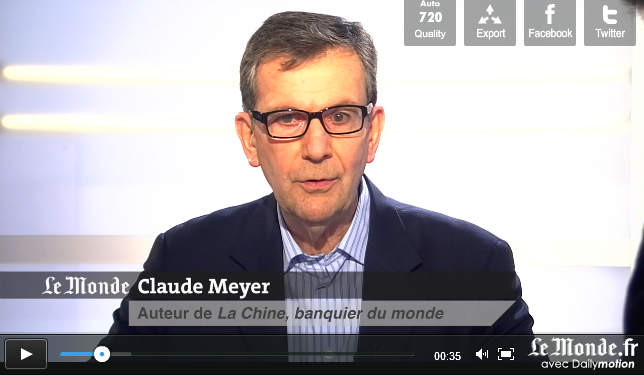
La Chine et les paradis fiscaux
Pour Claude Meyer, auteur de « La Chine, banquier du monde », l'internationalisation des grandes entreprises du pays et un système financier inadapté expliquent le recours au système offshore.

La Chine est-elle vraiment la première puissance économique mondiale ?
La Chine est-elle vraiment la première puissance économique mondiale ? La Banque mondiale le dit. En Afrique comme en France, on accueille à bras ouverts les investissements chinois. Mais, Pékin joue sur deux tableaux : acteur majeur de l’économie mondiale et, malgré tout, puissance émergente. Au moment où la croissance économique de l’empire du Milieu faiblit, où va la Chine, où entraîne-t-elle le monde ?


Ifri, a foundation recognized as being of public utility, relies largely on private donors – companies and individuals – to guarantee its sustainability and intellectual independence. Through their funding, donors help maintain the Institute's position among the world's leading think tanks. By benefiting from an internationally recognized network and expertise, donors refine their understanding of geopolitical risk and its consequences on global politics and the economy. In 2026, Ifri partners with over 90 French and international companies and organizations.

The European Think-tank Network on China (ETNC) is a gathering of China experts from a selection of European research institutes. It is devoted to the policy-oriented study of Chinese foreign policy and relations between China and European countries as well as China and the EU. It facilitates regular exchanges among participating researchers with a view to deepening the understanding within the European policy and research community and the broader public of how Europe, as a complex set of actors, relates with China and how China’s development and evolving global role is likely to impact the future of Europe. The network’s discussions and analyses take a decidedly ‘bottom-up’ approach, accounting for the various aspects of bilateral relations between European countries and China, and the points of convergence and divergence among EU member states in order to examine EU-China relations in a realistic and comprehensive way. The views presented in ETNC reports are the sole responsibility of the signed authors and do not in any way represent the views of all members of the ETNC, its participating institutions, nor the institutions with which the authors are affiliated.
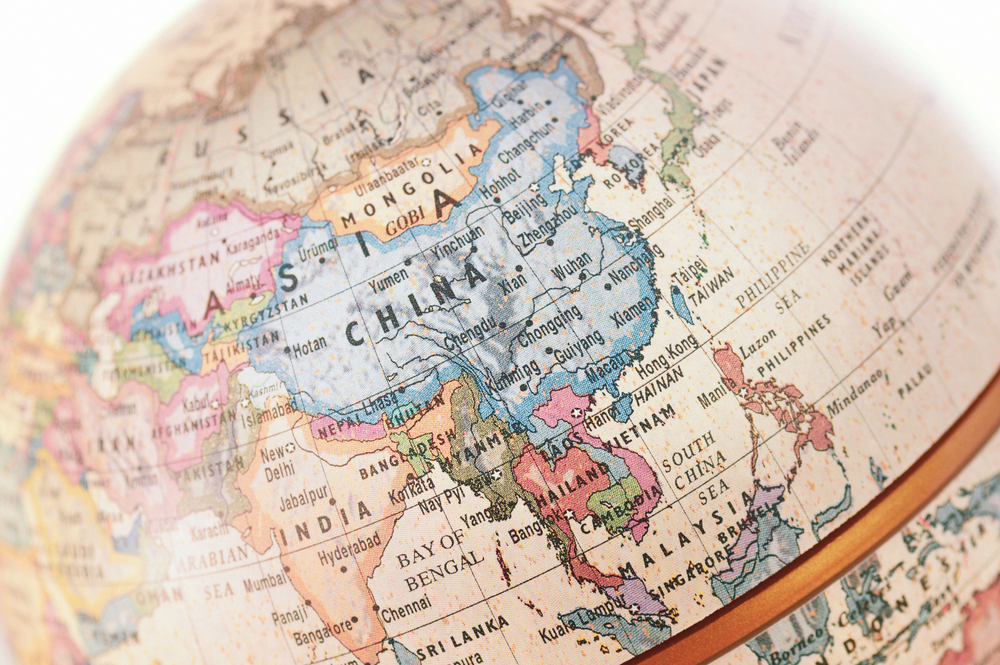
Asia is a nerve center for multiple global economic, political and security challenges. The Center for Asian Studies provides documented expertise and a platform for discussion on Asian issues to accompany decision makers and explain and contextualize developments in the region for the sake of a larger public dialogue.
The Center's research is organized along two major axes: relations between Asia's major powers and the rest of the world; and internal economic and social dynamics of Asian countries. The Center's research focuses primarily on China, Japan, India, Taiwan and the Indo-Pacific, but also covers Southeast Asia, the Korean peninsula and the Pacific Islands.
The Centre for Asian Studies maintains close institutional links with counterpart research institutes in Europe and Asia, and its researchers regularly carry out fieldwork in the region.
The Center organizes closed-door roundtables, expert-level seminars and a number of public events, including an Annual Conference, that welcome experts from Asia, Europe and the United States. The work of Center’s researchers, as well as that of their partners, is regularly published in the Center’s electronic journal Asie.Visions.