




China
China's diplomatic, military, economic and technological assertiveness, as well as its growing rivalry with the United States, raise certain apprehensions among its neighbors and Europeans alike.
Related Subjects
EU’s Derisking From China: A Daunting Task
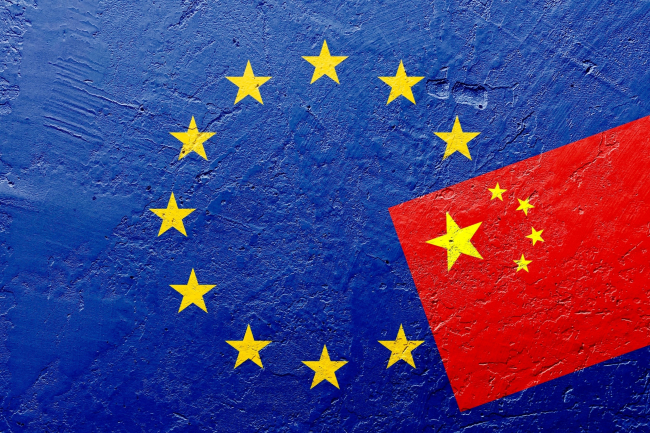
With economic security as a major concern, the EU has recently turned to “derisking” from China. The EU strategy entails reducing critical dependencies and vulnerabilities, including in EU supply chains, and diversifying where necessary, while recognizing the importance and need to maintain open channels of communication.


U.S. tariffs take center stage but China and the EU are quietly clashing
The U.S. tariff saga has stolen global spotlight from trade tensions between China and the European Union, which are now heating up.
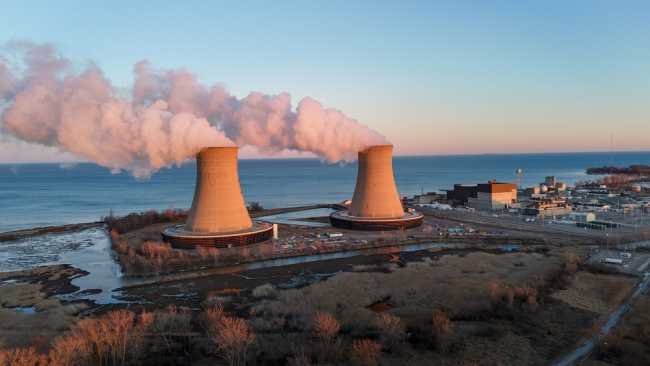
Will the Western Nuclear Power Revival Take Place? The State of Extra-European Advances
Against the dual backdrop of the energy transition and the rapid transformation of the international order, the question of Western nuclear revival is being raised with renewed acuity.
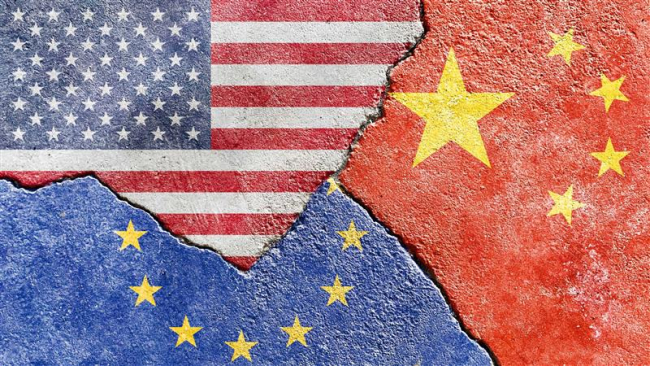
Quest for Strategic Autonomy? Europe Grapples with the US - China Rivalry
Building on the 2020 European Think Tank Network on China (ETNC) report, which assessed Europe’s positioning amid the strategic rivalry between the United States and China, this edition re-examines the geopolitical landscape in light of the Covid-19 pandemic, Russia’s war in Ukraine and Donald Trump’s return to the White House. This report features 22 national chapters and one dedicated to the EU, analysing the evolution of Europe’s relations with Washington and Beijing, the range of approaches to dealing the US-China rivalry and how these are expected to evolve.

The 'Macron Doctrine' goes to Asia: Autonomy with partners, steady on China
The French president calls for a 'third way' in the Indo-Pacific
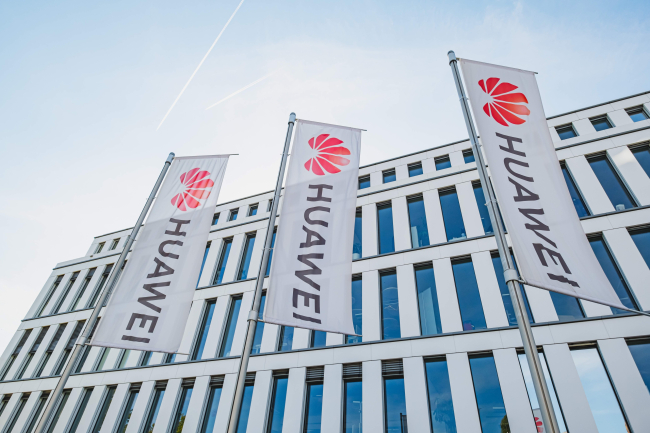
The “Huawei Saga” in Europe Revisited: German Lessons for the Rollout of 6G
While the European Union attempted to coordinate a collective response through its 5G Toolbox in Europe’s 5G infrastructure, member states diverged significantly in balancing political, economic, and technological considerations. Germany, despite its economic ties to China and status as Europe’s largest telecom market, only reached a tentative agreement in July 2024—one that appears largely symbolic.


How Will the Trump Presidency Change EU-China Relations?
Over the past few years, European countries have started to line up with the United States on China policy. But now, as Donald Trump destroys the trust European countries had in America, China is stepping up, promising stability and consistency.
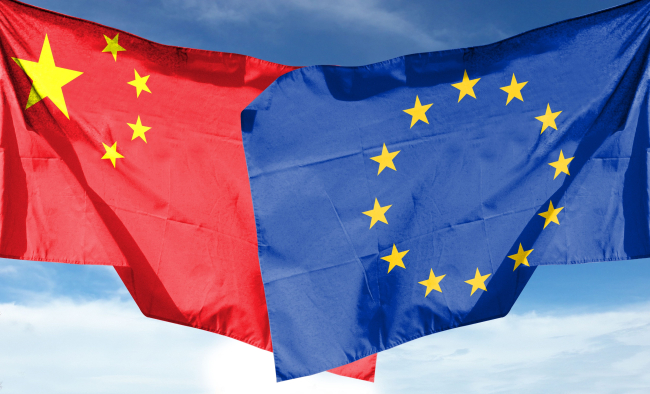
China-EU ties reach half century: 4 things to know
Will Trump 2.0 push the two combative sides to find common ground?
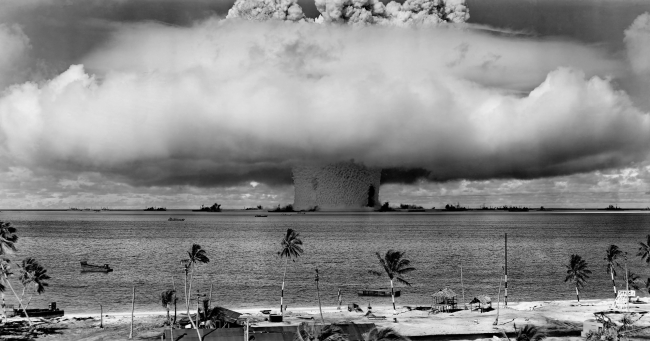
A Fragile Consensus? The Pressure on the Norm Against Nuclear Testing
Apart from North Korea, no state has conducted explosive nuclear tests in the 21st century, reflecting the emergence of a strong international norm against such testing.
A "DeepSeek Moment"?
DeepSeek, hailed as a champion of Chinese AI, represents less a revolution than a significant optimization of existing technologies. Doubts remain regarding the figures put forward by the start-up, inviting a more measured response to the media hype surrounding China’s technological catch-up. Nonetheless, DeepSeek signals the need to question an economic model based solely on the race for computational power. By betting on open innovation, Europe can carve out its own path in a competition that is far from being a zero-sum game.

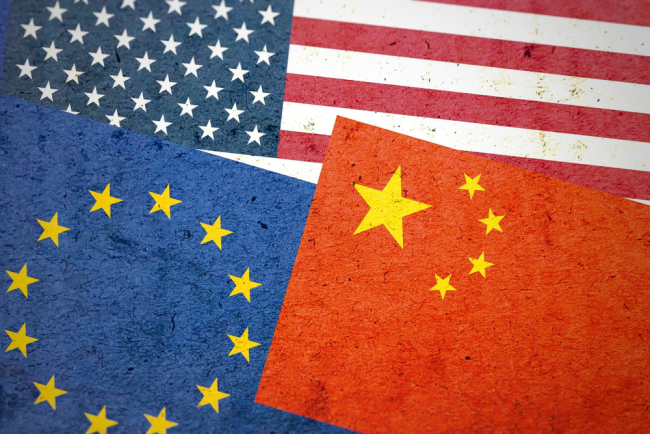
Trump-battered Europe eyes China with launch of diplomatic flurry to Beijing
EU officials and European national representatives are on overlapping visits but each will be asking for something slightly different
The China-led AIIB, a geopolitical tool?
The establishment of the Asian Infrastructure Investment Bank (AIIB) in 2016, on a Chinese initiative, constituted an attempt to bridge the gap in infrastructure financing in Asia. However, it was also perceived in the West as a potential vehicle for China’s geostrategic agendas, fueling the suspicion that the institution might compete rather than align with existing multilateral development banks (MDBs) and impose its own standards.

Will Europe Distance Itself From Taiwan?
To counter U.S. President Donald Trump’s hostility toward Europe, one idea being considered in Brussels is to lean into China’s latest charm offensive.
(Replay) US-China-Taiwan Relations: What to expect in the Trump II Era?
Replay of Ifri's Center for Asian Studies' conference "US-China-Taiwan Relations: What to expect in the Trump II era?", held at Ifri on Tuesday 11 March 2025.

Europe Tempted by Closer Relations With China Following Trump’s Hostility, but Barriers to Cooperation Persist
While U.S. Vice President JD Vance left Europe reeling at the Munich Security Conference last month, Chinese Foreign Minister Wang Yi (王毅) met with several European officials on the sidelines. At the U.N. Security Council a few days later, China pushed for greater European involvement in peace negotiations in the Russia-Ukraine war.
The China-Russia Partnership and the Ukraine War: Aligned but not allied
China and Russia maintain a strategic partnership rooted in shared opposition to the U.S. and liberal democracies, but their relationship is shaped more by pragmatism than trust.
Technical Standards, Soft Connectivity and China’s Belt and Road: Towards greater convergence or fragmentation?
As the intensification of geopolitical competition points toward increased global fragmentation, the definition of technical standards for future markets and industries will play an important role in determining just how deep the fissures will run.
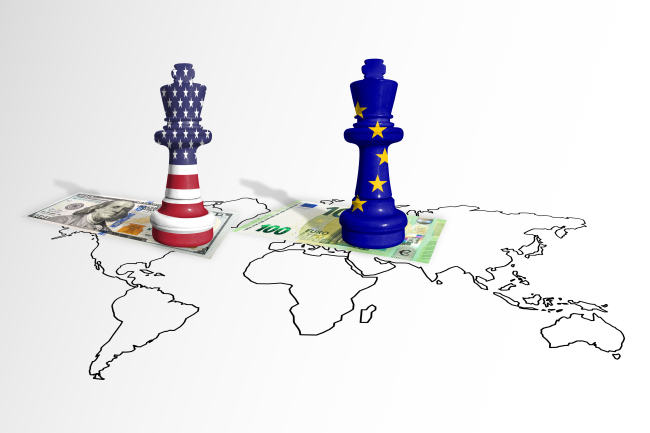
Trump’s Second Term: Laying the Groundwork for a New Trade War
In a statement released on February 1, 2025, President Trump announced the implementation of a 10% tariff on Chinese goods and a 25% tariff on imports from Canada and Mexico. While the former took effect via executive order on February 4, the latter were granted a 30-day reprieve. Sanctions targeting European Union (EU) products are said to be imminent.
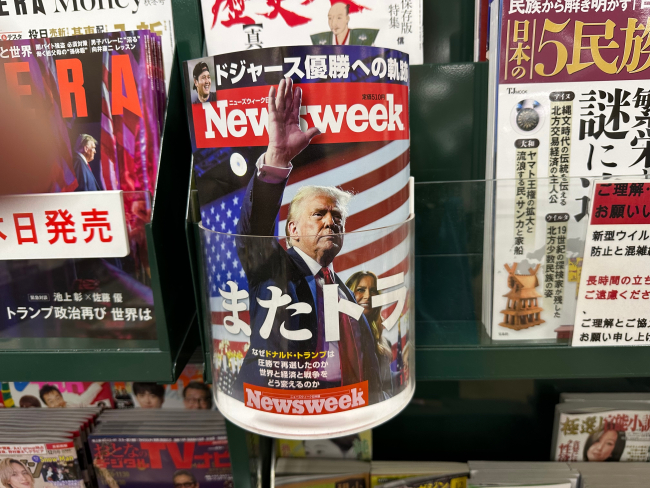
The Indo-Pacific and Trump II. In Uncle Sam’s brutal embrace
In this collective analysis, the research team of the Center for Asian Studies presents a synthetic and non-exhaustive assessment of the relations taking shape between the United States under the Trump II administration and some of the main players in the Indo-Pacific.
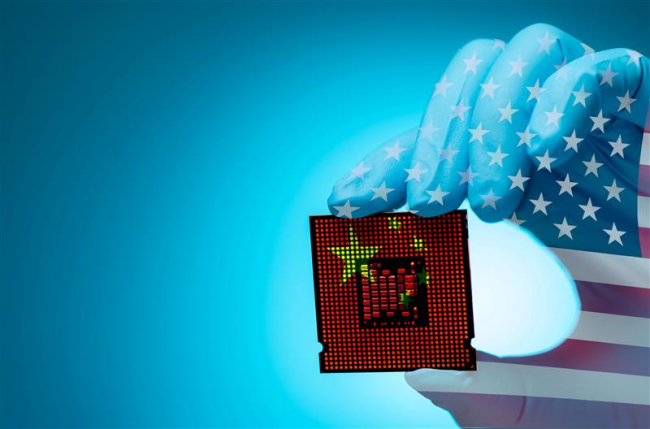
From nonproliferation to strategic competition: US export controls and China
Technological competition is at the heart of the renewed great-power competition that has characterized relations between the USA and China since the 2010s. The role of technological innovation in the evolution of power relations is already recognized in the literature of international relations. However, developments in US technology policy under the last two administrations raise the reverse question: how does the perception of changing power relations (in this case, Chinese technological catch-up perceived as a threat to US leadership) transform policies granting or denying access to technological innovation?
The “Huawei Saga” in Europe Revisited: German Lessons for the Rollout of 6G
While the European Union attempted to coordinate a collective response through its 5G Toolbox in Europe’s 5G infrastructure, member states diverged significantly in balancing political, economic, and technological considerations. Germany, despite its economic ties to China and status as Europe’s largest telecom market, only reached a tentative agreement in July 2024—one that appears largely symbolic.
A Fragile Consensus? The Pressure on the Norm Against Nuclear Testing
Apart from North Korea, no state has conducted explosive nuclear tests in the 21st century, reflecting the emergence of a strong international norm against such testing.
A "DeepSeek Moment"?
DeepSeek, hailed as a champion of Chinese AI, represents less a revolution than a significant optimization of existing technologies. Doubts remain regarding the figures put forward by the start-up, inviting a more measured response to the media hype surrounding China’s technological catch-up. Nonetheless, DeepSeek signals the need to question an economic model based solely on the race for computational power. By betting on open innovation, Europe can carve out its own path in a competition that is far from being a zero-sum game.
The China-led AIIB, a geopolitical tool?
The establishment of the Asian Infrastructure Investment Bank (AIIB) in 2016, on a Chinese initiative, constituted an attempt to bridge the gap in infrastructure financing in Asia. However, it was also perceived in the West as a potential vehicle for China’s geostrategic agendas, fueling the suspicion that the institution might compete rather than align with existing multilateral development banks (MDBs) and impose its own standards.
The China-Russia Partnership and the Ukraine War: Aligned but not allied
China and Russia maintain a strategic partnership rooted in shared opposition to the U.S. and liberal democracies, but their relationship is shaped more by pragmatism than trust.
Technical Standards, Soft Connectivity and China’s Belt and Road: Towards greater convergence or fragmentation?
As the intensification of geopolitical competition points toward increased global fragmentation, the definition of technical standards for future markets and industries will play an important role in determining just how deep the fissures will run.
Trump’s Second Term: Laying the Groundwork for a New Trade War
In a statement released on February 1, 2025, President Trump announced the implementation of a 10% tariff on Chinese goods and a 25% tariff on imports from Canada and Mexico. While the former took effect via executive order on February 4, the latter were granted a 30-day reprieve. Sanctions targeting European Union (EU) products are said to be imminent.
The Indo-Pacific and Trump II. In Uncle Sam’s brutal embrace
In this collective analysis, the research team of the Center for Asian Studies presents a synthetic and non-exhaustive assessment of the relations taking shape between the United States under the Trump II administration and some of the main players in the Indo-Pacific.
From nonproliferation to strategic competition: US export controls and China
Technological competition is at the heart of the renewed great-power competition that has characterized relations between the USA and China since the 2010s. The role of technological innovation in the evolution of power relations is already recognized in the literature of international relations. However, developments in US technology policy under the last two administrations raise the reverse question: how does the perception of changing power relations (in this case, Chinese technological catch-up perceived as a threat to US leadership) transform policies granting or denying access to technological innovation?
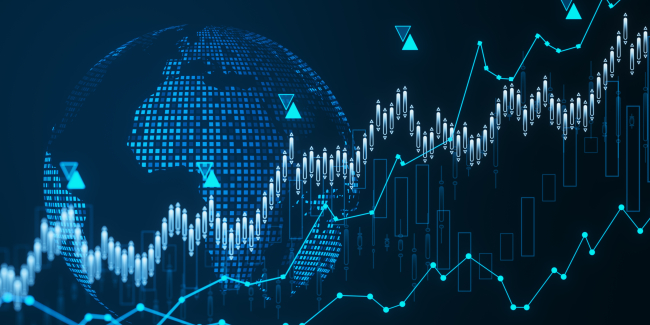
How Geopolitical Tensions Reshape Trade Patterns: Geoeconomic Fragmentation, or China’s Big Manufacturing Push?
A data-based analysis shows that widespread geoeconomic fragmentation of world trade is not visible, at least so far. In contrast, the geopolitically-motivated challenges to international coordination are striking, notably in relation with China's surging surplus in manufactured goods trade.
AI and Technical Standardization in China and the EU: Diverging priorities and the need for common ground
Given the highly disruptive potential of AI, global cooperation on AI safety and governance is imperative, and yet the deeply transformational potential of AI also ensures that a high level of competition and systemic rivalry is likely unavoidable. How can the EU best manage its complex relationship with China in the field of AI so as to ensure a necessary level of cooperation in spite of competition and rivalry?
China’s Quest for a Quantum Leap
The global race to harness quantum science is intensifying. Recognizing the strategic potential of quantum technology for economic, military, and scientific advancement, China is focusing on quantum breakthroughs as a way to shift the balance of power, especially in its competition with the United States. President Xi Jinping has emphasized the importance of scientific innovation, particularly in quantum fields, to fuel national development and ensure security.

Japan: Deciphering Prime Minister Ishiba’s Strategic Vision. Toward an Asian version of NATO?
On Tuesday, October 1, Shigeru Ishiba was sworn in as Prime Minister of Japan. His proposal to revise the security alliance with the United States and create an Asian version of the North Atlantic Treaty Organization (NATO) attracted attention and sparked lively debate.
Critical Raw Materials, Economic Statecraft and Europe's Dependence on China
As China tightens export controls on critical minerals, it is important to put Beijing's policies in perspective and analyse how Europe can respond.

Sat-to-Cell: Towards Universal Connectivity?
Sat-to-Cell is a new type of service that connects smartphones directly to satellites. It has recently enabled innovative applications such as emergency text messaging via satellite. The technology is developing rapidly, and many questions are now being raised about its potential impact.
Getting China Onboard a Global Debt Governance System
China has become the number one provider of development finance in the world. Because of its significant share in Low and Middle Income Countries’ (LMICs) external debt, China should take up responsibilities and cooperate with traditional development finance providers, but its particular lending style and distinct approach to debt management pose many challenges and do not make international cooperation straightforward.

Deployment of the French Frigate Bretagne in the Indo-Pacific: Implementing French Strategy in the Region
The deployment of the French Navy’s multi-mission frigate (FREMM) Bretagne in the Indo-Pacific in recent months demonstrates France’s capability to project power far from the mainland and solidifies its Indo-Pacific strategy.
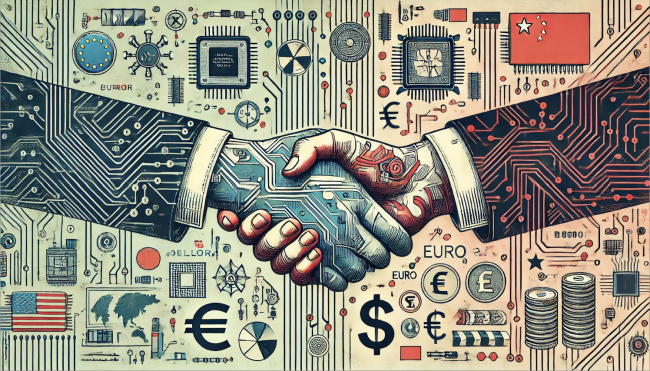
Funding A Rival: When the United States and Europe Invest in Chinese Tech
Outbound investments into rival powers are receiving increasing political attention on both sides of the Atlantic, as competition between the United States and China intensifies. The concern lies with American and European investments in certain Chinese technologies - such as artificial intelligence, biotechnology, semiconductors, or quantum computing - which could enable China to enhance its military capabilities and thus may pose risks to national and international security.

France Adapts to an Era of Strategic Competition With China
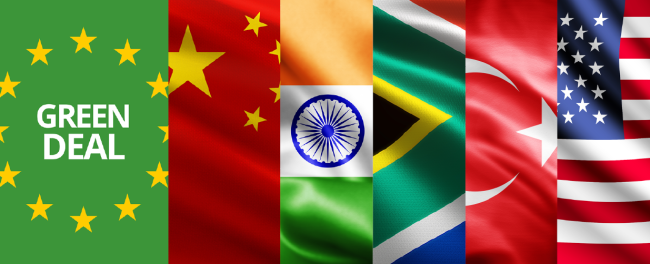
The EU Green Deal External Impacts: Views from China, India, South Africa, Türkiye and the United States
Ahead of June 2024 European elections and against the backdrop of growing geopolitical and geoeconomic frictions, if not tensions, between the EU and some of its largest trade partners, not least based on the external impacts of the European Green Deal (EGD), Ifri chose to collect views and analyses from leading experts from China, India, South Africa, Türkiye and the United States of America (US) on how they assess bilateral relations in the field of energy and climate, and what issues and opportunities they envisage going forward.

Europe is ‘counting on China’ to end Russia’s war in Ukraine, leaders tell Xi Jinping in Beijing
European Commission chief Ursula von der Leyen and French President Emmanuel Macron deliver united message to Chinese president during visit ; but as French leader signed over 20 business deals on China trip, EU chief took sterner line with Xi on economic grievances, human rights and Taiwan
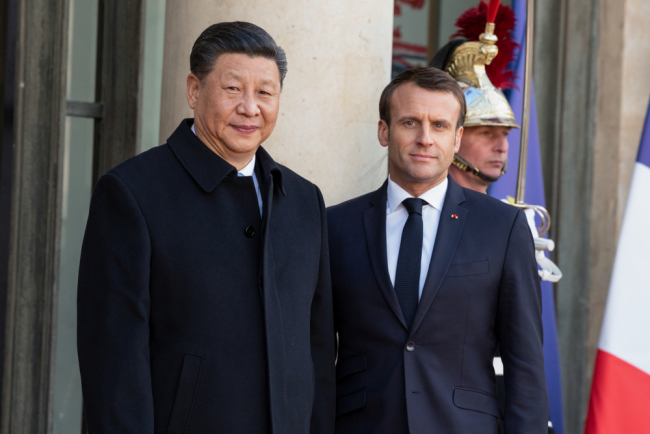
In China, Macron appeals to Xi to help end Ukraine conflict
French President Emmanuel Macron called on Chinese President Xi Jinping to help convince Russia to hold negotiations toward ending the war in Ukraine as the two leaders met in Beijing on Thursday.

France’s Emmanuel Macron to Press Xi Jinping on China’s Support of Russia
French President Emmanuel Macron is expected to press Chinese leader Xi Jinping during a trip to China this week to limit support for Russia in its war against Ukraine, according to French officials, amid growing Western concerns over Beijing’s deepening economic and political ties with Moscow.

Xi's Moscow Visit Risks Further Emboldening Putin: Analysts
There is no sign the visit of Chinese President Xi Jinping to Moscow will rein in President Vladimir Putin in his war in Ukraine, even if it again highlights a lopsided relationship where Russia is clearly the junior partner, analysts say.
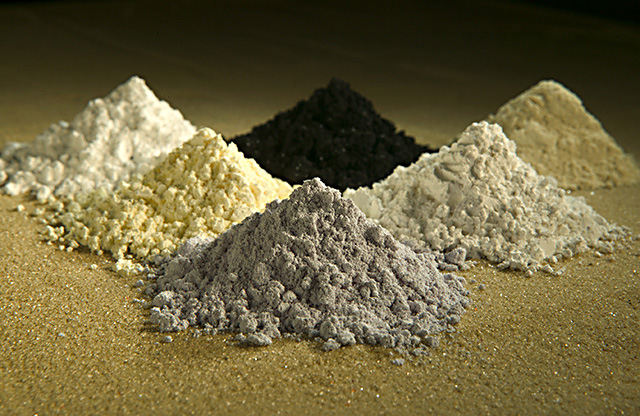
Europe’s big rare earth discovery seen as ‘game changer’ in bid to address China’s dominance
Europe has been almost entirely dependent on China for critical minerals for years, but a newly unearthed million-tonne deposit in Sweden could help reduce that reliance
France returns its ambassador to Australia, but years of antagonism lie ahead
France is eager to prevent the crisis from spiralling further as it recognises it is in its national interest, and President Macron’s favour, to end it. But damage has been done, writes Ahmed Aboudouh.

China Space Station First Step in Country's Plans to Colonize Space
China's far-reaching ambition for a permanent presence in outer space began in earnest on Thursday with the launch of its first crew bound for a new space station.
Coronavirus: China wants to lead the fight against Covid-19, but can it overcome the mistrust?
With the United States gripped by a domestic struggle with Covid-19, China appears to have stepped into its shoes as a global provider.
China wants its diplomats to show more fighting spirit. It may not be intended to win over the rest of the world
The rise of the so-called ‘wolf warriors’ heralds a more aggressive approach to promoting the country’s official line. Analysts warn this is likely to harm the country’s image even if their careers benefit as a result.

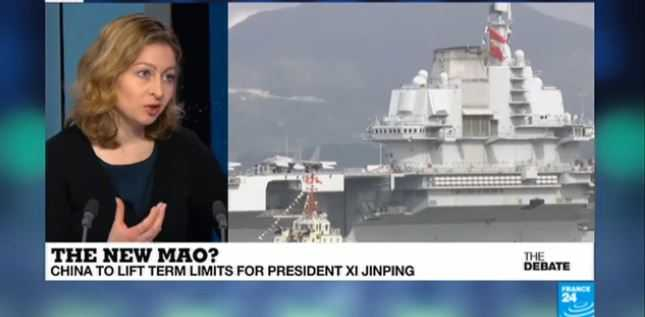
The new Mao? China to lift term limits for President Xi Jinping
Does China now have a president for life? China's leader Xi Jinping could stay in power indefinitely following the ruling Communist Party's proposal to scrap term limits.

IFRI's Alice Ekman on Emmanuel Macron's state visit to China
On his first state visit to China, the French president has pushed for more European involvement in China's ambitious multi-billion dollar project to revive the ancient Silk Road trade route. China specialist Alice Ekman talks to RFI's Amanda Morrow about how China is likely to respond to pressure from France.
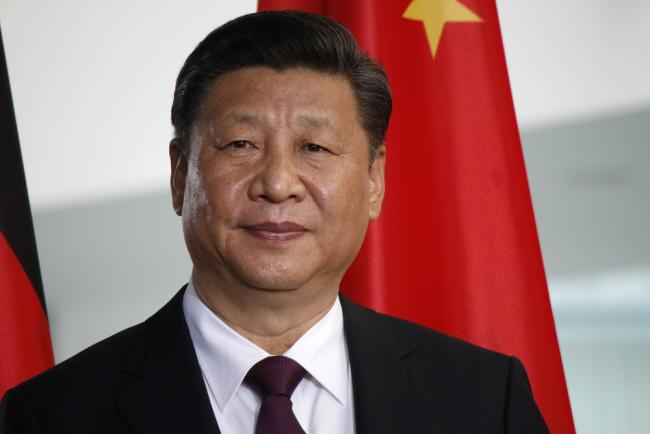
China and the “Definition Gap”: Shaping Global Governance in Words
Increasingly, China’s diplomacy is using key words commonly used by liberal democracies, but the meaning differs greatly. This evolution is changing the terms of the debate without changing a single term.

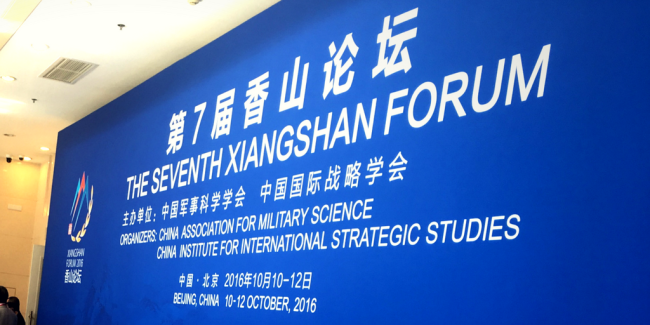
At the 2016 Xiangshan Forum, China Outlines a Vision for Regional Security Governance
Beijing has a plan for a new regional security architecture, and it’s not based around alliances.

China Gets French Wine in Exchange for Chemicals on First Run by ‘New Silk Road’ Train
The first freight train from Wuhan, in China, to Lyon, in France, reached its destination Thursday, carrying a cargo of mechanical, electrical, and chemical products — goods that are generally transported between the two countries by ship.
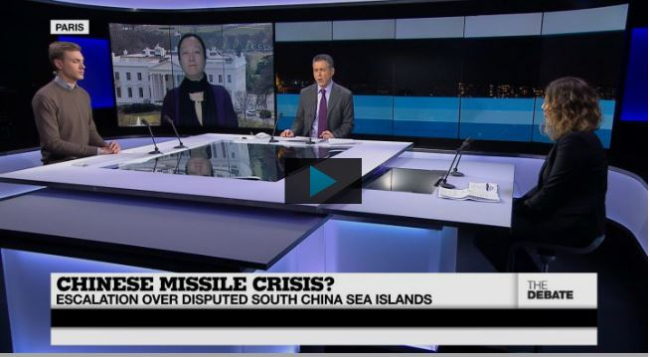
Chinese missile crisis? Escalation over disputed China Sea islands
Reports have emerged that China has set up a missile launch base on Woody Island, part of an archipelago disputed with Taiwan and Vietnam. This comes just as the US President was wrapping up an ASEAN summit to strengthen ties after the recent Trans-Pacific Partnership trade deal. How will this shape policy not only among Washington's traditional allies in the region but also in countries like Vietnam? Once again, a war-weary US is being called upon and has to look at the broader picture.

Faut-il avoir peur de la Chine?
A l'occasion du nouvel an chinois, Stéphanie Gallet et ses invités s'intéressent à la Chine, géant d'Asie, colosse économique et pays parmi les plus pollués au monde.

Ifri, a foundation recognized as being of public utility, relies largely on private donors – companies and individuals – to guarantee its sustainability and intellectual independence. Through their funding, donors help maintain the Institute's position among the world's leading think tanks. By benefiting from an internationally recognized network and expertise, donors refine their understanding of geopolitical risk and its consequences on global politics and the economy. In 2026, Ifri partners with over 90 French and international companies and organizations.

The European Think-tank Network on China (ETNC) is a gathering of China experts from a selection of European research institutes. It is devoted to the policy-oriented study of Chinese foreign policy and relations between China and European countries as well as China and the EU. It facilitates regular exchanges among participating researchers with a view to deepening the understanding within the European policy and research community and the broader public of how Europe, as a complex set of actors, relates with China and how China’s development and evolving global role is likely to impact the future of Europe. The network’s discussions and analyses take a decidedly ‘bottom-up’ approach, accounting for the various aspects of bilateral relations between European countries and China, and the points of convergence and divergence among EU member states in order to examine EU-China relations in a realistic and comprehensive way. The views presented in ETNC reports are the sole responsibility of the signed authors and do not in any way represent the views of all members of the ETNC, its participating institutions, nor the institutions with which the authors are affiliated.
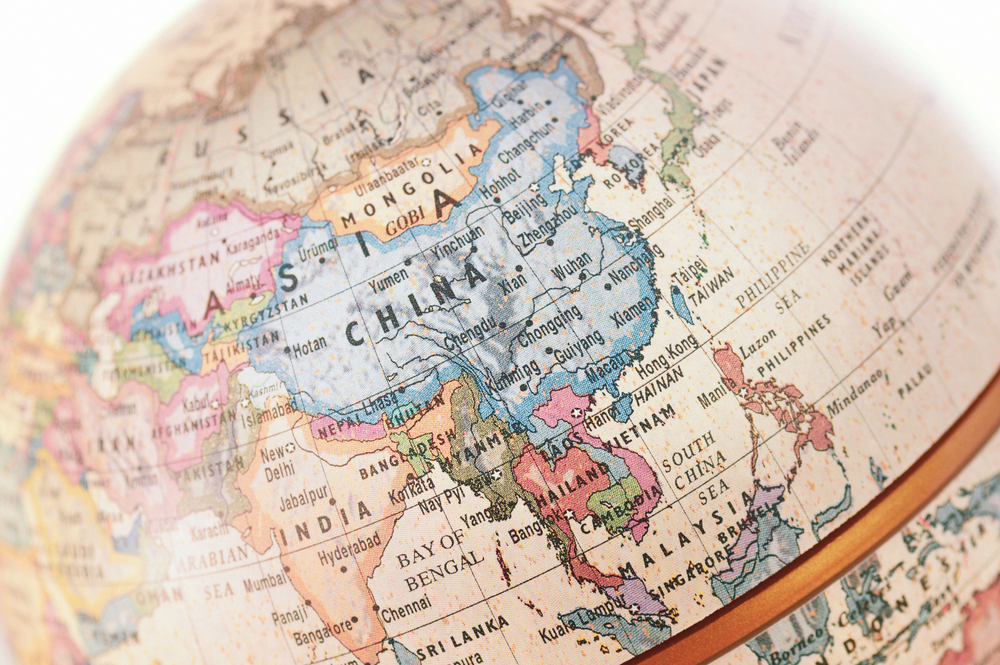
Asia is a nerve center for multiple global economic, political and security challenges. The Center for Asian Studies provides documented expertise and a platform for discussion on Asian issues to accompany decision makers and explain and contextualize developments in the region for the sake of a larger public dialogue.
The Center's research is organized along two major axes: relations between Asia's major powers and the rest of the world; and internal economic and social dynamics of Asian countries. The Center's research focuses primarily on China, Japan, India, Taiwan and the Indo-Pacific, but also covers Southeast Asia, the Korean peninsula and the Pacific Islands.
The Centre for Asian Studies maintains close institutional links with counterpart research institutes in Europe and Asia, and its researchers regularly carry out fieldwork in the region.
The Center organizes closed-door roundtables, expert-level seminars and a number of public events, including an Annual Conference, that welcome experts from Asia, Europe and the United States. The work of Center’s researchers, as well as that of their partners, is regularly published in the Center’s electronic journal Asie.Visions.