







China
China's diplomatic, military, economic and technological assertiveness, as well as its growing rivalry with the United States, raise certain apprehensions among its neighbors and Europeans alike.
Related Subjects
Fumio Kishida's Visit to Paris. The France-Japan Relation Deserves Better
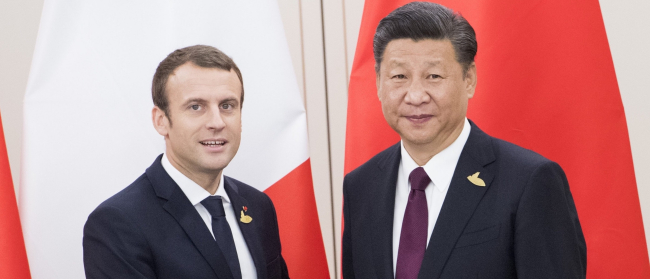
Chinese President Xi Jinping's state visit to France hit the headlines. President Macron rolled out the red carpet to welcome his guest, hoping to convince China to limit its support for Russia and respect fair trade rules.

Europe faces up to China's EV dominance as carbon-zero targets loom
As Xi travels through EU this week, automakers weigh whether to fight or team up with cheaper Chinese rivals.

Critical Raw Materials: What Chinese Dependencies, What European Strengths?
In adapting to growing geopolitical competition over digital technology, the EU and the UK are striving for economic security and technological sovereignty. European policies focus on reducing critical over-dependencies on China. This de-risking is a necessary process of adaptation to the new geopolitical realities.

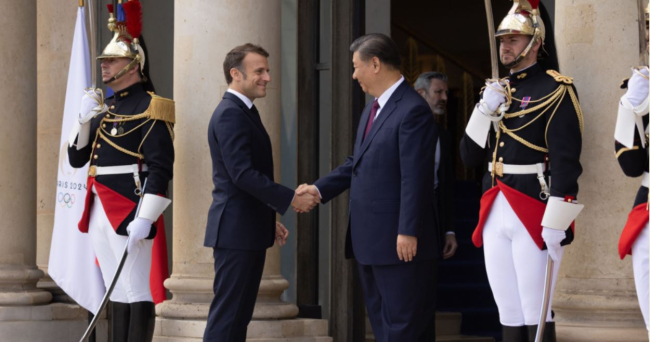
Macron accused of rolling out red carpet for ‘dictator’ Xi
Presidents Emmanuel Macron and Xi Jinping are meeting in Paris on Monday at a time of fragile relations between Europe and China.
Chinese President Xi Jinping is set to embark on his first European diplomatic tour in five years, starting in France before traveling on to Serbia and Hungary.
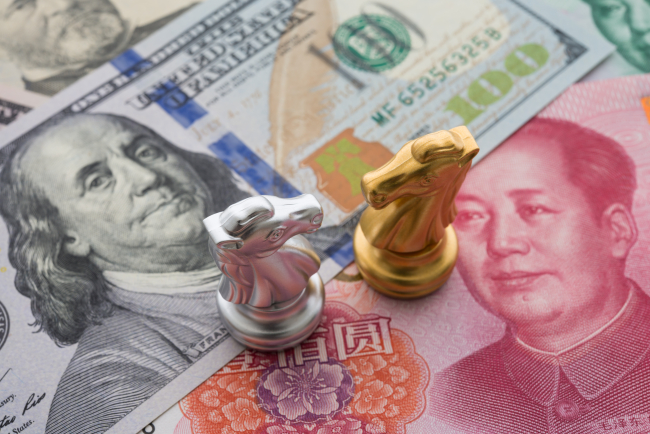
Power and Financial Interdependence
The link between financial self-reliance and geopolitical power has long been debated. The unbalanced Sino-American trade relationship has created asymmetric financial ties which generate potential sources of leverage for both parties and will not quickly disappear. Absent a clarifying major crisis, it will be difficult to definitively determine which party has greater leverage.
Xi Jinping's trip to Europe to center on trade as challenges 'pile up'
Chinese President Xi Jinping is set to embark on his first European diplomatic tour in five years, starting in France before traveling on to Serbia and Hungary.

EU turns up the heat on China as Xi Jinping readies for 3-nation tour, with fiery Paris talks on the cards
-
European Commission chief Ursula von der Leyen to meet Chinese President Xi and his French counterpart Emmanuel Macron in Paris to discuss China ties
-
Xi’s trip comes amid barrage of EU trade and competition tools mostly targeting Chinese firms, including dramatic raids in the Netherlands and Poland
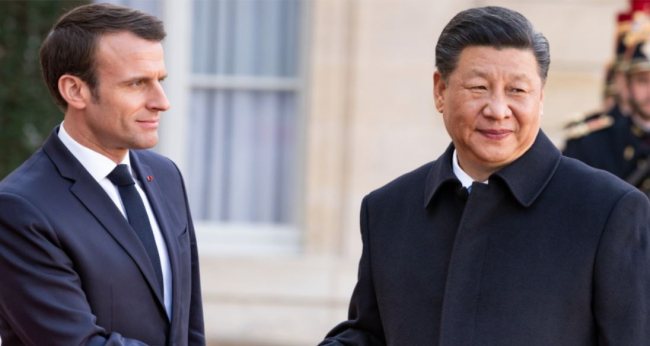
Xi Jinping’s Visit to France: Stumbling Blocks Pile Up on the Path of Bilateral Cooperation
On May 6 and 7, Chinese President Xi Jinping will pay a state visit to France, his first to Europe since 2019 and the Covid-19 pandemic. Emmanuel Macron and Xi Jinping will celebrate Franco-Chinese friendship and the sixtieth anniversary of the establishment of diplomatic relations between their two countries. It comes at a time when the bilateral relationship is officially perceived as positive on both sides, especially after the French President’s visit to China in April 2023.
The World Through the Lens of Ukraine
This issue of Politique étrangère looks at three conflicts currently unfolding around the world.


Without a Pact with Mercosur, the EU risks leaving China free in South America
The agreement EU-Mercosur It has been a banner of the recent protest by French farmers, who denounced unfair competition on the part of South Americans. However, if Paris closes the door to this pact, the way will be left clear to China, warn politicians and analysts consulted by EFE.
China, technical standardization, and the future of globalization
As the global economy sits at a crossroad between connectivity-driven globalization and strategic decoupling, technical standardization provides a valuable measure of where we are headed.
Italy's BRI withdrawal shines light on ties ahead of EU-China summit
PM Meloni makes move after calculating that membership failed to yield benefits.Italy's decision to pull out of China's Belt and Road Initiative has placed a spotlight on the relationship between the two countries and comes at an awkward time for Beijing, a day ahead of a summit it is holding with Europe.
The South versus the West?
In 2023, forums that amplify the voice of the “Global South” have proliferated and grown louder. As contradictory and divided as they may be, these forums (BRICS+, Shanghai Cooperation Organization (SCO), G20, the Group of 77, the European Silk Road Summit…) attest to the emergence of new power relations, and especially new directions in foreign policy, with states rejecting alignment with the dominant powers of the past in favor of putting their own interests first. A new world is taking shape, with changeable, still uncertain, contours.
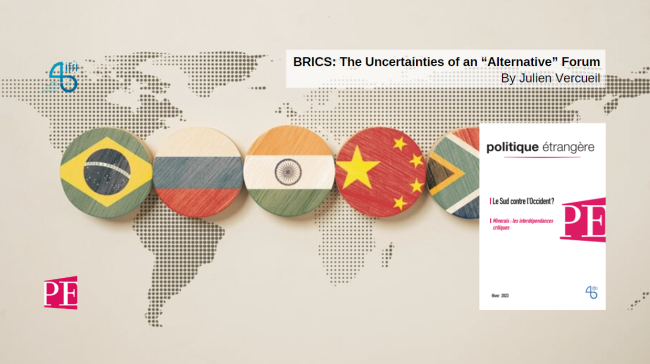
BRICS: The Uncertainties of an “Alternative” Forum
Initially limited to the financial domain, the term BRICS is gradually becoming established in global economic governance.
Italy's Belt and Road blues highlight hopes for rival India-Europe corridor
Ship-to-shore cranes tower high above choppy waters and colorful containers on the Ligurian coast of northern Italy. Sailors coming in to dock are greeted with a smorgasbord of transportation industry names and logos, from Denmark's Maersk to Taiwan's Evergreen. Harder to spot is COSCO, the jewel of China's maritime business, which owns a 40% stake in the cutting-edge Vado Port System at Vado Ligure.
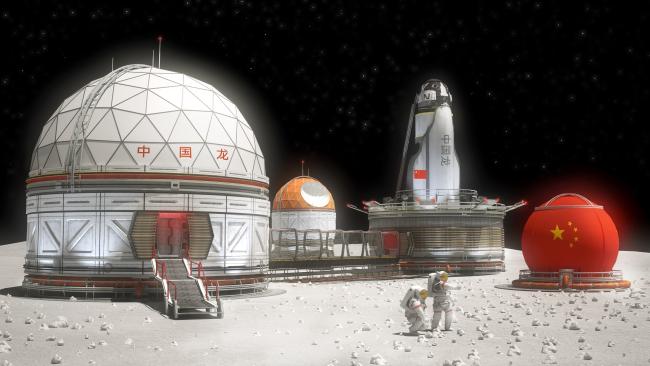
Racing to the Moon: China's Lunar exploration program in competition with the United States
A new Cold War-style race to the moon seems to be in the making. The People’s Republic of China and the United States are both investing in moon exploration with manned lunar scientific stations as the ultimate goal.
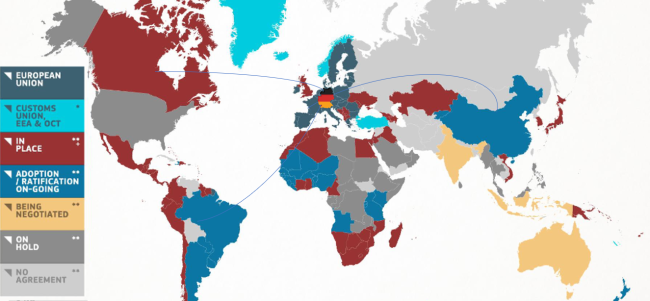
Towards a New European Trade Strategy in Times of Geopolitical Upheaval: The German Perspective
As one of the most successful trading blocs, the EU sees itself confronted with the erosion of the global rules-based trading system and trade becoming increasingly weaponized.
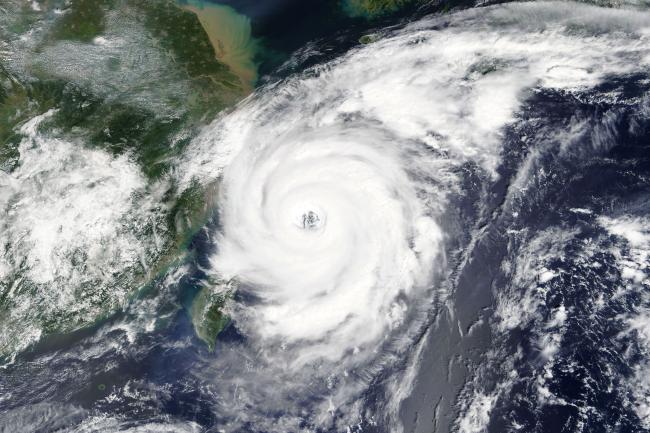
Balance of Power in the Taiwan Strait in the Case of a Natural Disaster: Considering an Overlooked Scenario
Scenario planning in the Taiwan Strait that solely assumes a situation without natural disasters or emergencies, where the military and government function as usual, falls short in preparing for more complex contingencies.
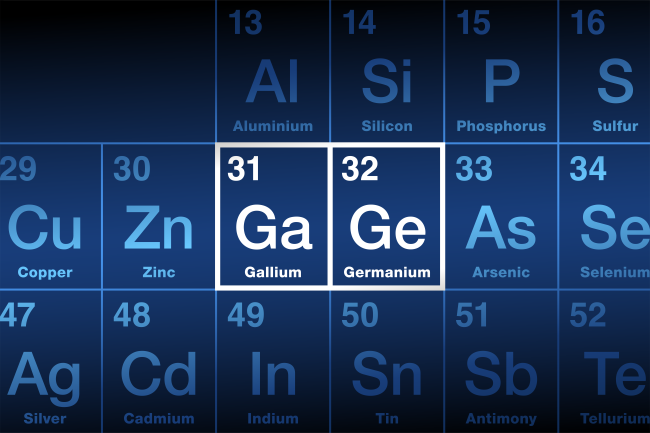
China’s Weaponization of Gallium and Germanium: The Pitfalls of Leveraging Chokepoints
China’s recent announcement of raw material export controls highlights important pitfalls of weaponized interdependence and demonstrates that not all chokepoints are created equal.
The Future of Europe in the Context of Sino-American Competition - Foreword
In this special issue of Politique étrangère devoted to the proceedings of the conference organized by Ifri on April 10, 2019, in the Grand Amphitheater of the Sorbonne, on the occasion of its fortieth anniversary, discover the speech by Bruno Le Maire, Minister of Economy and Finance.
The Future of Europe in the Context of Sino-American Competition - Foreword
In this special issue of Politique étrangère devoted to the proceedings of the conference organized by Ifri on April 10, 2019, in the Grand Amphitheater of the Sorbonne, on the occasion of its fortieth anniversary, discover the speech by Bruno Le Maire, Minister of Economy and Finance.
The Future of Europe from the US and Asian Point of View
In this special issue of Politique étrangère devoted to the proceedings of the conference organized by Ifri on April 10, 2019, in the Grand Amphitheater of the Sorbonne, on the occasion of its fortieth anniversary, discover the debate moderated by Sylvie Kauffmann between John Allen and Kishore Mahbubani.
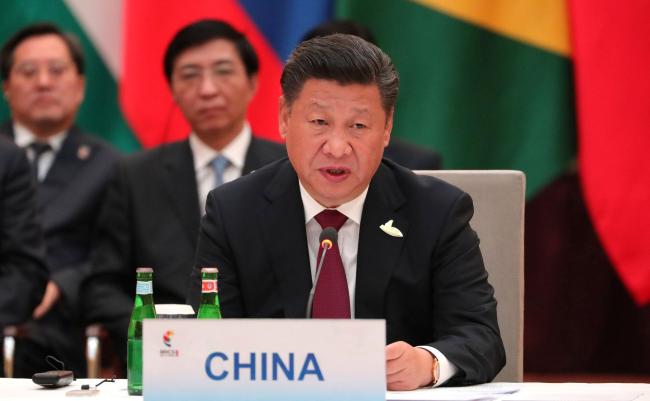
China’s Belt & Road and the World: Competing Forms of Globalization
China increasingly sees its flagship foreign policy project as a tool for restructuring global governance and a vector for promoting a new form of globalization.
France and China's Belt and Road Initiative
Under President Macron, France has staked out a positive but principled position towards China's BRI.
Between Concentration and Dispersion: A Promising Future for Power Relations
The notion of power has long been a topic of study in international relations. In the coming decade, the evolution of power will be characterized by the dynamics of concentration and dispersion. On the one hand, the global system will be marked by the clash of two superpowers, the United States and China. On the other hand, capacity for individual action will proliferate through information and communication technologies.
Xi Jinping’s Institutional Reforms: Environment over Energy?
During its two sessions (lianghui) in March 2018, the National People’s Congress (NPC) announced China’s most important institutional reforms in the last 30 years. These changes occurred right after Xi Jinping consolidated his power and at a time when stakeholders working in the energy field were expecting more clarity on policy orientations.
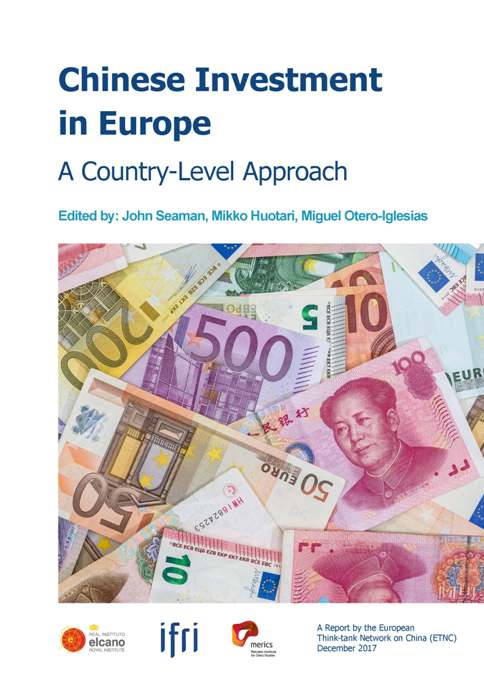
Chinese Investment in Europe. A Country-Level Approach
Chinese investments in Europe have surged in recent years, becoming both a source of hope and growing concern across the continent.
Energy Relations between Russia and China: Playing Chess with the Dragon
Post-sanctions Russia-China energy relations: what expectations?
Scientific Cooperation in the South China Sea: A vector for China's security diplomacy in Southeast Asia?
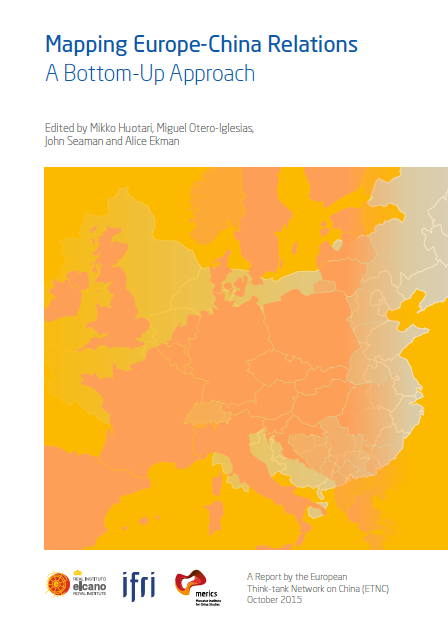
Mapping Europe-China Relations: A Bottom-Up Approach. A Report of the European Think-tank Network on China ETNC, October 2015
As China’s rise continues to shape and shake the course of international affairs, and Europe enters a new chapter in its collective history, Europe-China relations are becoming more relevant, but also much more complex.
Emerging Markets and Migration Policy: China
China’s development has given rise to massive flows of both domestic migration and international emigration.
The Distinctive Features of China's Middle Classes
This study seeks to lay the foundations for a better understanding of the Chinese middle classes. It goes beyond the traditional classification by revenue and identifies the distinctive features of China’s middle classes by taking into account relevant historical events, current sociopolitical and economic contexts, and key expectations of the population.
China's Growing Natural Gas Insecurity and the Potential of Chinese Shale Gas
China is poised for a dramatic increase in its demand for natural gas. As total energy demand has risen to record levels in the last five years, China has found itself in an increasingly difficult bind: the social and environmental burden from coal is becoming too heavy to bear and a growing dependence on foreign oil is becoming strategically more risky with the passage of time.
China's Two-Track Foreign Policy: From Ambiguous to Clear-Cut Positions
This analysis examines the current ambiguities, priorities and approaches of Chinese foreign policy from a practitioner’s perspective, taking into account experiences of Beijing-based diplomats (interviews conducted in 2011 and 2012), in addition to recent Chinese foreign policy positions and official communications.
It leads to the following conclusions:
China and Cleaner Coal: A marriage of necessity destined for failure?
For China, coal is a crucial source of abundant, indigenous and affordable energy and is a pillar of economic and social stability. From a logic of energy security, and because the industry itself maintains a formidable political presence through the sheer fact of its history and size, this resource will continue to play a central role in the country’s energy mix. But in order to respond to the growing need to reduce the burden of coal use on the environment and the Chinese population, and to prevent catastrophic climate change, both Chinese leaders and the industry itself have faced a certain reality - coal must become cleaner.
New Economic Development Opportunities for Taiwan in the Post-ECFA Era
The main aim of this paper is to analyze the new opportunities for Taiwan’s ongoing economic development in the era following the signing of the Economic Cooperation Framework Agreement (ECFA) between Taiwan and China.
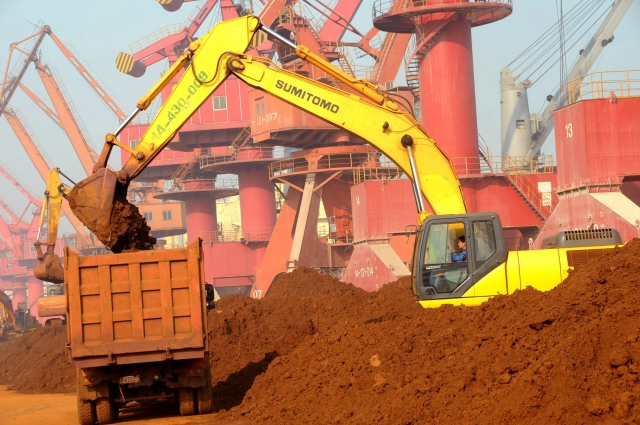
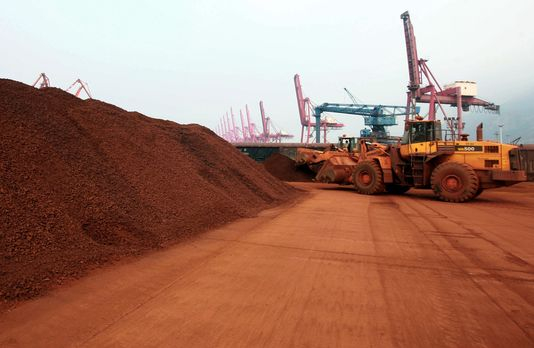
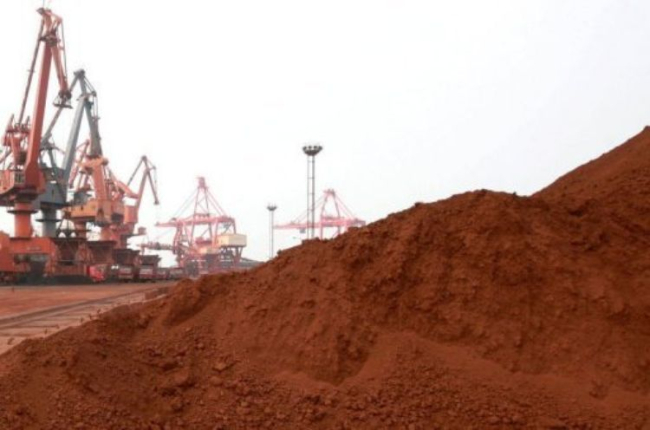
Rare Earths and the WTO: Tougher case than it looks
Deepening their partnership, Ifri and the Canon Institute for Global Studies (CIGS) are launching a series of op-eds, written both by Ifri and CIGS experts. This new series aims at providing the European and Asian public with original and different visions on the rapidly evolving international affairs.
The Expanding Chinese Footprint in Latin America: New Challenges for China, and Dilemmas for the US
The physical presence of China in Latin America is entering a phase of significant expansion, as the logical consequence of the rapid growth over the past decade of its trade, investment, and infrastructure for doing business in the region.
Doors Wide Shut? An Update on FDI Regulations in China
The fears of a rise in economic nationalism in China have been fueled by a number of recent moves, such as changes in the law on indigenous innovation or the enactment of a national security review (NSR) regulation for M&As by foreign enterprises. The objective of the current paper is twofold: First is to provide an update on the investment environment in China in order to determine whether or not these provisions reflect a move in the direction of more protectionism, and second is to suggest ways for European countries to level the playing field for their firms wishing to invest in China.









Ifri, a foundation recognized as being of public utility, relies largely on private donors – companies and individuals – to guarantee its sustainability and intellectual independence. Through their funding, donors help maintain the Institute's position among the world's leading think tanks. By benefiting from an internationally recognized network and expertise, donors refine their understanding of geopolitical risk and its consequences on global politics and the economy. In 2026, Ifri partners with over 90 French and international companies and organizations.

The European Think-tank Network on China (ETNC) is a gathering of China experts from a selection of European research institutes. It is devoted to the policy-oriented study of Chinese foreign policy and relations between China and European countries as well as China and the EU. It facilitates regular exchanges among participating researchers with a view to deepening the understanding within the European policy and research community and the broader public of how Europe, as a complex set of actors, relates with China and how China’s development and evolving global role is likely to impact the future of Europe. The network’s discussions and analyses take a decidedly ‘bottom-up’ approach, accounting for the various aspects of bilateral relations between European countries and China, and the points of convergence and divergence among EU member states in order to examine EU-China relations in a realistic and comprehensive way. The views presented in ETNC reports are the sole responsibility of the signed authors and do not in any way represent the views of all members of the ETNC, its participating institutions, nor the institutions with which the authors are affiliated.
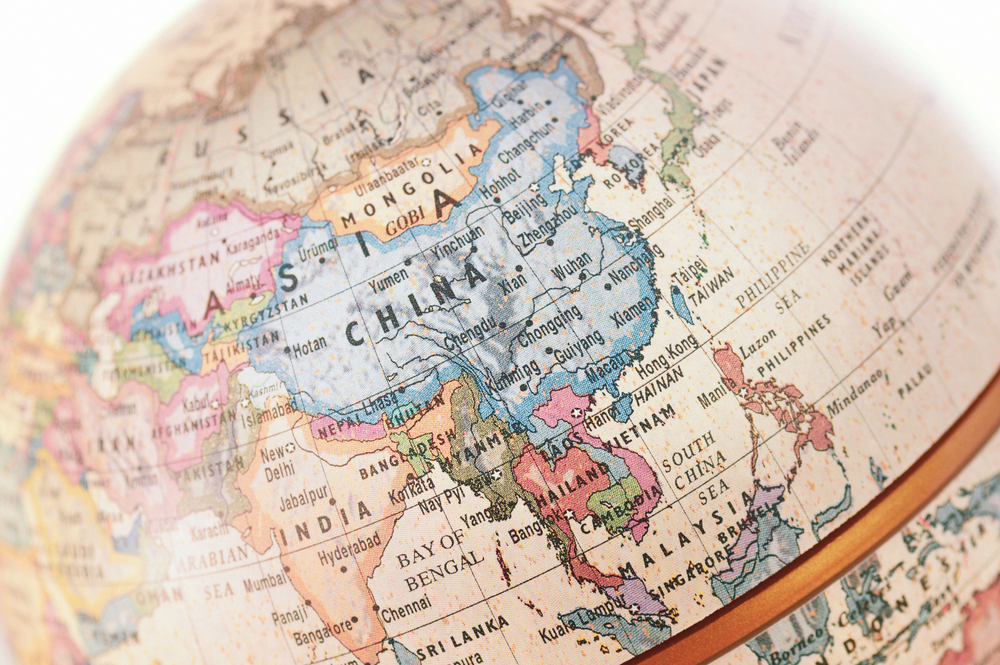
Asia is a nerve center for multiple global economic, political and security challenges. The Center for Asian Studies provides documented expertise and a platform for discussion on Asian issues to accompany decision makers and explain and contextualize developments in the region for the sake of a larger public dialogue.
The Center's research is organized along two major axes: relations between Asia's major powers and the rest of the world; and internal economic and social dynamics of Asian countries. The Center's research focuses primarily on China, Japan, India, Taiwan and the Indo-Pacific, but also covers Southeast Asia, the Korean peninsula and the Pacific Islands.
The Centre for Asian Studies maintains close institutional links with counterpart research institutes in Europe and Asia, and its researchers regularly carry out fieldwork in the region.
The Center organizes closed-door roundtables, expert-level seminars and a number of public events, including an Annual Conference, that welcome experts from Asia, Europe and the United States. The work of Center’s researchers, as well as that of their partners, is regularly published in the Center’s electronic journal Asie.Visions.