


Europe
Europe is described here in a geographical sense. It is not limited to the European Union, and includes, for example, the United Kingdom and the Balkans. It remains central to international relations.
Related Subjects
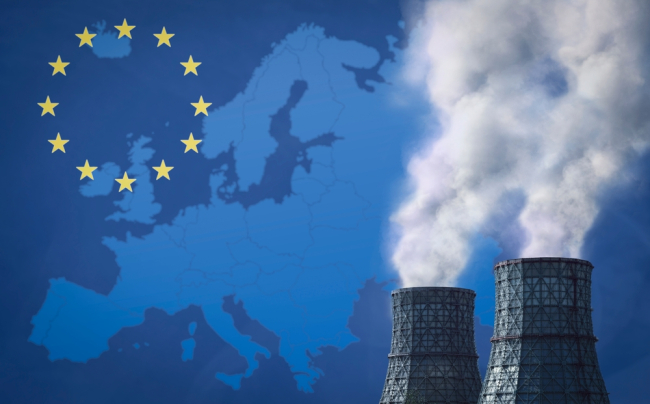
Reconnecting With Europe's Nuclear DNA: a Political Question
As Europe's main source of low-carbon electricity, nuclear power is a strategic asset for tackling climate and geopolitical challenges.
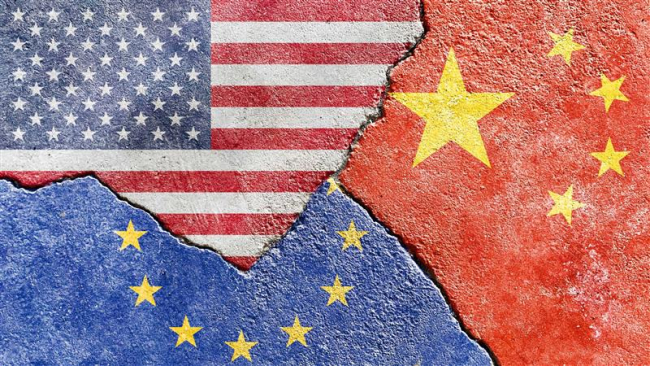
Quest for Strategic Autonomy? Europe Grapples with the US - China Rivalry
Building on the 2020 European Think Tank Network on China (ETNC) report, which assessed Europe’s positioning amid the strategic rivalry between the United States and China, this edition re-examines the geopolitical landscape in light of the Covid-19 pandemic, Russia’s war in Ukraine and Donald Trump’s return to the White House. This report features 22 national chapters and one dedicated to the EU, analysing the evolution of Europe’s relations with Washington and Beijing, the range of approaches to dealing the US-China rivalry and how these are expected to evolve.
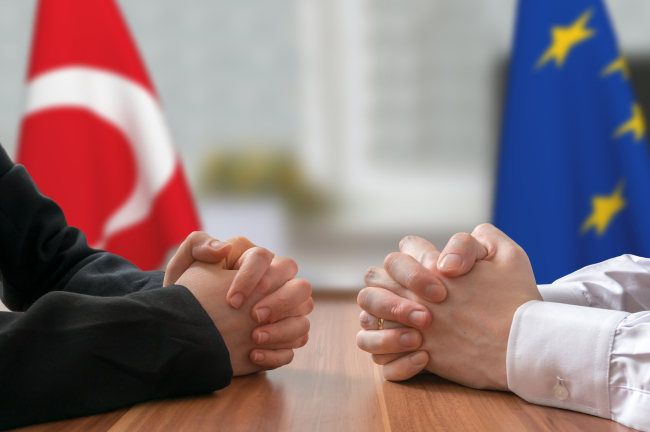
Turkey and France - Allies or Rivals: Opportunities to be Seized
As international relations have become increasingly unpredictable, the quest is to find a semblance of normality. Alliances are shifting as interests are changing. The so-called order established after the Second World War is being shattered by those who have given so much to create it. Global relations are being transformed by countries that wish to follow the rules and others that want to circumvent or ignore them. In this uncertain environment, it is therefore all the more crucial to find stable allies.
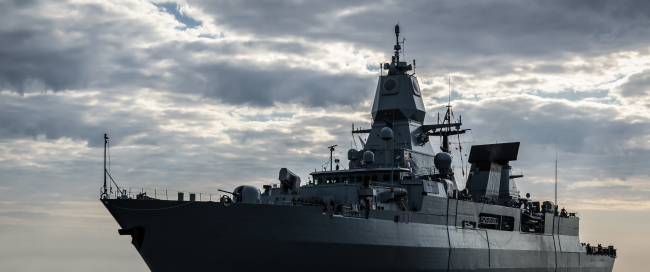
The Hunt for Economic Security: The Role of Navies in Deterring Threats to the Maritime Economy
The maritime domain is currently faced with a wide variety of threats, such as climate change, economic warfare, shadow fleet operations, protection of critical infrastructures, and illicit activities ranging from illegal fishing to piracy. Navies suffer from inherent limitations when deterring threats to the global maritime economy: their global presence and permanence limits their credibility in terms of deterrence, their focus usually set on immediate deterrence, implementing deterrence by punishment in and from the naval domain is difficult and costly.
The "Europe of Internal Security": An Unknown Quantity - Politique étrangère, Vol. 90, No. 2, Summer 2025
The new European Internal Security Strategy, unveiled by the European Commission in April 2025, provides an opportunity to shine a light on a little-known policy. To mitigate the problems created by freedom of movement, substantial additions have been made to European internal security policy over the last few years. The European Union is constantly striving to become stronger in order to combat crime, terrorism, illegal immigration, and hybrid threats more effectively.
Multilateralisms: Survival or Revival?
The organized multilateralism born out of the Second World War and the Cold War, and revived in the 1990s with the dream of a world of peaceful “global governance,” has fizzled out. The erosion of the large universal frameworks (United Nations, World Trade Organization, arms control and disarmament, international criminal justice, and so on) did not give way to a void but to an excess: a multitude of agreements and schemes that bore witness to the accelerated rebuilding of international relationships. Will institutional anarchy and the open competition of interests visible in uninhibited struggles for power be able to organize themselves around common fundamental interests in the future?

France seeks third way between US and China in Southeast Asia
The French leader sent a message of partnership but gave few concrete details on sustained engagement plans.
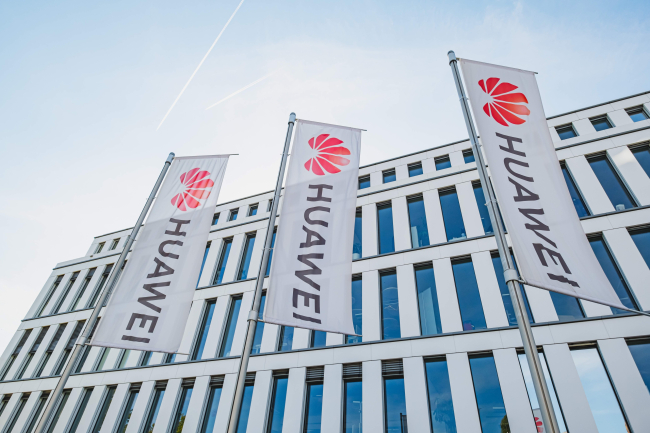
The “Huawei Saga” in Europe Revisited: German Lessons for the Rollout of 6G
While the European Union attempted to coordinate a collective response through its 5G Toolbox in Europe’s 5G infrastructure, member states diverged significantly in balancing political, economic, and technological considerations. Germany, despite its economic ties to China and status as Europe’s largest telecom market, only reached a tentative agreement in July 2024—one that appears largely symbolic.
Trump's Trade War: What Answers for the European Union?
The announcement, on April 2, 2025, of “reciprocal tariffs” by the United States has opened a sequence of profound break with decades of established trade policy practices, where the administration behaviour has been marked by dogmatic blindness, amateurism, and self-serving interests.
The Strategic Dimension of Power System Flexibility: Opportunities in Europe
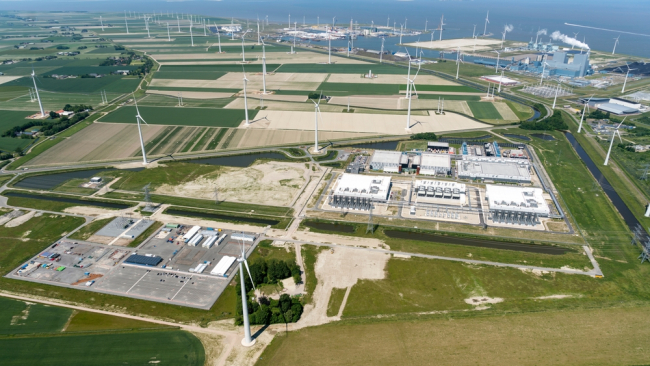
The European Union has embarked on an energy transition aimed primarily at replacing fossil fuels by electrifying demand.
Reconnecting With Europe's Nuclear DNA: a Political Question
As Europe's main source of low-carbon electricity, nuclear power is a strategic asset for tackling climate and geopolitical challenges.
Quest for Strategic Autonomy? Europe Grapples with the US - China Rivalry
Building on the 2020 European Think Tank Network on China (ETNC) report, which assessed Europe’s positioning amid the strategic rivalry between the United States and China, this edition re-examines the geopolitical landscape in light of the Covid-19 pandemic, Russia’s war in Ukraine and Donald Trump’s return to the White House. This report features 22 national chapters and one dedicated to the EU, analysing the evolution of Europe’s relations with Washington and Beijing, the range of approaches to dealing the US-China rivalry and how these are expected to evolve.
Turkey and France - Allies or Rivals: Opportunities to be Seized
As international relations have become increasingly unpredictable, the quest is to find a semblance of normality. Alliances are shifting as interests are changing. The so-called order established after the Second World War is being shattered by those who have given so much to create it. Global relations are being transformed by countries that wish to follow the rules and others that want to circumvent or ignore them. In this uncertain environment, it is therefore all the more crucial to find stable allies.
The Hunt for Economic Security: The Role of Navies in Deterring Threats to the Maritime Economy
The maritime domain is currently faced with a wide variety of threats, such as climate change, economic warfare, shadow fleet operations, protection of critical infrastructures, and illicit activities ranging from illegal fishing to piracy. Navies suffer from inherent limitations when deterring threats to the global maritime economy: their global presence and permanence limits their credibility in terms of deterrence, their focus usually set on immediate deterrence, implementing deterrence by punishment in and from the naval domain is difficult and costly.
The "Europe of Internal Security": An Unknown Quantity - Politique étrangère, Vol. 90, No. 2, Summer 2025
The new European Internal Security Strategy, unveiled by the European Commission in April 2025, provides an opportunity to shine a light on a little-known policy. To mitigate the problems created by freedom of movement, substantial additions have been made to European internal security policy over the last few years. The European Union is constantly striving to become stronger in order to combat crime, terrorism, illegal immigration, and hybrid threats more effectively.
Multilateralisms: Survival or Revival?
The organized multilateralism born out of the Second World War and the Cold War, and revived in the 1990s with the dream of a world of peaceful “global governance,” has fizzled out. The erosion of the large universal frameworks (United Nations, World Trade Organization, arms control and disarmament, international criminal justice, and so on) did not give way to a void but to an excess: a multitude of agreements and schemes that bore witness to the accelerated rebuilding of international relationships. Will institutional anarchy and the open competition of interests visible in uninhibited struggles for power be able to organize themselves around common fundamental interests in the future?
France seeks third way between US and China in Southeast Asia
The French leader sent a message of partnership but gave few concrete details on sustained engagement plans.
The “Huawei Saga” in Europe Revisited: German Lessons for the Rollout of 6G
While the European Union attempted to coordinate a collective response through its 5G Toolbox in Europe’s 5G infrastructure, member states diverged significantly in balancing political, economic, and technological considerations. Germany, despite its economic ties to China and status as Europe’s largest telecom market, only reached a tentative agreement in July 2024—one that appears largely symbolic.
Trump's Trade War: What Answers for the European Union?
The announcement, on April 2, 2025, of “reciprocal tariffs” by the United States has opened a sequence of profound break with decades of established trade policy practices, where the administration behaviour has been marked by dogmatic blindness, amateurism, and self-serving interests.
The Strategic Dimension of Power System Flexibility: Opportunities in Europe
The European Union has embarked on an energy transition aimed primarily at replacing fossil fuels by electrifying demand.

Macron and Scholz Meet to Patch up Their Fraying Ties
Allies fret that Franco-German animosity is undermining western unity over Ukraine. Emmanuel Macron will arrive in Berlin on Friday for talks designed to repair a fractured Franco-German relationship marred by caustic public spats and mutual recriminations over the war in Ukraine.
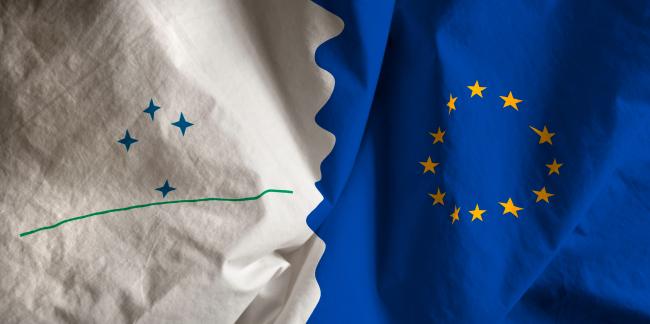
Without a Pact with Mercosur, the EU risks leaving China free in South America
The agreement EU-Mercosur It has been a banner of the recent protest by French farmers, who denounced unfair competition on the part of South Americans. However, if Paris closes the door to this pact, the way will be left clear to China, warn politicians and analysts consulted by EFE.

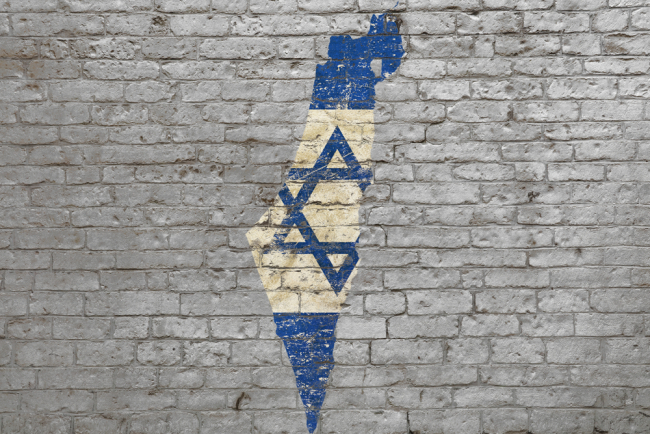
France Links Conversation in Russian to Star of David Graffiti
After more than 200 blue stars were stenciled on buildings in and around Paris, prosecutors say they are investigating whether a foreign intermediary paid a couple to spray paint them.
Macron's Taiwan comments expose muddled China policy
French President Emmanuel Macron's call for Europe to steer clear of a Taiwan conflict -- rooted in France's pride and deep-seated resistance to following America's lead -- has raised questions about where he and Paris really stand on China.

France's Macron is sending China the wrong signals
More realistic posture would strengthen Paris' role in Indo-Pacific region

Does Macron's stance on Taiwan weaken G7 deterrence against China?
One of Prime Minister Fumio Kishida’s top goals for next month’s Group of Seven summit in Hiroshima is to create a united front on issues like China and Ukraine. But finding a unified approach to dealing with Beijing’s assertiveness might have just become harder.
France’s Macron Renews Call for a Sovereign Europe Less Reliant on Foreign Powers
French president’s remarks follow criticism over his warning that Europe should steer clear of U.S.-China tensions over Taiwan

Europe is ‘counting on China’ to end Russia’s war in Ukraine, leaders tell Xi Jinping in Beijing
European Commission chief Ursula von der Leyen and French President Emmanuel Macron deliver united message to Chinese president during visit ; but as French leader signed over 20 business deals on China trip, EU chief took sterner line with Xi on economic grievances, human rights and Taiwan
In China, Macron appeals to Xi to help end Ukraine conflict
French President Emmanuel Macron called on Chinese President Xi Jinping to help convince Russia to hold negotiations toward ending the war in Ukraine as the two leaders met in Beijing on Thursday.

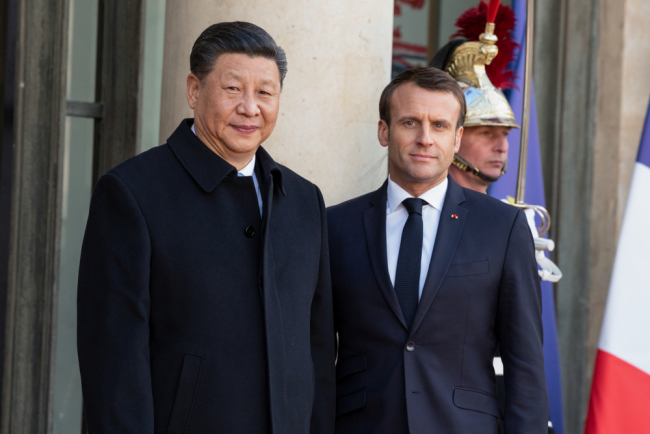
France’s Emmanuel Macron to Press Xi Jinping on China’s Support of Russia
French President Emmanuel Macron is expected to press Chinese leader Xi Jinping during a trip to China this week to limit support for Russia in its war against Ukraine, according to French officials, amid growing Western concerns over Beijing’s deepening economic and political ties with Moscow.
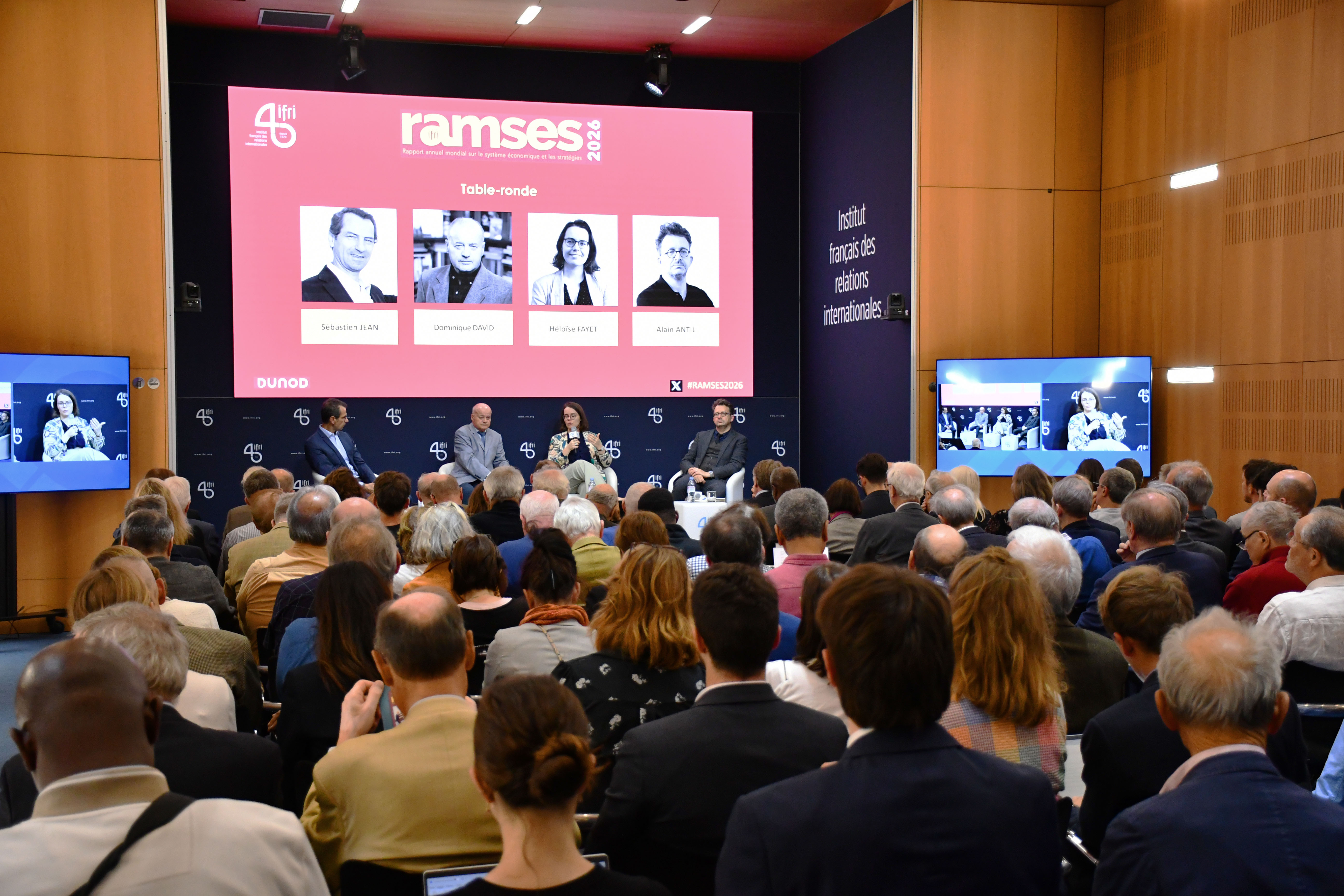
Support independent French research
Ifri, a foundation recognized as being of public utility, relies largely on private donors – companies and individuals – to guarantee its sustainability and intellectual independence. Through their funding, donors help maintain the Institute's position among the world's leading think tanks. By benefiting from an internationally recognized network and expertise, donors refine their understanding of geopolitical risk and its consequences on global politics and the economy. In 2026, Ifri partners with over 90 French and international companies and organizations.
Related centers and programs
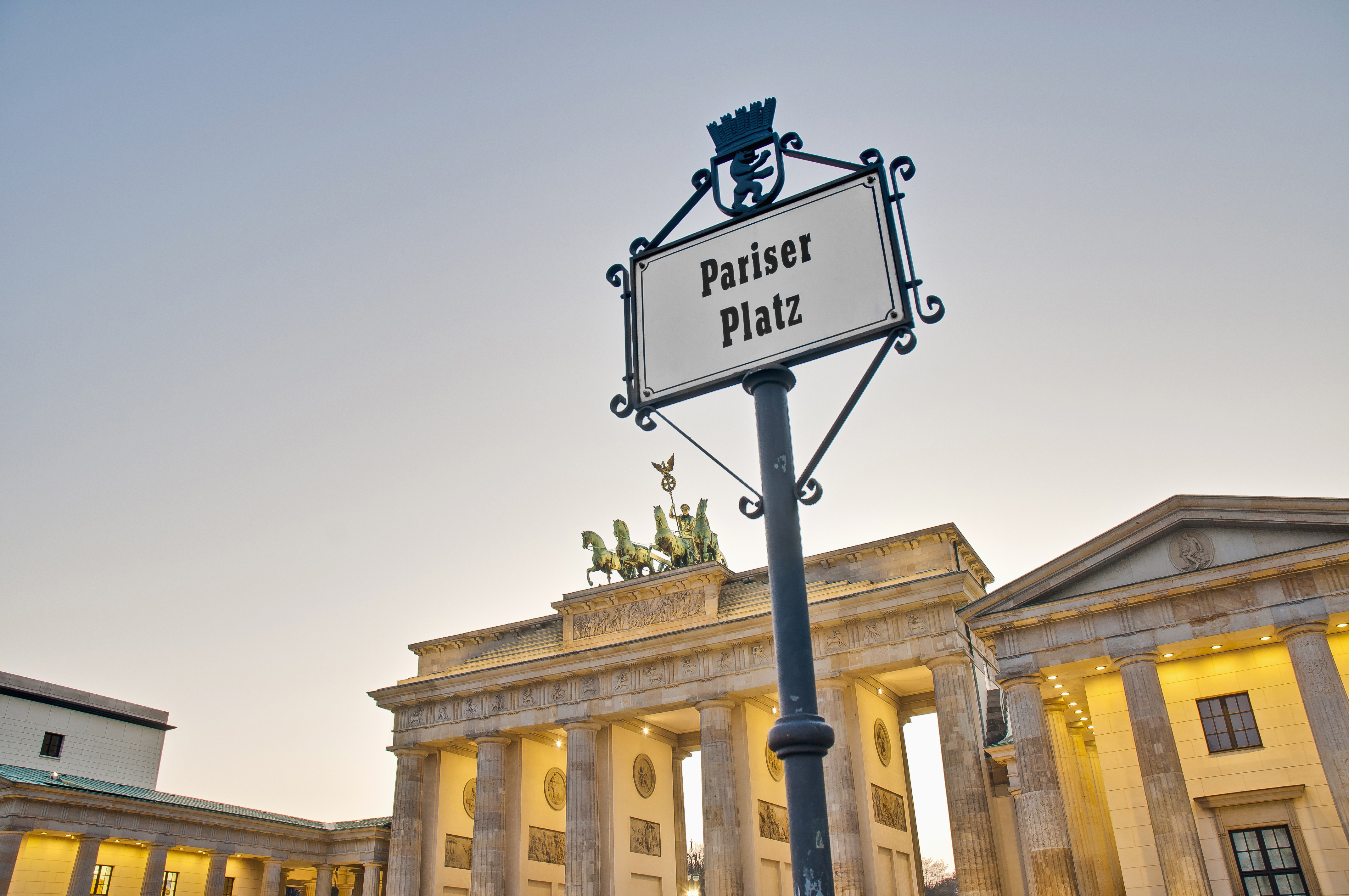
The Study Committee on Franco-German Relations (Cerfa)
The Study Committee on Franco-German Relations (Cerfa) was created in 1954 by an inter-governmental agreement between the Federal Republic of Germany and France, in order to raise awareness of Germany in France and analyze Franco-German relations, including in their European and international dimensions. In its conferences and seminars, which bring together experts, political leaders, senior decision-makers and representatives of civil society from both countries, Cerfa develops the Franco-German debate and stimulates political proposals. It regularly publishes studies through two collections: Cerfa notes and studies as well as Franco-German visions.
Cerfa maintains close relations with the network of German foundations and think tanks. In addition to its research and debate activities, Cerfa promotes the emergence of a new Franco-German generation through original cooperation programs. This is how in 2021-2022, Cerfa led a program on multilateralism with the Konrad Adenauer Foundation in Paris. This program is aimed at young professionals from both countries interested in the issues of multilateralism in the context of their activities. It covered a wide range of themes relating to multilateralism, such as international trade, health, human rights and migration, non-proliferation and disarmament. Previously, Cerfa had participated in the Franco-German future dialogue, co-led with the DGAP from 2007 to 2020, and supported by the Robert Bosch Foundation and the Daniel Vernet group (formerly the Franco-German Reflection Group) which was founded in 2014 upon the initiative of the Genshagen Foundation.
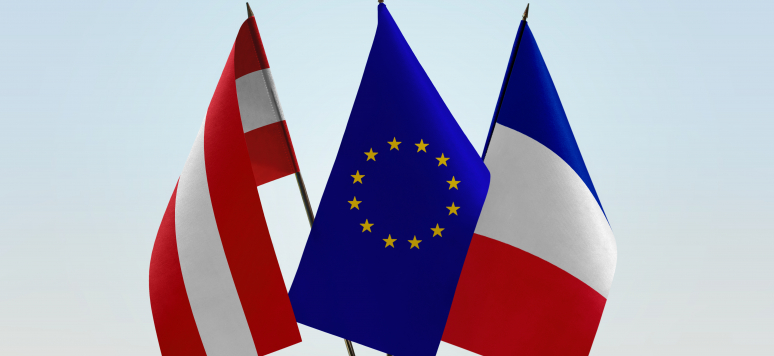
Austro-French Centre for Rapprochement in Europe (ÖFZ)
The Austro-French Centre for Rapprochement in Europe (ÖFZ/CFA) is a Franco-Austrian intergovernmental organization, initiated in 1976 by Prime Minister Jacques Chirac and Federal Chancellor Bruno Kreisky, in order to develop economic relations between Western and Eastern Europe, contributing to the creation of a Europe of peace.
After the fall of the Berlin Wall, the ÖFZ/CFA refocused its action on the problems following the enlargement of the European Union, and integrated the following countries in its field of activities : Hungary, Poland, Czech Republic, Slovak Republic, Slovenia, the Baltic countries, Romania and Bulgaria. ÖFZ/CFA's vocation, as a space for reflection and exchange, is in fact reinforced by the need to support the new member countries of the Union in their integration process. Since 2004, the ÖFZ/CFA has also turned towards the Union's new neighbors, in particular towards the countries of the Western Balkans, which perceive their future from a European perspective.
The ÖFZ/CFA strives to place all of its exchanges in a global perspective concerning the future of our continent. Today it centers its activities around three directions: the Franco-Austrian bilateral dialogue, the future of the European Union, the future recomposition of the continent.
Reports of all events organized by the ÖFZ/CFA are available on its website (http://oefz.at). The ÖFZ/CFA's budget is provided by the French and Austrian foreign ministries. Depending on the themes addressed, the ÖFZ/CFA calls on European public and private institutions to help finance its meetings. The CFA's orientations benefit from the recommendations of an Orientation Council, approved by a Board of Directors, which elects from among its members a president and a secretary general.