


Informations pratiques
Thématiques et régions
Centres et programmes liés
Recent tensions in Europe and Asia have underscored once more the question of geopolitics in the context of a highly interconnected, “globalised” world economy.
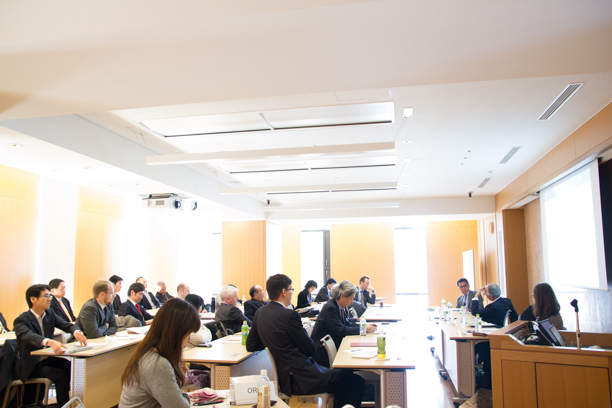
In both continents, security questions are currently intertwined with those pertaining industrial and trade policies, resulting in paradoxical relations of interdependence between countries belonging to different security alliances, and displaying different conceptions of (geo)political order. Furthermore, the spread of terrorist networks and the multiplication of asymmetrical threats urges the re-organisation of the very way in which security is conceptualised.
The first IFRI-PARI (Policy Alternatives Research Institute) joint workshop intends to explore this conundrum from European and Asian perspectives, paying particular attention to the issue of energy security within the broader landscape of a changing security definition, and reflecting on the role of great powers between strategic competition and possibilities of cooperation, and of regional integration.
Program
Session 1: Challenges regarding energy security and governance in Europe and Asia
Session 2: Security challenges in Europe and Asia
| 09:00-09:10 | Opening Speech by PARI Director Prof. Ichiro Sakata |
| 09:10-09:50 | Session 1—Keynote Speeches PARI representative Prof. Nobuo Tanaka IFRI Representative Dr. Thomas Gomart |
| 09:50-10:10 | Session 1—Panellists' Presentations Dr. Ingrid Barnsley (IEA) IFRI Representative Dr. Carole Mathieu Moderator: Prof. Hisashi Yoshikawa |
| 10:10-10:40 | Session 1—Discussion |
| 10:40-11:00 | Break |
| 11:00-11:40 | Session 2—Keynote Speeches PARI representative Prof. Kiichi Fujiwara IFRI Representative Dr. Thomas Gomart |
| 11:40-12:00 | Session 2—Panellists' Presentations PARI representative Dr. Yee-Kuang Heng Moderator: Dr. Roberto Orsi |
| 12:00-12:30 | Session 2—Discussion |
| 12:30-13:00 | Concluding remarks from both PARI and IFRI From PARI: Prof. Hideaki Shiroyama From IFRI: Dr. Françoise Nicolas |
Click here to read the report.
Participants from IFRI:

Thomas GOMART, current Vice-President for Strategic Development
Françoise NICOLAS, Director, Center for Asian Studies and specialist of Asian economic integration
Carole MATHIEU, research fellow, Centre for Energy, specialist of EU energy policy, energy security of supply and climate change policies
Participants from PARI:


Ichiro SAKATA, Professor at the Graduate School of Engineering and Director of the Policy Alternatives Research Institute (PARI)
Hideaki SHIROYAMA, Professor of Public Administration and Dean of the Graduate School of Public Policy (GraSPP)
Kiichi FUJIWARA, Professor of International Politics and Director of the Security Studies Unit
Hisashi YOSHIKAWA, Professor at the GraSPP and member of the PARI
Nobuo TANAKA, Professor at the GraSPP
Ingrid BARNSLEY, Head of International Partnerships and Initiatives, International Energy Agency.
Yee Kuang HENG, Professor at the GraSPP and Assistant-Dean of Lee Kuan Yew School of Public Policy, National University of Singapore
Roberto ORSI, Lecturer at the GraSPP, researcher at the Security Studies Unit
Intervenants

Notre équipe
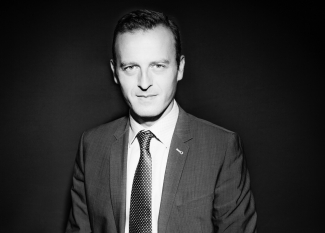
Thomas GOMART
Directeur de l'Ifri
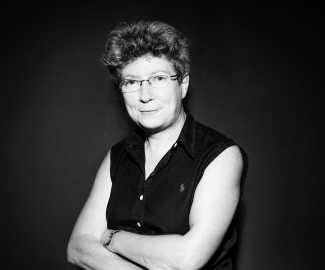
Françoise NICOLAS
Conseillère au Centre Asie de l'Ifri

Carole MATHIEU
Ancienne Responsable des politiques européennes au Centre Énergie et Climat de l'Ifri
Sujets liés
Autres événements
Pandémies et maladies infectieuses : que peut la communauté internationale ?
Tandis que les tensions internationales s’aiguisent et que le monde risque de se fracturer en blocs géopolitiques, pandémies et maladies infectieuses continuent de se développer. Des facteurs comme la multiplication des guerres ou le dérèglement climatique ne font qu’aggraver la situation.
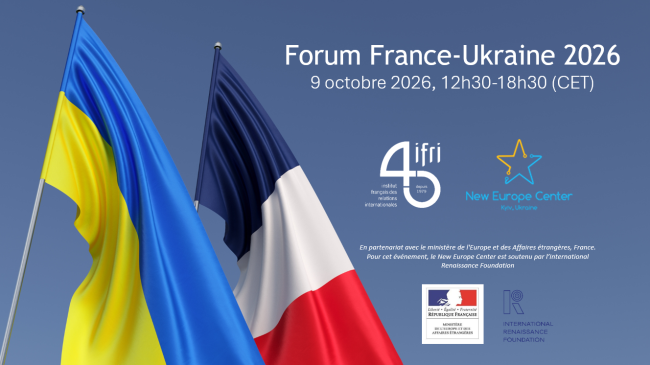
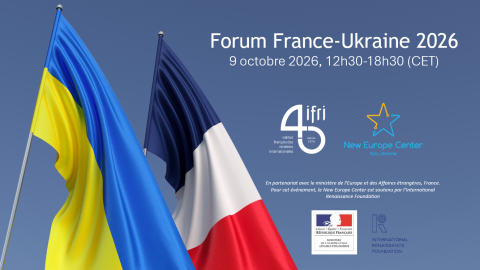
Forum France-Ukraine 2026
Plus de quatre ans et demi après le début de la guerre à grande échelle déclenchée par la Russie contre l’Ukraine, le Forum France-Ukraine 2026 accueillera des responsables politiques, des experts, des universitaires et des représentants de la société civile des deux pays pour échanger autour de trois sujets principaux : les formats et conditions d'un règlement diplomatique durable ; l'intégration euro-atlantique de l'Ukraine, entre processus d'adhésion à l'UE et rapprochement avec l'OTAN ; et les transformations sociétales de l'Ukraine d'après-guerre ainsi que ses perspectives de reconstru
Finance sous tension géopolitique : banques centrales, stablecoins et souveraineté européenne
Les tensions géopolitiques des dernières années bouleversent la donne monétaire et financière internationale, remettant en question des équilibres que l'on croyait stabilisés. Pour comprendre les évolutions en cours, il faut tenir compte de l’imbrication croissante des logiques financières et politiques, des comportements des grands acteurs, mais aussi des évolutions institutionnelles et techniques.