





Re-thinking Turkish foreign policy in the Western Balkans

Informations pratiques
Thématiques et régions
Centres et programmes liés
Ceci est un événement réservé.
En savoir plus sur nos programmes de soutienIn the first of our foreign policy meeting series “Ruptures in the Neighborhood: The Impact of Turkish Foreign Policy in its Neighboring Countries and Beyond,” we will focus on the Turkish foreign policy (TFP) in the Balkans. In line with the overall goal of the series, we will aim to get an overview of TFP in the Balkans, outline the risks and opportunities it bears for Balkan countries, Turkey, and the EU, and develop political frameworks and policy proposals which would contribute to the peace, stability, cooperation, and welfare in the region. The over-arching question will be: how can German-French foreign policy react to TFP.
This dialogue is co-organized by the Heinrich Böll Stiftung, IFRI, Al Sharq Forum and the ISAC Fund.
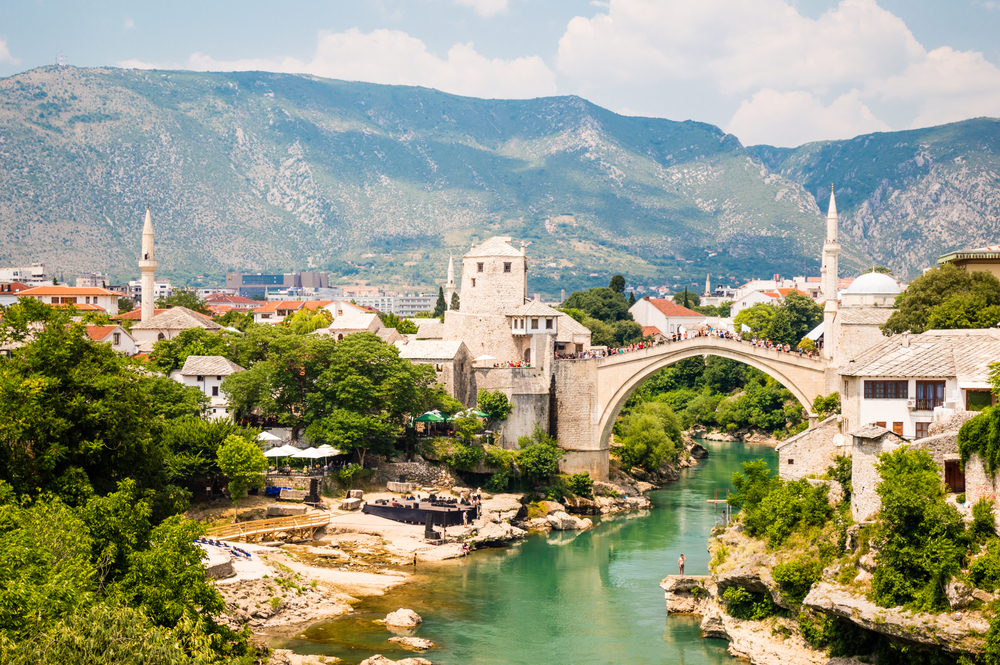
With this meeting, we aim to address the following issues:
- Analysis of the implementation of TFP in Balkans & implications for German-French and overall EU approach to Turkey.
- Turkish cultural and development aid (TİKA)
- The religious dimension of TFP in the Balkans under the shadows of neo-Ottomanism, Islamism, Gülenism, and anti-Gülenism
- Is neo-Ottomanism over?
- Turkey’s role in post-Dayton Bosnia-Herzegovina
- Turkish role in Kosovo, Albania, Serbia (and Sandzak), North Macedonia and Montenegro
- Outlining foreign policy risks and opportunities for the peace, stability, and welfare of the region.
- Analysis of main economic dimensions of foreign policy issues.
- Turkish investments and trade
- Energy projects
- EU Connectivity Agenda & Belt and Road Initiative
- EU Enlargement policies and fostering of practical cooperation (Berlin Process/Connectivity Agenda, new French Western Balkans Strategy etc) and the Balkans.
- Turkey and other third actors’ influences in the Balkans (Russia, Gulf States, China)
- Refugee crisis, challenges to European migration regime, and their implications for the countries of the region.
- Developing a joint German-French approach to Turkish policies in Balkans. Chances for joint EU-Turkey initiatives.
Intervenants

Notre équipe

Dorothée SCHMID
Responsable du programme Turquie/Moyen-Orient de l'Ifri

Sujets liés
Autres événements

Brésil : vers une continuité décevante, avec Lula ou Bolsonaro
Un brief de 30 minutes autour de Jean-Louis Martin, chercheur associé, Programme Amériques et Centre énergie et climat de l'Ifri.

La sécurité environnementale : nouvel enjeu de l’autonomie stratégique européenne
Face aux bouleversements géopolitiques, à l’accélération du changement climatique et aux avancées technologiques qui redessinent les rapports de force mondiaux, la maîtrise des ressources s’impose comme un enjeu de puissance. Eau, énergie, matières premières critiques : des sujets longtemps appréhendés principalement sous l’angle environnemental ou économique occupent aujourd’hui une place croissante dans les réflexions sur la souveraineté et la sécurité des États.

Le renseignement peut-il encore anticiper les ruptures ?
Retour de la guerre de haute intensité en Europe, durcissement des rivalités entre puissances, multiplication des menaces hybrides, persistance du risque terroriste : le monde est entré dans une ère de confrontation où l'information, son contrôle et son exploitation sont devenus des armes à part entière.