





Informations pratiques
Thématiques et régions
Centres et programmes liés
Ceci est un événement réservé.
En savoir plus sur nos programmes de soutienDans le cadre de l'Ifri Energy Breakfast Roundtable, un séminaire avec John Brodman, former Deputy Assistant Secretary at the US Department of Energy. Présidence : Jacques Lesourne, président du Comité scientifique du Programme Energie à l'Ifri. Modérateur : William C. Ramsay, Directeur du Programme Energie à l'Ifri.
American public opinion may have been shifting in recognition of nuclear as part of the answer to climate change. But is public policy leading following public opinion ? The future of the US nuclear industry will depend on decisions made by the Obama administration, in which multiple issues - political, legal and technological - remain unsettled. Financial and regulatroy stability are essential for the industry to proceed with investments with a 30-year or longer time-horizon. The nomination of Steven Chu, known to be favorable to nuclear power, was a positive signal sent to the industry, however at the same time, the President's economic stimulus package did not provide any funding to nuclear development. Furthermore, funding was deeply cut for the nuclear waste repository project at Yucca Mountain. These signals are mixed and it is difficult for the external observer to analyze the true potential for the US nuclear industry to launch into a wave of new construction.
Pour en savoir plus, télécharger la publication "Toward a US Nuclear Renaissance"
Pour plus d'information, contacter Martine Breux - [email protected]
Intervenants

Notre équipe
Sujets liés
Autres événements

Le renseignement peut-il encore anticiper les ruptures ?
Retour de la guerre de haute intensité en Europe, durcissement des rivalités entre puissances, multiplication des menaces hybrides, persistance du risque terroriste : le monde est entré dans une ère de confrontation où l'information, son contrôle et son exploitation sont devenus des armes à part entière.

Comment l'IA transforme-t-elle la guerre ?
À l'occasion de la parution du numéro d'automne de Politique étrangère (n° 3/2026) et de son dossier sur les modalités de la "nouvelle" guerre, l'Ifri et l'Association (ADEA) du Magistère relations internationales et action à l'étranger (MRIAE) de la Sorbonne sont heureux de s'associer pour vous proposer une conférence autour de deux chercheurs de l’Ifri ayant contribué à ce dossier.
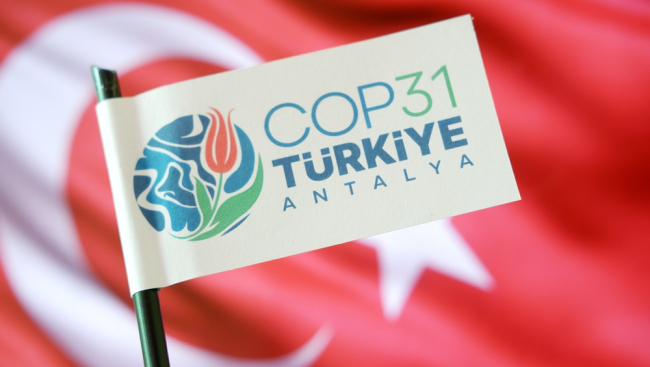
La COP31 à Antalaya : état de la gouvernance climatique mondiale, enjeux et perspectives
Les Conférences des Parties (COP) sont devenues un marathon de fin d’année visant à redynamiser un monde désormais entré dans l’ère du dépassement climatique. Alors que la Turquie affiche la plus grande production d’électricité carbonée parmi les pays de l’OCDE en Europe, elle a adopté le programme d’électrification et entend s'associer à l'Australie pour encourager la mise en œuvre de mesures concrètes. Il s'agit là d'un dispositif de coprésidence de facto inhabituel, mais qui pourrait donner des résultats prometteurs.