




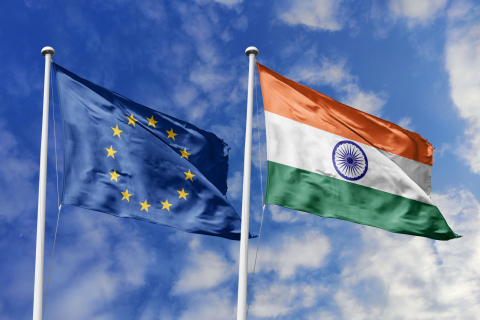

AUKUS, the Indo-Pacific, and France’s Role: Fluctuat Nec Mergitur
The announcement of the new AUKUS alliance between Australia, the UK and the U.S. came as a shock for France.

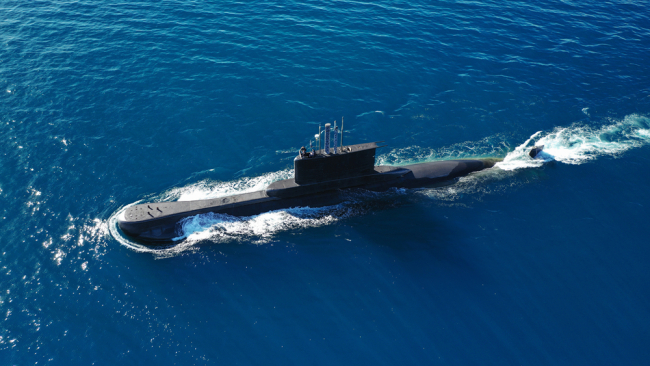
France’s submarine trouble highlights its precarious status as a great power
French admiral says US has broken a pact among nuclear powers on the UN Security Council by agreeing to sell nuclear submarines.

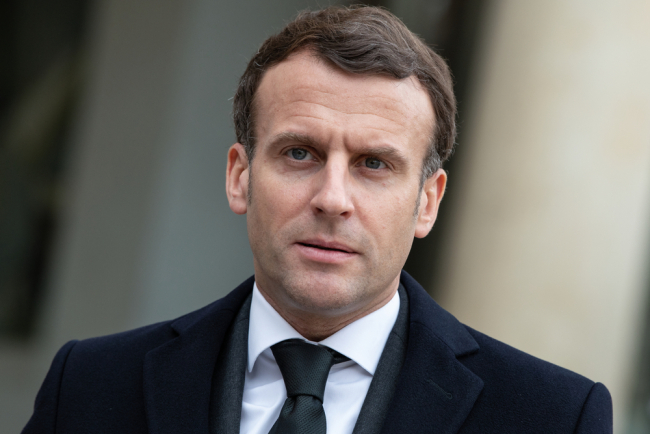
America's Defense Pact with Australia and the U.K. Has Humiliated France's Macron. But It Might Also Help Him
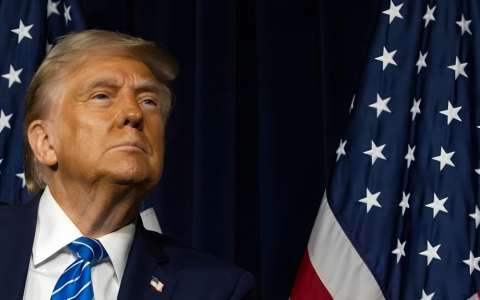
For years, French President Emmanuel Macron butted heads, bit his tongue in frustration, and lashed out at former President Donald Trump, who refused to yield an inch to his entreaties about global cooperation. Trump pulled the U.S. out of the Iran nuclear deal and the Paris Agreement on climate change—cherished projects for Macron—and trashed the NATO military alliance as “obsolete.”
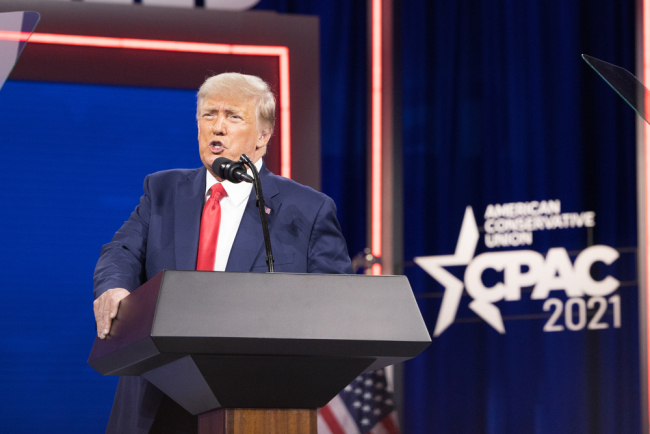
Trump and the Republican Party: electoral defeat, ideological victory?
During Donald Trump’s four-year term, many new Republican candidates have been elected to Congress. Often backed by the former president from the GOP’s primaries, they were chosen for their devotion towards him and their support for his policies : moral conservatism and laissez-faire attitudes towards fiscal and environmental issues are old Republican tenets taken over by Trump, while nativist and economic nationalism (based on anti-immigration and protectionist policies respectively), as well as the portrayal of White people without college degree as an oppressed minority are fresh precepts brought forward by the former populist President.

Europe/United States: 50 Shades of Dependence
Is Joe Biden’s United States (US) returning to multilateral, traditional diplomacy? This more open stance does not eliminate either its domestic problems or the divergence in interests separating the US from the Europeans: how will open diplomacy fit in with the priority of defending US interests? Will Washington organize a broad anti-Chinese coalition that the Europeans are opposed to? Will sanctions with their resulting effects remain at the heart of US strategy? Will the Europeans be able to assert their sovereignty in the key area of new technologies against the US giants?
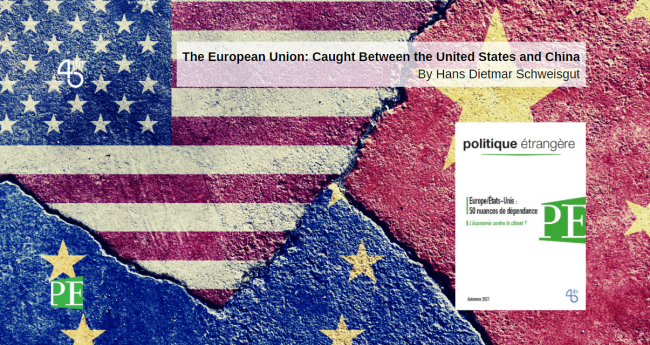
The European Union: Caught Between the United States and China
The United States and the European Union (EU) are now both in agreement regarding China – long viewed benevolently – as a systemic rival in the international order.
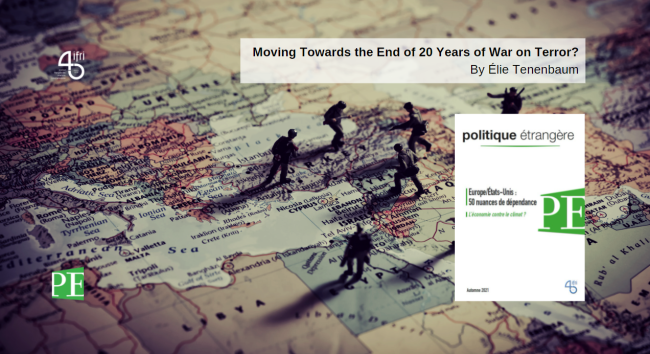
Moving Towards the End of 20 Years of War on Terror?
Twenty years after 9/11, the assessment of the “War on Terror” is mixed: heavy financial and human costs, weakening of Al-Qaeda central and the Islamic State in the Levant, but creation of affiliates in different locations, fatigue of endless wars, etc.
The China dilemma from Trump to Biden: one consensus and three worldviews
The United States underwent a fundamental transformation in its stance on China during the Trump presidency.

Exclusive: Western Intelligence Fears New Russian Sat-Nav’s Espionage Capabilities
GLONASS, Moscow’s answer to GPS, is set to launch an upgraded satellite network later this year, which it hopes to sell to the U.S. and Europe. Buyer beware.

Health Data Governance: Lessons Learned from the COVID-19 Pandemic in Europe, China, and the United States
The health crisis has triggered a tectonic movement in the recomposition of health data governance and protection models around the world, while accelerating the investment of large digital companies in the field of e-health.

USA/Europe: Seven Digital Challenges
As a consequence of the positive momentum in Transatlantic relations brought about by the arrival of the Biden administration, significant progress is expected on a range of key digital issues.
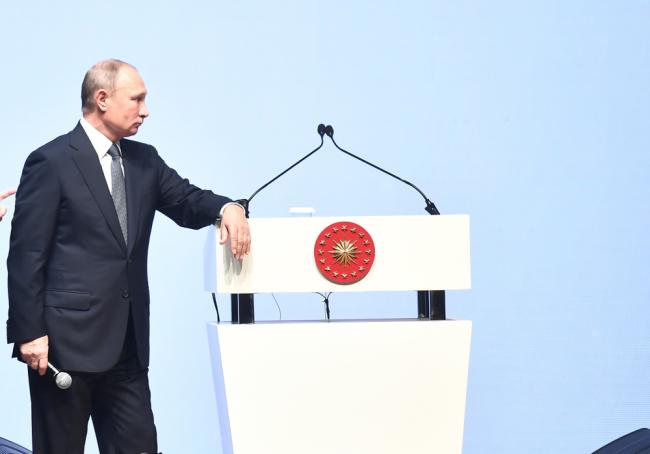
Dialogue with Russia. Russia Needs to Reset Relations with the West
This report analyses Western-Russian relations and proposes a way forward for conducting dialogue with Russia. It offers an analysis of Russia’s relations with NATO and the EU, an overview of the bilateral relations of various Western countries with Russia, a glimpse of China’s role, and an assessment of the main interests and contentious issues in Western-Russian relations.
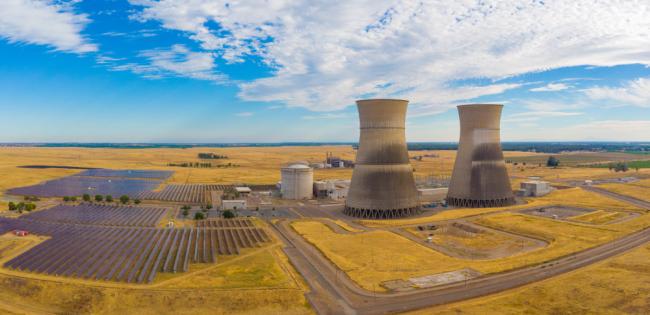
The Herculean Task of Decarbonizing the American Power System by 2035
The Biden Administration has so far taken the focus of the Biden candidate on climate issues seriously, especially the commitment made during the campaign of a net zero power system by 2035.
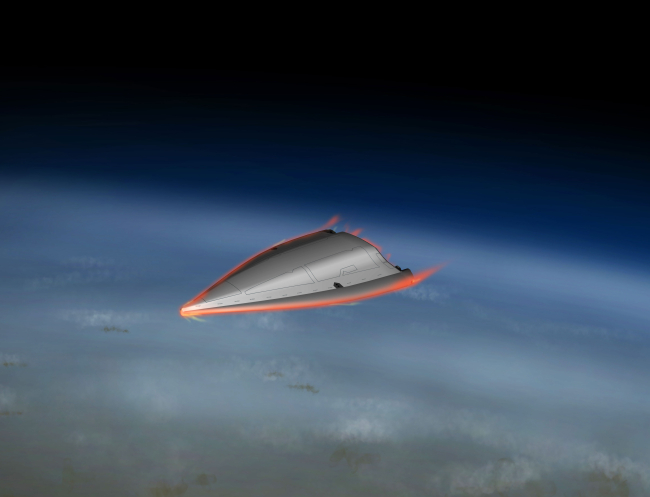
Hypersonic Weapons: What Are the Challenges for the Armed Forces?
Hypersonic systems are becoming attributes of power for the states that design and implement them, at the risk of reviving an arms race.
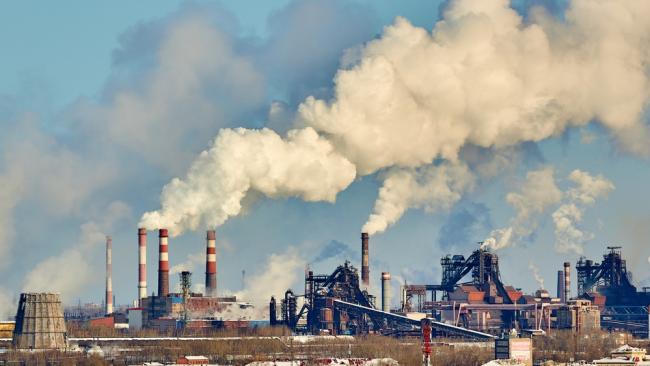
Can the Biggest Emitters Set Up a Climate Club? A Review of International Carbon Pricing Debates
The world’s largest emitting countries are reconsidering the role of carbon pricing instruments and increasingly looking at carbon border adjustment mechanisms (CBAMs) to address leakage concerns. This renewed momentum should trigger a broader discussion on how to make trade policies compatible with the climate agenda.
East Asia Confronted with China
China is now an undeniable heavyweight on the international scene, wielding a remarkable range of political strategies. Studying its position in the surrounding area of Southeast Asia in relation to Japan, Korea, Taiwan, and the Association of Southeast Asian Nations (ASEAN) countries, as well as Australia, gives us an understanding of both the strength and the limits of such a diverse range of actions.

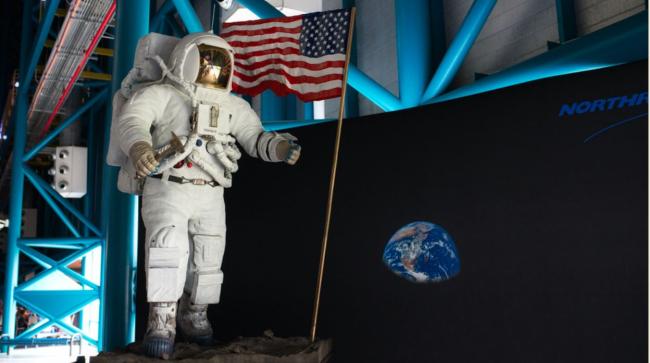
Destination Moon: is it time for us to send astronauts back?
The series For All Mankind (2019) is a fictional alternate history that imagines a world where the Soviet Union was the first power to send an astronaut to the moon. From that starting point, the two rival superpowers compete to establish their own lunar station.
From the Digital Levy to the Taxation of Multinationals: Joe Biden's Tax Revolution
The Organisation for Economic Co-operation and Development (OECD) is conducting important negotiations this spring to reform international taxation.
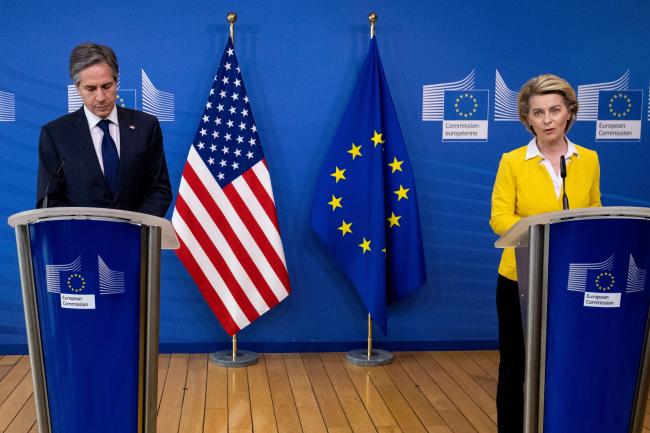
Europe in the Geopolitics of Technology: Connecting the Internal and External Dimensions
To respond to growing global competition, the EU has made notable progress on the internal dimension of technology policy over the past 3 years. It is now also seeking to adapt its foreign policy – from the transatlantic relationship to global partnerships – to technological challenges.
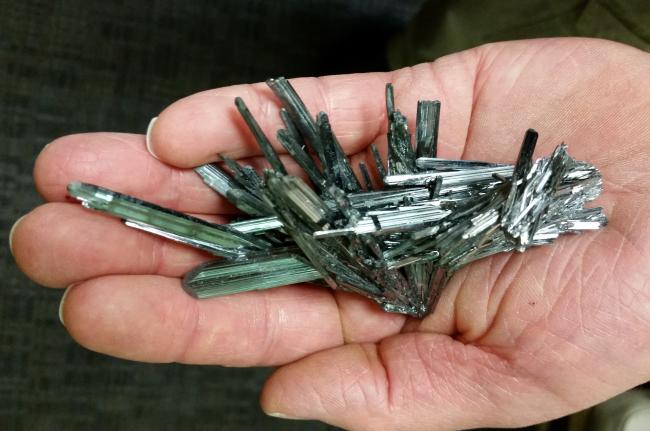
The US Mineral Independance Strategy : An All-Out Mobilization
The Trump administration has been very actively designing and implementing a new strategy for reliable supply of critical minerals which aims at reducing the country’s vulnerabilities and becoming a leader in this field.
Obama Remarks on Energy: Ball in Congressional Court
President Obama has made clear that in the 2012 election, he intends to defend his record on energy from the middle.
Strategic Stability in the Cold War: Lessons for Continuing Challenges
During the Cold War, the phrase “strategic stability” gained currency both as a foreign policy objective and as an apt way of describing the fact that the United States and the Soviet Union never actually went to war.
‘‘I'm Not a Feminist, But…'', a Comparative Analysis of the Women's Movement in the United States and France
The emergence of a feminist thought in the 18th century gave rise to steady and regular exchanges between French philosophers and American activists. They illustrate in a very particular sector the wealth of the relation between both countries. This dialogue continues on renewed bases today: both in universities (with the exploration of the concept of gender) and in the militant world (with the defense of precise and limited causes).
Ampo at 50: The Faltering US-Japan Relationship
For the last 50 years the governance of the US-Japan alliance has often been characterized by secret diplomacy and discretionary choices. In the post-war period Japan's strategic choices have given overall priority to sustaining a strong security alliance with the United States.
Understanding the Issue of U.S. Military Bases in Okinawa
The failure of Prime Minister Hatoyama to transfer the dangerous U.S. military base of Futenma out of Okinawa hastened his resignation, announced on June 2nd.
Disaster in Gulf not a Disaster for Obama
Pundits argue that the BP accident in the US Gulf is a final nail in the coffin of President Obama’s energy and environment legislation. They conclude that American energy and environment policy will be left in disarray with little hope for key decisions before the crucial Cancun climate change talks.
President Obama Snubs Europe: The US Perspective on the EU
Introduction
With the ratification of the Lisbon Treaty completed the EU is undergoing profound institutional changes. How does the US perceive the EU and these changes?
To analyze American perceptions of the EU it is first necessary to distinguish between the general American public and the American political elite.
Ifri, a foundation recognized as being of public utility, relies largely on private donors – companies and individuals – to guarantee its sustainability and intellectual independence. Through their funding, donors help maintain the Institute's position among the world's leading think tanks. By benefiting from an internationally recognized network and expertise, donors refine their understanding of geopolitical risk and its consequences on global politics and the economy. In 2026, Ifri partners with over 90 French and international companies and organizations.
