









What Progress on the Paris Agreement on Climate Change?
At COP26, a long-term target to keep global warming below 1.5°C was set. This goal is inconsistent with the commitments that the signatory countries have made in terms of reducing their greenhouse gas emissions by 2030.
Sino-American Climate Diplomacy
During COP26, Beijing and the Biden administration committed to reviving Sino-American cooperation on climate issues, in the name of their common interest in climate stability.

Climate: Which Way Forward?
Thirty years after Rio, the case file “Climate: Which way forward?” assesses current climate commitments, which are undoubtedly less impressive and less certain than the political pronouncements and media fanfare make them seem. A number of fundamental problems remain.
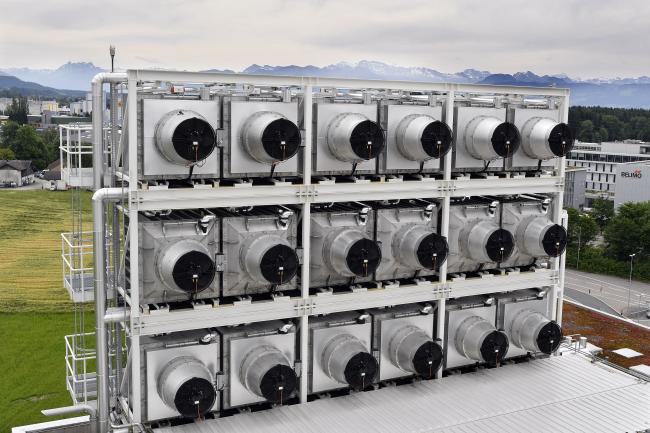
Geoengineering to the climate's rescue? Issues, actors and perspectives of an anthropocene symbol
Geoengineering is a catchword for a wide range of techniques, and it is becoming an international issue that will grow in importance as the costs of certain technologies fall or as greenhouse gas emissions continue to decline, making these techniques more attractive.
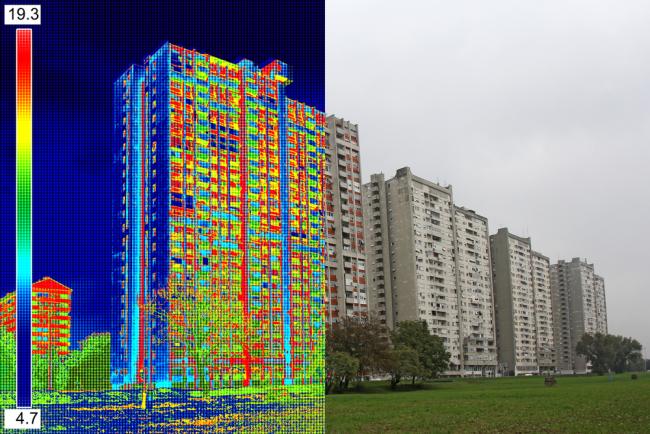
The Missing Guest: Energy Efficiency in the Multilateral Energy Arena
Since the 1970s, energy efficiency has gained visibility as a low hanging fruit – its potential impact on critical issues such as climate change, energy security, or competitiveness is now widely acknowledged, even more so in times of higher energy prices.

RAMSES 2022. Beyond Covid
For its 40th edition, RAMSES 2022. Beyond Covid, written by Ifri's research team and external experts, offers an in-depth and up-to-date analysis of geopolitics in today’s world.
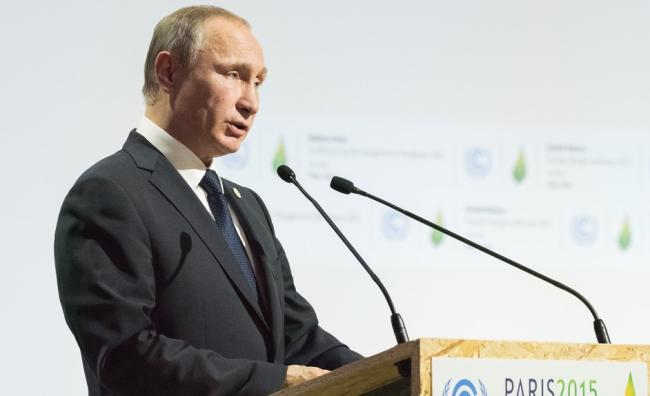
The Adaptation Game — Russia and Climate Change
Russia is an outlier in the international consensus on climate change.
Ambitious New Climate Goals Shouldn't Let China off the Hook
Xi Jinping’s announcement of carbon neutrality is impeccably timed, but the hard part lies ahead.

RAMSES 2021. At the Edge?
RAMSES 2021. At the Edge?, written by Ifri's research team and external experts, offers an in-depth and up-to-date analysis of geopolitics in today’s world.
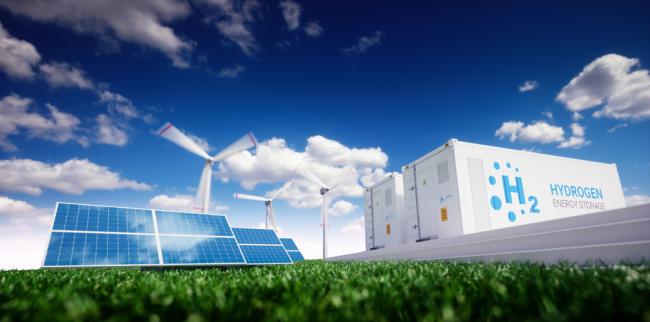
Perspectives on a Hydrogen Strategy for the European Union
There is now a wide understanding that larger use of clean hydrogen in future can be an important mean to achieve decarbonisation of the European economy.
U.S. foreign policy and the World's new power balance: an interview with Gordon Adams
Gordon Adams, Professor Emeritus of International Relations, School of International Service, American University speaks about U.S. foreign policy and the World's new power balance on the sidelines of Ifri's 18th annual U.S. conference held on December 6, 2019.
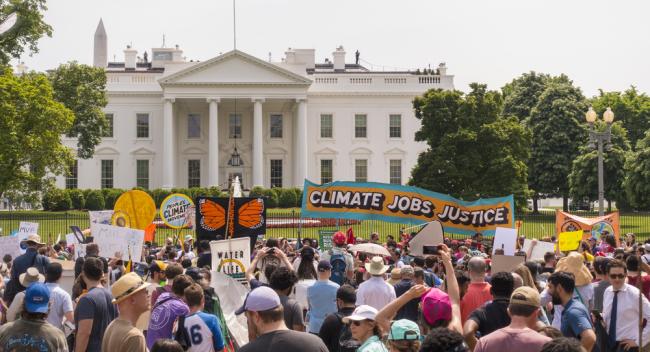
The Battle Heats Up: Climate Issues in the 2020 US Presidential Election
Environmental issues have frequently enjoyed bipartisan support in American history: the Clean Air Act was enacted in 1963 under Democratic President Johnson, and the Environmental Protection Agency (EPA) was established in 1970 under Republican President Nixon.

RAMSES 2020. A World without a Compass?
RAMSES 2020. A World without a Compass?, written by Ifri's research team and external experts, offers an in-depth and up-to-date analysis of geopolitics in today’s world.

2019-2029: The World in 10 Years
The last four decades have witnessed the profound transformation of the very foundations of the international system: the globalization of trade, technical revolutions, the upheaval of the hierarchy of powers, the emergence of China, the explosion of the Middle-East, the mutation of conflicts and threats, climate concerns, etc.

After the Demographic Explosion
Demographic forecasting is not an exact science. UN projections, which suggest that the world population may rise to 11.2 billion in 2100, could be overestimates. Indeed, fertility could fall more rapidly and life expectancy may rise less than expected. The Sahel is set to experience the most spectacular demographic explosion, but this will not necessarily lead to massive migration to Europe.
Possible Energy Transitions through 2029
Renewable energies are experiencing rapid growth, due not only to their limited impact on the environment but also to shrinking costs. To fight climate change, new investments in low carbon technologies are necessary. Apart from its positive aspects, the energy transition carries risks, notably geopolitical. The notion of energy security will be profoundly modified. These risks can be anticipated and managed.
The roots of anti-environmentalism in the U.S.
An interview with Peter Jacques, Professor of Political Science, University of Central Florida.

Brexit, Electricity and the No-Deal Scenario: Perspectives from Continental Europe, Ireland and the UK
When it comes to energy and electricity in particular, there can be no winner in the Brexit negotiations. The only reasonable objective should be to minimise losses and avoid trade friction.
Xi Jinping’s Institutional Reforms: Environment over Energy?
During its two sessions (lianghui) in March 2018, the National People’s Congress (NPC) announced China’s most important institutional reforms in the last 30 years. These changes occurred right after Xi Jinping consolidated his power and at a time when stakeholders working in the energy field were expecting more clarity on policy orientations.

RAMSES 2019. The Clashes of the Future
RAMSES 2019. The Clashes of the Future, written by Ifri's research team and external experts, offers an in-depth and up-to-date analysis of global geopolitics.
Key Trends in the European Earth Observation Sector
An ambitious Earth Observation (EO) policy could bring significant benefits to Europe both regarding the fight against climate change and the competitiveness of its EO industry and service sectors.
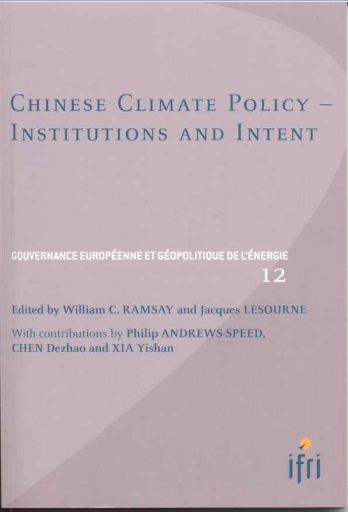
Chinese Climate Policy: Institutions and Intent
Until the late 1990s, the balance of Chinese energy production and consumption was treated by the rest of the world as a net figure. No one knew what was going on inside the Chinese economy - it was a black box. As far as anyone was concerned, the Chinese would not soon be a major factor in world energy markets.
The Electric Vehicle in the Climate Change Race: Tortoise, Hare or Both?
Europe is seeking ways to decrease the growing negative impact of passenger cars on climate, currently responsible for up to 12% of total EU CO2 emissions. After biofuels in the nineties and hydrogen in 2000, the new answer to climate change appears to be electric. But contrary to many marketing messages, electric cars are not zero emissions cars. They will not necessarily contribute to actual CO2 emission reductions before 2020 and even then, not in every country.
Copenhagen's Legacy Is Ambiguity
The third Ifri Annual Energy Conference held at the Plaza Hotel, Brussels in February 2010 posed the question: “How do we begin effectively to close the gap between climate change policies and current practices - or put another way between climate change rhetoric and market reality”.
Climate Change: When the Media Play the Role of Speculators
Climate change, the risks it implies, the time horizons it imposes and the extent of possible consequences it threaten are exposing how the media deals with public issues.
Getting Carbon Out: Tougher Than it Looks. An Assessment of EU, US & Chinese Pledges
This paper intends to examine the emissions trajectories of the three largest emitters, China, the US and the European Union through the optics of indicators and assess the feasibility of their targets for 2020.
Ifri, a foundation recognized as being of public utility, relies largely on private donors – companies and individuals – to guarantee its sustainability and intellectual independence. Through their funding, donors help maintain the Institute's position among the world's leading think tanks. By benefiting from an internationally recognized network and expertise, donors refine their understanding of geopolitical risk and its consequences on global politics and the economy. In 2026, Ifri partners with over 90 French and international companies and organizations.
