





Turkey
Analysis of Turkey's internal and external dynamics as a regional power, with a focus on diplomatic, economic and political issues linked to Recep Tayyip Erdoğan's third term in office.
Related Subjects
The French-Greek Partnership: Beyond the Eastern Mediterranean
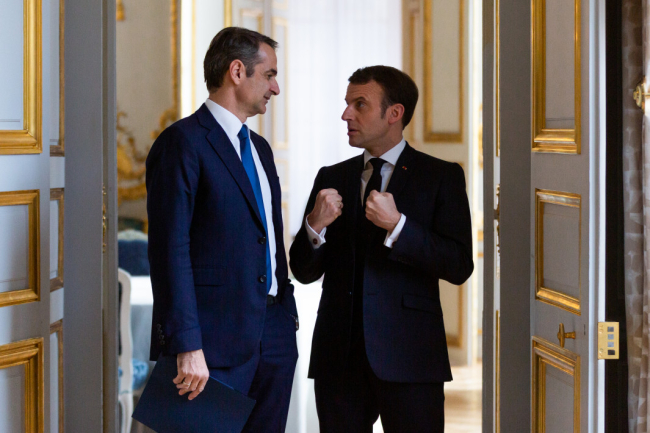
The bilateral defense agreement signed by France and Greece in September 2021 confirms the strategic turn of the relationship between the two countries. It was already unveiled in 2020 when Paris supported Athens to counter Turkish maritime operations that France and Greece considered very hostile.
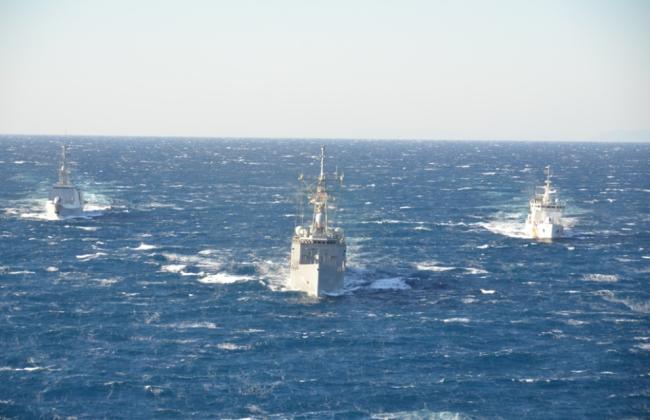
The French Military's Perception of the Turkish Military and Turkey's Expansion in the Eastern Mediterranean
In the summer of 2020, the Central and Eastern Mediterranean became the center of unusual tensions between France and Turkey. Given that these tensions were also military, which is uncommon for the two countries, the perception that the French military has of Turkey’s army and its doctrine is particularly relevant to address.
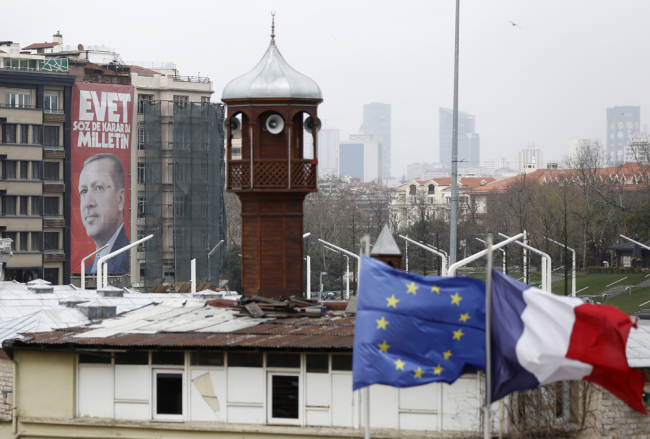
Building European Strategic Autonomy vs. Turkish Strategic Depth: Macron's Diplomatic Gamble
Since coming into office in 2017, Emmanuel Macron has been the loudest advocate for the development of European ‘strategic autonomy’, which aims at reinforcing the European Union’s geo-strategic independence. Asserting the EU’s role on the international stage, starting with its immediate neighborhood, directly clashes with Recep Tayyip Erdogan's long-term expansion strategy in several key areas.
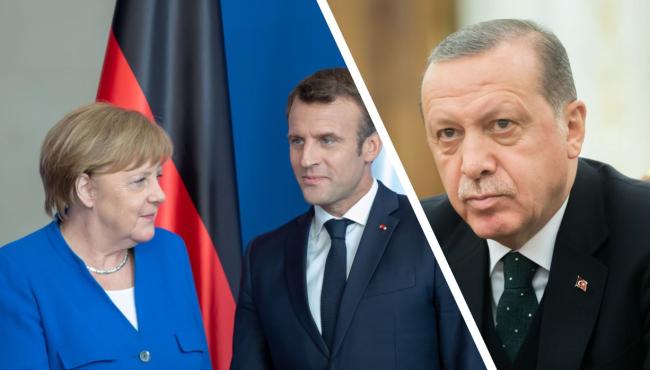
Conflicts in the EastMed: From Germany’s and France’s Conflicting Strategies to a Dual Approach
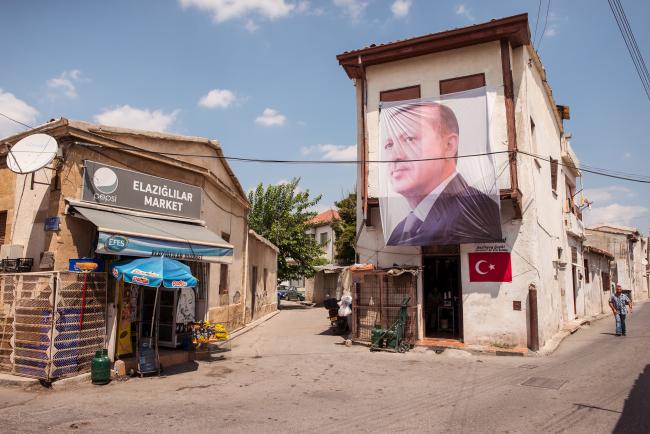
Turkey's Method in the Mediterranean: The Hold over Northern Cyprus
On July 20, 2021, Turkish President Recep Tayyip Erdoğan celebrated with his Turkish Cypriot counterpart Ersin Tatar the 47th anniversary of the Turkish military intervention in Northern Cyprus. This ceremony marks the strategic reinvestment of the Cypriot file by Turkey.
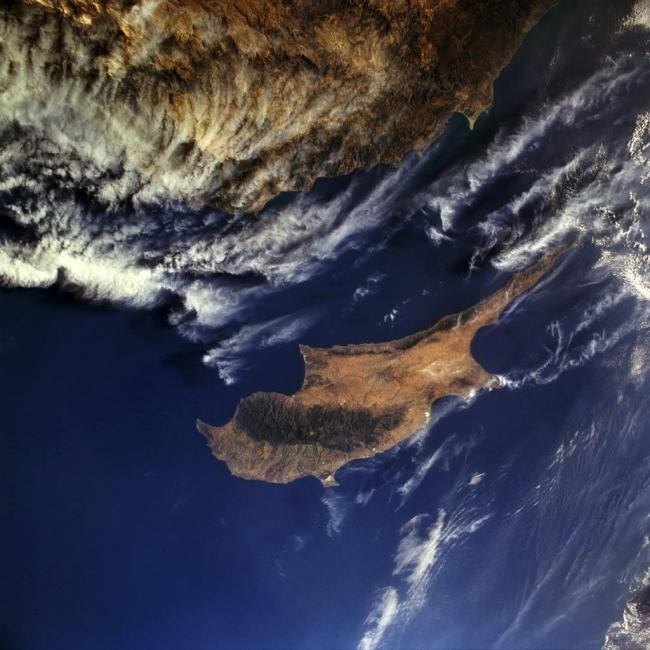
Back to “the Tradition”: Turkey’s Changing Position from a Federal to a Two-State Solution to the Cyprus Conflict
When it came to power in 2002, the Justice and Development Party (AKP) defended a bicommunal, federal solution for Cyprus, and supported the Annan Plan to reunite the island.
France vs. Turkey in the EastMed: A Geopolitical Rivalry between a “Keeper” of the Old Order and a Challenging Emergent Power
The Franco-Turkish standoff is first and foremost a geopolitical contest for influence in the EastMed area. It must be understood in light of Turkey’s rise as an emergent power in quest for geostrategic autonomy and France’s unease with Ankara’s growing assertiveness in a region that Paris traditionally views as part of its sphere of influence.
Russia and Turkey. Strategic Partners and Rivals
The extraordinarily troublesome year 2020 tested many international institutions and bilateral ties, but few experienced sharper challenges than the complex relations between Russia and Turkey, which have a strong impact on crisis developments in Europe’s immediate neighborhood.

Mavi Vatan, the "Blue Homeland": the Origins, Influences and Limits of an Ambitious Doctrine for Turkey
Turkey’s activism in the Eastern Mediterranean now appears to be guided by an ambitious legal and geopolitical doctrine, based on the claim of a vast maritime domain – the “Blue Homeland” or Mavi Vatan in Turkish.

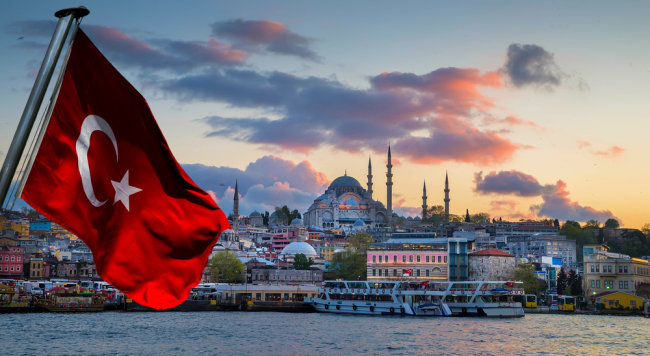
2021, year of the revival of EU-Turkey relations?
The EU and Turkey both say they are ready to iron out their differences and step up bilateral cooperation, which could take place in many areas. But Ankara will have to prove its goodwill.
Turkey: An Emerging Power without the Resources to Match Its Ambitions
Turkey is adopting an increasingly hostile stance towards Western countries. Its activities in the eastern Mediterranean and in Libya demonstrate this.
Turkey-China Relations: Ambitions and Limits of the Economic Cooperation
At first glance, China and Turkey have many interests to cooperate. The deployment of the Chinese Belt and Road Initiative (BRI), Turkey's colossal investment and financing needs, as well as President Erdogan's mistrust of the West, appear as many converging interests. Yet economic cooperation between the two countries is struggling to achieve its full potential. Political differences persist, particularly the question of the Uyghurs.
Turkey’s New Gas Discovery in the Black Sea and Its Potential Implications
Turkish President Recep Tayyip Erdogan announced Turkey’s biggest gas discovery ever on August 21, 2020. Initial findings show that the estimated reserve capacity is 320 billion cubic meters (bcm) of gas.
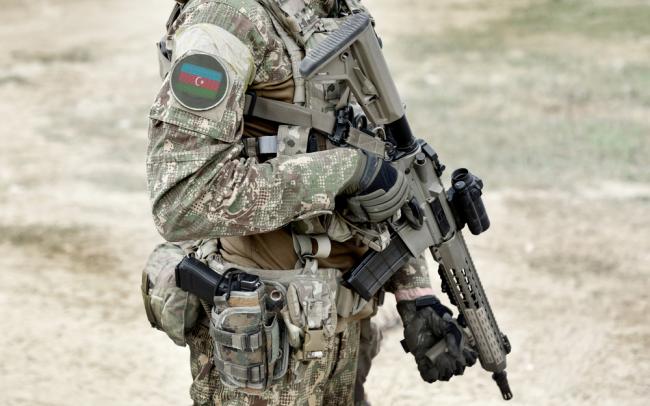
No Peacemakers for the New / Old Caucasian War: Understanding the Armenia-Azerbaijan Clash
A full-blown war erupted in the South Caucasus last Sunday, September 27, and as the two belligerents — Armenia and Azerbaijan — mobilize their forces under martial law, no international authority is trying in earnest to stop the hostilities. The conflict over the disputed Nagorno-Karabakh region ignited 30 years ago as the Soviet Union was collapsing and has never effectively “frozen.” The cease-fire Russia negotiated in May 1994 was not backed by a peacekeeping operation, and clashes have kept occurring, most notably in April 2016.
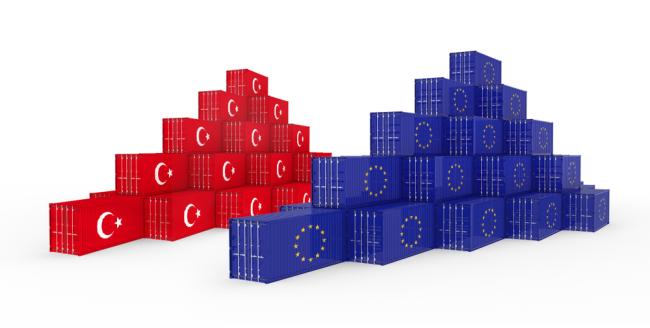
France and the Modernization of the EU-Turkey Customs Union: Interests and Obstacles
This report is part of a joint endeavor of the Centre for Applied Turkey Studies (CATS) at Stiftung Wissenschaft und Politik (SWP), along with Elcano Royal Institute (ELCANO, Madrid), The Polish Institute of International Affairs (PISM, Warsaw), Istituto Affari Internazionali (IAI, Rome) and the Hellenic Foundation for European and Foreign Policy (ELIAMEP, Athens), to open perspectives for the modernization of the European Union-Turkey Customs Union (EU-Turkey CU).


Turkey fuels regional power game over Mediterranean gas reserves
Competing claims have left Ankara isolated. Its efforts to stall projects threaten billions of dollars in investment. Europe’s top diplomat smiled for the camera as he took a helicopter flight over the disputed waters of the island of Cyprus at the end of June.
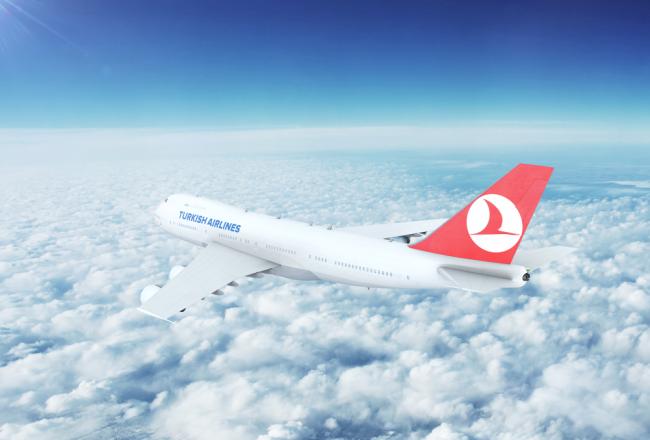
Turkish Airlines: An International Strategic Instrument for Turkey
Turkey has undergone significant transformations since the Justice and Development Party (AKP) came to power in 2002, as illustrated by the notable growth of its airline industry. Turkish Airlines (THY) is the main company based in the country, and has dramatically extended its network of destinations in the past 15 years.

The 2016 Failed Coup in Turkey: What Is the Impact on Turkish-African Relations?
The July 2016 failed coup against President Recep Tayyip Erdoğan’s government not only resulted in a dramatic upheaval in Turkey, it also had a significant impact on the structure of its international relations and its networks of influence abroad.

Turkey end French studies in response to call for Koran reform
Turkey has decided to suspend the opening of several French studies departments in its universities, in a context of bilateral tensions after the publication of a "manifesto against new anti-Semitism" last month, calling for the correction of some parts of the Quran. Dorothée Schmid, head of the Contemporary Turkey program at Ifri, analyses the reasons behind this decision and its implications for the two countries.
Mind the Gap: How France and Germany Can Spearhead Joint Foreign Policy Initiatives Now
In light of the current instability on Europe’s borders and uncertainties about the international role of the US under the administration of President Donald Trump, it is high time for Franco-German foreign policy initiatives. With the formation of a new German government, a window of opportunity opens for new joint action by the two countries at the core of the EU. At the same time, differences between France and Germany, both on policy issues and in terms of their strategic cultures, could impede any such cooperation.
Ifri, a foundation recognized as being of public utility, relies largely on private donors – companies and individuals – to guarantee its sustainability and intellectual independence. Through their funding, donors help maintain the Institute's position among the world's leading think tanks. By benefiting from an internationally recognized network and expertise, donors refine their understanding of geopolitical risk and its consequences on global politics and the economy. In 2026, Ifri partners with over 90 French and international companies and organizations.

The Turkey 2050 Program develops a forward-looking analysis of the country to anticipate its dynamics over the next 30 years. The reflection is structured around three key themes:
• Domestic politics, to assess the stability of the AKP regime and the prospects for political change;
• The economy, to understand Turkey's capacity for recovery, the evolution of its production model, and its regional integration prospects;
• Foreign policy, to monitor the rise of Turkey's diplomacy and military capabilities, and to map the country's new spheres of influence.
This research, funded by companies and institutions active in Turkey, is based on field missions that aim to shed light on the blind spots and lesser-known areas of the Turkish landscape. Program partners benefit from personalized monitoring of relevant indicators to inform their decision-making, supported by monthly strategic briefings, sectoral reports, and access to a network of Turkish and French experts. The exchanges surrounding the program ultimately seek to define the concept of "Turkish risk" in a broad sense, in order to adapt our working methods accordingly.
Ifri's Turkey/Middle East Program aims to provide expertise on the trends and developments in politics, societies and economies across the region.
The programme has the following objectives:
- Proposing a new approach towards the MENA region through an analysis of local, regional, and international dynamics with the potential to guide and influence new policies.
- Highlighting the role of foreign powers which have traditionally been present in the region and analyzing the new role taken on by emerging countries ;
- Anticipating new directions and outlooks in each country.
- Interpreting risks and potentials and putting forward new templates for analysis.
The programme has built a dense network of researchers and experts who provide expertise on the MENA region and working together on a range of crosscutting themes.