




Turkey
Analysis of Turkey's internal and external dynamics as a regional power, with a focus on diplomatic, economic and political issues linked to Recep Tayyip Erdoğan's third term in office.
Related Subjects
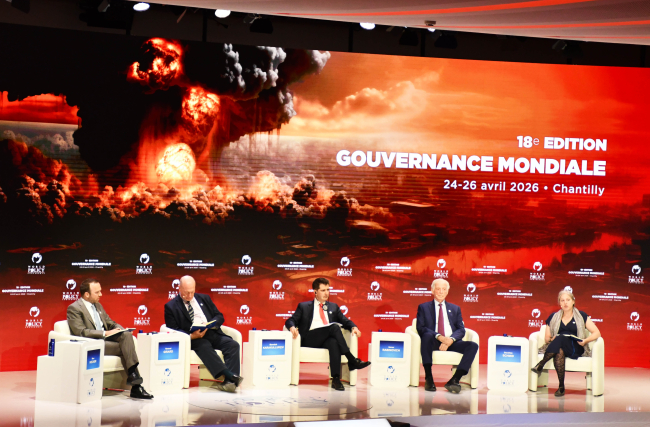
War in the Middle East: Regional Fractures, Global Shockwaves, and the End of the Old Order
Panel from the World Policy Conference 2026, organized by Thierry de Montbrial and Ifri, from April 24 to 26, 2026.
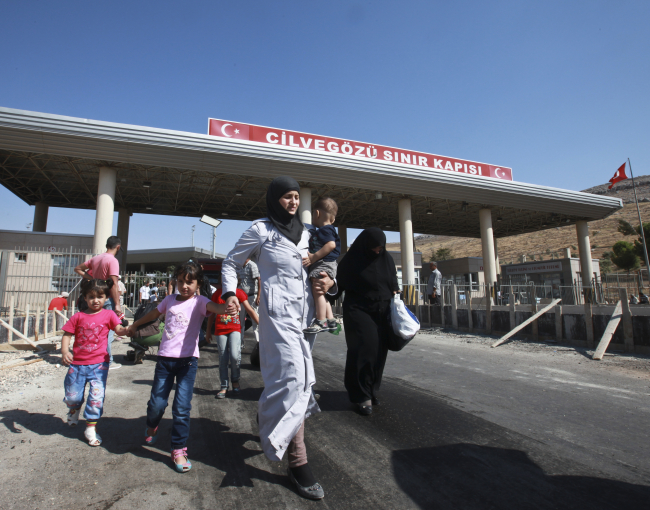
How to Jumpstart Economic Recovery in Syria? The role of syrian entrepreneurs in Turkey
This report examines the potential role of Syrian-partnered companies operating in Türkiye in supporting economic recovery and reconstruction efforts in Syria. Based on data collected through field research and surveys conducted by the Economic Policy Research Foundation of Türkiye (TEPAV), the report provides an overview of the business characteristics, sectoral distribution, and cross-border economic activities of Syrian entrepreneurs. The report explores how this business activity could contribute to restoring supply chains, stimulating local production, and generating employment.

Turkey and France - Allies or Rivals: Opportunities to be Seized
As international relations have become increasingly unpredictable, the quest is to find a semblance of normality. Alliances are shifting as interests are changing. The so-called order established after the Second World War is being shattered by those who have given so much to create it. Global relations are being transformed by countries that wish to follow the rules and others that want to circumvent or ignore them. In this uncertain environment, it is therefore all the more crucial to find stable allies.
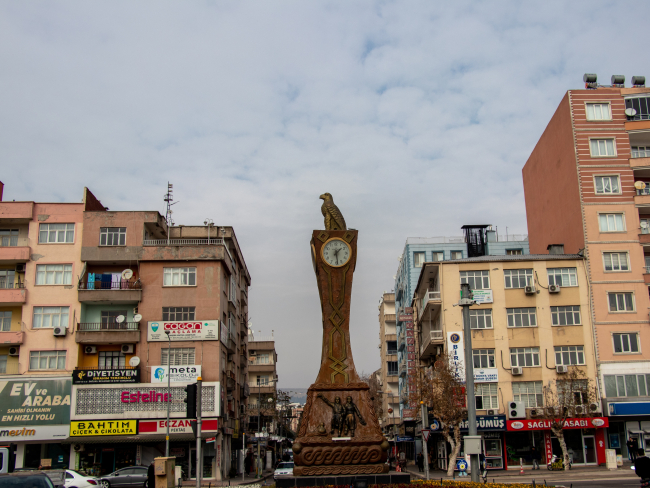
Adıyaman, the “Ownerless City”: Story of a Political Emancipation
Over the past two years, the city of Adıyaman has made headlines for two major reasons: first, its devastation by the earthquake of February 6, 2023, which struck between Turkey and Syria, and second, its significant political shift following the municipal elections of March 31, 2024.
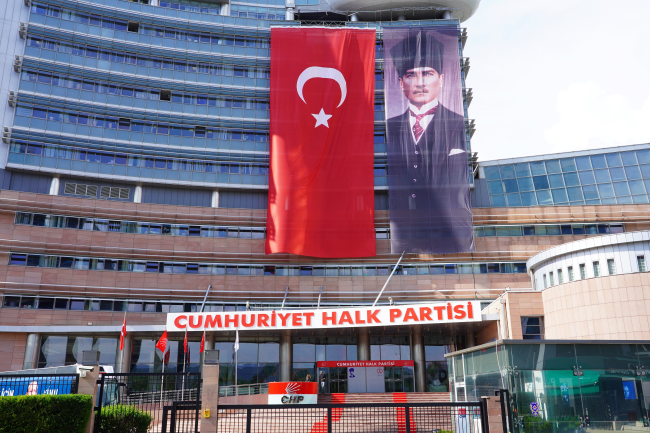
Is the Republican People’s Party (CHP) Rising from the Ashes?
The victory of the CHP [Cumhuriyet Halk Partisi, Republican People’s Party] in the Turkish municipal elections of March 2024 firmly established it as the leading party of opposition to the Islamic-conservative AKP [Adalet ve Kalkınma Partisi, Justice and Development Party], which has been in power since 2002.
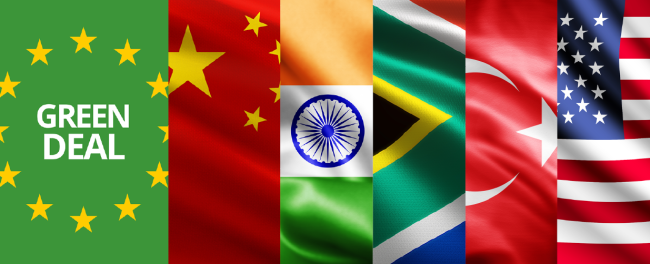
The EU Green Deal External Impacts: Views from China, India, South Africa, Türkiye and the United States
Ahead of June 2024 European elections and against the backdrop of growing geopolitical and geoeconomic frictions, if not tensions, between the EU and some of its largest trade partners, not least based on the external impacts of the European Green Deal (EGD), Ifri chose to collect views and analyses from leading experts from China, India, South Africa, Türkiye and the United States of America (US) on how they assess bilateral relations in the field of energy and climate, and what issues and opportunities they envisage going forward.
Maritime Security from the Gibraltar Strait to the Persian Gulf, a shared Euro-Mediterranean interest ?
Speech by Héloïse Fayet at the EuroMesCo annual conference
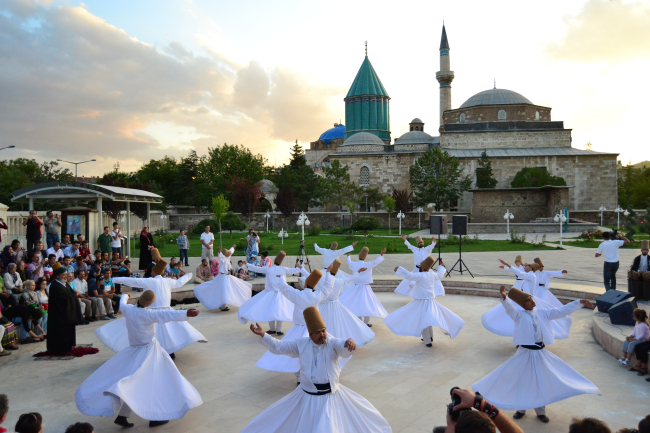
"A Capital City Will Always Be a Capital City”: Konya’s Rise Under the AKP’s Rule
While the May 2023 parliamentary and presidential elections looked as a difficult test for the flagging Islamo-conservative Justice and Development Party (AKP), they eventually held on to power, demonstrating their remarkable foothold in the Turkish context. The party notably recorded one of its highest scores in Konya, confirming the massive and uninterrupted support of this two-million inhabitants central Anatolian city for Turkish political Islam.
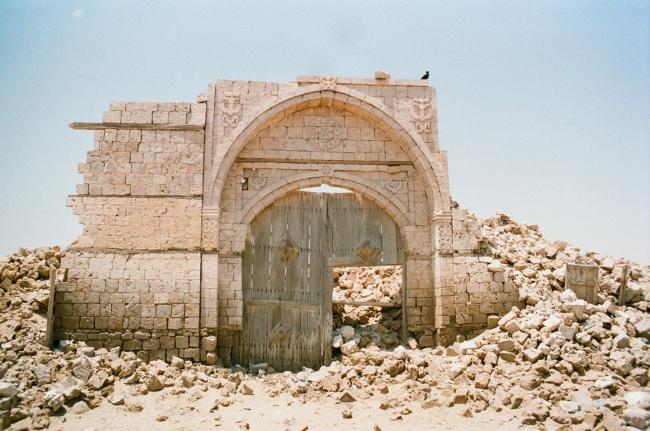
Sudan in Turkey’s African Geopolitics: A Sotto Voce Experience in a Coveted Region
Since the launch of the Opening Plan to Africa in 2003, Turkey's African policy has spread to the whole of the African continent, where its involvement is distinguished by its scope and diversity.

Türkiye’s Stifled Ambitions
As its elections have unfolded this spring, Türkiye has again shown itself to be symptomatic of the times. Across the world, numerous political regimes oscillate between democratic forms of government and an authoritarian concentration of power; impressive periods of growth give way to inflation and recession; and international deregulation gives rise to widespread diplomacy in an effort to juggle a myriad of shifting political loyalties. Faced with the war in Ukraine, Ankara is playing a strong hand by enlarging its areas of presence and intervention. Türkiye is more important to its partners than ever, independent of its eventual domestic trajectory.
Western discourse predicted the advent of Chinese dominance in the very short term, but events have taken a rather different turn. The drivers that enabled the unprecedented growth of recent decades seem to have run out of steam. Moreover, the outcome of Beijing’s economic strategies is still uncertain, in a context shaped primarily by U.S. policies. China’s influence in the future will be considerable, but the direction its rebound will take remains unclear.
For Europeans, the events in Ukraine and the thorny issue of the Sino-American rivalry cannot paper over the other security problems we face: On what common vision of our history and future will we build the Europe of tomorrow? Has drug trafficking already changed the nature of our societies? Can we afford to turn away from instances of destabilization in Africa, from the Horn to the Sahel?
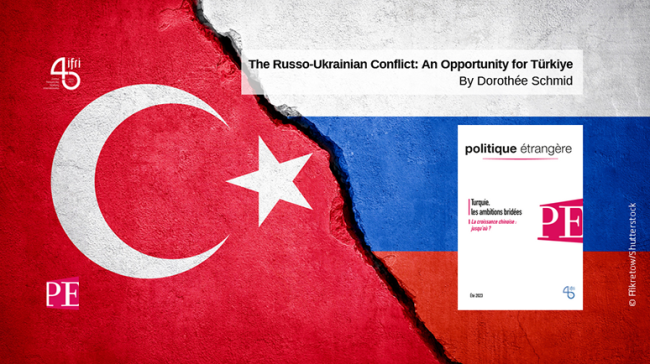
The Russo-Ukrainian Conflict: An Opportunity for Türkiye
In response to the Ukrainian conflict, Ankara, which had previously developed a special relationship with both sides based on history and economic interests, adopted a balancing strategy of active neutrality.
Balancing Security and Innovation: Opposition's View on Turkey's Digital Policies
The upcoming presidential and parliamentary elections in Turkey on May 14, 2023, are expected to be closely contested. Polls suggest that the ruling AK Party-led People’s Alliance will lose its majority in parliament, resulting in a hung lower house.
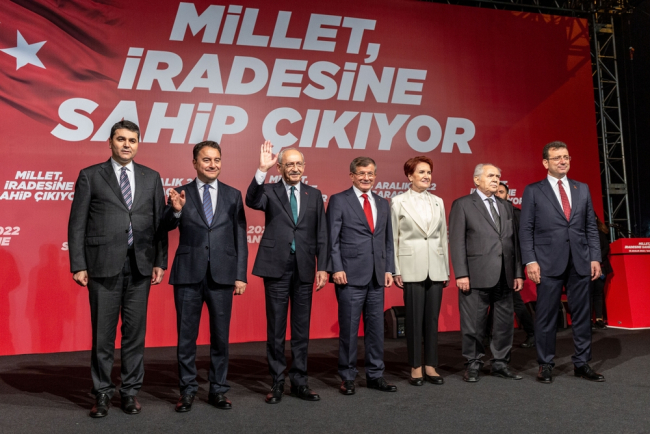
Political Coalitions in Turkey in the Run-Up to the 2023 Elections
The year 2023, already marked by a deadly double earthquake in the south-east of the country in February, is the year of the centenary of the Republic, but above all an election year for Turkey.
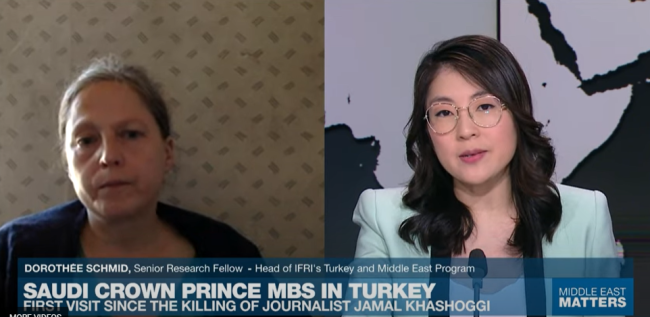
Saudi Arabia, Turkey Seek to Mend Ties as Crown Prince Visits Ankara
The leaders of Saudi Arabia and Turkey are turning the page on years of strained relations, exacerbated by the 2018 assassination of Saudi journalist Jamal Khashoggi at the kingdom's consulate in Istanbul. Face-to-face dialogue is the order of the day between Crown Prince Mohammed bin Salman and President Recep Tayyip Erdogan.
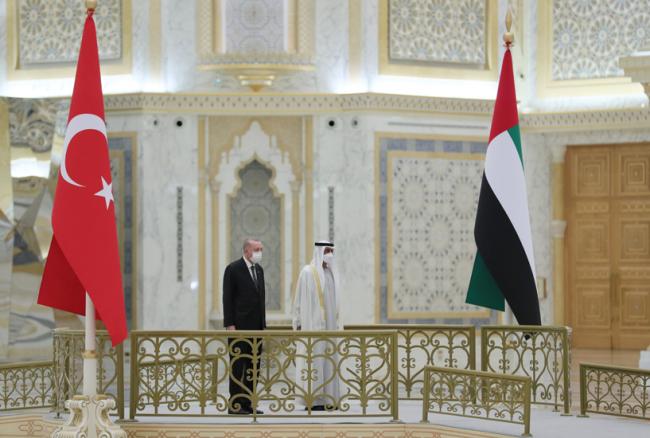
After a Divorce, a Frosty Entente: Turkey's Rapprochement with the United Arab Emirates and Saudi Arabia
After the Arab uprisings, Turkey’s relations with Saudi Arabia and the United Arab Emirates (UAE) broke down along sharp ideological lines. While Riyadh and Abu Dhabi sought to preserve the regional status quo by adopting a counter-revolutionary approach, Turkey emerged as an anti status quo, pro-revolutionary power supporting political islam.
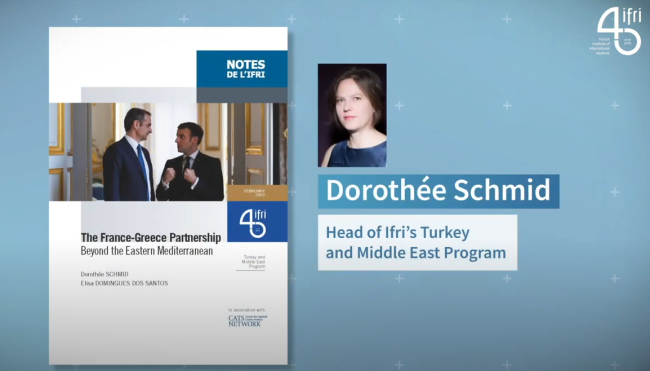
The French-Greek Partnership: Beyond The Eastern Mediterranean.
This week, Ifri, in partnership with CATS Network, is launching a series of five videos on the tensions in the Eastern Mediterranean, seen through the prism of the geopolitical rivalry between France and Turkey.

The French Military's Perception of the Turkish Military and Turkey's Expansion in the EastMed.
This week, Ifri, in partnership with CATS Network, is launching a series of five videos on the tensions in the Eastern Mediterranean, seen through the prism of the geopolitical rivalry between France and Turkey.
Building European Strategic Autonomy vs. Turkish Strategic Depth: Macron's Diplomatic Gamble.
This week, Ifri, in partnership with CATS Network, is launching a series of five videos on the tensions in the Eastern Mediterranean, seen through the prism of the geopolitical rivalry between France and Turkey.
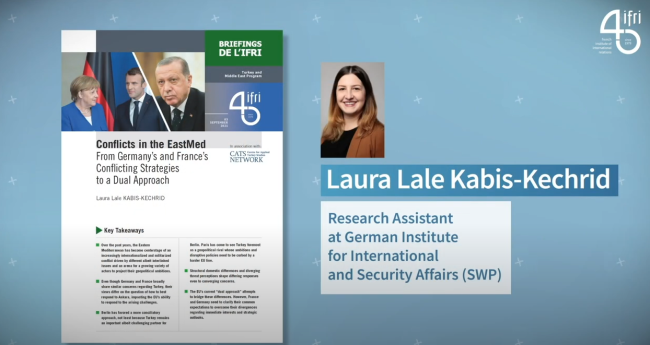
Conflicts in the EastMed: from Germany's and France's Conflicting Strategies to a Dual Approach.
This week, Ifri, in partnership with CATS Network, is launching a series of five videos on the tensions in the Eastern Mediterranean, seen through the prism of the geopolitical rivalry between France and Turkey.
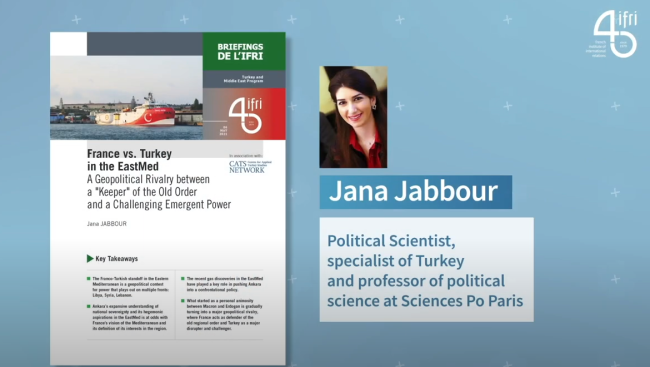
France/Turkey in the EastMed: a Closer Look at the Rivalry between the Two Countries.
This week, Ifri, in partnership with CATS Network, is launching a series of five videos on the tensions in the Eastern Mediterranean, seen through the prism of the geopolitical rivalry between France and Turkey.
How to Jumpstart Economic Recovery in Syria? The role of syrian entrepreneurs in Turkey
This report examines the potential role of Syrian-partnered companies operating in Türkiye in supporting economic recovery and reconstruction efforts in Syria. Based on data collected through field research and surveys conducted by the Economic Policy Research Foundation of Türkiye (TEPAV), the report provides an overview of the business characteristics, sectoral distribution, and cross-border economic activities of Syrian entrepreneurs. The report explores how this business activity could contribute to restoring supply chains, stimulating local production, and generating employment.
Turkey and France - Allies or Rivals: Opportunities to be Seized
As international relations have become increasingly unpredictable, the quest is to find a semblance of normality. Alliances are shifting as interests are changing. The so-called order established after the Second World War is being shattered by those who have given so much to create it. Global relations are being transformed by countries that wish to follow the rules and others that want to circumvent or ignore them. In this uncertain environment, it is therefore all the more crucial to find stable allies.
Adıyaman, the “Ownerless City”: Story of a Political Emancipation
Over the past two years, the city of Adıyaman has made headlines for two major reasons: first, its devastation by the earthquake of February 6, 2023, which struck between Turkey and Syria, and second, its significant political shift following the municipal elections of March 31, 2024.
Is the Republican People’s Party (CHP) Rising from the Ashes?
The victory of the CHP [Cumhuriyet Halk Partisi, Republican People’s Party] in the Turkish municipal elections of March 2024 firmly established it as the leading party of opposition to the Islamic-conservative AKP [Adalet ve Kalkınma Partisi, Justice and Development Party], which has been in power since 2002.
The EU Green Deal External Impacts: Views from China, India, South Africa, Türkiye and the United States
Ahead of June 2024 European elections and against the backdrop of growing geopolitical and geoeconomic frictions, if not tensions, between the EU and some of its largest trade partners, not least based on the external impacts of the European Green Deal (EGD), Ifri chose to collect views and analyses from leading experts from China, India, South Africa, Türkiye and the United States of America (US) on how they assess bilateral relations in the field of energy and climate, and what issues and opportunities they envisage going forward.
Sudan in Turkey’s African Geopolitics: A Sotto Voce Experience in a Coveted Region
Since the launch of the Opening Plan to Africa in 2003, Turkey's African policy has spread to the whole of the African continent, where its involvement is distinguished by its scope and diversity.
Balancing Security and Innovation: Opposition's View on Turkey's Digital Policies
The upcoming presidential and parliamentary elections in Turkey on May 14, 2023, are expected to be closely contested. Polls suggest that the ruling AK Party-led People’s Alliance will lose its majority in parliament, resulting in a hung lower house.
After a Divorce, a Frosty Entente: Turkey's Rapprochement with the United Arab Emirates and Saudi Arabia
After the Arab uprisings, Turkey’s relations with Saudi Arabia and the United Arab Emirates (UAE) broke down along sharp ideological lines. While Riyadh and Abu Dhabi sought to preserve the regional status quo by adopting a counter-revolutionary approach, Turkey emerged as an anti status quo, pro-revolutionary power supporting political islam.
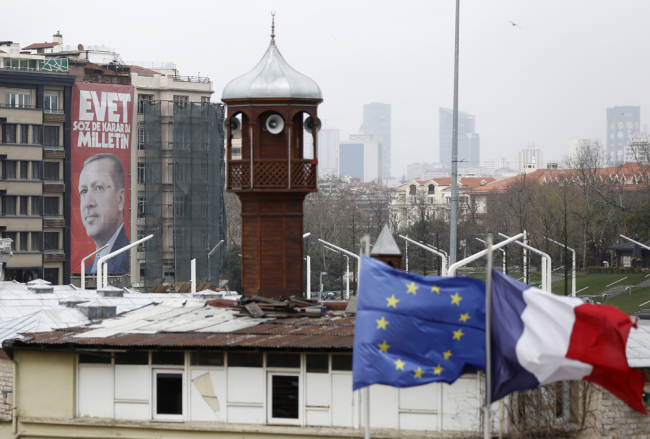
Building European Strategic Autonomy vs. Turkish Strategic Depth: Macron's Diplomatic Gamble
Since coming into office in 2017, Emmanuel Macron has been the loudest advocate for the development of European ‘strategic autonomy’, which aims at reinforcing the European Union’s geo-strategic independence. Asserting the EU’s role on the international stage, starting with its immediate neighborhood, directly clashes with Recep Tayyip Erdogan's long-term expansion strategy in several key areas.
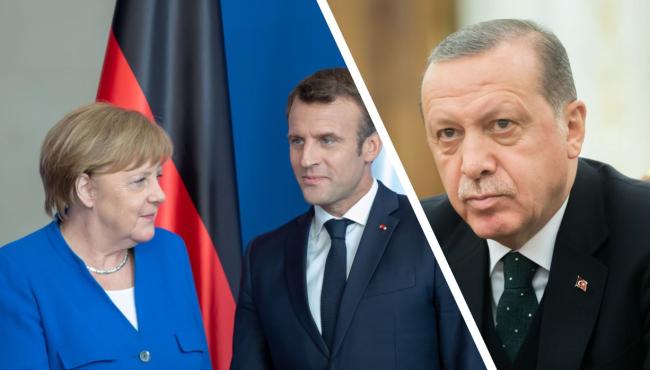
Conflicts in the EastMed: From Germany’s and France’s Conflicting Strategies to a Dual Approach
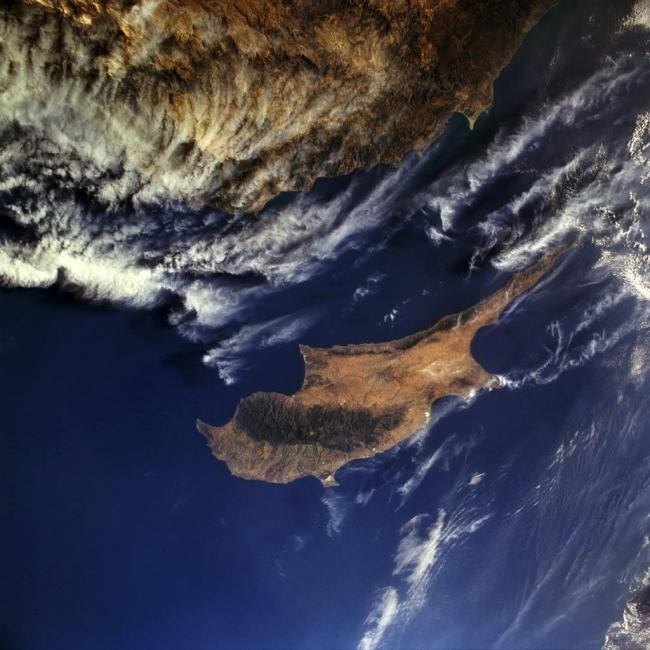
Back to “the Tradition”: Turkey’s Changing Position from a Federal to a Two-State Solution to the Cyprus Conflict
When it came to power in 2002, the Justice and Development Party (AKP) defended a bicommunal, federal solution for Cyprus, and supported the Annan Plan to reunite the island.
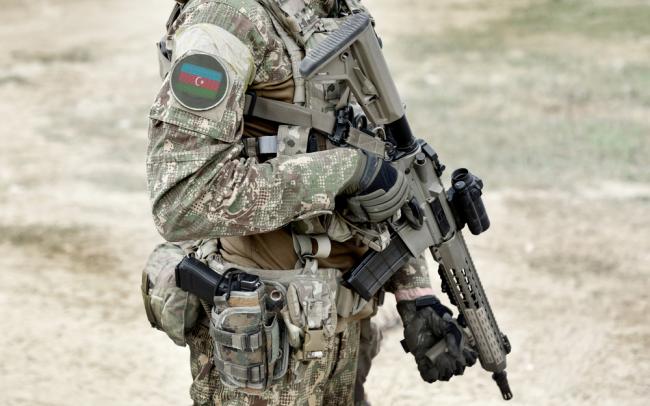
No Peacemakers for the New / Old Caucasian War: Understanding the Armenia-Azerbaijan Clash
A full-blown war erupted in the South Caucasus last Sunday, September 27, and as the two belligerents — Armenia and Azerbaijan — mobilize their forces under martial law, no international authority is trying in earnest to stop the hostilities. The conflict over the disputed Nagorno-Karabakh region ignited 30 years ago as the Soviet Union was collapsing and has never effectively “frozen.” The cease-fire Russia negotiated in May 1994 was not backed by a peacekeeping operation, and clashes have kept occurring, most notably in April 2016.
War and Democratic Decision Making: How do Democracies Argue and Decide Whether or Not to Intervene in Distant Wars?
What is the proper place and forum for decisions about war and peace in a democracy? There is surprisingly little consensus on this matter, not in theory and not in practice. While in Iraq, Libya and Syria, all Western actions have ended in failure, it seems necessary to analyze the place and importance of this aspect of the democratic decision making.
The Taboo of the Armenian Genocide, Part One: Global Reaction and American Inaction
In the Syrian refugee crisis enveloping Europe, Turkey has become the bottleneck toward which migrants are flowing into Europe, a factor increasingly important for Germany in particular. Relations have been strained, however, due to disputes over the possibility of lifting visa requirements.
Israel and Hezbollah: The New Strategic Equation
After the war between Israel and Hezbollah during the summer of 2006, a deterrence strategy was established between the two parties. Occasional subsequent crises have thereby been contained and have been prevented from escalating into extensive confrontations.
Turkey: the Sèvres Syndrome, or the Endless War
For Turks, the Treaty of Sèvres symbolises the dissolution of the empire and the carving up of Turkey by foreign powers.
Turkey's re-imagined neighborhood policy after the Arab Spring
Joshua W. Walker was a speaker at the international conference on “The international consequences of the Arab Spring” held at Ifri on March 13th, 2012. This paper is a follow up on his oral intervention.
Is Turkey an Economic Exception?
This roundtable dealt with the specificities of Turkey"s economy, which is completing major economic achievements in particularly difficult times. François Faure analyzed the risks of an economic backlash following the European crisis; Turkey appears indeed in a weaker position than in 2008 and difficult times could lie ahead. Esen Çağlar pointed out how Turkey progressed from a low-technology to medium-technology economy, thus ensuring considerable levels of growth. Yet, a renewed reform agenda is needed if Turkey wants to maintain its economic performance. Deniz Ünal addressed the issue of economic governance under the AKP and the consistency of their economic policy agenda. In any case, Europe will most certainly play a role in the country"s economic future. According to Rémi Bourgeot, the Middle East cannot provide an alternative to European markets even if it offers interesting opportunities for the Turkish South East. Turkey"s future growth will also depend on its capacity to impose itself as a corridor between Europe and its neighbours energy resources.
Turkey and the EU : current key issues
Report written by Séverine Neervoort, Intern, Ifri Brussels.
War in the Middle East: Regional Fractures, Global Shockwaves, and the End of the Old Order
Panel from the World Policy Conference 2026, organized by Thierry de Montbrial and Ifri, from April 24 to 26, 2026.
Saudi Arabia, Turkey Seek to Mend Ties as Crown Prince Visits Ankara
The leaders of Saudi Arabia and Turkey are turning the page on years of strained relations, exacerbated by the 2018 assassination of Saudi journalist Jamal Khashoggi at the kingdom's consulate in Istanbul. Face-to-face dialogue is the order of the day between Crown Prince Mohammed bin Salman and President Recep Tayyip Erdogan.

'Turkey Is Using Syria to Show its Strength - it's All About Image'
Turkey is looking to revive a fragile ceasefire in Aleppo, and the planned evacuation of civilians, which brokered with Russia. But why is Ankara, a staunch opponent of Damascus, interested in helping to create an outcome that would benefit President Assad? Amanda Morrow put the question to Dorothée Schmid, head of the Turkish studies programme at the French Institute of International Relations.

Coalition or snap poll: What next for Turkey?
Turkish President Recep Tayyip Erdogan’s AKP suffered a stunning defeat in the latest parliamentary poll with the party losing its absolute majority for the first time in 13 years. The question now is whether it can hold on to power.
War in the Middle East: Regional Fractures, Global Shockwaves, and the End of the Old Order
Panel from the World Policy Conference 2026, organized by Thierry de Montbrial and Ifri, from April 24 to 26, 2026.

France, Turkey, and Shifting Balance - Léo Péria-Peigné
The interview explores France’s withdrawal from Africa, its strategic pivot to NATO’s eastern flank, and the complex dynamics with Turkey. It also touches on Europe’s military dilemmas, the growing strength of Turkey’s defense industry, and the limits of French influence in the Middle East. A clear-eyed look at where Europe stands—and where it may be heading.
Maritime Security from the Gibraltar Strait to the Persian Gulf, a shared Euro-Mediterranean interest ?
Speech by Héloïse Fayet at the EuroMesCo annual conference
Ifri, a foundation recognized as being of public utility, relies largely on private donors – companies and individuals – to guarantee its sustainability and intellectual independence. Through their funding, donors help maintain the Institute's position among the world's leading think tanks. By benefiting from an internationally recognized network and expertise, donors refine their understanding of geopolitical risk and its consequences on global politics and the economy. In 2026, Ifri partners with over 90 French and international companies and organizations.

The Turkey 2050 Program develops a forward-looking analysis of the country to anticipate its dynamics over the next 30 years. The reflection is structured around three key themes:
• Domestic politics, to assess the stability of the AKP regime and the prospects for political change;
• The economy, to understand Turkey's capacity for recovery, the evolution of its production model, and its regional integration prospects;
• Foreign policy, to monitor the rise of Turkey's diplomacy and military capabilities, and to map the country's new spheres of influence.
This research, funded by companies and institutions active in Turkey, is based on field missions that aim to shed light on the blind spots and lesser-known areas of the Turkish landscape. Program partners benefit from personalized monitoring of relevant indicators to inform their decision-making, supported by monthly strategic briefings, sectoral reports, and access to a network of Turkish and French experts. The exchanges surrounding the program ultimately seek to define the concept of "Turkish risk" in a broad sense, in order to adapt our working methods accordingly.
Ifri's Turkey/Middle East Program aims to provide expertise on the trends and developments in politics, societies and economies across the region.
The programme has the following objectives:
- Proposing a new approach towards the MENA region through an analysis of local, regional, and international dynamics with the potential to guide and influence new policies.
- Highlighting the role of foreign powers which have traditionally been present in the region and analyzing the new role taken on by emerging countries ;
- Anticipating new directions and outlooks in each country.
- Interpreting risks and potentials and putting forward new templates for analysis.
The programme has built a dense network of researchers and experts who provide expertise on the MENA region and working together on a range of crosscutting themes.