



A Sovereignist Foreign Policy? The World as Seen by National Rally Lawmakers
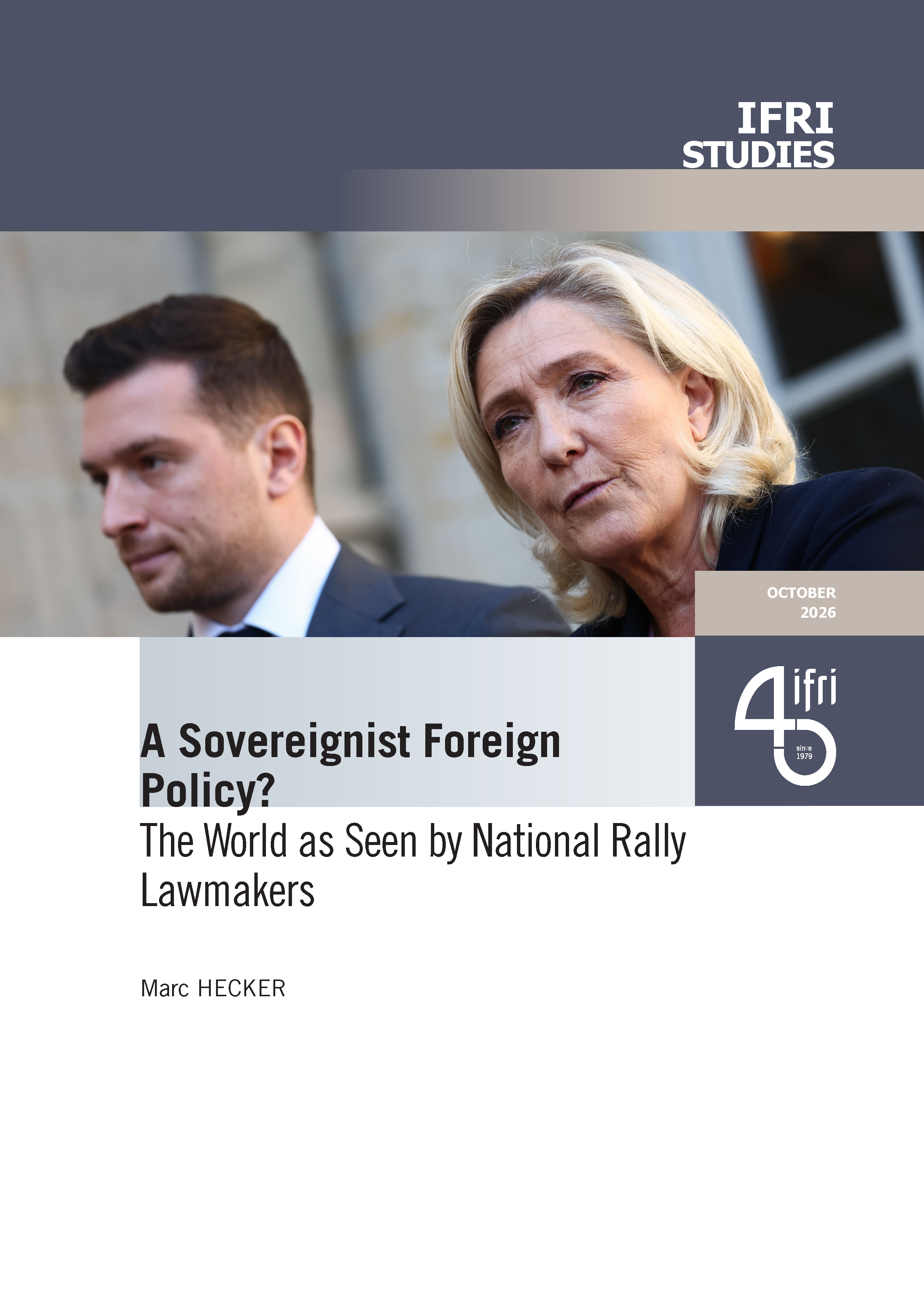
The National Rally’s (Rassemblement national—RN) “de-demonization” strategy appears to be paying off: Marine Le Pen and Jordan Bardella’s party is steadily gaining ground in elections, and polls place it in the lead for the spring 2027 French presidential election. The period of normalization for this far-right movement has coincided with an era of upheaval on the international stage. Within this context, a fundamental question arises: what would the RN’s foreign policy look like if it came to power?
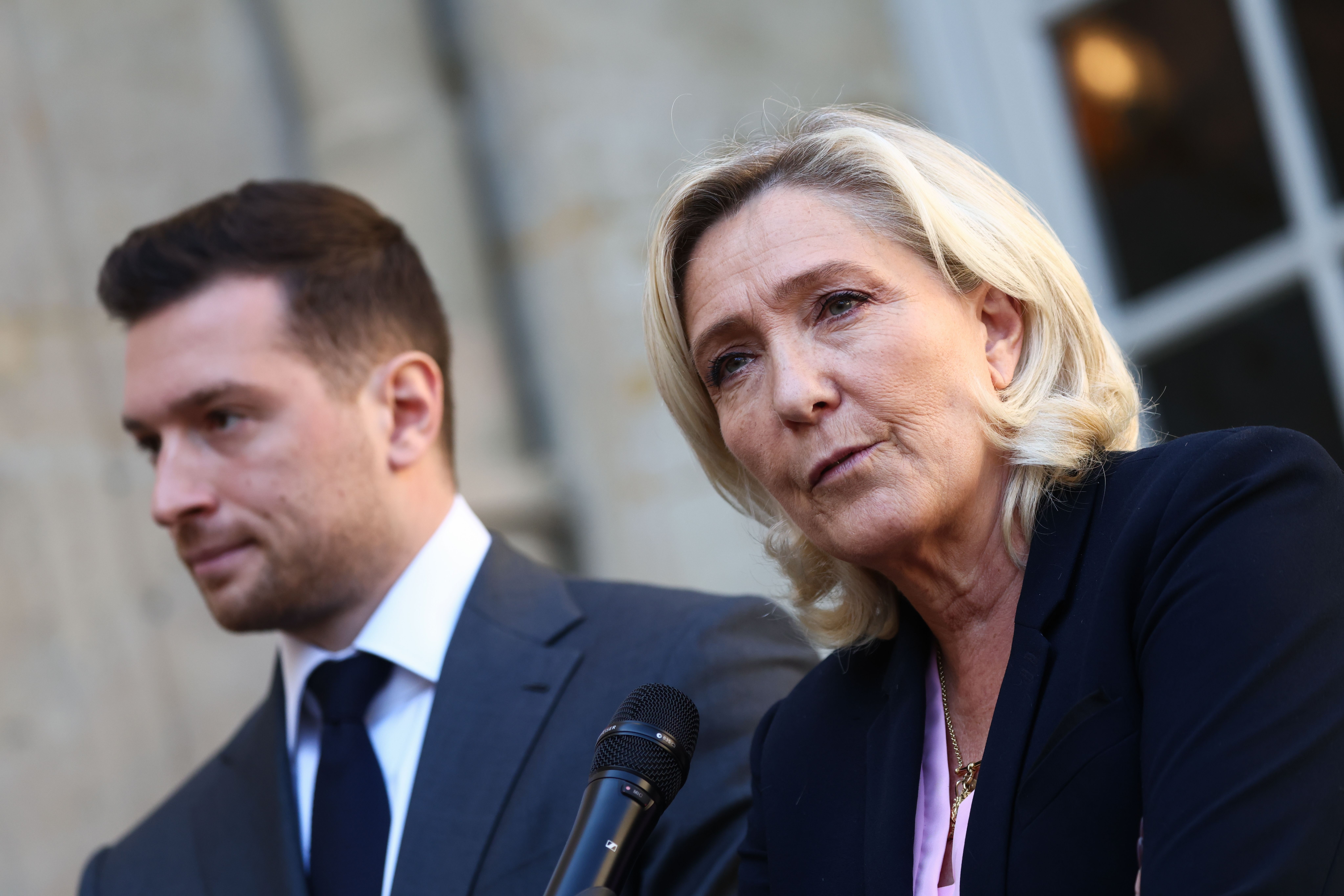
The National Rally’s (Rassemblement national—RN) “de-demonization” strategy appears to be paying off: Marine Le Pen and Jordan Bardella’s party is steadily gaining ground in elections, and polls place it in the lead for the spring 2027 French presidential election. The period of normalization for this far-right movement has coincided with an era of upheaval on the international stage. Within this context, a fundamental question arises: what would the RN’s foreign policy look like if it came to power?
To gain a clearer understanding, we used an original methodology: verbatim transcripts of debates from three National Assembly committees (“Foreign Affairs,” “European Affairs,” and “National Defense and Armed Forces”) were collected, spanning from the dissolution in 2024 through the summer of 2026. The author analyzed these thousands of pages using a specialized artificial intelligence tool.
The remarks by RN lawmakers reveal a focus on defending sovereignty, national interests, and the purchasing power of the French people. The party led by Marine Le Pen and Jordan Bardella presents itself as a kind of shield, seeking to protect the French people from external threats and actors contributing to France’s decline. Among its recurring targets are European institutions, German leaders, and the Algerian regime.
RN lawmakers regularly weigh in on major international issues. For example, while they express support for Ukraine, they voice significant reservations about the aid provided to Kyiv. Their condemnation of the 2022 Russian aggression does not prevent them from questioning the sanctions, particularly in the energy sector. Regarding the Middle East, they view the region through the lens of energy costs, the fight against Islamism, and immigration.
In short, the lawmakers are sketching out the contours of a sovereigntist foreign policy whose details remain vague. Their positions nevertheless allow us to anticipate some major changes and identify areas of friction—or even crisis—with France’s current allies or partners. A few specific proposals are put forward by RN’s members of parliament, such as abolishing the French Office for Immigration and Integration (OFII) or reducing funding for the French Development Agency (AFD).

Available in:
Themes and regions
ISBN / ISSN
Share
This page contains only a summary of our work. If you would like to have access to all the information from our research on the subject, you can download the full version in PDF format.
A Sovereignist Foreign Policy? The World as Seen by National Rally Lawmakers

Marc HECKER
Executive Director of Ifri, Editor-in-Chief of Politique étrangère, and Research Fellow at the Security Studies Center, Ifri

What Do Companies Fear? The New Geography of Geopolitical Risk
Geopolitical risk has established itself, within the space of a few years, as a central variable in corporate strategy.
Europe-Russia: Balance of Power Review
European countries can no longer avoid the "Russian question," as Russia has chosen war. They have the necessary potential—that is, the economic means, military capabilities, and technological expertise—to face Russia by 2030, provided they demonstrate the political will to do so.
Manufacturing Risk: Geopolitical Doxa and the Corporate World
The evolving power dynamics between the United States, China, and Russia are creating new geopolitical realities that businesses can no longer evade. Geopolitical risk has become unavoidable, yet many companies remain unprepared to navigate its complexities. Corporate leaders can no longer afford to overlook its implications.
Towards the Second Crusade?
Europeans first grew aware of a possible pandemic exactly one year ago. The wave is here. It has submerged the world, claiming many lives and causing tremendous collateral damage.