International Organizations and Multilateralism
Rhetoric on the crisis of multilateralism is frequent. International organizations (UN, WTO, etc.) remain no less important, while other forums (G20, BRICS, etc.) are asserting themselves.
Related Subjects
Assessing the Achievements of International Criminal Justice / A New Era of Oil Abundance?
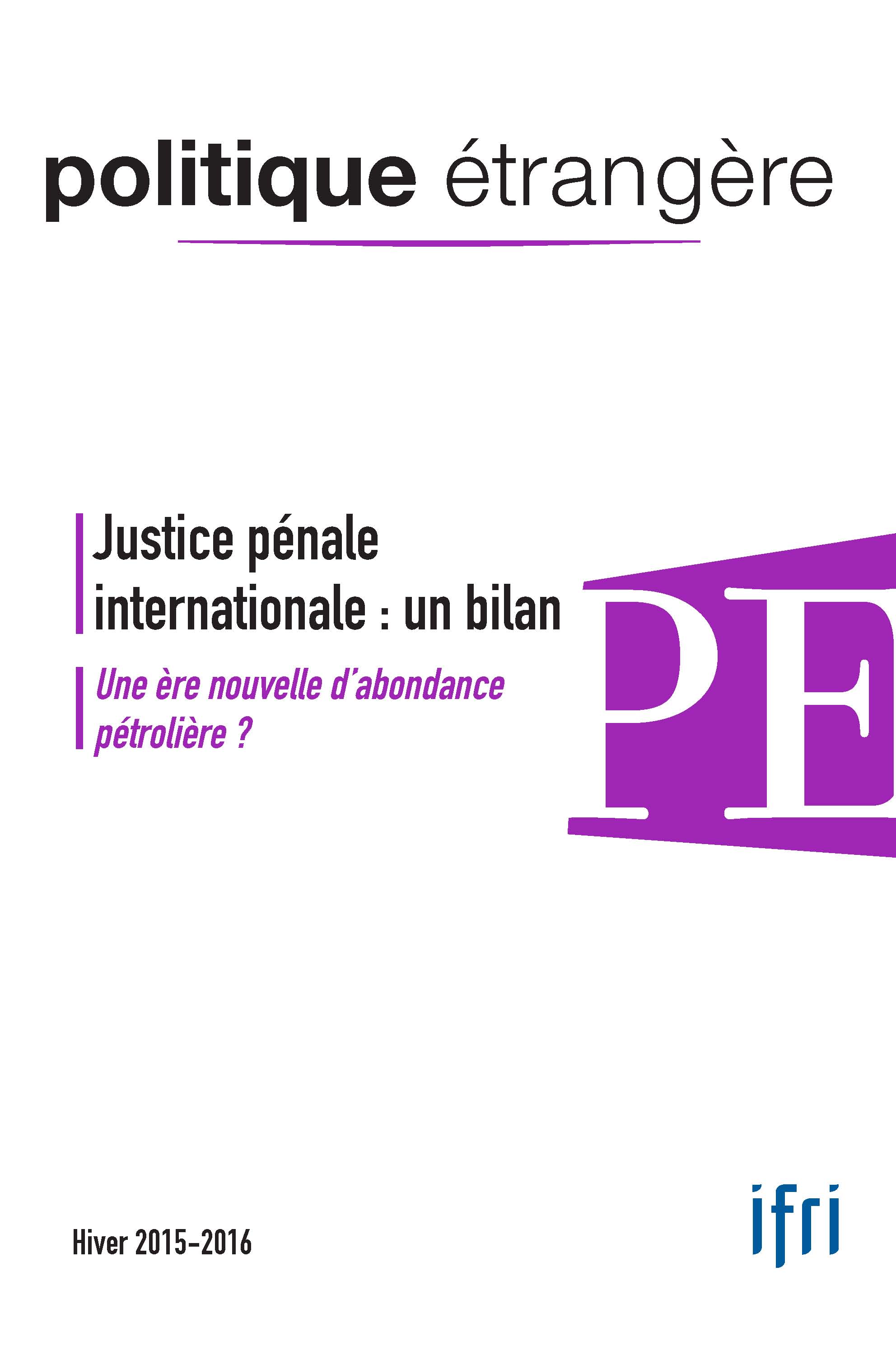
Born from the ashes of two world wars, the concept of international criminal justice took nearly half a century to become anchored in institutions and legal concepts that are independent of specific conflicts. The International Criminal Tribunal for the former Yugoslavia, that for Rwanda, and the creation of the International Criminal Court, among others, bear witness to the real progress made during the 1990s. This issue of Politique étrangère offers a series of articles that shed light on these achievements and their limits.

The Right to Compensation at the ICC: Promises and Uncertainties
The establishment of the International Criminal Court (ICC) has made it possible for the victim to be fully recognized in international trials, with the assertion of the right to compensation for acts of genocide, crimes against humanity, and war crimes.
International Criminal Justice at 70: Between the Iron and Golden Ages
The modern principle of international criminal justice goes back to Nuremberg and its highly specific historical context. The 1990s marks a decade of renaissance, for former Yugoslavia and Rwanda in particular.
From Financial Diplomacy to Geopolitics of Finance
The financial system has become too complex to be controlled at state level.
The ICTY Story: A Clear Failure?
Established to hold trials for crimes committed during the Yugoslav wars in the 1990s, the International Criminal Tribunal for the former Yugoslavia (ICTY) has vacillated between its punitive purpose and writing the history of this period.
Opening speech of the 8th edition of the World Policy Conference, Montreux, Switzerland
The eighth World Policy Conference, or WPC as we call it, opens exactly one week after the so-called “Islamic State” committed the terrorist attacks in Paris. The civilised world, in all its forms that have come down through history, with all its diversity and richness, weeps over and is outraged by this barbarism. Indignation can bring out the best in human aspirations, but it is not enough. Neither terrorism nor any of the contemporary world’s other ills will be defeated by expressing emotions alone. Only a genuinely international policy in the highest sense of the term will allow the world to make it through the 21st century without repeating tragedies on the scale of those that wracked the 20th.

The TPP and its consequences for China, and Europe
John Seaman answers questions from the China Daily on the recently concluded negotiations of the Trans-Pacific Partnership (TPP) and their consequences for China and for Europe.
Read the interview, in Chinese
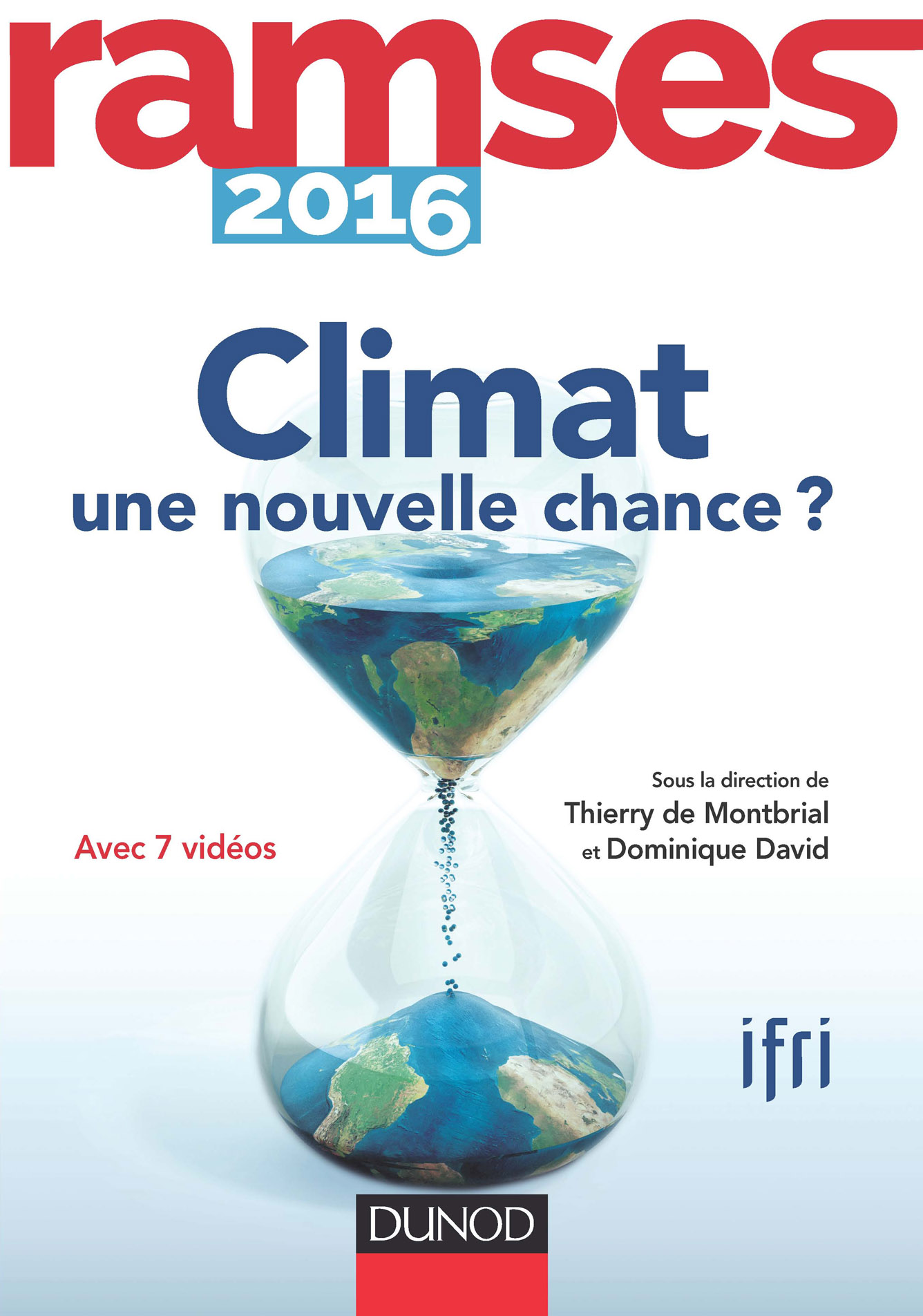
RAMSES 2016. Climat : une nouvelle chance ?
Written by Ifri's research team and its network of associates, the new RAMSES 2016 analyses geopolitics on a worldwide scale. The major theme of this 34th edition is Climate: A new chance? In addition, RAMSES 2016 tackles the insertion of Africa in globalization and the uncertainties of democracy today in post-industrial societies, but also in the South.
TISA, TTIP: How Trading is Done on Europe’s Behalf
The way in which bargaining mandates are granted to the Commission for the purpose of leading the European Union’s commercial negotiations make it a unique negotiator.
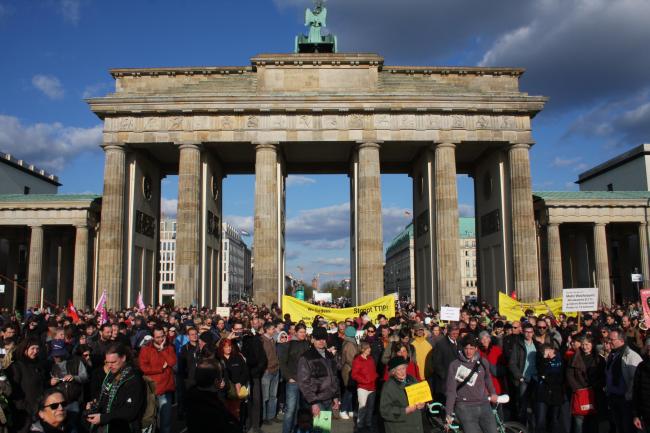
The German Debate on TTIP
The German economy is characterized by a very high degree of international openness – much more so than in other European countries such as France. Its economic success hence largely depends on the intensity with which it trades with the rest of the world, and in particular the United States who play a crucial role. Against this backdrop, it would seem logical that Berlin would welcome signing a free-trade agreement between the U.S. and the European Union.
Climate: Injustice for the South
While climate change is already producing devastating effects, climate negotiations so far have been largely unsuccessful.
Brazil : Coping With a Double Whammy
Brazil’s economy is currently undergoing the effects of a double whammy.
Afghanistan’s Difficult Transition
Afghanistan’s transition has been, politically speaking, slower than first expected; militarily, it has been difficult with the Taliban increasing its attacks in many provinces, compromising the possibility of dialogue with the new power; and a diplomatic transition in which partners and neighbors have moved slowly from dialogue to action.
Asie de l’Est : la communauté économique impossible
The East Asian region has long been characterized by its informal structure. Strong economic integration, backed by dense intra-regional trade, has never been accompanied by regional institutional commitments. At the end of the 1990s, there was a vague desire to institutionalize the region, but to no avail.
A New Era for the European Council ?
Donald Tusk is set to make his mark as the new president of the European council. How will this be felt across the other institutions that make up the EU?
The Asian Century: What International Norms and Practices? Conference Proceedings, 12 September 2014
Asia is now a nerve center for global economic activity and a theatre of some of the most pressing security concerns of our time. So important has Asia become to global affairs today, and ostensibly for the decades to come, that many have already dubbed the 21st Century as the “Asian Century”.
International Health Cooperation Abolished by Ebola?
Since 1976, there have been twenty-five recorded epidemics of the Ebola virus. The 2014 outbreak is the most serious.
Juncker's 'last chance' Commission: Can he deliver?
Jean-Claude Juncker has made a surprisingly strong start. But behind the clear priorities and the innovative team set-up, his ability to restore trust in the EU remains to be seen.
The European Union to Ukraine’s Rescue
Recent events have provided the opportunity for the rekindling of relations between Ukraine and the European Union.
China’s Role in Multilateral Economic Institutions, between Revisionism and Status Quo
China, now the world’s second largest economy, is going to play an increasingly substantial role in multilateral economic organizations and mechanisms.
Ifri, a foundation recognized as being of public utility, relies largely on private donors – companies and individuals – to guarantee its sustainability and intellectual independence. Through their funding, donors help maintain the Institute's position among the world's leading think tanks. By benefiting from an internationally recognized network and expertise, donors refine their understanding of geopolitical risk and its consequences on global politics and the economy. In 2026, Ifri partners with over 90 French and international companies and organizations.