




International Organizations and Multilateralism
Rhetoric on the crisis of multilateralism is frequent. International organizations (UN, WTO, etc.) remain no less important, while other forums (G20, BRICS, etc.) are asserting themselves.
Related Subjects
China and the “Definition Gap”: Shaping Global Governance in Words
Increasingly, China’s diplomacy is using key words commonly used by liberal democracies, but the meaning differs greatly. This evolution is changing the terms of the debate without changing a single term.
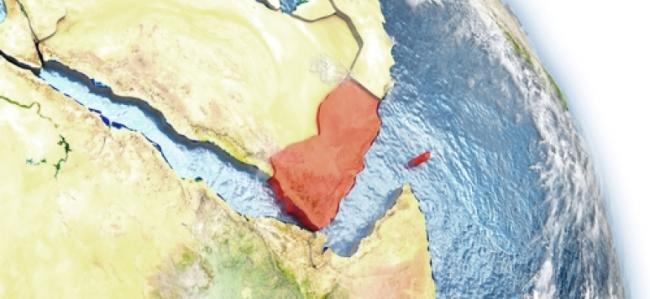
Nomadic Diplomacy: The Case of Yemen
Along with Syria and Libya, Yemen is the third Arab country experiencing civil/international war, with the same consequences for diplomatic activity: because of the closure of embassies in situ and the security situation, states have had to develop a “nomadic” policy of contacts in third countries with their counterparts, according to their places of exile, which the following article designates in terms of Yemen as a test in “map-making.”

The Arctic: a Strategic Exploration
Two strategic regions are at the focus of this back-to-school issue of Politique étrangère.
Reforming the EU electricity markets - Florian ERMACORA
Florian Ermacora, Head of the Internal Energy Market Unit in DG Energy, explains how the Clean Energy Package will improve the functioning of the internal electricity market, and how the new market design will help integrating larger shares of renewables.
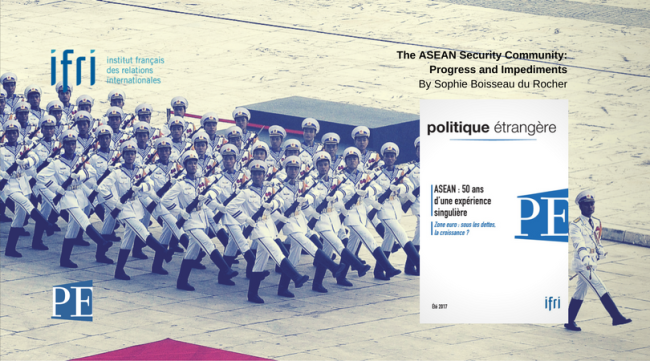
The ASEAN Security Community: Progress and Impediments
The Association of Southeast Asian Nations (ASEAN) strives to deal with security problems in an inclusive and flexible way. In 2003 it established a Security Community which has since expanded through several institutions and partnerships.
ASEAN at 50: Half a Century of Unique Experience
In its fifty-year existence, the Association of Southeast Asian Nations (ASEAN) has developed a complex, progressive and balanced approach to regional integration. Rather than the European Union’s far-reaching statements of ever-closer union, ASEAN combines highly diverse economic and political strategies of different States whose main priority is to safeguard sovereignty.
The ASEAN Economic Community’s Original Integration Model
When it was created 50 years ago, ASEAN's (Association of Southeast Asian Nations) economic ambitions were rather modest. However, up until 1992 it progressively integrated the economies of its member states.

Foreign Policy Challenges for the Next French President
France’s current presidential campaign has created an unprecedented situation fuelled by revelations and a total absence of restraint, but it has not truly taken account of the disruptions of the last year: Brexit, the attempted coup in Turkey, the election of Donald Trump, the recapturing of Aleppo by Bashar al-Assad, Xi Jinping’s declarations about “economic globalization”, or the behavior of North Korea. The debate, or rather its absence, can be looked at in two ways.
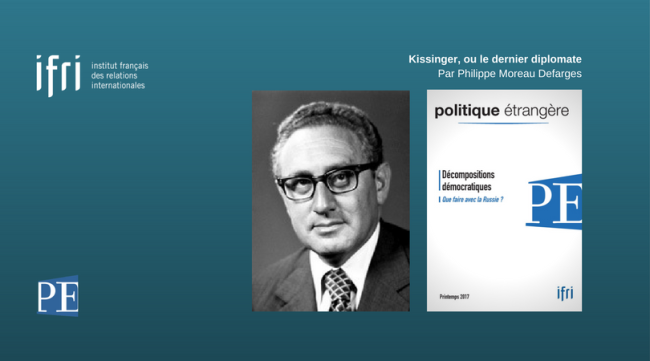
Kissinger, or the Last Diplomat
In the second half of the 20th century, Kissinger evokes the fundamental choices underpinning American diplomacy.
Africa and the ICC Going Forward
October 2016 presented a grim test for the fourteen-year-old International Criminal Court (ICC) as three Sub-Saharan African countries, Burundi, South Africa and Gambia announced their decision to opt out of the international judicial body.
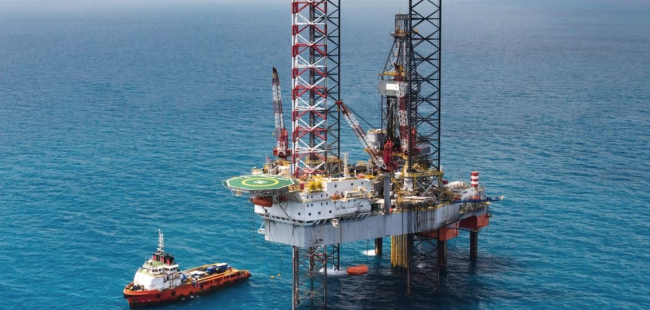
Energy in Southeast Asia: from Networks to Markets Integration
Southeast Asia is one of the world's most dynamic regions and experiences strong economic and energy demand growth rates. In this context, the Association of Southeast Asian Nations (ASEAN) is seeking to interconnect the electric grids and gas networks of the countries through two initiatives, the Asean Power Grid and the Trans-Asean Gas Pipeline, in order to pool resources and optimize energy markets integration in the region.
France: Reducing Nuclear Dominance and Promoting a Low Carbon Energy System
This chapter covering the French energy transition model is part of a broader study conducted by the Institute of Advanced Sustainability Studies (IASS), in preparation of the German Presidency of the G20. Based on the analysis of fourteen national strategies, the IASS study considers the potential of the G20 to shape a global transition to sustainable energy, urgently needed in order to achieve the United Nations' climate and sustainability goals.
China and Global Economic Order: A discreet yet undeniable contestation
Having long remained a passive presence within multilateral economic organisations, China recently changed its stance when the United States was faced with a major financial crisis.

Juncker, the optimist
The president of the European Commission about security, investment and assistance in Africa. According to Hans Stark, Jean-Claude Juncker didn't beat around the bush and instead of going too far in self-chastisement he tried to give hope to European citizens.
Brazil: the Harder they Fall
During the 2000s, Brazil's economy took off, with growth driven primarily by strong Chinese demand for commodities. Within a decade, the Brazilian middle class increased from 30% to 50% of the population.
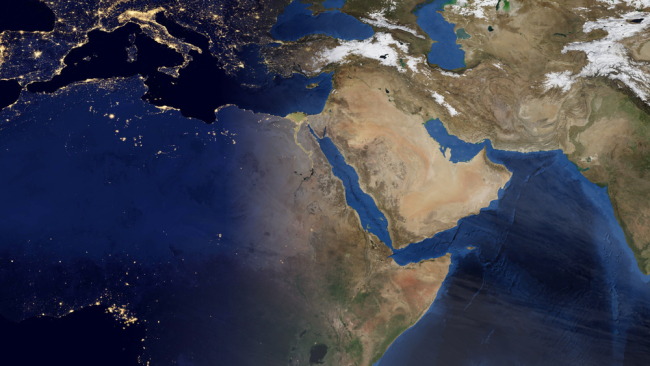
Diplomatic Relations between Qatar and Sub-Saharan Africa. An Evolving Affair
In the space of 20 years, under the leadership of the former Emir, Hamad bin Khalifa Al Thani, in power between 1995 and 2013, Qatar became a country which matters due to its status, obtained in 2006, as the leading world producer of liquefied natural gas (LNG).
Middle East, the new "Great Game"
Will a divided Middle East become the center of a new “Great Game”? The world’s global powers are aligned in it: the United States, falsely tempted by retraction; Russia, establishing its position in an unexpected state of play, France, destabilized by the contradictions of its own policy… In addition are tussles for regional hegemony between Iran, Turkey, and Saudi Arabia.
The Illusion of Convergence—Russia, China, and the BRICS
The discussion about the BRICS (Brazil, Russia, India, China, and South Africa) opposes two narratives. The first considers they play an increasing role in the international relations as the West is loosing power; the other sees the BRICS as a charade. But the key role played by the interaction between Russia and China is an evidence shared by most experts.
Scientific Cooperation in the South China Sea: A vector for China's security diplomacy in Southeast Asia?
Japan's Challenges in Public Diplomacy, An American Vision
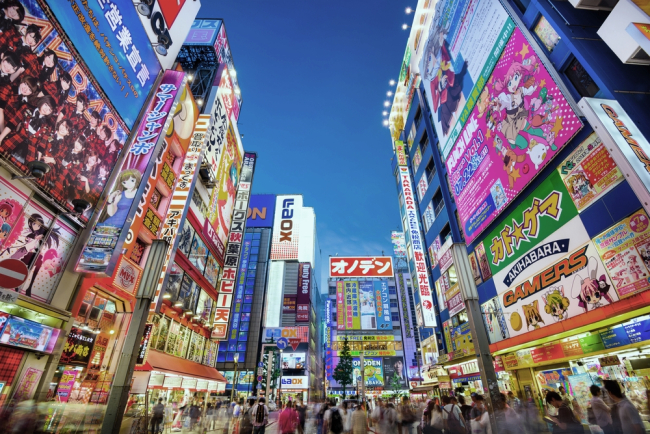
Japan’s public diplomacy (PD) profile rests almost exclusively on the promotion of its cultural soft power. Today, in the complex geopolitical setting of Asia, in which national rivalries are reviving competing wartime history narratives and territorial disputes, this approach is no longer sufficient to advance Japan’s own national interests and gain favorable opinion abroad. Under the Prime Minister Abe, Japan has begun to transform and upgrade its public diplomacy. However, the country is still facing a number of challenges.
Ifri, a foundation recognized as being of public utility, relies largely on private donors – companies and individuals – to guarantee its sustainability and intellectual independence. Through their funding, donors help maintain the Institute's position among the world's leading think tanks. By benefiting from an internationally recognized network and expertise, donors refine their understanding of geopolitical risk and its consequences on global politics and the economy. In 2026, Ifri partners with over 90 French and international companies and organizations.
