International Organizations and Multilateralism
Rhetoric on the crisis of multilateralism is frequent. International organizations (UN, WTO, etc.) remain no less important, while other forums (G20, BRICS, etc.) are asserting themselves.
Related Subjects
Trump's trade policy: pushing back against China
Although not akin to the protectionist policies practiced by the United States through the 1930s, the trade war launched by the Trump administration since early 2018 challenges the principles and institutions of free trade.
Shaping the Global Governance of Renewables: A Comparative Institutional Analysis
Over the past decade, facilitating the widespread deployment of renewable energy sources (RES) and enabling their integration within the energy systems has become a central priority for various international organizations (IO) and initiatives.
A New Japan-France Strategic Partnership: A View from Paris
On the occasion of the conference held on the 22 November 2018 marking the 160th anniversary of Franco-Japanese diplomatic relations, Ifri publishes two parallel articles offering French and Japanese perspectives on the bilateral security partnership. Michito Tsuruoka's analysis of Japan's point of view is available here.
A New Japan-France Strategic Partnership: A View from Tokyo
On the occasion of the conference held on the 22 November 2018 marking the 160th anniversary of Franco-Japanese diplomatic relations, Ifri publishes two parallel articles offering French and Japanese perspectives on the bilateral security partnership. Céline Pajon’s analysis of French point of view is available here.
WPC 2018 - Statement by Thierry de Montbrial
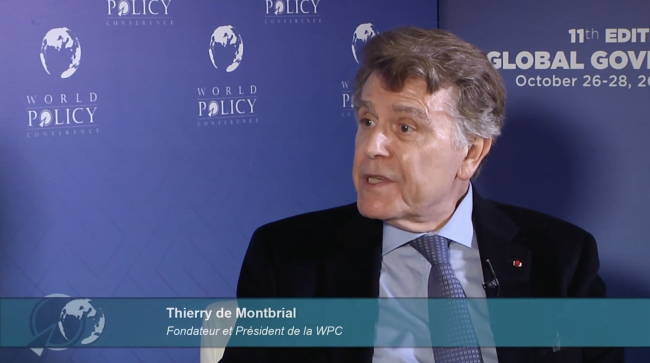
Thierry de Montbrial makes a statement on the 11th edition of the World Policy Conference (WPC) held from October, 26-28, 2018, in Rabat, Morocco.
An interview led by John Andrews, contributing editor, The Economist.
The US Oil Embargo on Iran: A New Oil Shock?
The 14 July 2015 Vienna agreement on Iran’s nuclear activities (Joint Comprehensive Plan of Action – JCPoA) was a game changer on the geopolitics in the Middle East and for the oil market. The oil sanctions were lifted and Iran increased significantly its production and exports. On 8 May 2018, President Trump announced that the United Stated (US) would withdraw from the agreement. Financial sanctions were reintroduced. From 5 November 2018 onwards, further sanctions will be re-imposed more specifically on petroleum related transactions, including the purchase of petroleum, petroleum products and petrochemical products. What could be the impact of this new embargo? Is there a risk of a new oil supply and price shock?
A Year after the Start of the Saudi-Emirati Blockade against Qatar. What Are the Consequences for West Africa?
On June 5th 2017, Saudi Arabia, the United Arab Emirates, Egypt and Bahrain broke off diplomatic relations with Qatar and agreed to isolate the Emirate via an air and land blockade.
Xi Jinping’s Institutional Reforms: Environment over Energy?
During its two sessions (lianghui) in March 2018, the National People’s Congress (NPC) announced China’s most important institutional reforms in the last 30 years. These changes occurred right after Xi Jinping consolidated his power and at a time when stakeholders working in the energy field were expecting more clarity on policy orientations.
Understanding the Resilience of the Islamic Republic of Iran
The leaders of Iran nurture regional ambitions, and are conscious of the limits of their country’s power.

Transitions from War to Peace
How do we get out of wars? One hundred years after 1918, Politique étrangère’s special report takes up this question from different perspectives in relation to the conflicts in which Western armies, willingly or otherwise, are embroiled.
RAMSES 2019. The Clashes of the Future
RAMSES 2019. The Clashes of the Future, written by Ifri's research team and external experts, offers an in-depth and up-to-date analysis of global geopolitics.

The 2016 Failed Coup in Turkey: What Is the Impact on Turkish-African Relations?
The July 2016 failed coup against President Recep Tayyip Erdoğan’s government not only resulted in a dramatic upheaval in Turkey, it also had a significant impact on the structure of its international relations and its networks of influence abroad.

Global Heterogeneity: Political Regimes and World Politics
One of the focal points of my writings has consisted of shedding light on the problem that arises from the heterogeneity of the international (or national) system, and the need for its components to reach agreement on the rules of the game and thus avoid collapsing into hostile blocs—as well as the need for the components of those blocs, the active units, in particular the political ones, to respect them.
Opposing Trump's Environmental Policy
An interview with Julie CERQUEIRA, Executive Director of the U.S. Climate Alliance.
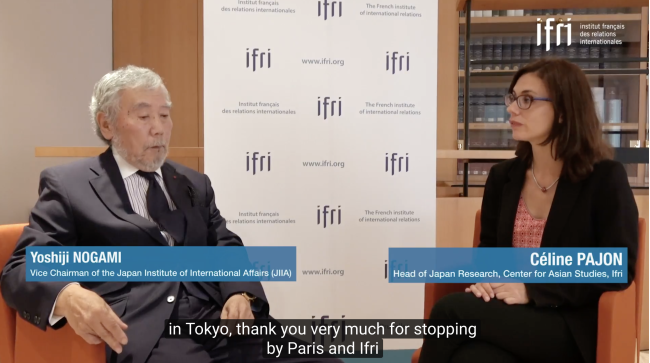
The significance of the France-Japan partnership
A dialogue with Yoshiji NOGAMI, Vice-Chairman of the Japan Institute of International Affairs (JIIA).
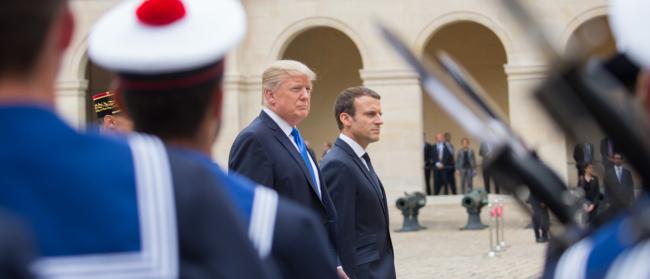
Trade Wars: A French Perspective
The Section 232 tariffs on steel and aluminum announced by the United States in March would, if applied, have little direct impact on the French economy, but rather point toward a broader trend of protectionism and economic nationalism and a widening gap in transatlantic relations that is likely to have far-reaching implications for France.
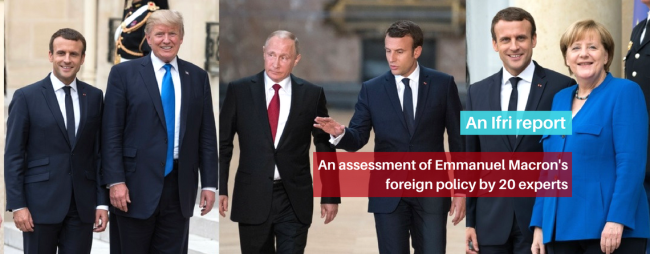
Macron, Diplomat: A New French Foreign Policy?
How can we define Emmanuel Macron’s foreign policy since he took office? After Nicolas Sarkozy’s brazen style of “gutsy diplomacy” and François Hollande’s “normal diplomacy”, the eighth president of the Fifth Republic seems to have opted for an agile classicism. In substance, he makes no claim to any radical break with the past, but sees his approach as being in line with historical tradition.
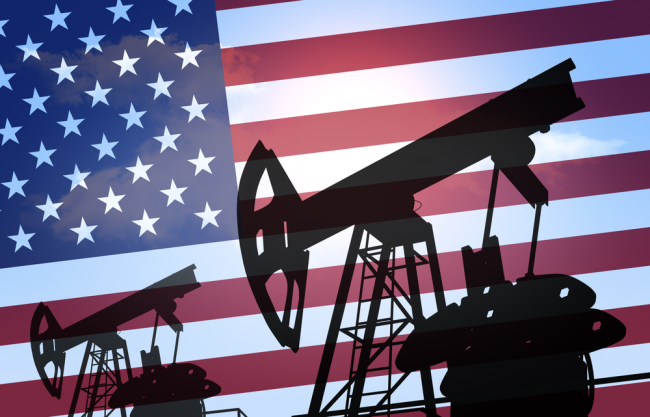
Trump's Tax Reform and Trade Policy: Renewables Spared, Oil Industry Wins
The energy sector is one where the break between the Trump and Obama administrations is the most pronounced. The three officials in charge, Rick Perry at the Department of Energy (DoE), Scott Pruitt at the Environmental Protection Agency (EPA) and Ryan Zinke at the head of the Department of the Interior (DoI), share the same indifference to the issue of climate change, the same will to encourage oil and gas production in the USA in order to bring an era of American “energy dominance”, the same desire to promote the extraction of “beautiful, clean coal”, to paraphrase President Trumps’s State of the Union address, and the same deep mistrust of renewable energies such as wind and solar.
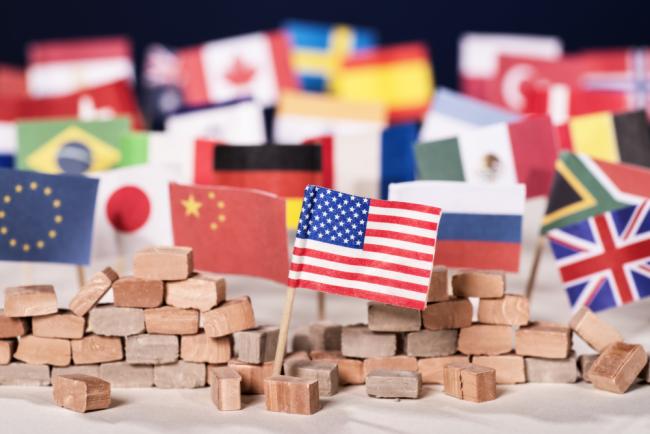
A Brave New World for Trade
The global environment for trade is undergoing significant changes. New emerging players such as China are aiming to adapt the rules and institutions inherited from the postwar Bretton Woods system.

International Order and Trump’s America
Donald Trump is disrupting the established world order. But, despite his provocative declarations, is he really looking to challenge it?
Ifri, a foundation recognized as being of public utility, relies largely on private donors – companies and individuals – to guarantee its sustainability and intellectual independence. Through their funding, donors help maintain the Institute's position among the world's leading think tanks. By benefiting from an internationally recognized network and expertise, donors refine their understanding of geopolitical risk and its consequences on global politics and the economy. In 2026, Ifri partners with over 90 French and international companies and organizations.