




Russia-Eurasia
Eurasia is undergoing profound changes. While the Soviet past has left a lasting imprint, Russia and the countries of Eastern Europe, Central Asia and the South Caucasus have their own trajectory.
Related Subjects
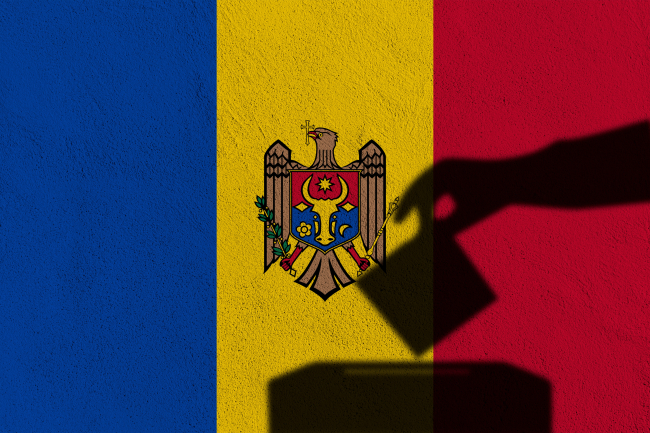
Moldova's Crucial Parliamentary Election. What's at Stake?
On the occasion of Moldova’s National Day, August 27, 2025, Chișinău hosted a high-level European delegation composed of Emmanuel Macron, Friedrich Merz and Donald Tusk, who sought to reaffirm their support for the country’s sovereignty and pro-European course. This unprecedented and highly symbolic visit took place at a pivotal moment. Moldova is preparing for decisive parliamentary elections on September 28, whose stakes extend far beyond the national framework.
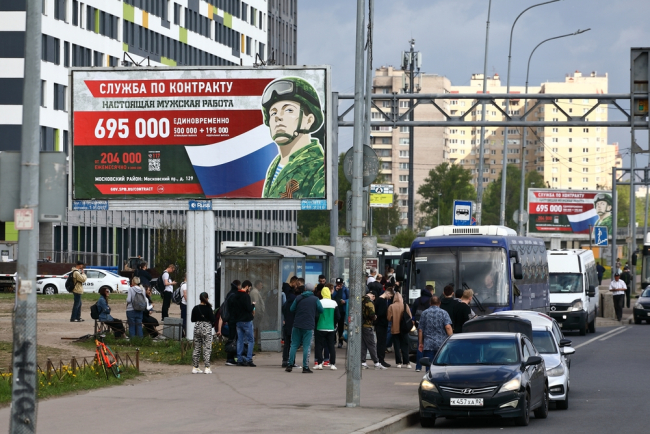
War as Social Elevator: The Socioeconomic Impact of Russian Military Keynesianism
In order to finance its war effort, the Russian state has spent substantial sums of money and implemented a form of “military Keynesianism” that is transforming society at both the socioeconomic and cultural levels. This has partially rebalanced the wide disparities in wealth, levels of consumption, and social prestige in Russian society by granting significant financial and symbolic advantages to peripheral Russia, which has long been overlooked by the central government.

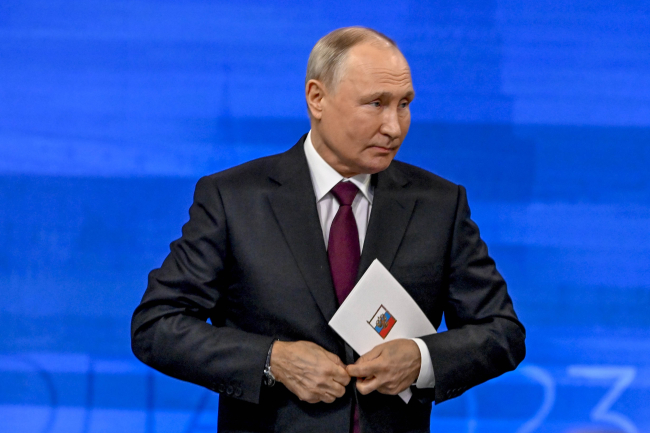
Putin Eyes Peacemaking Role In Israel-Iran Air War
Vladimir Putin is eyeing the conflict between Israel and Iran as an opportunity to thrust himself to the forefront of the international stage, more than three years into his invasion of Ukraine.
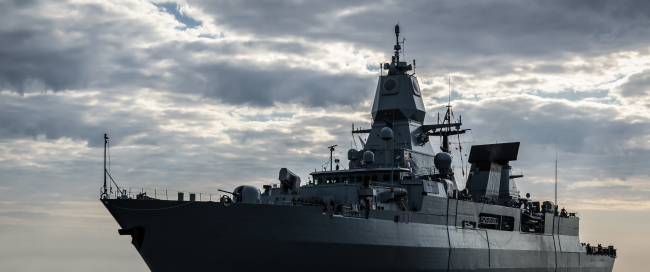
The Hunt for Economic Security: The Role of Navies in Deterring Threats to the Maritime Economy
The maritime domain is currently faced with a wide variety of threats, such as climate change, economic warfare, shadow fleet operations, protection of critical infrastructures, and illicit activities ranging from illegal fishing to piracy. Navies suffer from inherent limitations when deterring threats to the global maritime economy: their global presence and permanence limits their credibility in terms of deterrence, their focus usually set on immediate deterrence, implementing deterrence by punishment in and from the naval domain is difficult and costly.
Multilateralisms: Survival or Revival?
The organized multilateralism born out of the Second World War and the Cold War, and revived in the 1990s with the dream of a world of peaceful “global governance,” has fizzled out. The erosion of the large universal frameworks (United Nations, World Trade Organization, arms control and disarmament, international criminal justice, and so on) did not give way to a void but to an excess: a multitude of agreements and schemes that bore witness to the accelerated rebuilding of international relationships. Will institutional anarchy and the open competition of interests visible in uninhibited struggles for power be able to organize themselves around common fundamental interests in the future?
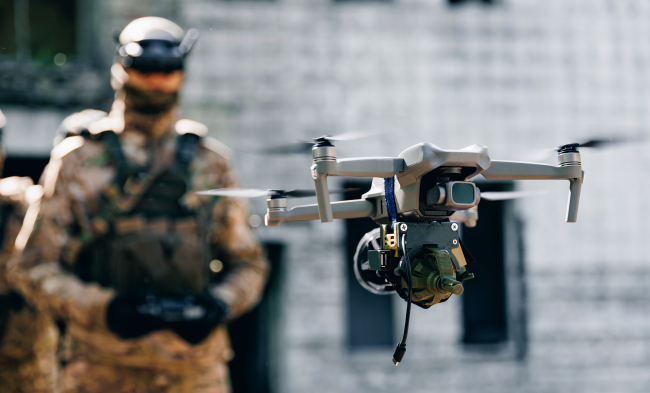
Design, Destroy, Dominate. The Mass Drone Warfare as a Potential Military Revolution
The widespread use of drones observed in Ukraine—both in terms of the scale of the fleets deployed and their omnipresence in the operations of both belligerents—appears to meet the conditions of a genuine military revolution.
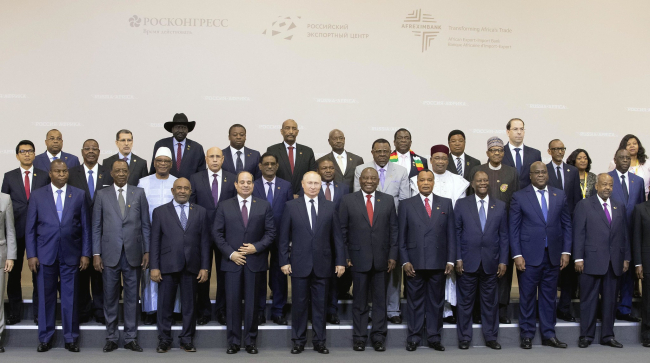
The Contradictory Impacts of Western Sanctions on Economic Relations between Russia and Sub-Saharan Africa
How does Russia maintain economic ties with Africa despite Western sanctions? An analysis of investments, trade, and the circumvention strategies deployed by Moscow.
Ukraine: A Year of Uncertain Peace - Politique étrangère, Vol. 90, No. 1, Spring 2025
During his election campaign, Donald Trump promised to settle the war in Ukraine in 24 hours. As the American president settles into the White House, different options are emerging for the future of this conflict. Some are more likely than others, but none can be ruled out. European countries appear increasingly divided over Russia, and the European Union risks paying a high price if it fails to come up with a solid common strategy.
France Contested in Overseas Territories - Politique étrangère, Vol. 90, No. 1, Spring 2025
New Caledonia, Mayotte: France's overseas territories were severely shaken in 2024. Beyond explanations of the economic situation, the place of these overseas territories in French policies and strategies is once again being called into question.
Are France's overseas territories the remnants of an outdated colonialism? Or, on the contrary, are they supports for an extended French presence that the opening-up of the world makes indispensable, and barriers raised here and there against the appetites of new powers? In any case, what policies should the Hexagone pursue in these regions, to promote better development and more effective integration into their environment? And is the legal status of these overseas territories untouchable?
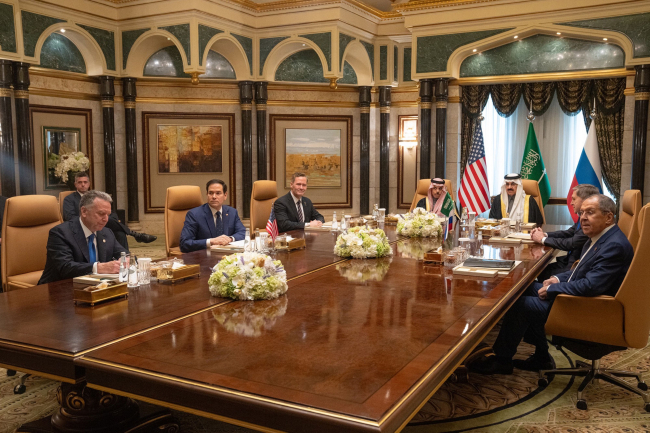
How the US under Trump Became a Strategic and Ideological Adversary of Europe
The Europeans' worst security nightmare seems to be coming true: on Tuesday, February 18, 2025, U.S. Secretary of State Marco Rubio and Russian Foreign Minister Sergey Lavrov met in Saudi Arabia to initiate the normalization of relations between their two countries. The meeting also aimed to set up peace negotiations for Ukraine. However, despite having the potential to affect the entire continent, the discussions took place without the Europeans or the Ukrainians being present.
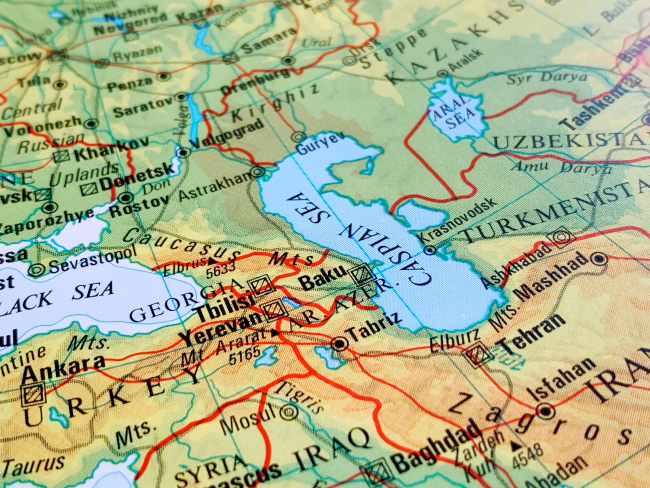
The Caspian Sea as an Emerging Energy Hub : Potentials and Limitations
This report analyzes the prospects of the Caspian Sea region — and its key actors except for Russia and Iran — becoming an important energy hub serving the needs of the European Union (EU).
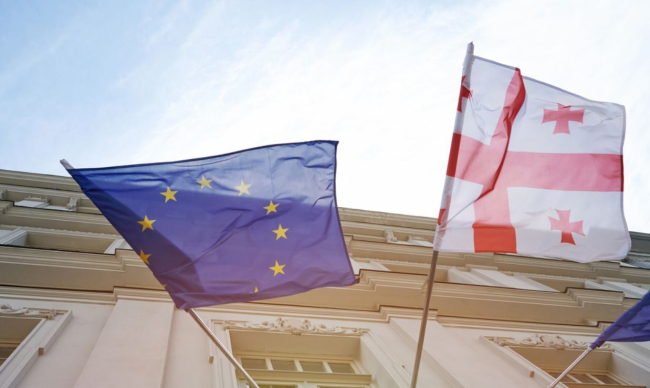
The European Union's Strategic Test in Georgia
The political crisis brewing in Georgia is of an existential nature for the country. What is at stake is Georgia's future as a democratic and sovereign European nation (EU).
WPC 2024 - Multi-vector Foreign Policies? (Plenary Session)
Friday, December 13, 2024 - 17th edition of the World Policy Conference in Abu Dhabi, United Arab Emirates. Plenary session 2: Multi-vector Foreign Policies?
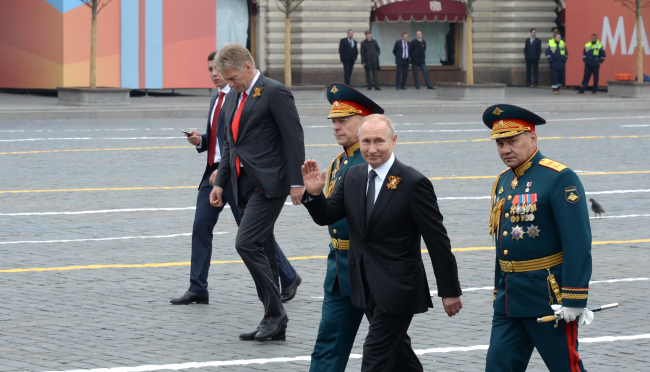
Commanders of Putin's Long War: Purged, Reshuffled and Disgruntled
The trend of reshuffling the Russian top military command in the course of a fast-evolving and far from successful war has progressed unevenly both across the Armed Forces’ structures and in time. The rationale for and timing of the abrupt cadre decisions made by Commander-in-Chief Putin often defy logical explanation, and the rare official clarifications are no more informative than the usual information blackout.
Russian Military Manpower After Two and a Half Years of War in Ukraine
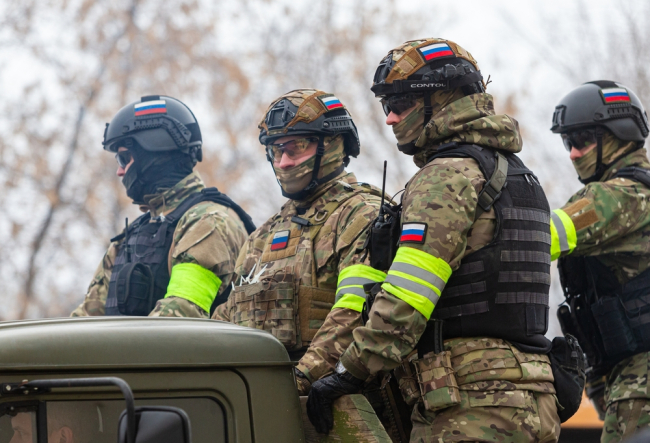
In addition to a military victory in Ukraine, the Russian leadership is planning to build up sizable troop formations for a possible conflict with NATO in the Baltic region and the Kola Peninsula. In particular, current plans aim for the military manpower to grow by about 350,000, reaching a total of 1.5 million soldiers and commanders. In the context of the current conflict in Ukraine, this cannot be accomplished without a new wave of mass mobilization.
Moldova’s Foreign Policy after 2024 Presidential Elections: Staying on the EU Path, Moving Eastwards or Becoming Multi-vector?
The future of Moldova’s foreign agenda will undergo a stress test during the upcoming presidential elections on October 20, 2024.

Russian Strategic Thinking and Culture Before and After February 24, 2022: Political-Strategic Aspects
Written by Dimitri Minic, the scientific article "Russian Strategic Thinking and Culture Before and After February 24, 2022: Political-Strategic Aspects" in Russia’s war against Ukraine: Complexity of Contemporary Clausewitzian War by the National Defence University Department of Warfare, Helsinki 2024.
Russia and the New BRICS Countries: Potentials and Limitations of a Scientific and Technological Cooperation
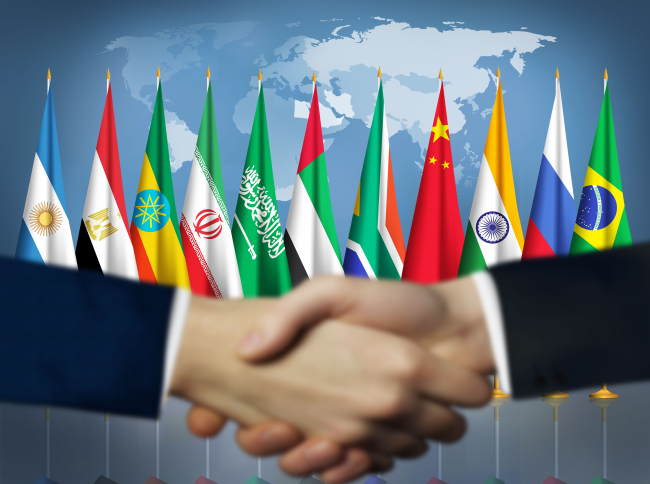
At the fifteenth BRICS summit, held in Johannesburg, South Africa, from August 22 to 24, 2023, a resolution was adopted to extend an invitation to six new countries to join the organization: Argentina, Egypt, Ethiopia, Iran, Saudi Arabia, and the United Arab Emirates (UAE). All of these countries except Argentina duly became members of BRICS in 2024, with the expanded group known as BRICS+. In addition to the political and economic advantages, it is assumed that the incorporation of these new countries could potentially facilitate their scientific and technological development.
Russia in the Arctic: The End of Illusions and the Emergence of Strategic Realignments
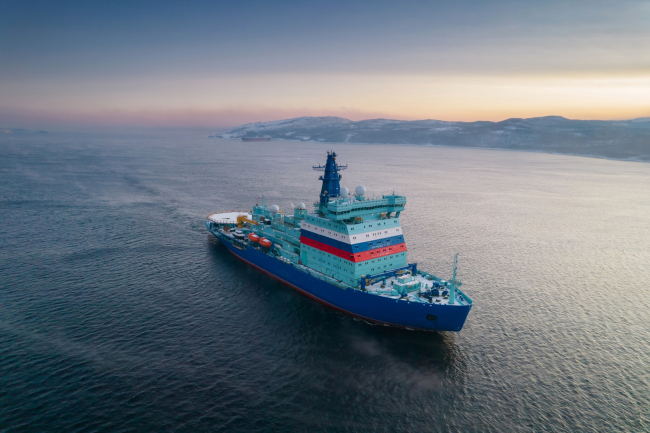
Russia’s full-scale invasion of Ukraine has triggered profound changes in the Arctic region, the consequences of which remain uncertain in the long term.
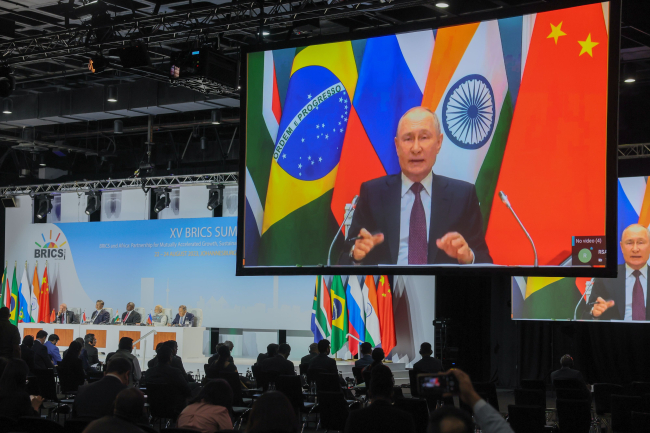
Between Aspiration and Reality: Russia in the World (Dis)order
The world has rarely seemed more disorderly than it is today. But in this anarchic environment, some things are constant.
How the US under Trump Became a Strategic and Ideological Adversary of Europe
The Europeans' worst security nightmare seems to be coming true: on Tuesday, February 18, 2025, U.S. Secretary of State Marco Rubio and Russian Foreign Minister Sergey Lavrov met in Saudi Arabia to initiate the normalization of relations between their two countries. The meeting also aimed to set up peace negotiations for Ukraine. However, despite having the potential to affect the entire continent, the discussions took place without the Europeans or the Ukrainians being present.
The Caspian Sea as an Emerging Energy Hub : Potentials and Limitations
This report analyzes the prospects of the Caspian Sea region — and its key actors except for Russia and Iran — becoming an important energy hub serving the needs of the European Union (EU).
The European Union's Strategic Test in Georgia
The political crisis brewing in Georgia is of an existential nature for the country. What is at stake is Georgia's future as a democratic and sovereign European nation (EU).
Commanders of Putin's Long War: Purged, Reshuffled and Disgruntled
The trend of reshuffling the Russian top military command in the course of a fast-evolving and far from successful war has progressed unevenly both across the Armed Forces’ structures and in time. The rationale for and timing of the abrupt cadre decisions made by Commander-in-Chief Putin often defy logical explanation, and the rare official clarifications are no more informative than the usual information blackout.
Russian Military Manpower After Two and a Half Years of War in Ukraine
In addition to a military victory in Ukraine, the Russian leadership is planning to build up sizable troop formations for a possible conflict with NATO in the Baltic region and the Kola Peninsula. In particular, current plans aim for the military manpower to grow by about 350,000, reaching a total of 1.5 million soldiers and commanders. In the context of the current conflict in Ukraine, this cannot be accomplished without a new wave of mass mobilization.
Moldova’s Foreign Policy after 2024 Presidential Elections: Staying on the EU Path, Moving Eastwards or Becoming Multi-vector?
The future of Moldova’s foreign agenda will undergo a stress test during the upcoming presidential elections on October 20, 2024.
Russian Strategic Thinking and Culture Before and After February 24, 2022: Political-Strategic Aspects
Written by Dimitri Minic, the scientific article "Russian Strategic Thinking and Culture Before and After February 24, 2022: Political-Strategic Aspects" in Russia’s war against Ukraine: Complexity of Contemporary Clausewitzian War by the National Defence University Department of Warfare, Helsinki 2024.
Russia and the New BRICS Countries: Potentials and Limitations of a Scientific and Technological Cooperation
At the fifteenth BRICS summit, held in Johannesburg, South Africa, from August 22 to 24, 2023, a resolution was adopted to extend an invitation to six new countries to join the organization: Argentina, Egypt, Ethiopia, Iran, Saudi Arabia, and the United Arab Emirates (UAE). All of these countries except Argentina duly became members of BRICS in 2024, with the expanded group known as BRICS+. In addition to the political and economic advantages, it is assumed that the incorporation of these new countries could potentially facilitate their scientific and technological development.
Russia in the Arctic: The End of Illusions and the Emergence of Strategic Realignments
Russia’s full-scale invasion of Ukraine has triggered profound changes in the Arctic region, the consequences of which remain uncertain in the long term.
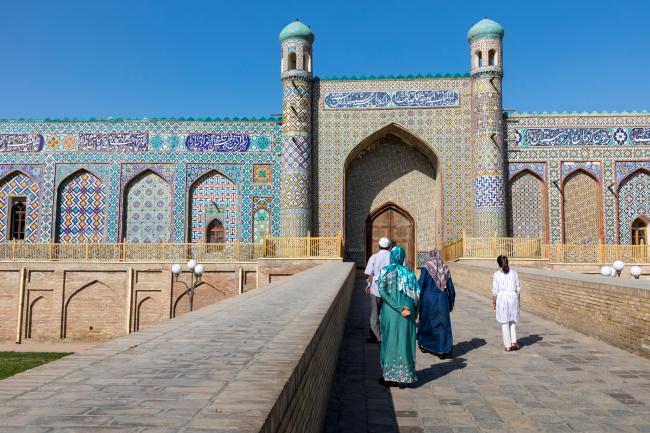
Islam, politique et société en Ouzbékistan. Enquête sur le renouveau religieux de la jeunesse ouzbèke
This study aims to decipher the complex relationships between politics, Islam, and society in Uzbekistan and, more specifically, the dynamics at work in the religious revival of Uzbek youth.
Central Asia: Making Use of a Historic Opportunity
This report analyzes the economic and geopolitical situation in Central Asia.
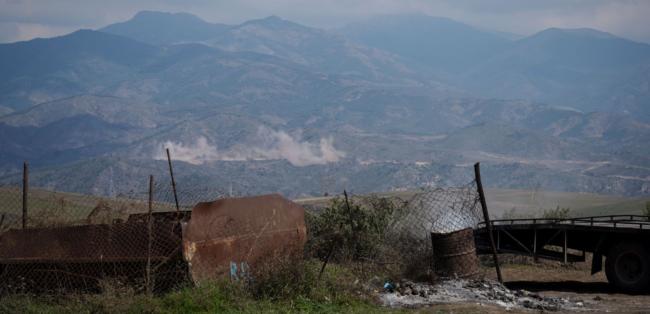
The Next Surge of Conflict in the South Caucasus Is Still Preventable
The tragic exodus of the Armenian population from the Nagorno Karabakh region has closed a chapter in the long saga of conflict between Armenia and Azerbaijan.
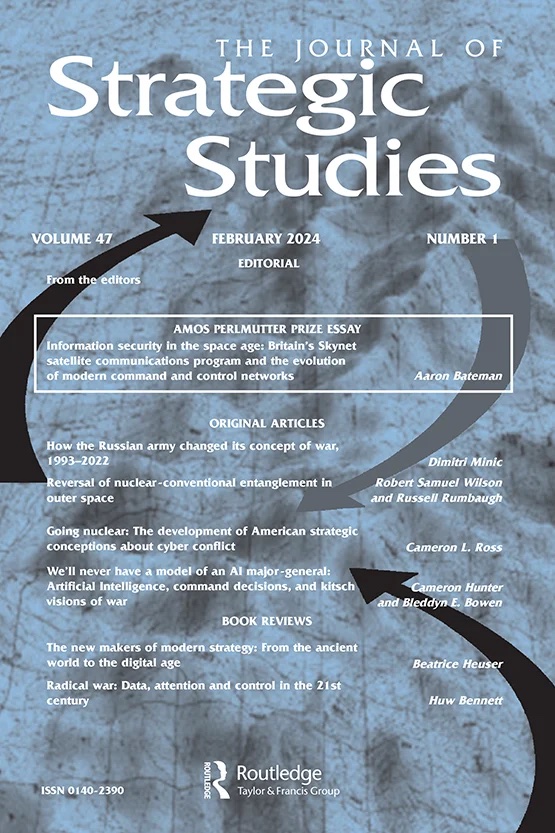
How the Russian Army Changed its Concept of War, 1993-2022
The traditional and high-intensity war that has occurred in Ukraine since Russia decided to invade raises a key issue: did post-soviet Russian strategic thought really prepare Russia for waging this war?
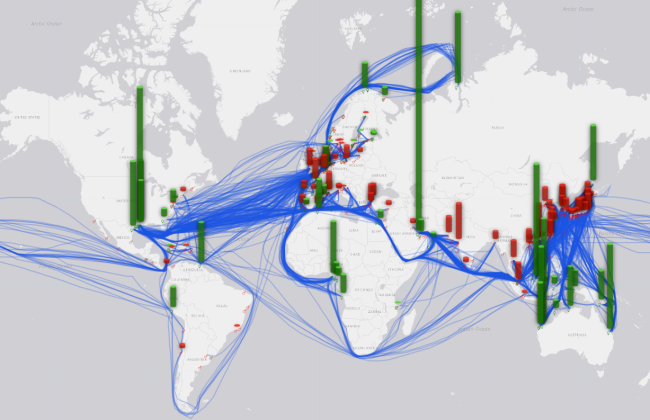
The Strategic Repositioning of LNG: Implications for Key Trade Routes and Choke Points
2022 saw the climax so far of the weaponization of energy. Following its geopolitical demise, Russia has undertaken its own gas amputation, moving from a super energy power status to a diminished role with uncertain prospects and only hard options left.
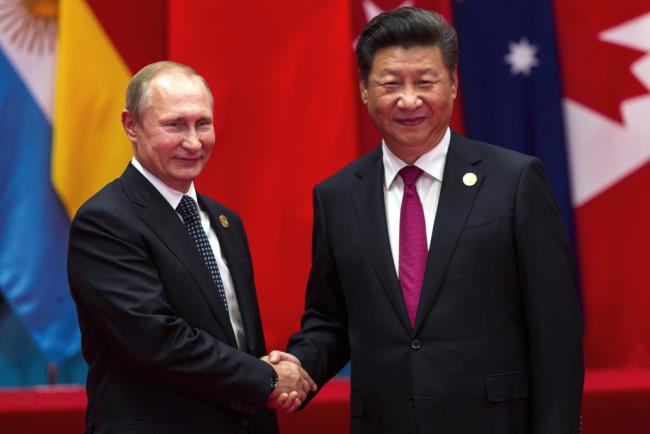
China-Russia Cooperation in Space: The Reality behind the Speeches
China-Russia cooperation in space has been increasing for the past two decades. This cooperation accelerated after the Crimea crisis in 2014 and culminated with the announcement in 2021 of the joint construction of the International Lunar Research Station (ILRS).
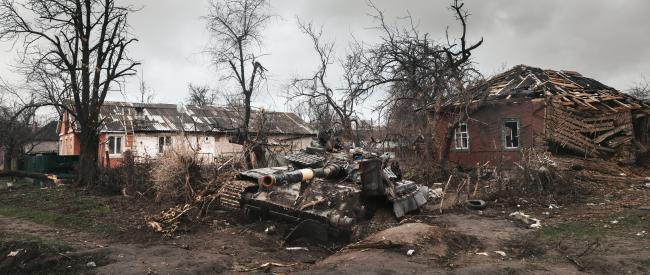
The Return of High-Intensity Conflict in Ukraine: Lessons for Land Forces
After twenty years of counter-terrorism, the Ukrainian battlefield marks the renewal of so-called “high-intensity” warfare. It constitutes a major strategic turning point, reversing the contemporary model of wars involving the West.
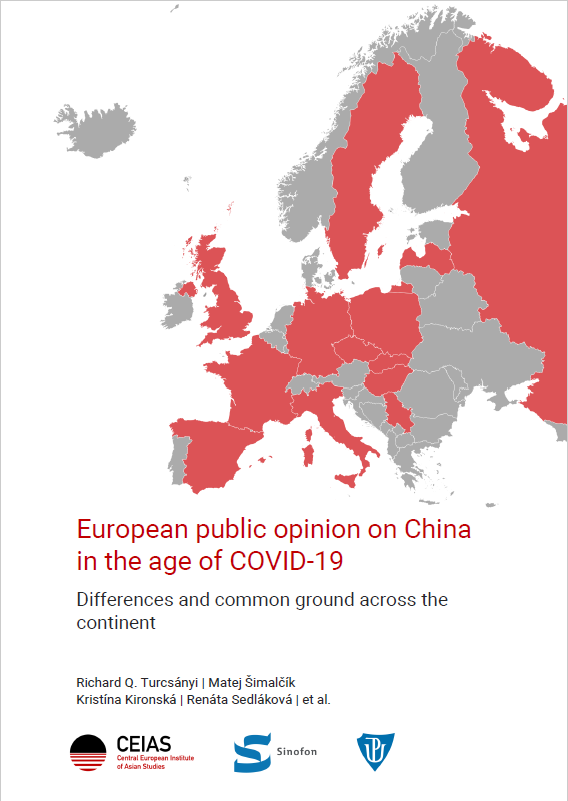
European public opinion on China in the age of COVID-19: Differences and common ground across the continent
In September and October 2020, the Sinophone Borderlands project at Palacký University Olomouc conducted a wide-scale survey of public opinion on China in 13 European countries. The polled countries include: Czechia, France, Germany, Hungary, Italy, Latvia, Poland, Russia, Serbia, Slovakia, Spain, Sweden, and the United Kingdom. Here, we present the basic findings of the survey, which are a result of a joint analysis of the survey data by the Central European Institute of Asian Studies (CEIAS) and Sinophone Borderlands.

The Future of Europe in the Context of Sino-American Competition
This special issue of Politique étrangère focuses on the proceedings of the Conference organized by the French Institute of International Relations (Ifri) for its 40th anniversary, held on April 10th, 2019, in Sorbonne University's Grand Amphithéâtre.
Greater Eurasia: The Emperor’s New Clothes or an Idea whose Time Has Come?
The Greater Eurasia project has emerged as the poster-child of Vladimir Putin’s foreign policy, symbolic of a resurgent and self-confident Russia.

Envisioning Opportunities for U.S.-Russia Cooperation in and with Central Asia
Central Asia is conventionally seen as a conflicting space for great powers.

After the riots, a new era in Kazakhstan?
In January 2022 Kazakhstan underwent its most serious political crisis since its independence, proclaimed on December 16, 1991. The increase in the price of fuel has set ablaze the west of the country in the grip of socio-economic marginalization, then the southern regions, traditionally more resistant to central power. What actually happened, and what consequences did these troubles have at the national and regional levels?

Putin’s War is Stuck, Beware The Rising Risks
Data on the concentration of Russian troops was solid; the diplomatic offensive executed by Moscow was deliberately disagreeable; yet, many experts (myself including) refused to accept the proposition on the coming war as “inevitable”.

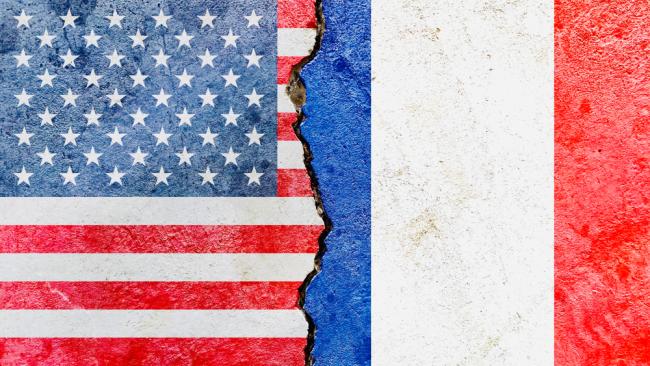
Sub snub just one symptom of longtime French unease with US
Born of a revolution fought for liberty, ties between the United States and its oldest ally, France, have long been fraternal, but they've also been marked by deep French unease over their equality.

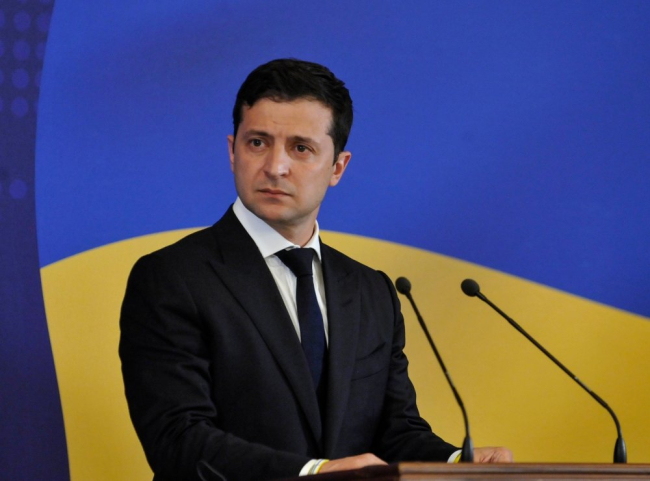
President Zelensky’s Increasingly Critical Stance toward the West
After the recent intensification of dialogue between official Kyiv and President Biden’s administration, in the wake of the rising threat to Ukraine posed by Russia and in anticipation of President Biden’s visit to the UK and EU, President Volodymyr Zelensky and his team began sharpening their rhetorical stance toward Ukraine’s Western partners.

France and Germany back Ukraine’s call for Russian troop pullback
Zelensky’appeal for help in Paris follows Biden’s condemnation of Russian ‘aggression’.
Belarus opposition leader takes risky diplomatic path
Once a political novice, Belarusian opposition leader Svetlana Tikhanovskaya is joining Europe's diplomatic big leagues but risks undermining her own cause in the process, experts said.

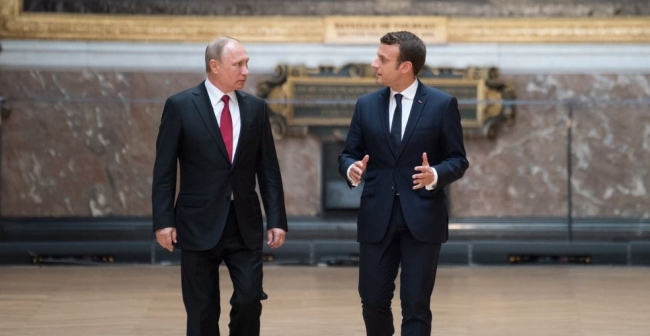
Russia, France look for way out of geopolitical deadlock
On Thursday, Russian President Vladimir Putin and his French counterpart Emmanuel Macron are due to hold a meeting in St. Petersburg.
Macron Heads to Russia in European Effort to Salvage Iran Deal
French President Emmanuel Macron’s trip to Russia this week once threatened to split France from its European allies. Now it’s part of a wider European effort to tie President Vladimir Putin to the Iran nuclear accord.

As fighting rages, can Russia forge a peace in Syria?
Nearly two and a half years after the Russian military began an intensive bombing campaign in Syria in support of Syrian President Bashar al-Assad, Russia is struggling to engineer a political solution in the war-ravaged country, analysts say.
Missiles of March: A political means of last resort for Putin
President Vladimir Putin’s extra-heavy emphasis on new strategic missile systems in his March 1 address to parliament was quite unexpected and rather out of character.

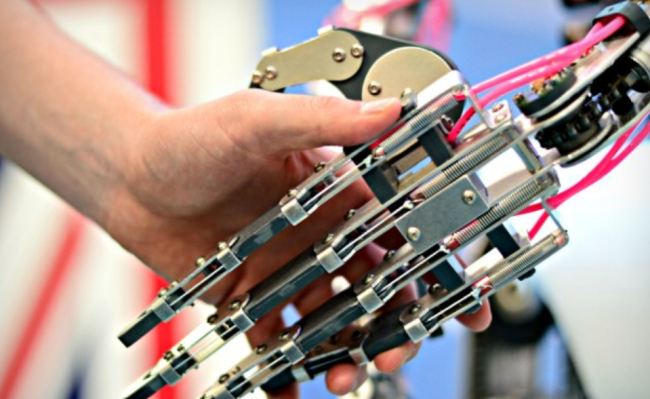
Artificial Intelligence, The New Chess Piece Of Geopolitics
China, Russia and the U.S. see potential and risks. And for now, there's still no form of governance to oversee AI development — technology moves faster than diplomacy.

Moscow Eyes the French Elections
With just a few weeks left until French voters head to the polls, far-right presidential candidate Marine Le Pen made her way to Moscow for a surprise meeting with Russian President Vladimir Putin.

Emmanuel Macron aide blames Russia for hacking attempts
Russia watchers say Moscow is deploying considerable resources to swing the French election.
Ifri, a foundation recognized as being of public utility, relies largely on private donors – companies and individuals – to guarantee its sustainability and intellectual independence. Through their funding, donors help maintain the Institute's position among the world's leading think tanks. By benefiting from an internationally recognized network and expertise, donors refine their understanding of geopolitical risk and its consequences on global politics and the economy. In 2026, Ifri partners with over 90 French and international companies and organizations.

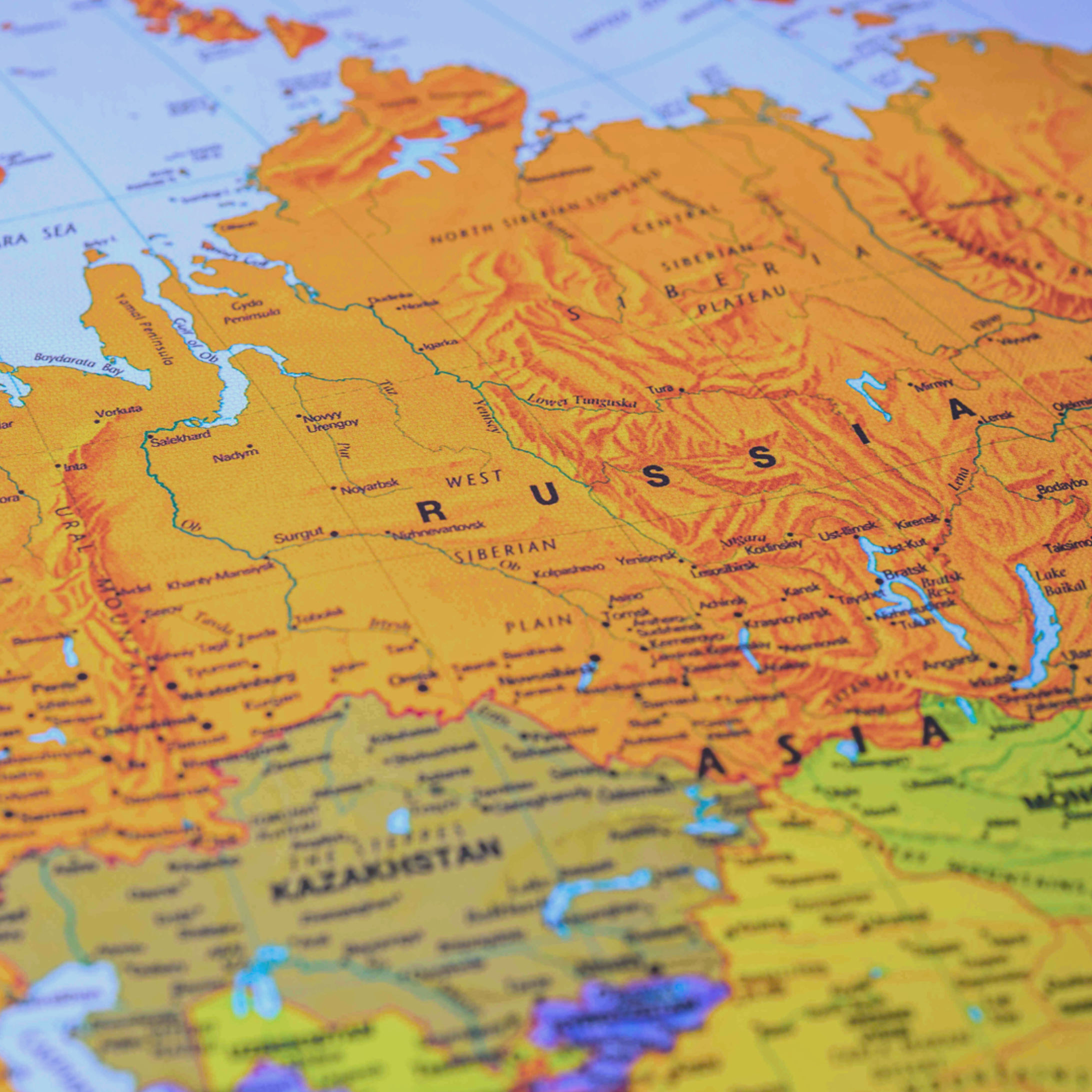
Russia/Eurasia Center
Founded in 2005 within Ifri, the Russia/Eurasia Center conducts research and organizes debates on Russia, Eastern Europe, Central Asia, and the South Caucasus. Its goal is to understand and anticipate the evolution of this complex and rapidly changing geographical area in order to enrich public discourse in France and Europe and to assist in strategic, political, and economic decision-making.