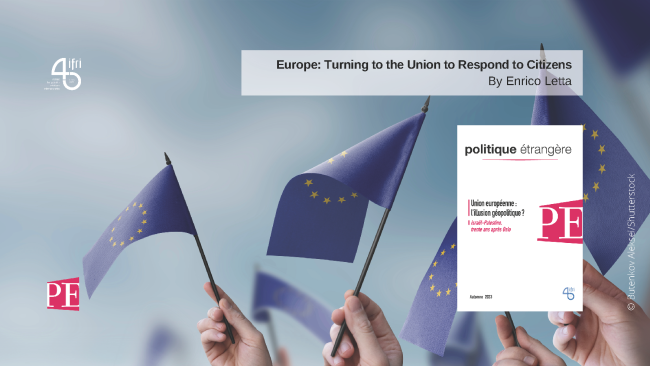
Europe: Turning to the Union to Respond to Citizens
To deal with the internal and external challenges of a new era, the European Union must reform its institutions: review Member States' right of veto, strengthen the Commission, and take action on foreign policy and security matters, energy, the single market and the economy, social policy, health and immigration—while at the same time considering expansion. This is the only way for the Union to preserve the values of freedom and democracy that underlie European integration.
Fiscal Policy in France and Germany: Insurmountable Differences?
The state of public finances in France and Germany is often compared. Germany is considered a model of rigor, through its ability to contain its deficits and generate surpluses, particularly between 2012 and 2019, thanks to the introduction into its constitution of a debt brake mechanism.
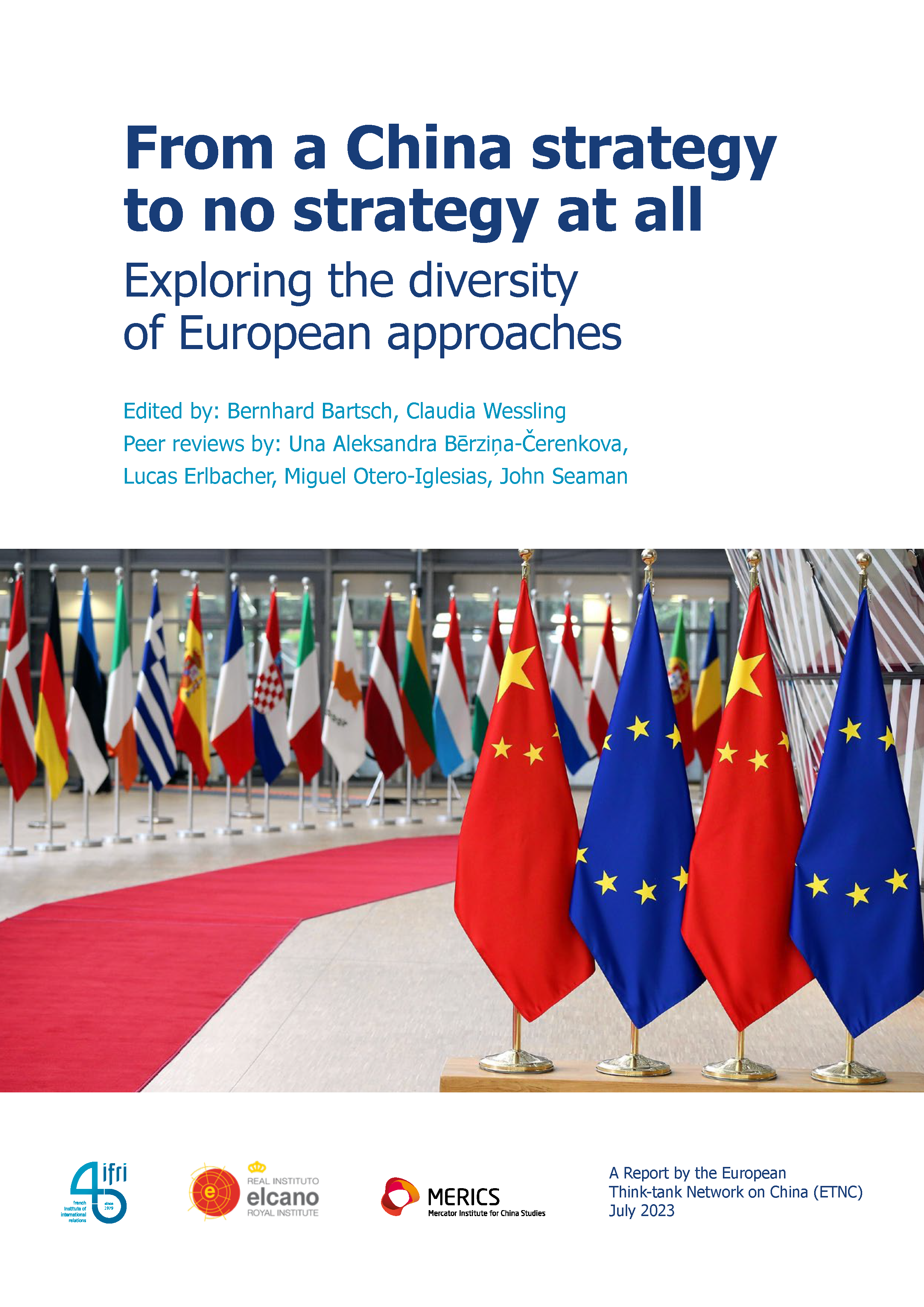
From a China strategy to no strategy at all: Exploring the diversity of European approaches
While there is now new momentum in the relationship between Europe and China, considerable variation remains in approaches across the continent, from clear-cut strategies to more ambiguous policies, complicating a common European position.
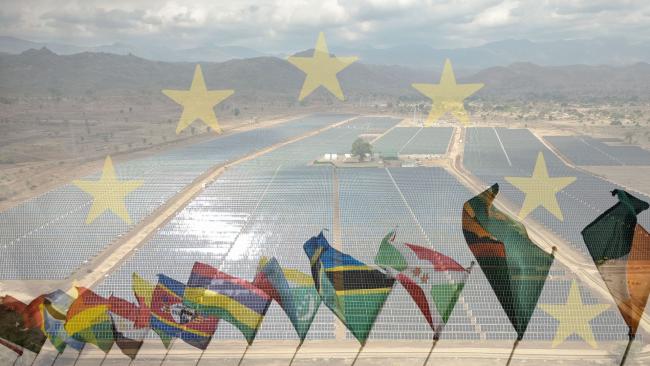
A framework for a Win-Win Europe-Africa Energy and Climate Partnership
North-South tensions are exacerbated at a time of unprecedented turmoil for both Europeans and Africans. European polycrises (geopolitical, energy-related and economic) echo the systematic vulnerability of Africans, which is reinforced by external shocks.

France, Germany play safe during China Premier Li's European trip
HAMBURG, Germany -- Chinese Premier Li Qiang avoided public clashes on a high-profile visit to Germany and France this week, in what analysts see as a sign of the European nations' reluctance to alienate Beijing.
Türkiye’s Stifled Ambitions
As its elections have unfolded this spring, Türkiye has again shown itself to be symptomatic of the times. Across the world, numerous political regimes oscillate between democratic forms of government and an authoritarian concentration of power; impressive periods of growth give way to inflation and recession; and international deregulation gives rise to widespread diplomacy in an effort to juggle a myriad of shifting political loyalties. Faced with the war in Ukraine, Ankara is playing a strong hand by enlarging its areas of presence and intervention. Türkiye is more important to its partners than ever, independent of its eventual domestic trajectory.
Western discourse predicted the advent of Chinese dominance in the very short term, but events have taken a rather different turn. The drivers that enabled the unprecedented growth of recent decades seem to have run out of steam. Moreover, the outcome of Beijing’s economic strategies is still uncertain, in a context shaped primarily by U.S. policies. China’s influence in the future will be considerable, but the direction its rebound will take remains unclear.
For Europeans, the events in Ukraine and the thorny issue of the Sino-American rivalry cannot paper over the other security problems we face: On what common vision of our history and future will we build the Europe of tomorrow? Has drug trafficking already changed the nature of our societies? Can we afford to turn away from instances of destabilization in Africa, from the Horn to the Sahel?
Can Europe do Without a Geologistical Strategy to Face China?
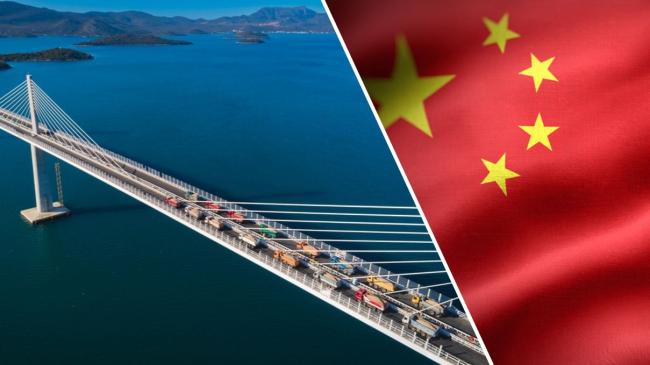
During the economic and financial crisis in 2008, during which the West was severely weakened, the ties between the Western Balkans and China were particularly close. For these countries, turning to China meant to secure new destination markets for their exports and to guarantee new investments.
Moldova, a Political System Under Pressure: Between European Aspirations and War in Ukraine
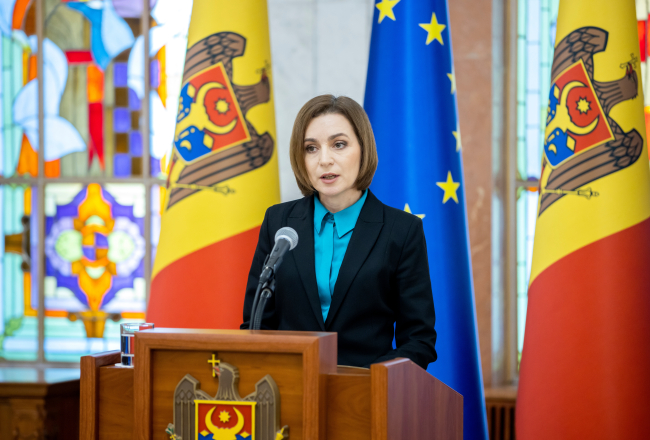
Maia Sandu, who was elected President of the Republic of Moldova by direct universal suffrage in November 2020, won a large parliamentary majority in the snap parliamentary elections held in July 2021. Her plan for the internal transformation of Moldova is closely linked to her objective of progress toward the European Union.
European and Japanese Soft Power Signal Renewed Influence of G7
The G7 summit in Hiroshima showcased a new international order in the making: in a world where security is indivisible, the priority should be to uphold a collectively shaped rules-based order and find a modus vivendi with China. The G7 can work toward this by taking into account the diverse perspectives of industrialized countries and the Global South, which prioritizes multi-alignment and autonomy. Japan and Europe played a critical role in this process.
EU's China policy staying on track despite intensifying debate
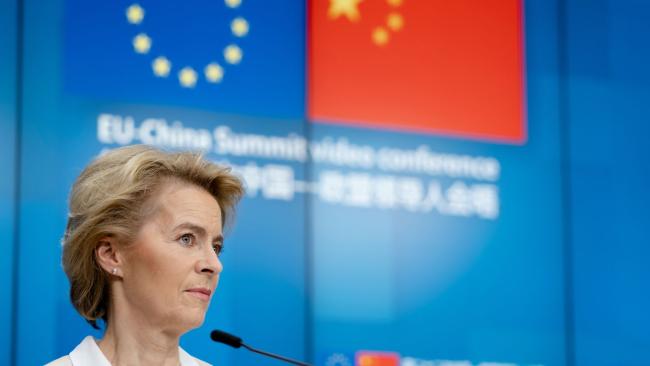
While French President Emmanuel Macron’s state visit to China is viewed by some to be an exercise in stirring the pot, this does not mean that the European boat has veered off course. The EU is used to robust debate among and within member states, and can take this as another opportunity to affirm their stance on China.
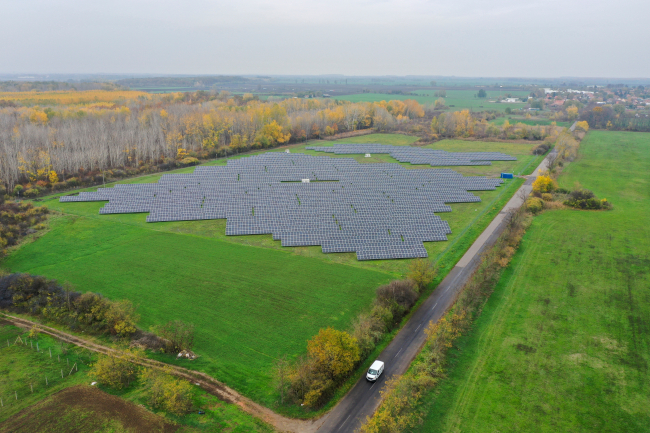
The Europeanisation of the Energy Transition in Central and Eastern EU Countries: An Uphill Battle that Can Be Won
Russia’s war in Ukraine, and the brutal decoupling from Russian fossil fuels, is a game changer for the Central and Eastern Europe region which was still heavily dependent on Russia for its energy supply.

France's Macron is sending China the wrong signals
More realistic posture would strengthen Paris' role in Indo-Pacific region
France’s Macron Renews Call for a Sovereign Europe Less Reliant on Foreign Powers
French president’s remarks follow criticism over his warning that Europe should steer clear of U.S.-China tensions over Taiwan


In the middle of the race, the Franco-German motor seems to be breaking down
Faced with the risk of losing investments in the technologies of the future, due to subsidies that its global competitors are pumping into their economies, the European Union is forced to rethink its industrial policy.
The United States and Europe risk entering into a subsidy war, each trying to support the competitiveness of their economies… their market economies… with public money. Meanwhile, member states expect from Brussels solutions that will allow them to remain relevant in a world where interventionism is the order of the day.
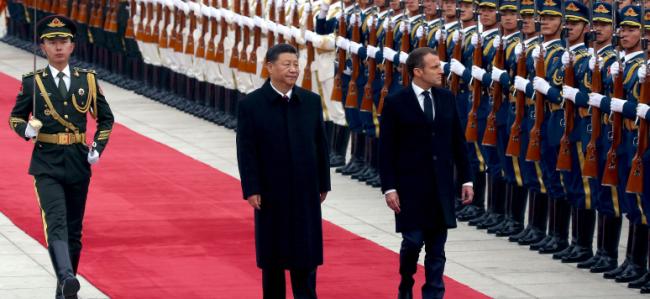
Europe is ‘counting on China’ to end Russia’s war in Ukraine, leaders tell Xi Jinping in Beijing
European Commission chief Ursula von der Leyen and French President Emmanuel Macron deliver united message to Chinese president during visit ; but as French leader signed over 20 business deals on China trip, EU chief took sterner line with Xi on economic grievances, human rights and Taiwan
Emmanuel Macron Visits China: Stability in the Taiwan Strait Should be a Priority for France
President Emmanuel Macron will visit China from April 4 to 8 for the first time since 2019 and five months after his meeting with Chinese President Xi Jinping, on the sidelines of the G20 summit in Bali.
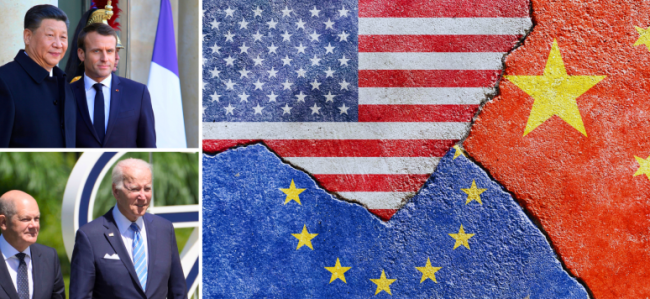
China/United States: Europe off Balance
As French President Emmanuel Macron (accompanied by Ursula von der Leyen) is on a state visit to China, some twenty Ifri researchers decipher the stakes of the U.S./China/Europe strategic triangle.

Schisms in research collaboration risk worsening global crises
Barriers being put up by the US, China and the EU could hinder scientific progress at a time when it is most urgently needed, according to OECD’s latest report on the global R&D outlook.

High hopes UK-France summit will reset soured post-Brexit relations
As Emmanuel Macron prepares to welcome Rishi Sunak to Paris, hopes are high that the first UK-France summit since 2018 will turn the page on years of strained post-Brexit relations.
European Strategic Autonomy and the Green Transition: What Industrial and Technological Strategies? (Replay)
The invasion of Ukraine by the Russian Federation and consequent supply chain disruptions in the energy sector have exposed critical vulnerabilities in the European Union’s broader strategic autonomy agenda and bolstered efforts at lessening strategic dependency on third states in a variety of areas , from raw materials, batteries and active pharmaceutical ingredients to hydrogen, semiconductors, and cloud and edge technologies.
European and Japanese Soft Power Signal Renewed Influence of G7
The G7 summit in Hiroshima showcased a new international order in the making: in a world where security is indivisible, the priority should be to uphold a collectively shaped rules-based order and find a modus vivendi with China. The G7 can work toward this by taking into account the diverse perspectives of industrialized countries and the Global South, which prioritizes multi-alignment and autonomy. Japan and Europe played a critical role in this process.
EU's China policy staying on track despite intensifying debate
While French President Emmanuel Macron’s state visit to China is viewed by some to be an exercise in stirring the pot, this does not mean that the European boat has veered off course. The EU is used to robust debate among and within member states, and can take this as another opportunity to affirm their stance on China.
The Europeanisation of the Energy Transition in Central and Eastern EU Countries: An Uphill Battle that Can Be Won
Russia’s war in Ukraine, and the brutal decoupling from Russian fossil fuels, is a game changer for the Central and Eastern Europe region which was still heavily dependent on Russia for its energy supply.
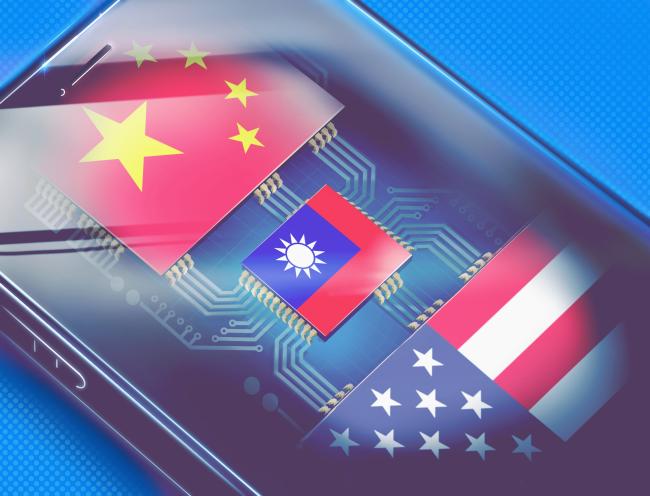
Implications of the Global Supply Chain Reform: A Taiwanese Perspective
How have both the private and public sectors in Taiwan sought to mitigate the challenges posed by the reform agenda for global supply chains (GSCs)?
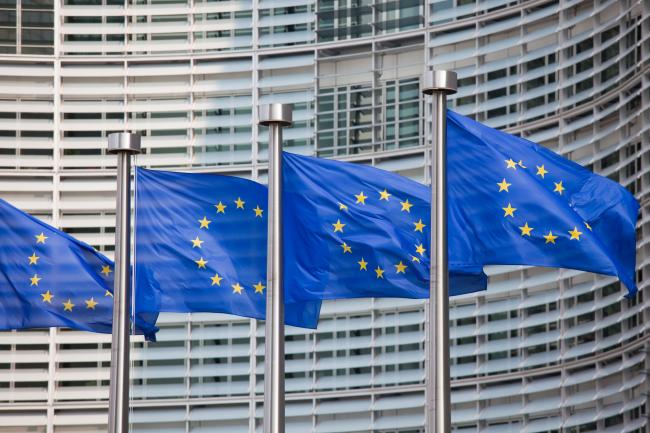
What Role Should Southern Europe Play After the Pandemic and the War in Ukraine? Towards a Shared Agenda for EU Reform
Relations between southern European member states have often been marked by a loose cooperation or, worse, by logics of competition. Precisely when regional groupings within the European Union are increasingly shaping the agenda, these dynamics have hindered the capacity of France, Greece, Italy, Portugal, and Spain to pursue shared interests and objectives, while acting as a force for good for the European integration project. Recent events such as the post-pandemic recovery or the war in Ukraine show that, when cooperation occurs, positive results can be achieved.
Europe’s Quest for Technological Power
Computing power plays a key role in enabling data analytics and machine learning, in cybersecurity, for scientific research, and in military domains like nuclear warhead design and detonation simulation.
European Economic Governance: Past Errors and Future Promises
The eurozone crisis marked a real failure of European Union (EU) policy, which led to mediocre economic performance and the erosion of its political legitimacy among the populations of member states.
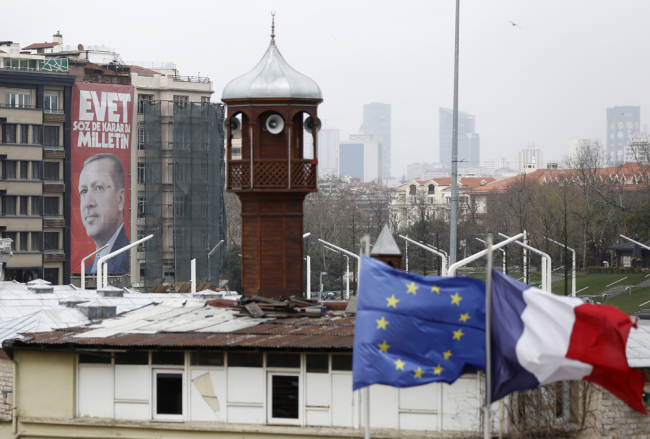
Building European Strategic Autonomy vs. Turkish Strategic Depth: Macron's Diplomatic Gamble
Since coming into office in 2017, Emmanuel Macron has been the loudest advocate for the development of European ‘strategic autonomy’, which aims at reinforcing the European Union’s geo-strategic independence. Asserting the EU’s role on the international stage, starting with its immediate neighborhood, directly clashes with Recep Tayyip Erdogan's long-term expansion strategy in several key areas.
The European Union: Caught Between the United States and China
The United States and the European Union (EU) are now both in agreement regarding China – long viewed benevolently – as a systemic rival in the international order.
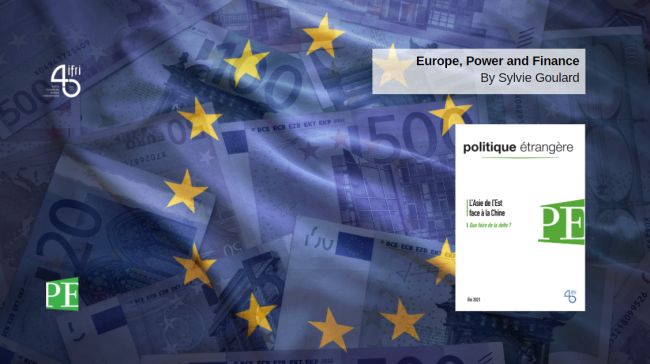
Europe, Power and Finance
Finance has become an essential attribute of power. Its importance has grown given the substantial investments needed for the energy and digital transitions as well as the need to support economies affected by the COVID-19 pandemic.
Russia’s spat with EU puts relations into deep-freeze
Kremlin stance is blow to European countries which favour outreach to Moscow. Russia’s combative treatment of the EU’s top diplomat during a landmark trip there has triggered a political outcry — but little expectation that the European bloc will end divisions over how to handle the Kremlin.

Cyprus, to be remade, must resolve some issues
Cyprus is set to be ‘remade’ in the coming years through €1 billion in grants from the European Recovery Plan, as we’ve reported here, but there are a few issues to be resolved along the way, according to EU policy experts and economists.
[...]
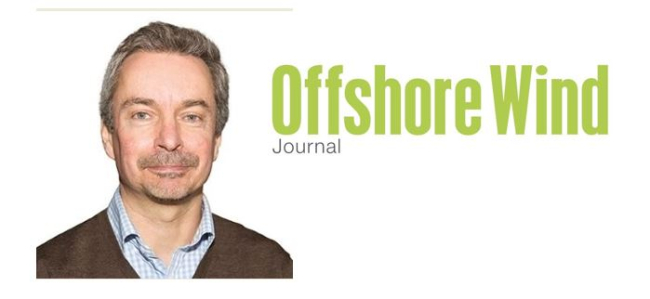
Super-synergies could arise from cross-border projects
Shared projects, shared tenders and joint R&D projects could see low-cost offshore windfarms and interconnectors criss-crossing the North Sea.

What's next for Europe after Brexit?
Vivien Pertusot was interviewed after the vote in United Kingdom in June on what the consequences of Brexit are for the future of the European Union.

French business to gain from Brexit, but Frexit menaces
Vivien Pertusot, of the international relations think tank Ifri, said the Franco-British political relationship had never been defined by the European Union but is based on bilateral interests.
A week that will define Europe
In a few days’ time, the populist conservative Boris Johnson may well be on his way to becoming British prime minister. And the radical left Podemos movement could be close to the reins of power in Spain. There is the question of what role the current EU institutions — the Commission and the Parliament — might play in a new climate infused with Euro-wariness. “There’s a realization that Europe has changed much faster than its conservative, slow-moving institutional bodies,” said Vivien Pertusot.
Read the article.
After UK: Who's next curbing social benefits?
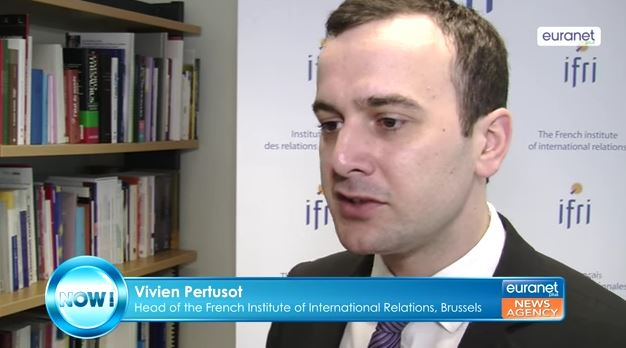
Vivien Pertusot appears in a news report by Euranet Plus looking at the section on social benefits from the deal found between the United Kingdom and the European Union.
Great-Britain Whistle-Stop Tour of the EU
The consultations on Cameron’s demands were run with the EU members by the head of the European Council, Donald Tusk from Poland. Tusk wrote down what was said and sent a letter to London and other European capitals. The letter was quite peculiar, admits Vivient Pertusot, the head of the French Institute of International Relations (IFRI) in Brussels.

Semi-Mutual Defense: Europe’s Patchwork Response to Paris Attacks
The offer of active military support to France in Syria or in the Sahel by several European member states is likely to overshadow the absence of meaningful commitment from others. On balance, the picture will not be too disheartening for supporters of the EU: its foreign and security policy apparatus will not come out damaged, but only because it has not been properly tested.
The French are looking for a fair deal for France and the EU, not just Britain
France has been ambivalent on the British renegotiation campaign. The general mood is to keep the UK in, but messages are going in different directions. Some are shrugging off the UK’s calls for reform and are not trying very hard to accommodate Westminster. Others seem keener to find an acceptable deal for Britain.
Ifri, a foundation recognized as being of public utility, relies largely on private donors – companies and individuals – to guarantee its sustainability and intellectual independence. Through their funding, donors help maintain the Institute's position among the world's leading think tanks. By benefiting from an internationally recognized network and expertise, donors refine their understanding of geopolitical risk and its consequences on global politics and the economy. In 2026, Ifri partners with over 90 French and international companies and organizations.