




Security - Defense
As a result of global strategic competition, security and defense issues are marked by the return of major wars and nuclear deterrence, the transformation of terrorism and the race for military technologies.
Related Subjects
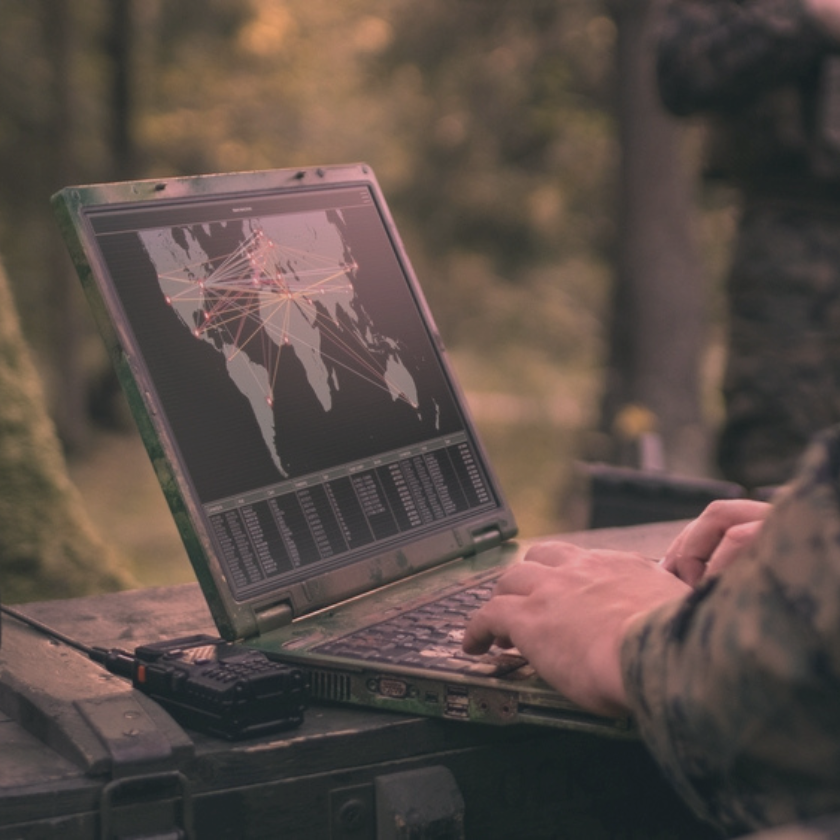
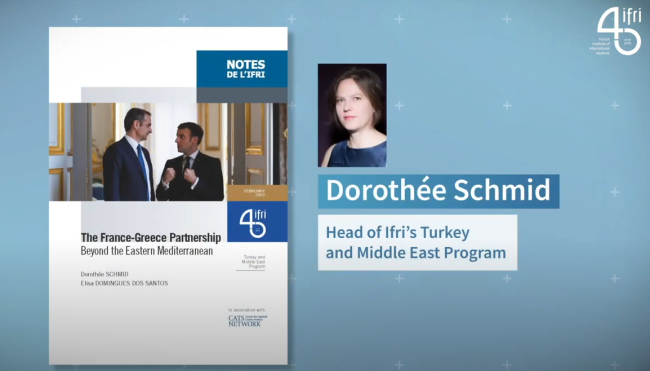
The French-Greek Partnership: Beyond The Eastern Mediterranean.
This week, Ifri, in partnership with CATS Network, is launching a series of five videos on the tensions in the Eastern Mediterranean, seen through the prism of the geopolitical rivalry between France and Turkey.
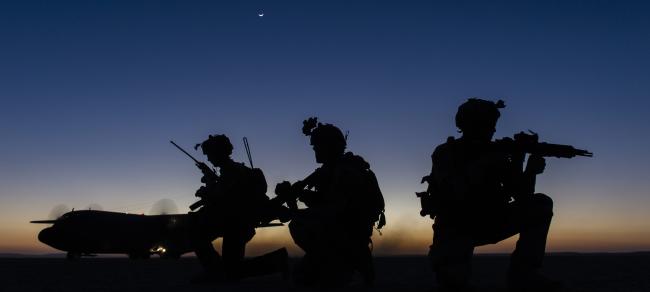
French Special Operations What Is Their Role in the Context of Great-Power Competition?
The year 2022 marks thirty years since the creation of the Commandement des operations spéciales (COS, Special Operations Command). Those three decades have been dominated by missions carried out in volatile environments, most often against irregular adversaries, primarily terrorist groups.

Technology at the Center of Geopolitical Relations
Technologies from big data to quantum computing, artificial intelligence and next-generation drones are fueling power struggles between nations and large industrial companies. Alice Pannier, head of the Geopolitics of Technology program at the French Institute of International Relations (IFRI), talks us through the impact of these new technologies, which have added a further level of complexity to the major energy issues seen in the 20th century.
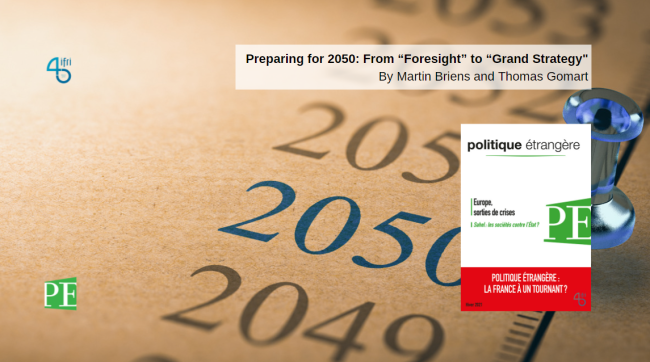
Preparing for 2050: From “Foresight” to “Grand Strategy”
China and the United States both have a “grand strategy”: Beijing aspires to be the world’s leading power in 2049, while Washington plans to remain primus inter pares.
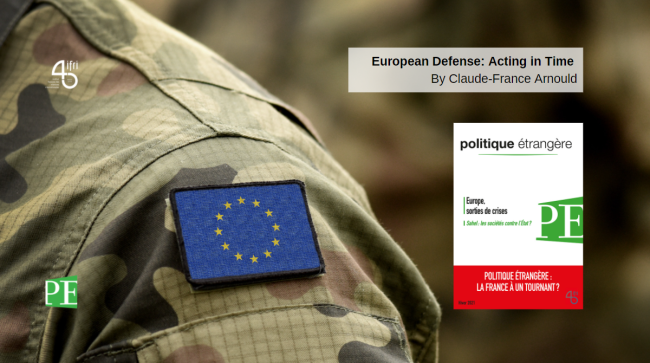
European Defense: Acting in Time
This seems like a fitting moment to strengthen European cooperation on defense.

Le cloud défense : défi opérationnel, impératif stratégique et enjeu de souveraineté
Cloud computing – or data management – is considered as one of the pillars of the digital transformation of the French Ministry of the Armed Forces.
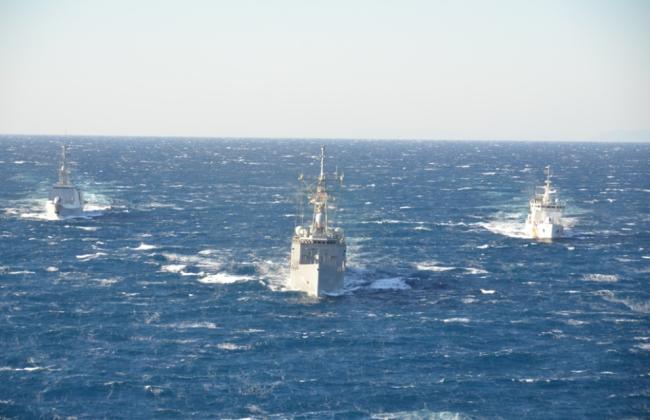
The French Military's Perception of the Turkish Military and Turkey's Expansion in the Eastern Mediterranean
In the summer of 2020, the Central and Eastern Mediterranean became the center of unusual tensions between France and Turkey. Given that these tensions were also military, which is uncommon for the two countries, the perception that the French military has of Turkey’s army and its doctrine is particularly relevant to address.
AUKUS, a Hot Topic at Beijing Xiangshan Forum Webinar 2021
BEIJING, Oct. 28 -- The 5th session of Beijing Xiangshan Forum Webinar 2021 was held on the evening of October 26 around the topic of “Strategic Stability: Impasse and Way Out”, in which the establishment of the so-called trilateral security partnership, AUKUS, by the US, Britain and Australia and their nuclear submarine cooperation were heatedly discussed.
Developments in Japan’s Defense Strategies and Readiness: Is the Glass Half Full or Half Empty?
On December 18, 2018, the Japanese government issued its latest National Defense Program Guidelines (NDPG), marking another step in Japan’s defense planning and the readiness of the Japan Self-Defense Force (JSDF).
Human Machine Teaming and the Future of Air Operations
The increasing autonomy and digitization of battlefields implies a re-examination of Man Machine Teaming (MMT). While Artificial Intelligence (AI) has significant benefits, the human cognitive system remains unique until this day. Nonetheless, as demonstrated by the “centaur” approach, man-machine teaming offers even greater potentials than the two working separately.

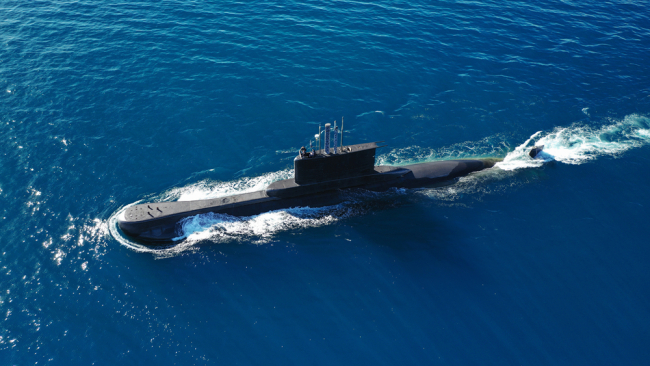
France’s submarine trouble highlights its precarious status as a great power
French admiral says US has broken a pact among nuclear powers on the UN Security Council by agreeing to sell nuclear submarines.

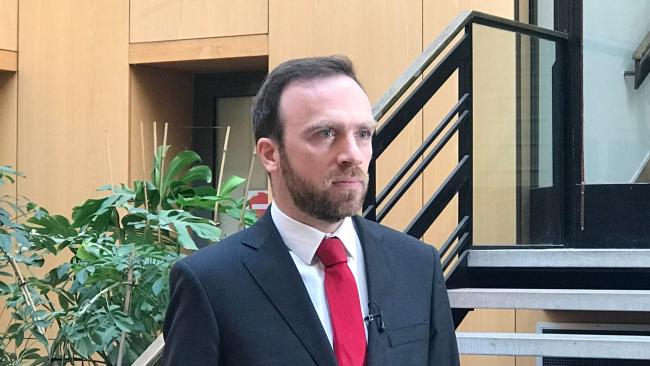
Paris attacks: Survivors hope for justice as France's biggest criminal trial in history begins
"Still now I have the images of the corpses next to my feet": Olivier Laplaud and his wife were in the Bataclan enjoying themselves amongst a crowd of 1,500 people when everything changed in an instant.
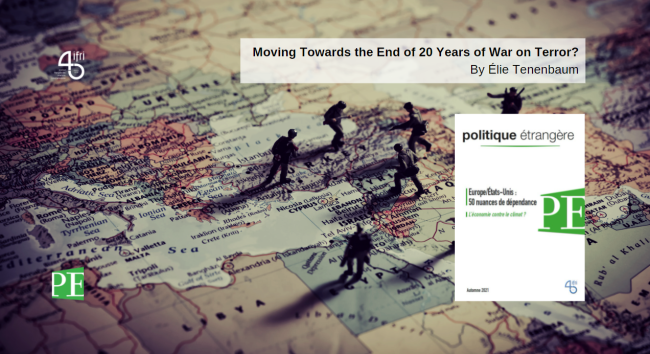
Moving Towards the End of 20 Years of War on Terror?
Twenty years after 9/11, the assessment of the “War on Terror” is mixed: heavy financial and human costs, weakening of Al-Qaeda central and the Islamic State in the Levant, but creation of affiliates in different locations, fatigue of endless wars, etc.
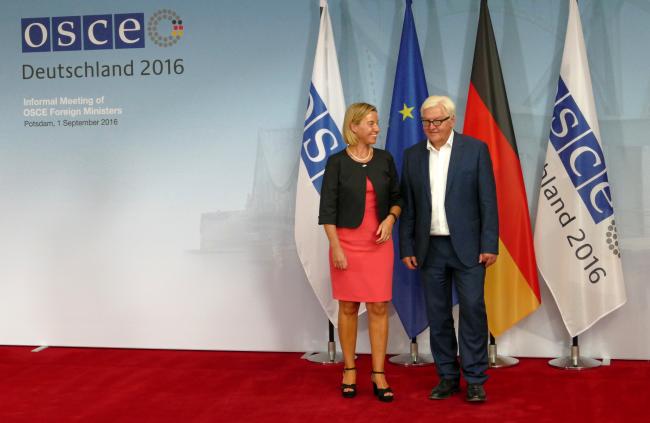
The Importance of the OSCE in German Diplomacy
As an essential platform for multilateralism, the Organization for Security and Co-operation in Europe (OSCE) has always been important to German diplomacy, although in varying degrees. Historically, Germany’s support for the Conference on Security and Co-operation in Europe (CSCE) process was motivated by the aim of mitigating and ultimately overcoming the division of Germany.

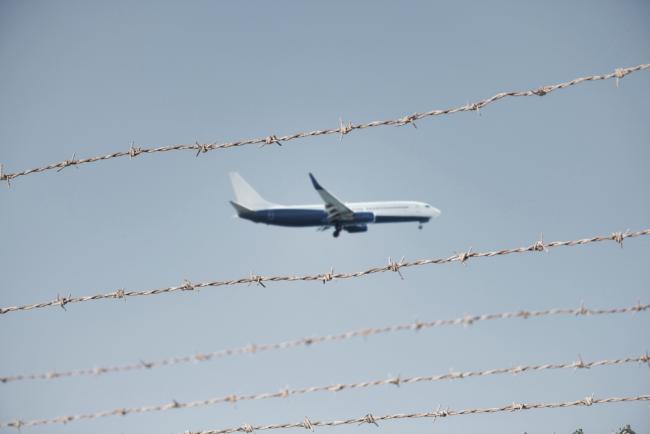
France hopes deporting more alleged radicals will bring security
France has repatriated more than half the people it defined as radical Islamists living in the country without a residence permit since 2018. Now it wants to extend the penalty and deport even more.
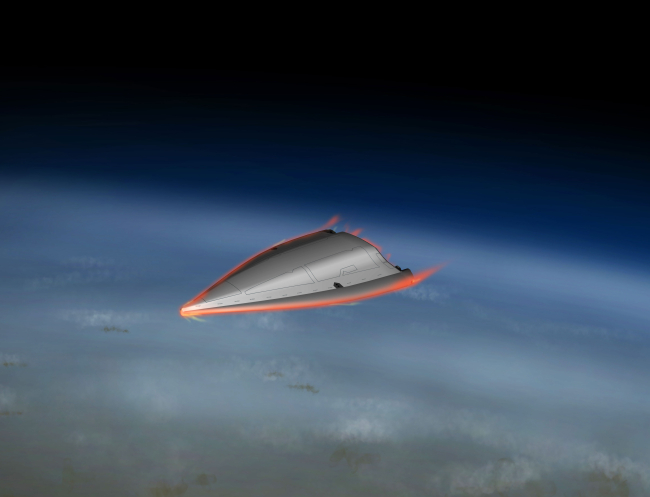
Hypersonic Weapons: What Are the Challenges for the Armed Forces?
Hypersonic systems are becoming attributes of power for the states that design and implement them, at the risk of reviving an arms race.

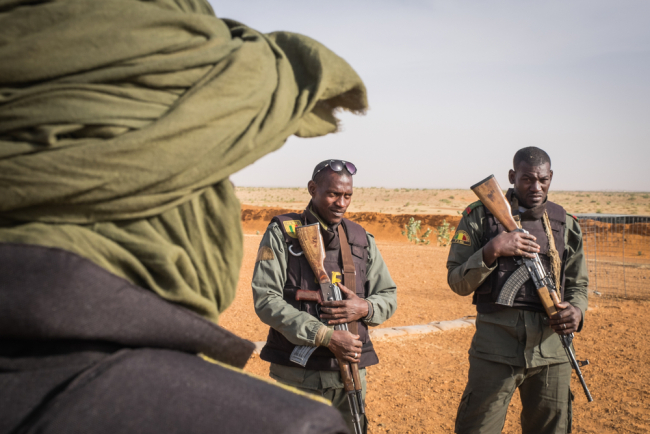
Army colonel sworn in as Mali president as tensions with Paris grow
Assimi Goïta vows to uphold republican regime and democracy in Mali.

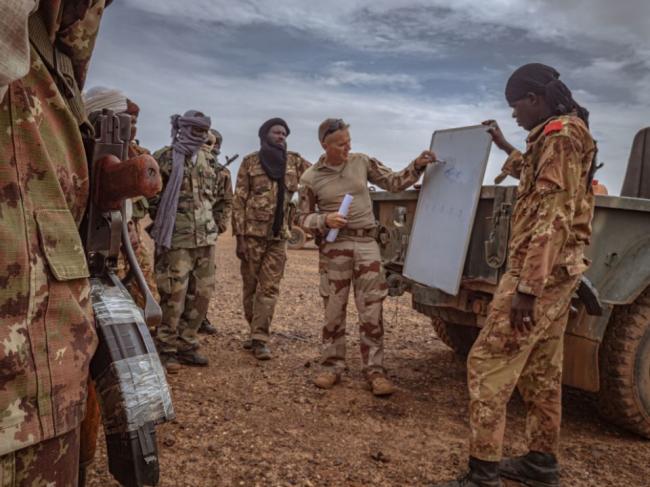
France Halts Joint Military Operations with Mali Over Coup
PARIS - France said Thursday it would suspend joint military operations with Malian forces after the West African country's second coup in nine months, adding to international pressure for the military junta to return civilians to positions of power.
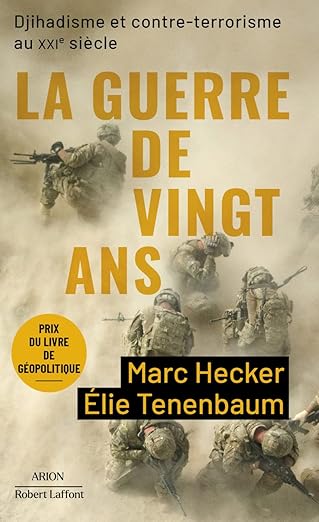
La Guerre de vingt ans. Djihadisme et contre-terrorisme au XXIe siècle
La Guerre de vingt ans was awarded the Prize for the best book on geopolitics in 2021.

Germany calls for closer cooperation with France over security threats
German Defence Minister Annegret Kramp-Karrenbauer has called for closer bilateral cooperation with France in light of the tense security situation in Europe marked by the Russian “threat”, the rise of China and spreading “Islamist terrorism” in the Sahel region.
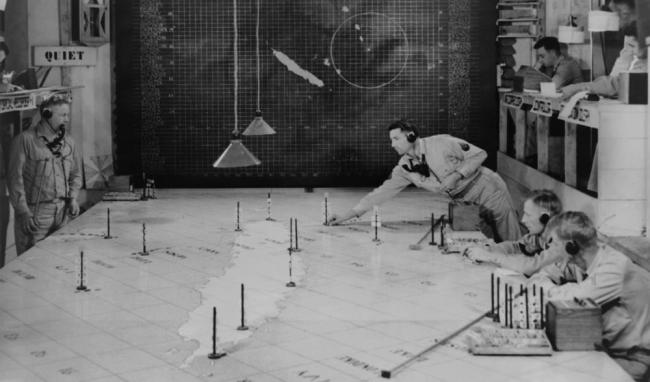
La fourmilière du général : le commandement opérationnel face aux enjeux de haute intensité
Operational command structures have always been able to adapt to the strategic context. However, they now face a new challenge: high intensity threats.
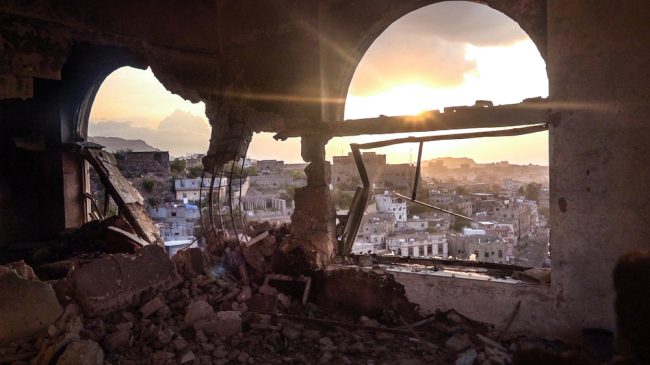
The Future of Urban Warfare in the Age of Megacities
Urbanization is a relentless trend, and as cities grow and expand, armed conflict and violence are urbanizing as well.
Wars in the Next Decade
Forecasting in areas of strategy is particularly delicate as predictions may impact the course of events. While several major trends in the evolution of conflicts during the next decade can be identified, precise forecasts are impossible. Yet one thing is certain: in the next 10 years, decision-makers face unknown risks of significant consequence.
Between Concentration and Dispersion: A Promising Future for Power Relations
The notion of power has long been a topic of study in international relations. In the coming decade, the evolution of power will be characterized by the dynamics of concentration and dispersion. On the one hand, the global system will be marked by the clash of two superpowers, the United States and China. On the other hand, capacity for individual action will proliferate through information and communication technologies.
The Franco-German Tandem: Bridging the Gap on Nuclear Issues
The Franco-German couple has long been characterized by divergent trajectories on nuclear matters, and antagonist historical decisions still frame the current relationship.
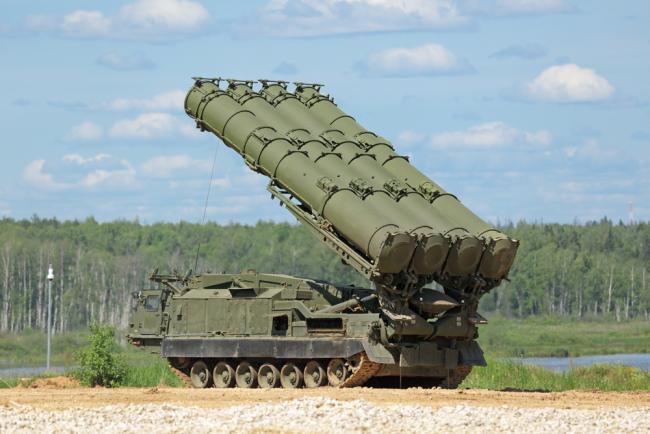
Les armées françaises face aux menaces anti-aériennes de nouvelle génération
Although it had never entirely disappeared, the surface-to-air threat was mitigated for three decades by Western air superiority. It now benefits from a modernization and dissemination momentum that will increasingly hinder expeditionary forces’ freedom of action.
The Erosion of Strategic Stability and the Future of Arms Control in Europe
The instruments of cooperative security created during and since the Cold War to foster mutual confidence and reduce the risks of war, inadvertent escalation, and arms races, in and around Europe, have come under increasing strain.
The Gulf Monarchies' Armed Forces at the Crossroads
Something is happening with the military forces of the Arab monarchies in the Gulf.
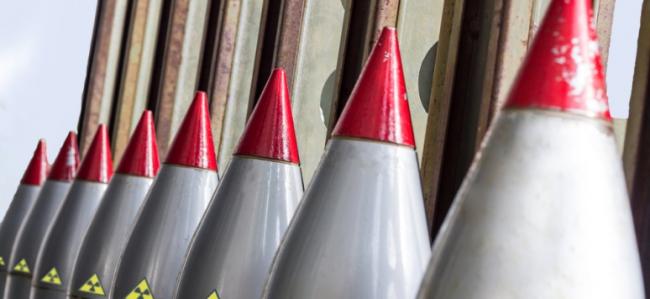
La guerre nucléaire limitée : un renouveau stratégique américain
Over the past few years, a debate on possible scenarios of limited nuclear weapons use has surfaced again in the United States. Russian nuclear saber-rattling since 2014 and the growing tensions in the Korean peninsula have led Washington to reassess its own ability to deter, or respond to, such a limited use of nuclear weapons.
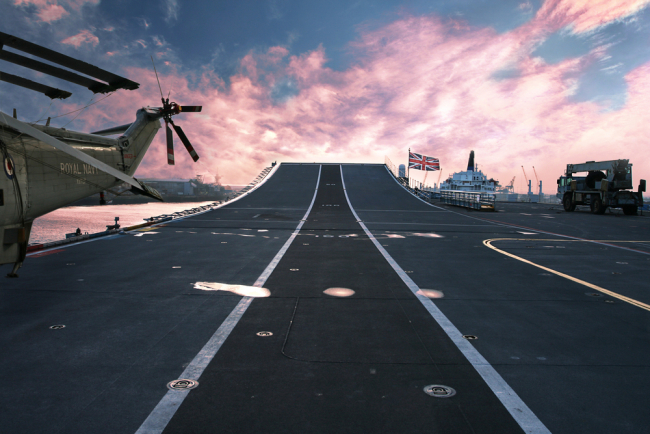
The Future of British Defense Policy
As the prospect of the United Kingdom leaving the European Union raises increasing challenges to its international position, as well as major divisions at home, the future of British defense policy seems more uncertain than ever.
Ifri, a foundation recognized as being of public utility, relies largely on private donors – companies and individuals – to guarantee its sustainability and intellectual independence. Through their funding, donors help maintain the Institute's position among the world's leading think tanks. By benefiting from an internationally recognized network and expertise, donors refine their understanding of geopolitical risk and its consequences on global politics and the economy. In 2026, Ifri partners with over 90 French and international companies and organizations.
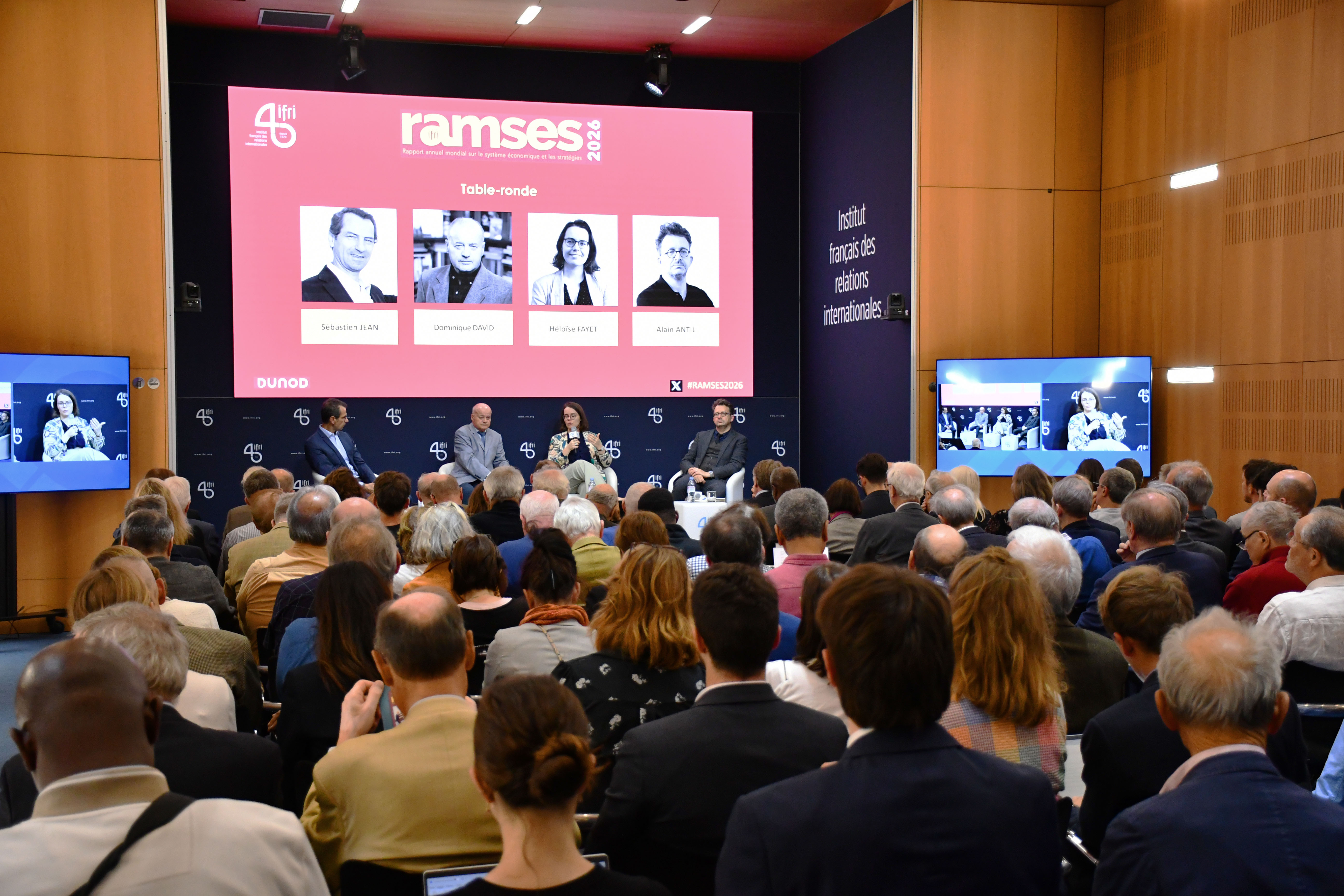
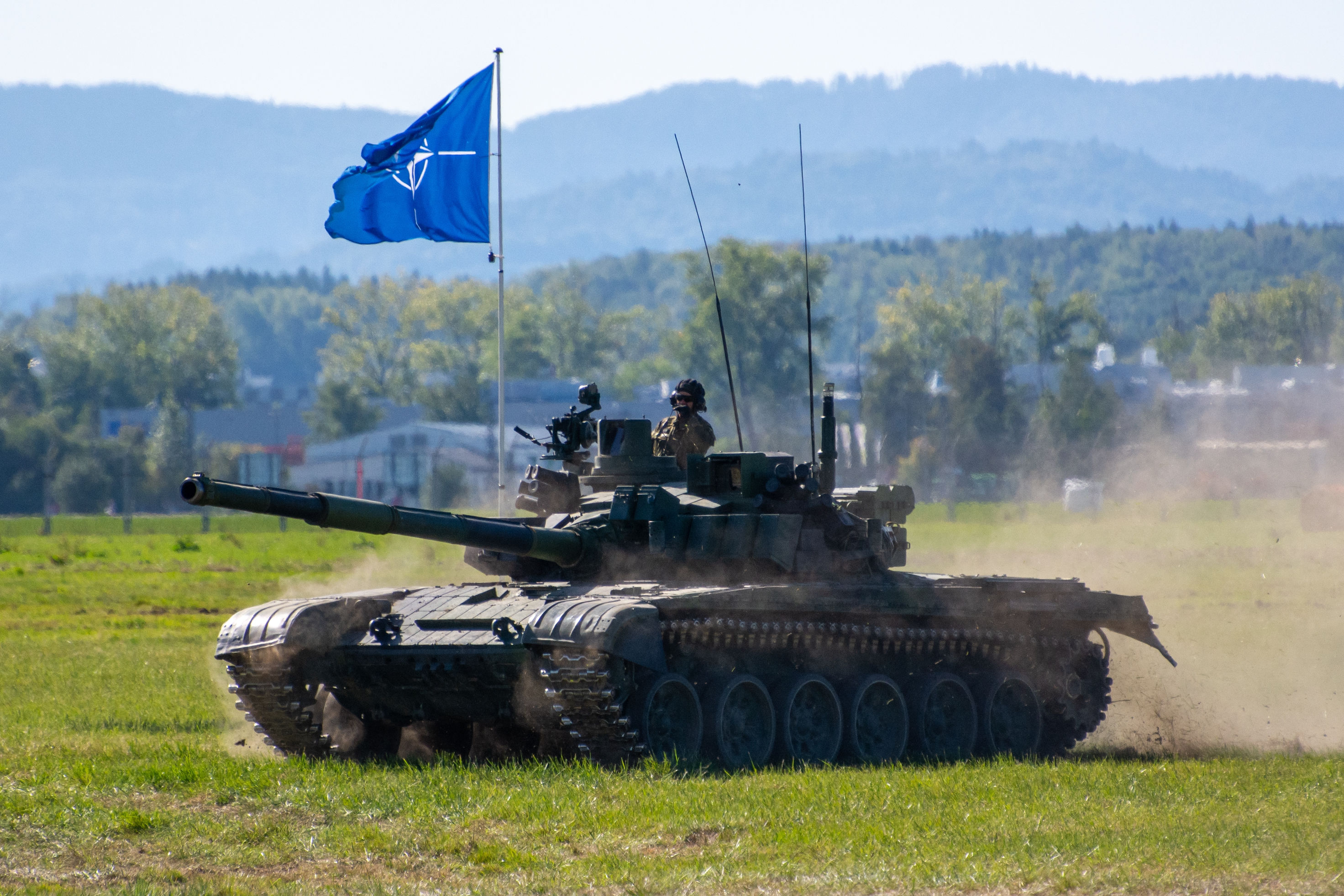
The European & Transatlantic Security Program aims to contribute to the strategic debate by developing analyses around three main axes: European defense and the security architecture of the European continent, institutional and strategic links between the Treaty Organization of North Atlantic (NATO) and the European Union (EU), as well as the evolution of the transatlantic relationship.
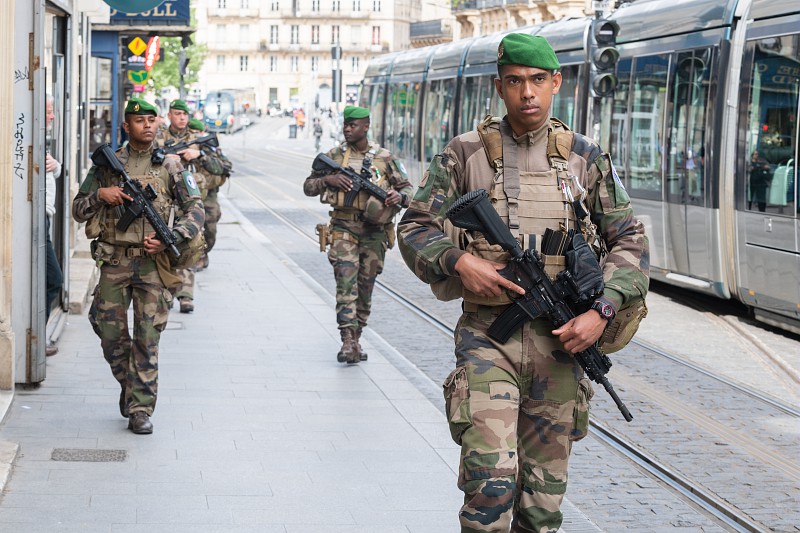
The distinction between internal and external threats is often exaggerated, as the borders are so porous. Conflicts taking place thousands of kilometers from France can have tragic resonances on national territory. Radicalization, terrorism and even organized crime have an international dimension that cannot be ignored.
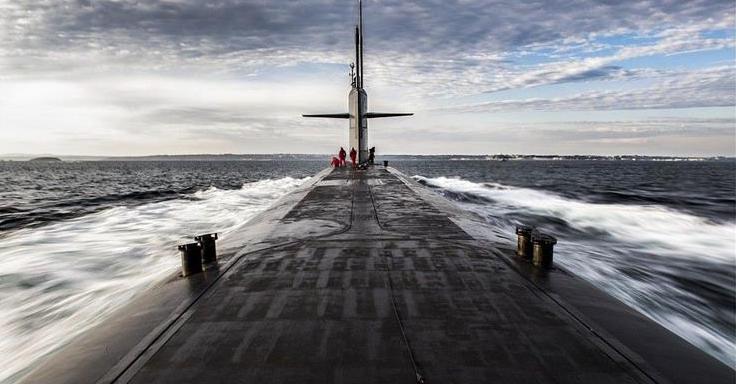
The conflicts in Europe, Asia and the Middle East demonstrate a return of nuclear power to the balance of power. Arsenals are being modernized and expanded, while arms control is collapsing. This research program aims to analyze these phenomena.
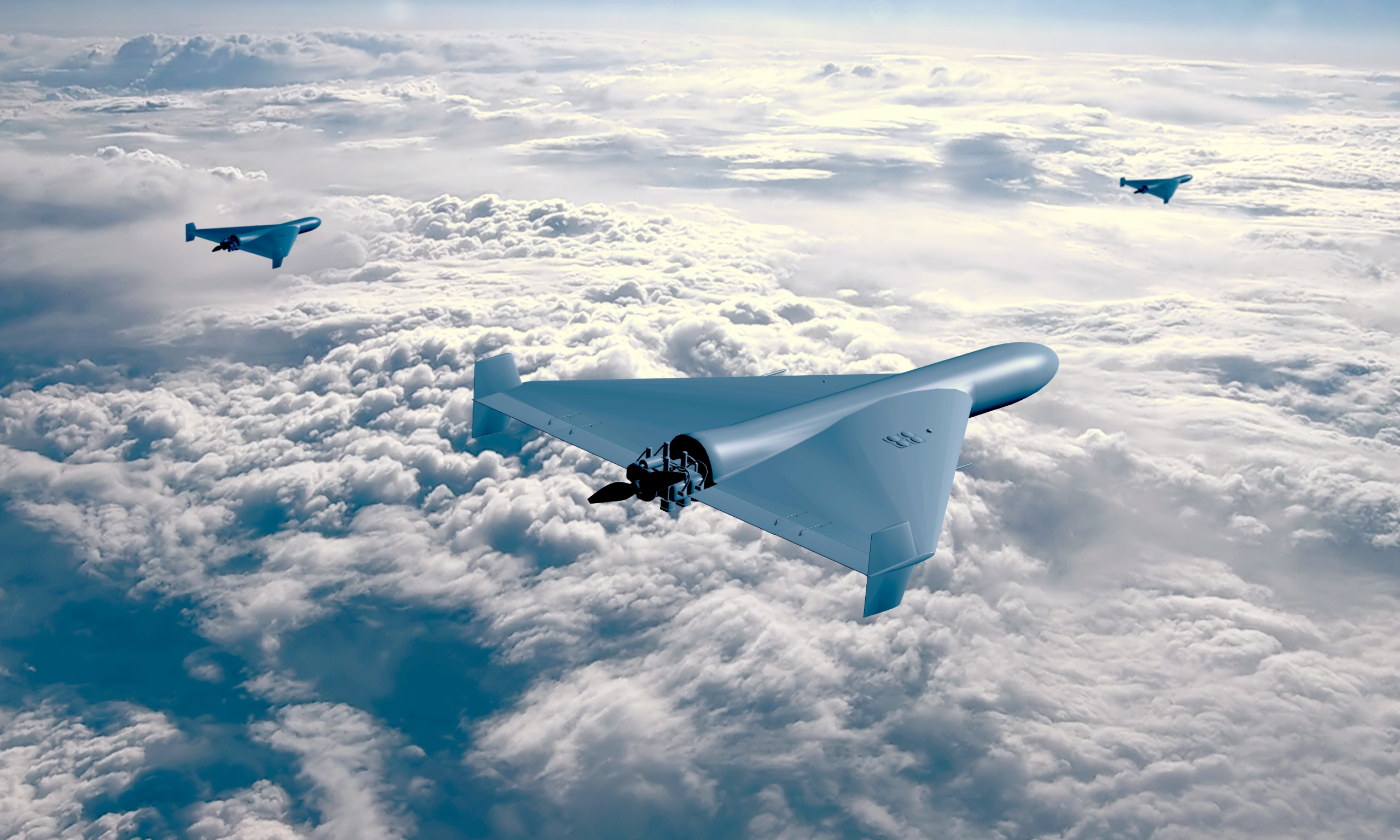
The Observatory of Future Conflicts is a research program carried out by the French Institute of International Relations and the Foundation for Strategic Research on behalf of the three army headquarters aimed at studying developments in tensions and armaments at the horizon 2040 in a transversal perspective, taking into account the issues of each army.
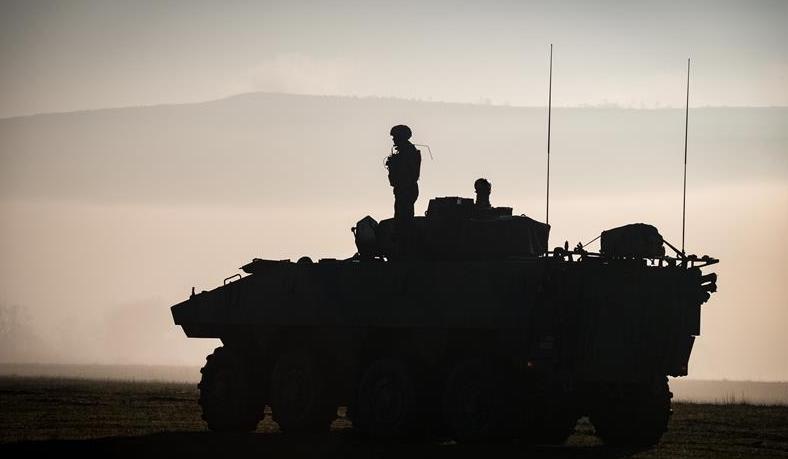
Heir to a tradition dating back to the founding of Ifri, the Security Studies Center provides public and private decision-makers as well as the general public with the keys to understanding power relations and contemporary modes of conflict as well as those to come. Through its positioning at the juncture of politics and operations, the credibility of its civil-military team and the wide distribution of its publications in French and English, the Center for Security Studies constitutes in the French landscape of think tanks a unique center of research and influence on the national and international defense debate.
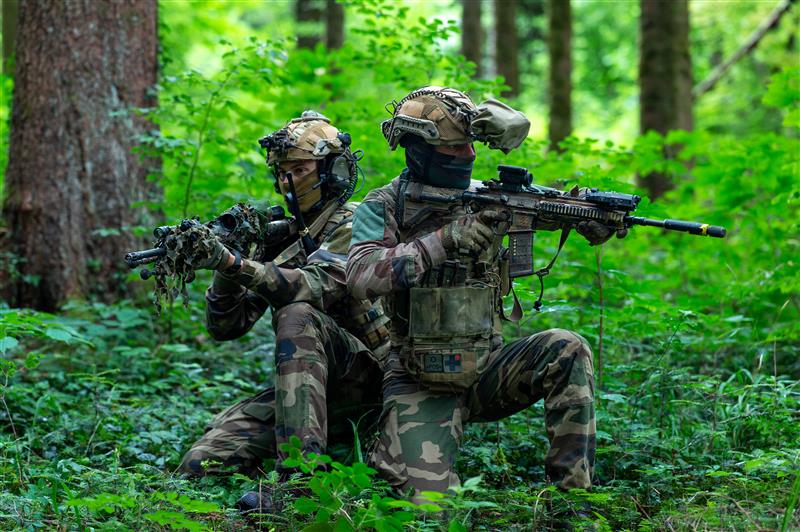
The Defense Research Unit is a program that aims at stimulating the strategic debate by dealing with subjects at the junction of the “technico-operational” and the “political-strategic”. A unique structure in France, it brings together civilian researchers and “military fellows” from each of the three armies to produce work on defense policies, the capability and strategic adaptation of armies, and foresight on tomorrow's conflicts.