







Informations pratiques
Centres et programmes liés
Ceci est un événement réservé.
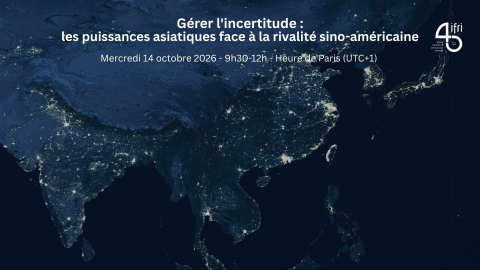
En savoir plus sur nos programmes de soutienA conference co-organised by the Asian Development Bank (ADB), the Agence Française de Développement (AFD) and the Centre asie ifri on the occasion of the publication of the last report of the ADB 'Asian Development Outlook 2006'. With the interventions of Dr. Frank Harrigan, Assistant Chief Economist, ADB and Pierre Jacquet, Chief Economist and Executive Director for Strategy, AFD, and chaired by Valérie Niquet, Director, Centre asie ifri.
Asia and the Pacific -are home to many of the world's most dynamic economies. how will they perform in 2006? What are the issues that will impact growth in Asia? How can the countries of Asia maximise their growth and development? These are some of the issues discussed in Asia Development Outlook 2006 (ADO 2006), the Asian Development Bank's flagship economic publication.
The annual Asian Development Outlook provides a comprehensive economic analysis of 42 economies in developing Asia and the Pacific. On the basis of the Asian Development Bank's unique knowledge of the region, the edition overviews aggregate trends and medium-term prospects by sub-region: East Asia, Southeast Asia, South Asia, Central Asia, and the Pacific, in the context of global economic movements.
A special chapter of ADO 2006 will examine the future of trade in Asia. In recent years, technological change, markets and the private sector, particularly mutinational firms, have been crucial in deepening economic integration in Asia and driving trade. But now a proliferation of "free trade arrangements" is creating a "noodle bowl" of deals that criss-crosses regions. A proliferation of bilateral agreements that descriminate against third parties and that require convoluted and costly implementation rules have the potential to divert trade and to polarize opportunities, with the smallest, poorest countries losing out. Recognizing that global free trade is an ideal but possibly unrealistic ambition, the chapter asks what developing Asia can do to position itself to maximise the future benefits of trade.
The Conference will be held in English.
Autres événements

À un mois des midterms, où va l’Amérique de Donald Trump ?
La 24e édition de la Conférence annuelle du programme Amériques de l'Ifri analysera les dynamiques à l’œuvre aux États-Unis et leurs conséquences pour l'Europe et la relation transatlantique.
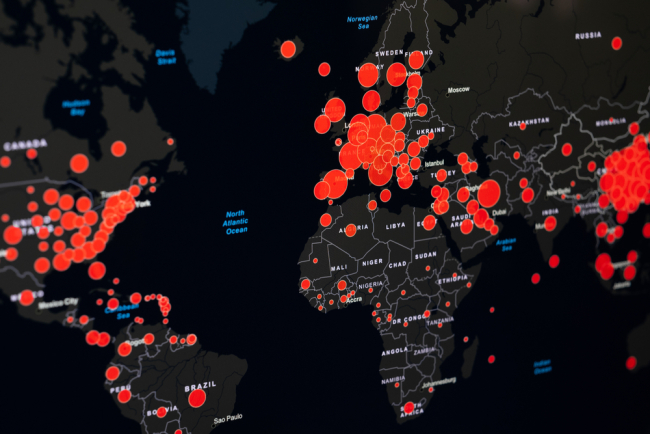
Pandémies et maladies infectieuses : que peut la communauté internationale ?
Tandis que les tensions internationales s’aiguisent et que le monde risque de se fracturer en blocs géopolitiques, pandémies et maladies infectieuses continuent de se développer. Des facteurs comme la multiplication des guerres ou le dérèglement climatique ne font qu’aggraver la situation.

Forum France-Ukraine 2026
Plus de quatre ans et demi après le début de la guerre à grande échelle déclenchée par la Russie contre l’Ukraine, le Forum France-Ukraine 2026 accueillera des responsables politiques, des experts, des universitaires et des représentants de la société civile des deux pays pour échanger autour de trois sujets principaux : les formats et conditions d'un règlement diplomatique durable ; l'intégration euro-atlantique de l'Ukraine, entre processus d'adhésion à l'UE et rapprochement avec l'OTAN ; et les transformations sociétales de l'Ukraine d'après-guerre ainsi que ses perspectives de reco