


Transforming Asia: What impact of international politics and grand strategies on regional stability?

Informations pratiques
Centres et programmes liés
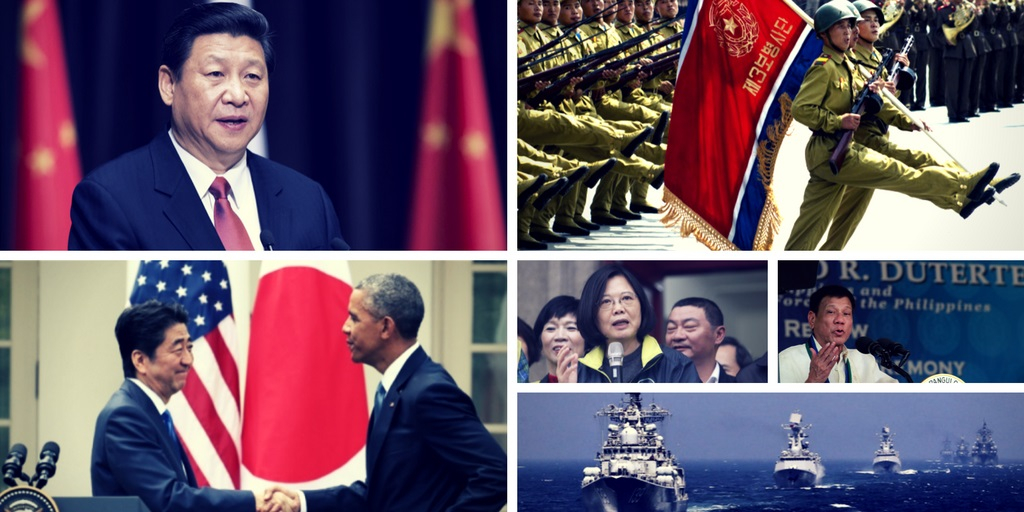
As the regional balance of power in East Asia continues to evolve and tensions in a number of hot spots - from the East and South China Seas to the Korean Peninsula and the Taiwan Strait - either simmer or intensify, the future of regional stability is increasingly uncertain. Within this context, the region's major players - in particular China and the United States - have in recent years developed grand strategies that could either prove sources of greater stability, or of division and further tension. This conference will call upon experts from throughout East Asia to offer their analyses on the risks and the ways forward. Furthermore, it will look at how France and Europe more broadly define and seek to promote their interests in an increasingly tumultuous region.
How international politics and grand strategies can impact on regional stability?
This question was asked to four of the speakers who participated in the annual conference of the Ifri's Center for Asian Studies.
- Renato C. de CASTRO's point of view (Professor and Charles Lui Chi Keung Chair in China Studies, De La Salle University, Manila, Philippines).
- Shingo YAMAGAMI's point of view (Director General (Acting), Japan Institute of International Affairs (JIIA), Tokyo, Japan).
- Renwei HUANG's point of view (Vice President and Research Professor, Shanghai Academy of Social Sciences, Shanghai, China).
- Kao-cheng WANG's point of view (Professor, Graduate Institute of International Affairs and Strategic Studies, and Dean, School of International Studies, Tamkang University, Taipei, Taiwan).
Welcoming Remarks:
09:45-10:15
- Thomas GOMART, Director of Ifri
- Alain RICHARD, Senator, Val-d’Oise (Ile-de-France), former Minister of Defense of France
- Ming-zhong ZHANG, Representative, Taipei Representative Office in France
Morning Session
Discussion on key developments in Asian regional affairs and geopolitics
10:15-12:15
-
Renato C. de CASTRO, Professor and Charles Lui Chi Keung Chair in China Studies, De La Salle University, Manila
-
Renwei HUANG, Vice President and Research Professor, Shanghai Academy of Social Sciences, Shanghai
-
Heungho MOON, Dean of the Graduate School of International Studies, and Director of Institute of Chinese Studies, Hanyang University, Seoul
-
Kao-cheng WANG, Professor, Graduate Institute of International Affairs and Strategic Studies, and Dean, School of International Studies, Tamkang University, Taipei
-
Shingo YAMAGAMI, Director General (Acting), Japan Institute of International Affairs (JIIA), Tokyo
Interactive discussion led by François PICARD, Host/Presenter of The Debate for France 24
Lunch break
12:15-13:45
Afternoon sessions
chaired by Françoise Nicolas, Director, Center for Asian Studies, Ifri
Panel 1. Europe and Asia’s stability
13:45-15:15
Discussion on competing grand strategies in Asia and how France and Europe formulate diplomacy towards the region in a context of rising tension, instability and a shifting regional balance of power
-
Gudrun WACKER, Senior Fellow, Asia Research Division, German Institute of International and Security Affairs (SWP)
-
Frédéric LAPLANCHE, Counselor for Asia and the Americas to the Minister of Foreign Affairs and International Development, France
-
Michael REITERER, Senior Advisor, Asia-Pacific Department, European External Action Service (EEAS)
Panel 2. Taiwan after the elections – Cross-strait and regional impacts
15:30-17:00
-
Alice EKMAN, Research Fellow, Head of China Research, Center for Asian Studies, Ifri
-
Kao-cheng WANG, Professor, Graduate Institute of International Affairs and Strategic Studies, and Dean, School of International Studies, Tamkang University
-
Chih-chung WU, Professor, Department of Political Science, Taiwan Soochow University
Sujets liés
Autres événements
À un mois des midterms, où va l’Amérique de Donald Trump ?
La 24e édition de la Conférence annuelle du programme Amériques de l'Ifri analysera les dynamiques à l’œuvre aux États-Unis et leurs conséquences pour l'Europe et la relation transatlantique.
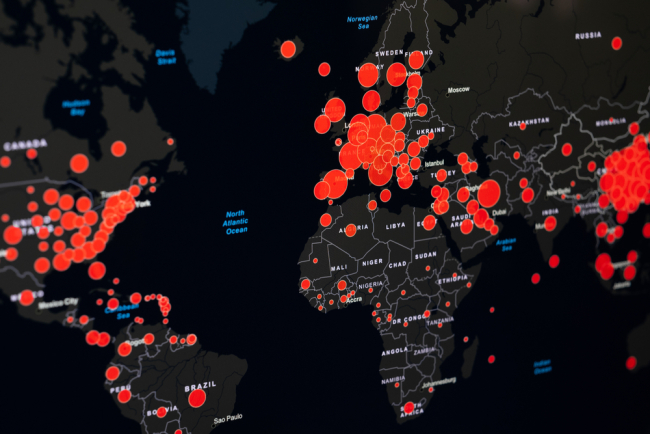
Pandémies et maladies infectieuses : que peut la communauté internationale ?
Tandis que les tensions internationales s’aiguisent et que le monde risque de se fracturer en blocs géopolitiques, pandémies et maladies infectieuses continuent de se développer. Des facteurs comme la multiplication des guerres ou le dérèglement climatique ne font qu’aggraver la situation.
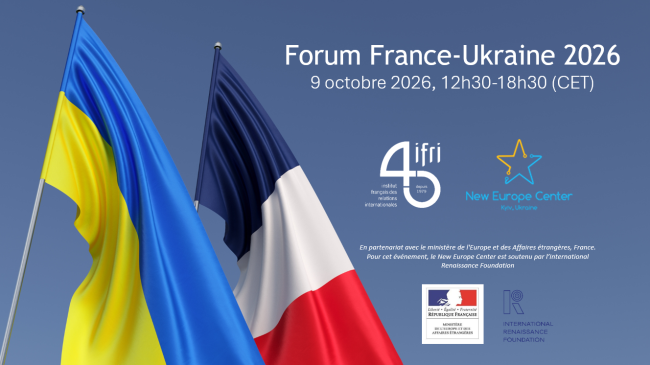
Forum France-Ukraine 2026
Plus de quatre ans et demi après le début de la guerre à grande échelle déclenchée par la Russie contre l’Ukraine, le Forum France-Ukraine 2026 accueillera des responsables politiques, des experts, des universitaires et des représentants de la société civile des deux pays pour échanger autour de trois sujets principaux : les formats et conditions d'un règlement diplomatique durable ; l'intégration euro-atlantique de l'Ukraine, entre processus d'adhésion à l'UE et rapprochement avec l'OTAN ; et les transformations sociétales de l'Ukraine d'après-guerre ainsi que ses perspectives de reco