





Security - Defense
As a result of global strategic competition, security and defense issues are marked by the return of major wars and nuclear deterrence, the transformation of terrorism and the race for military technologies.
Related Subjects


La prueba nuclear norcoreana refuerza el papel de EE UU en Asia
Corea del Norte ha tratado esta semana de aumentar la presión para ser reconocida como una potencia nuclear con la prueba del pasado miércoles en la que aseguraba que empleó una bomba de hidrógeno. Y ha introducido un nuevo elemento en el gran juego de alianzas estratégicas y comerciales que Estados Unidos y China disputan en el siglo XXI en Asia, un tablero de ajedrez que representa el 38,8% del PIB mundial. La prueba nuclear ha dejado en evidencia la falta de control de Pekín sobre Pyongyang y ha reforzado el papel de Washington como garante de la seguridad en la región.
Hybrid Warfare in the Strategic Spectrum: an Historical Assessment
"Hybrid Warfare" is a fashionable concept, but in order fo it to be really relevant, it has to be visualized within the whole strategic spectrum.
Après Paris et San Bernardino, le terrorisme dans le débat américain
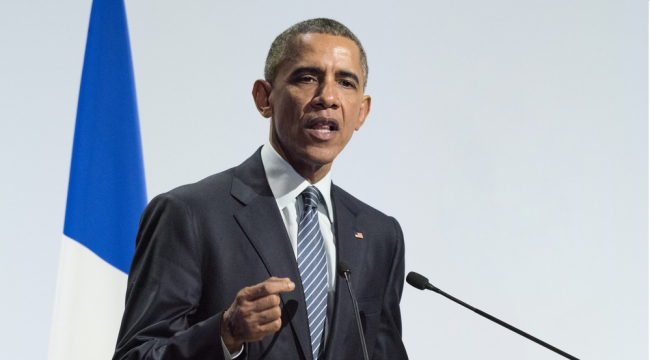
Both the Paris attacks and the San Bernardino shooting reopened the wound of terrorism in the United States. Although President Obama has not shifted his stance or his strategy on the issue, public opinion is worried and populist rhetoric is ever more present in the campaign for the 2016 election.
De-radicalization and the Prevention of Radicalization in Germany, Great Britain and Denmark
To date, a few thousand Europeans have left Europe to join jihadi fighters in Syria and Iraq. Several hundreds of them have already returned. To deal with this phenomenon, some countries have developed radicalization prevention and de-radicalization programs.
War’s Indirection or the Return of the Limited War
Over the last few years both the United States and Russia seem to have changed their conception of how to deploy force.
The ICTY Story: A Clear Failure?
Established to hold trials for crimes committed during the Yugoslav wars in the 1990s, the International Criminal Tribunal for the former Yugoslavia (ICTY) has vacillated between its punitive purpose and writing the history of this period.
Sweden's Nato Workaround: Swedish security and defense policy against the backdrop of Russian revisionism
Russia’s revisionist foreign policy and military build-up has considerable security implications for the Baltic Sea region, including for Sweden.

Before Paris Attack, the Bataclan Had Long History in Music and Politics
PARIS — Crowds gathered on Monday to place flowers and candles and pay their respects to the 89 people killed at the Bataclan, as speculation swirled about why the legendary music hall was the target of the most brutal of the terrorist attacks on Friday.
Cross-Domain Coercion: The Current Russian Art of Strategy
This paper traces the evolution of Russian views on the art of coercion, and on the role of nuclear weapons in it, from the post-Cold War “regional nuclear deterrence” thinking to the current “Gerasimov Doctrine”.
Le piège de la guerre hybride
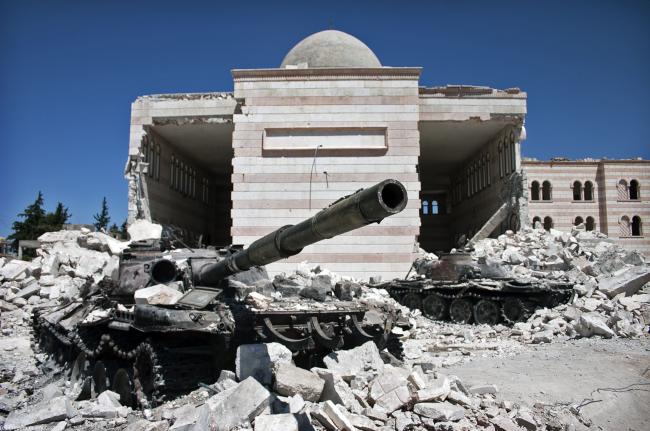
Since its inception in the mid-2000s, hybrid warfare has become a fashionable concept among Western strategic community. However, it lacks a clear definition and, if loosely used, could lead to possibly dangerous misunderstandings.
Guerre de l'information : le web russe dans le conflit en Ukraine
Since the beginning of the crisis in Ukraine, Russia has been waging an information war that reflects its perception of its relationship towards the West as being that of a state of permanent conflict which needs the use of alternative tools to weaken both the enemy’s will and the capabilities.
Defending Europe? A stocktaking of French and German Visions for European Defense
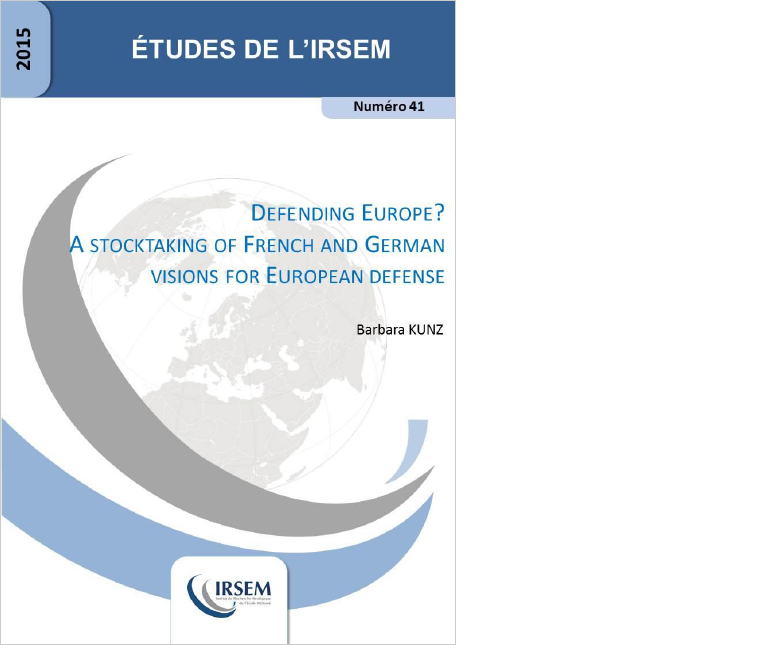
The aim of this study consists of taking stock of strategic thinking in France and Germany. More concretely, it intends to identify compatible and incompatible aspects, as well as the potential for compromise, in these national considerations on the future of CSDP and NATO. In so doing, it concentrates on five issues: strategic visions, threat perception and military doctrine; the institutional framework for European defense; military interventions; capabilities as well as the industrial dimension.
Guerre de l'information : le web russe dans le conflit en Ukraine
Since the beginning of the crisis in Ukraine, Russia has been waging an information war.
Going Tactical: Pakistan’s Nuclear Posture and Implications for Stability
For decades, the Asian security environment has been characterized by multiple strategic rivalries with cascading effects.
Maîtriser la puissance de feu. Un défi pour les forces terrestres
Over the last few decades, in order to limit the risk of collateral damage, tailoring the effects of firepower has become a main concern for Western armed forces.

The defense posture of China
Alice Ekman comments the defense posture of China as Beijing is holding a large military parade on September 3rd.

La cyberguerre des gangs aura-t-elle lieu ?
Gangs have relied on cyberspace to evolve. New information technologies have allowed them to speed up and globalize their operations.
L'opération Serval à l'épreuve du doute : vrais succès, fausses leçons
The deployment of French forces to Mali in January 2013 with the objective to counter the offensive of jihadist groups from Northern Mali, demonstrated the French armed forces’ ability to deploy on a very short notice and to conduct a long-distance expeditionary operation by themselves in spite of their limited strategic capabilities.
Thinking and Anticipating the Socio-Economic Impacts of the Humanitarian Response in the Central African Republic
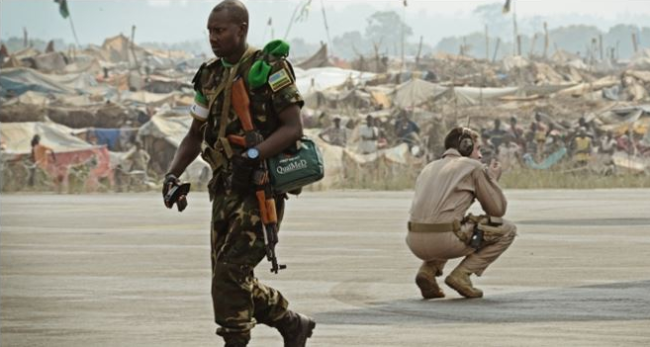
Nowadays, the Central African Republic (CAR) is a country dependent on international aid.
Activists Without Borders
Various associations organise trips to Israel and/or to the Palestinian Territories. Someone who has no previous knowledge of the Near East and who takes part in a journey organised by a pro-Israeli group, would return to France with a very different vision of the Israeli-Palestinian conflict to that of someone who had travelled with a pro-Palestinian group.
For more information concerning the complete work, please click on this link.
Dangerous Weapons in Dangerous Hands: Responding to the Challenges of Chemical and Biological Terrorism
The World After: Proliferation, Deterrence and Disarmament if the Nuclear Taboo is Broken
Candide in Congo. The Expected Failure of Security Sector Reform (SSR)
Strategic Stability Reconsidered: Prospects for Escalation and Nuclear War in the Middle East
The Evolution of the North Korean Nuclear Crisis: Implications for Iran
President-elect Obama and Nuclear Disarmament: Between Elimination and Restraint
Ifri, a foundation recognized as being of public utility, relies largely on private donors – companies and individuals – to guarantee its sustainability and intellectual independence. Through their funding, donors help maintain the Institute's position among the world's leading think tanks. By benefiting from an internationally recognized network and expertise, donors refine their understanding of geopolitical risk and its consequences on global politics and the economy. In 2026, Ifri partners with over 90 French and international companies and organizations.

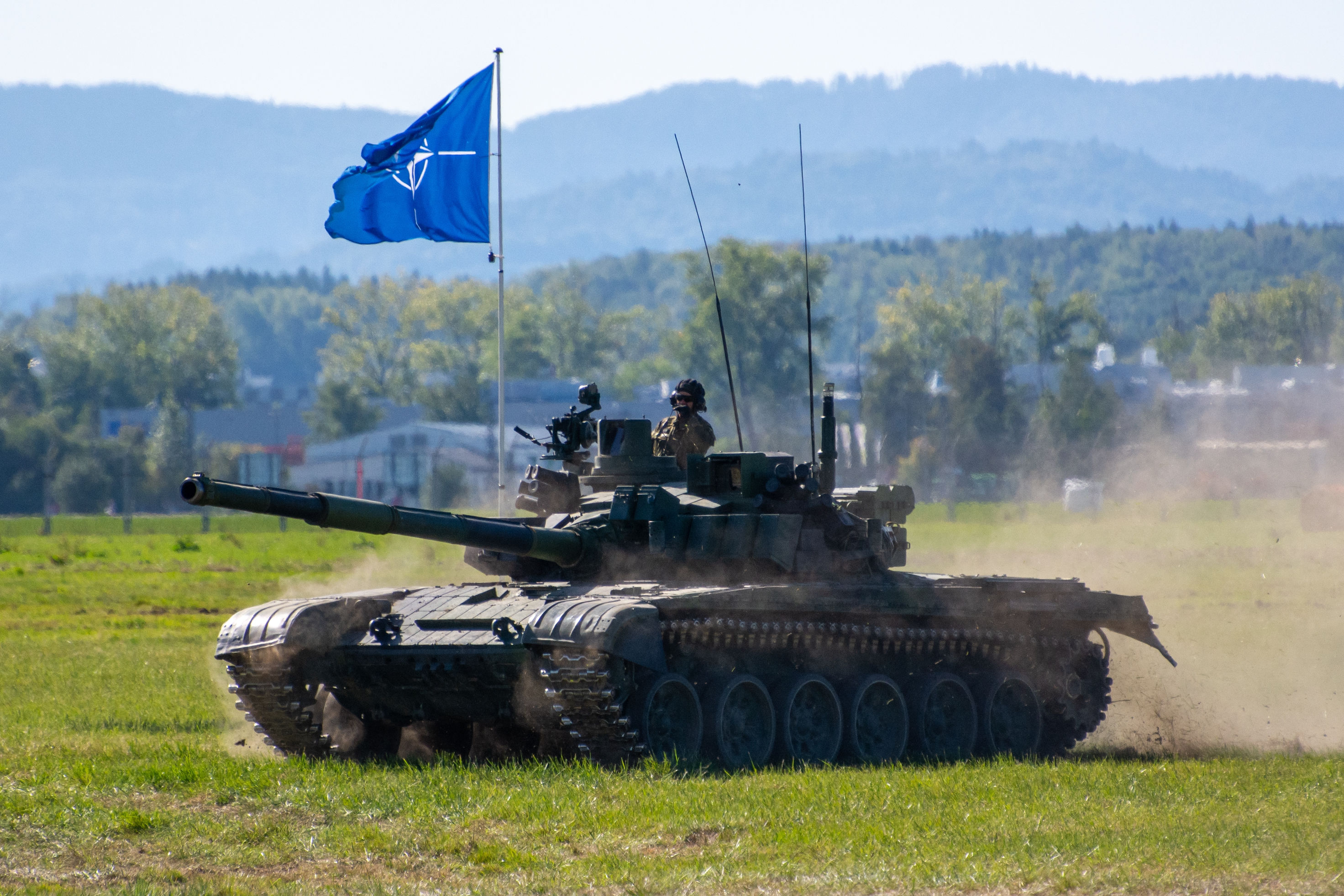
The European & Transatlantic Security Program aims to contribute to the strategic debate by developing analyses around three main axes: European defense and the security architecture of the European continent, institutional and strategic links between the Treaty Organization of North Atlantic (NATO) and the European Union (EU), as well as the evolution of the transatlantic relationship.
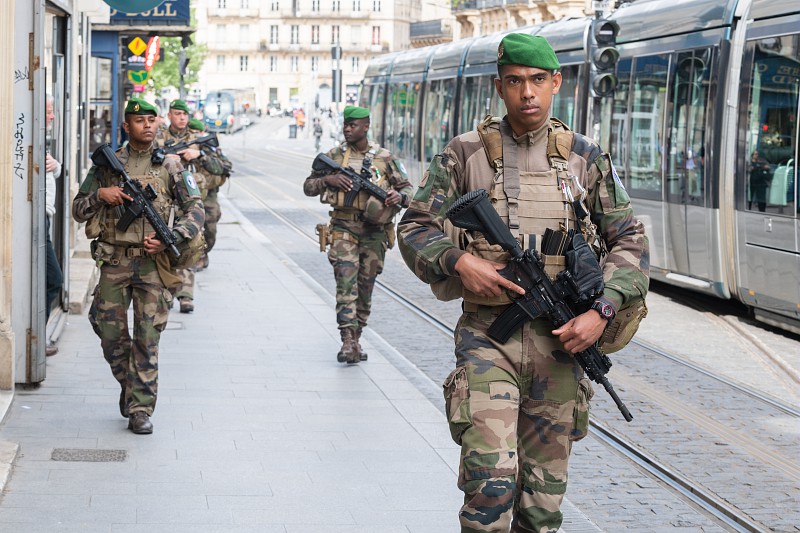
The distinction between internal and external threats is often exaggerated, as the borders are so porous. Conflicts taking place thousands of kilometers from France can have tragic resonances on national territory. Radicalization, terrorism and even organized crime have an international dimension that cannot be ignored.
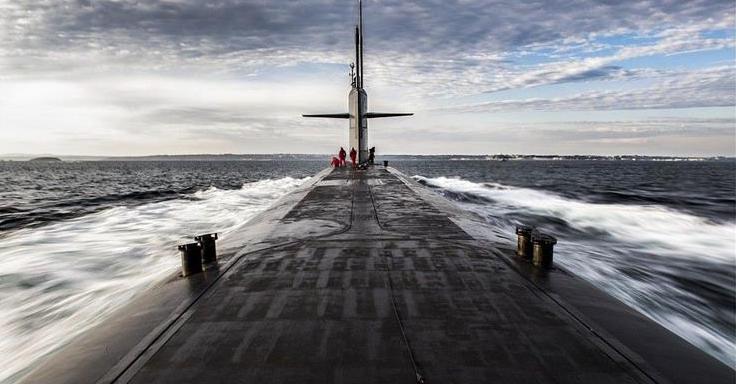
The conflicts in Europe, Asia and the Middle East demonstrate a return of nuclear power to the balance of power. Arsenals are being modernized and expanded, while arms control is collapsing. This research program aims to analyze these phenomena.
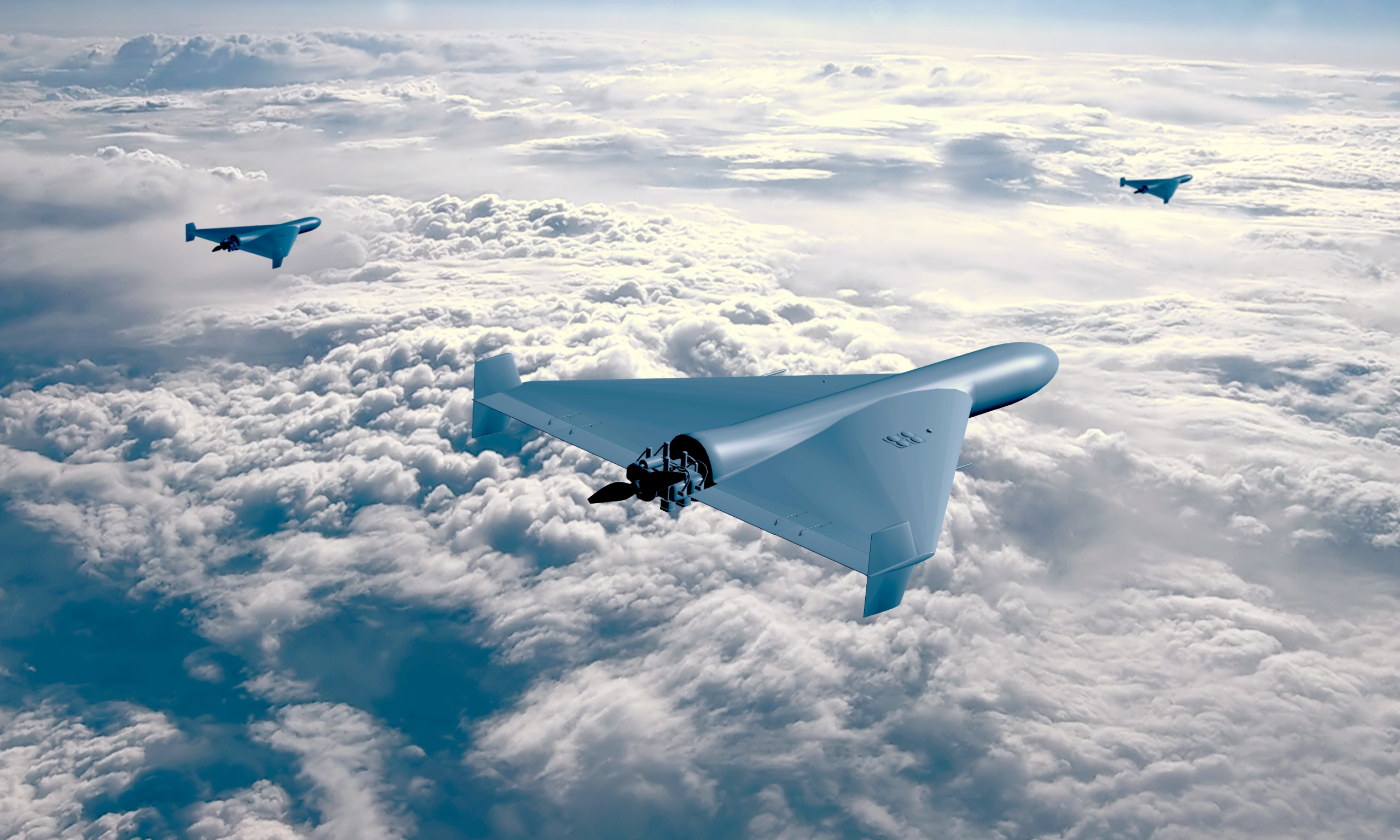
The Observatory of Future Conflicts is a research program carried out by the French Institute of International Relations and the Foundation for Strategic Research on behalf of the three army headquarters aimed at studying developments in tensions and armaments at the horizon 2040 in a transversal perspective, taking into account the issues of each army.
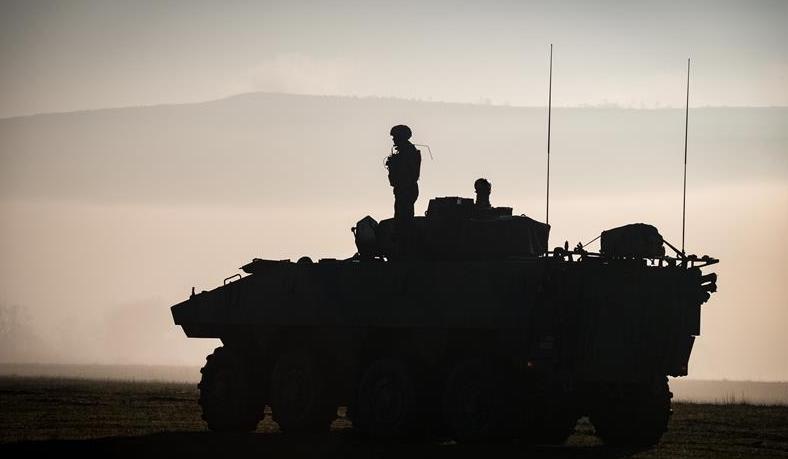
Heir to a tradition dating back to the founding of Ifri, the Security Studies Center provides public and private decision-makers as well as the general public with the keys to understanding power relations and contemporary modes of conflict as well as those to come. Through its positioning at the juncture of politics and operations, the credibility of its civil-military team and the wide distribution of its publications in French and English, the Center for Security Studies constitutes in the French landscape of think tanks a unique center of research and influence on the national and international defense debate.
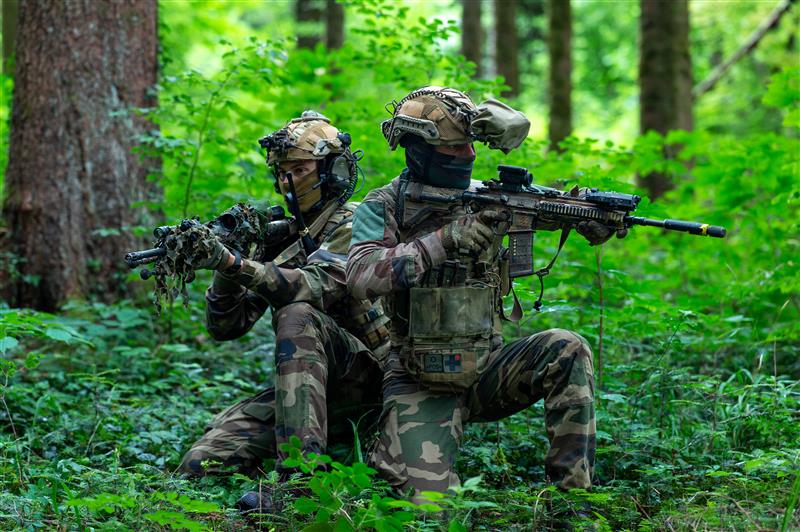
The Defense Research Unit is a program that aims at stimulating the strategic debate by dealing with subjects at the junction of the “technico-operational” and the “political-strategic”. A unique structure in France, it brings together civilian researchers and “military fellows” from each of the three armies to produce work on defense policies, the capability and strategic adaptation of armies, and foresight on tomorrow's conflicts.