


Informations pratiques
Centres et programmes liés
Ceci est un événement réservé.
En savoir plus sur nos programmes de soutienSeminar with Ian Holliday, Professor, Department of Politics and Public Administration, The University of Hong Kong
Discussant: Sophie Boisseau du Rocher, lecturer at Sciences Po Paris, associate researcher with the IRASEC in Bangkok and ISEAS in Singapour, and an independent consultant specializing in Southeast Asian affairs
Chair: John Seaman, Research Fellow, Center for Asian Studies, Ifri
In “Freedom from Fear”, published in 1991, Aung San Suu Kyi made a passionate plea for her country and its people to be liberated from tyranny. Two decades on, in 2011, Myanmar"s long-standing military junta finally did give way to a nominally civilian government, and soon thereafter the terrain of liberal freedom unquestionably expanded. Yet today there is still fear in Myanmar. Partly, it is vertical: ongoing fear of the state and its agents. Partly, it is horizontal: resurgent fear of society and the institutions, associations and identities that constitute it. Partly, it is in some sense inbred: deep-seated fear as a habit of mind after decades of dictatorship. The talk will consider how Myanmar"s unfolding reform process is extending freedom across the land, and at the same time how it might address prevalent fear. Drawing chiefly on Judith N. Shklar"s liberalism of fear, Jacob T. Levy"s multiculturalism of fear and Václav Havel"s writings on hope and fear, it will examine the policy implications of a political agenda premised above all on freedom from fear in Myanmar. It will contrast this agenda with two competing approaches driven by promotion of human rights, and pursuit of economic development.
Brief bio
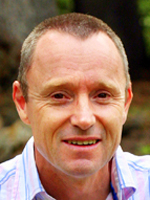
Ian Holliday"s research focuses on political reform in Myanmar. His most recent book is Burma Redux: Global Justice and the Quest for Political Reform in Myanmar (New York: Columbia University Press, 2011). His classroom teaching addresses dilemmas of humanitarian intervention. Each year he also takes around 60 students to Cambodia, Myanmar and Thailand to deliver intensive English language training in marginalized and impoverished communities. He was educated as an undergraduate student at the University of Cambridge, and as a graduate student at the University of Oxford. From 2006 to 2011, he was Dean of Social Sciences at the University of Hong Kong.
Autres événements
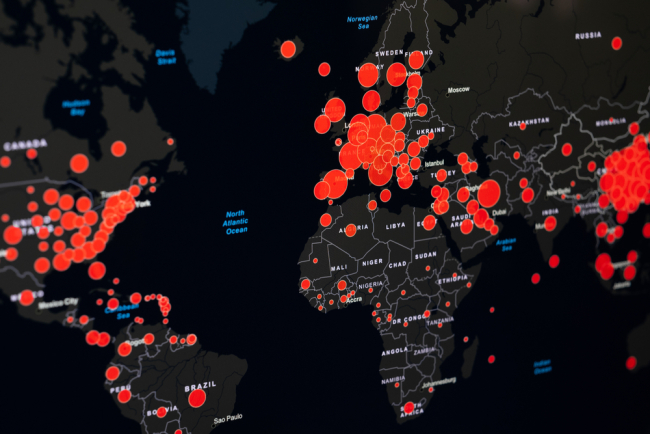
Pandémies et maladies infectieuses : que peut la communauté internationale ?
Tandis que les tensions internationales s’aiguisent et que le monde risque de se fracturer en blocs géopolitiques, pandémies et maladies infectieuses continuent de se développer. Des facteurs comme la multiplication des guerres ou le dérèglement climatique ne font qu’aggraver la situation.
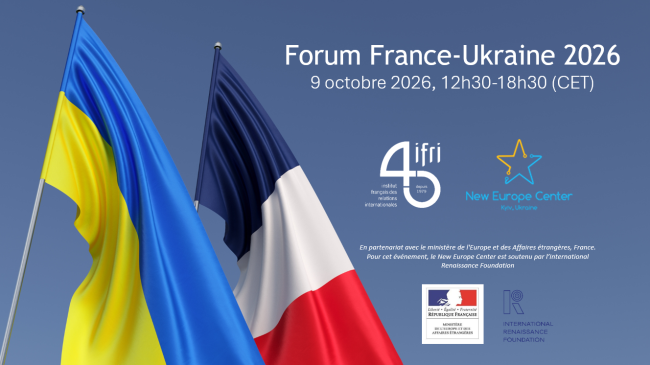
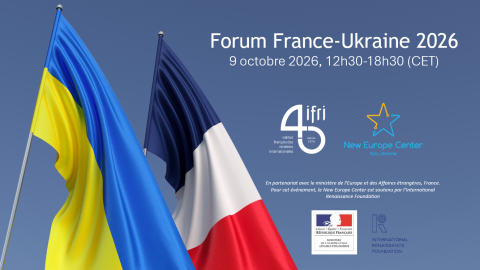
Forum France-Ukraine 2026
Plus de quatre ans et demi après le début de la guerre à grande échelle déclenchée par la Russie contre l’Ukraine, le Forum France-Ukraine 2026 accueillera des responsables politiques, des experts, des universitaires et des représentants de la société civile des deux pays pour échanger autour de trois sujets principaux : les formats et conditions d'un règlement diplomatique durable ; l'intégration euro-atlantique de l'Ukraine, entre processus d'adhésion à l'UE et rapprochement avec l'OTAN ; et les transformations sociétales de l'Ukraine d'après-guerre ainsi que ses perspectives de reconstru
Finance sous tension géopolitique : banques centrales, stablecoins et souveraineté européenne
Les tensions géopolitiques des dernières années bouleversent la donne monétaire et financière internationale, remettant en question des équilibres que l'on croyait stabilisés. Pour comprendre les évolutions en cours, il faut tenir compte de l’imbrication croissante des logiques financières et politiques, des comportements des grands acteurs, mais aussi des évolutions institutionnelles et techniques.