





Informations pratiques
Thématiques et régions
Ceci est un événement réservé.
En savoir plus sur nos programmes de soutienLocal policies and politics addressing non-regularised migrants in five European capitals (ETFIM 2nd meeting)
Local contexts have played a crucial role in the politicisation of irregular migration in the EU. Shores of the Canary Islands or Lampedusa, and the "Jungle" in Sangatte have become the very symbols of the challenge of irregular migration in Europe. The local can also provide the grounds for a challenge to national governmental responses to irregular migration: in 2009, for example, the Mayor of Paris challenged the national policy of non regularisation, emphasising the difficult situation non regularised migrants endured, but also the impact of their situation on local labour market and communities. The Mayor of London had advocated a few months earlier a comparable approach, which challenged the British national policy.
ETFIM's second workshop is dedicated to the study of this interplay between the local and the national levels of the politics and policies addressing the issue of migrants in an irregular situation.
We try to identify the various logics at play in both the politicisation of and the policymaking on irregular migration at local levels in France, Germany, Italy, Spain, and the United Kingdom. How has irregular immigration been politicised at local levels in these countries? How far has the issue of irregular migrations impacted the relationship between local authorities and national governments? How do local authorities deal with undocumented migrants? Eventually, could the local level provide a framework for the changing of policy and p ublic attitudes vis-à-vis undocumented migrants and regularisation?
List of invited participants :
Philip Anderson, Professor, Catholic University of Applied Sciences, Munich, Germany
Antoine Bussy, Head of Cabinet of the St-Denis City Mayor, France
Elizabeth Collett, Policy Analyst, European Policy Centre, Brussels, Belgium
Johannes G. Knickenberg, Director, Catholic Forum on Life in Illegality, Germany
Laura Lopez de Cerain Salsamendi, Director General of Immigration and development cooperation, City of Madrid, Spain
Akli Mellouli, Special adviser, Presidency of Conseil régional d'Ile-de-France, France
Nadan Petrovic, Director, Central Service of the Protection System for Asylum Seekers and Refugees and Consultant for the Italian Interior Ministry, Rome, Italy
Robin Schneider, Senior Officer for the Office of the Commissioner of the Berlin Senate for Integration and Migration, Germany
Nando Sigona, Senior Researcher, Centre on Migration, Policy and Society (COMPAS), University of Oxford, UK
Olga Trostiansky, Deputy Mayor in charge of Family, Solidarity, and the Fight against Exclusion, City of Paris, France
The Members of the ETFIM group are:
Arianna Cascelli, Sapienza University, Rome
Stefano Bertozzi, Bureau of European Policy Advisers (BEPA), EU Commission
Hector Cebolla Boado, National University of Distance Education, Madrid
Luìs Garido Medina, Head of Department of Social Structure, National University of Distance Education, Madrid
Danièle Joly, Director of the Centre of Research in Ethnic Relations, University of Warwick
Johannes G. Knickenberg, Catholic Forum on Life in Illegality, Berlin
Barbara Laubenthal, Chair of Sociology Department, University of Bochum
Patricia Pielage, University of Bochum
Gemma Pinyol, Migration Program Coordinator at CIBOD, Barcelona
Ayesha Saran, Barrow Cadbury Trust, London
Sarah Toucas, Sciences Po Paris, France
Khursheed Wadia, Centre of Research in Ethnic Relations, University of Warwick
Catherine Wihtol de Wenden, Centre for International Studies and Research (CERI), Paris
The group is supervised by Christophe Bertossi, Senior Research Fellow and Director of the "Migrations, Identities, Citizenship" Program at Ifri, Paris.
Replay
Sujets liés
Autres événements
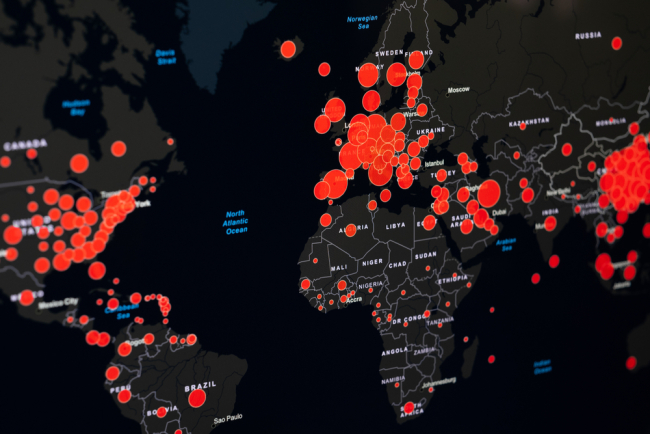
Pandémies et maladies infectieuses : que peut la communauté internationale ?
Tandis que les tensions internationales s’aiguisent et que le monde risque de se fracturer en blocs géopolitiques, pandémies et maladies infectieuses continuent de se développer. Des facteurs comme la multiplication des guerres ou le dérèglement climatique ne font qu’aggraver la situation.
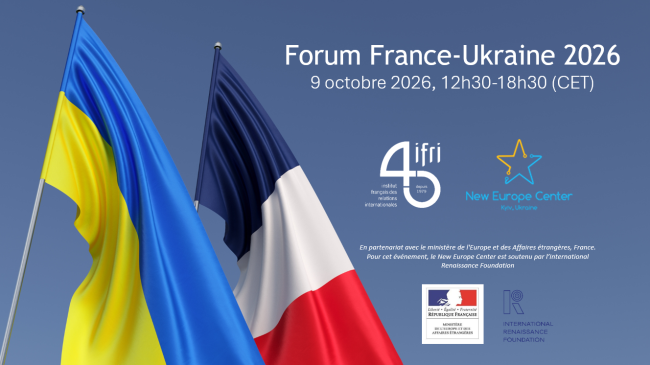
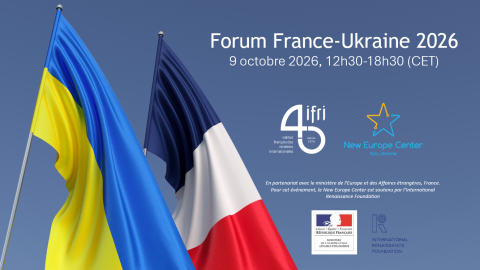
Forum France-Ukraine 2026
Plus de quatre ans et demi après le début de la guerre à grande échelle déclenchée par la Russie contre l’Ukraine, le Forum France-Ukraine 2026 accueillera des responsables politiques, des experts, des universitaires et des représentants de la société civile des deux pays pour échanger autour de trois sujets principaux : les formats et conditions d'un règlement diplomatique durable ; l'intégration euro-atlantique de l'Ukraine, entre processus d'adhésion à l'UE et rapprochement avec l'OTAN ; et les transformations sociétales de l'Ukraine d'après-guerre ainsi que ses perspectives de reconstru
Finance sous tension géopolitique : banques centrales, stablecoins et souveraineté européenne
Les tensions géopolitiques des dernières années bouleversent la donne monétaire et financière internationale, remettant en question des équilibres que l'on croyait stabilisés. Pour comprendre les évolutions en cours, il faut tenir compte de l’imbrication croissante des logiques financières et politiques, des comportements des grands acteurs, mais aussi des évolutions institutionnelles et techniques.