




Security - Defense
As a result of global strategic competition, security and defense issues are marked by the return of major wars and nuclear deterrence, the transformation of terrorism and the race for military technologies.
Related Subjects
Replay - European Security: Perspectives from Latvia. Debate with the Minister of Defense of the Republic of Latvia, Andris Sprūds
How should European security be approached in the face of the challenges posed by the war in Ukraine? Replay of the conference European Security: Perspectives From Latvia. Debate with the Minister of Defense of the Republic of Latvia, Andris Sprūds.
Arctic: A New Era of Geopolitical Tensions? The Alert from the Norwegian Intelligence Director
An interview with Nils-Andreas Stensønes, Director of the Norwegian Intelligence Service, conducted by Daphné Benoit, Head of international affairs, AFP, on the occasion of Ifri's conference "New geopolitical realities of the Arctic", 19 March 2025.
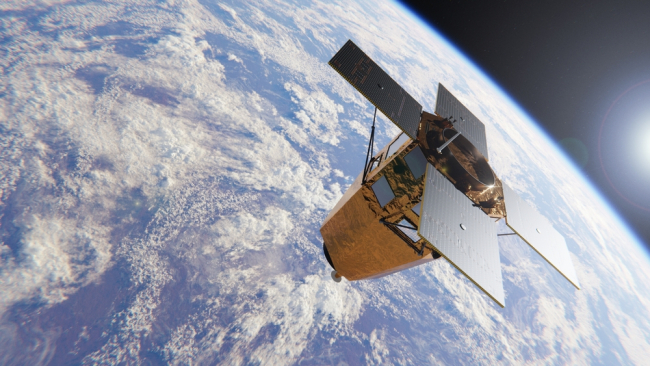
The European Space Model: Renewing Ambition in a Changing Strategic Landscape
The European space model, based on science, cooperation and trade, is now being undermined by changes in international relations and the economic upheavals brought about by New Space. In light of the war in Ukraine and American disengagement, Europe needs to rethink its strategy by adding a fourth pillar dedicated to defense, in order to strengthen its sovereignty and deter possible aggression against the continent.
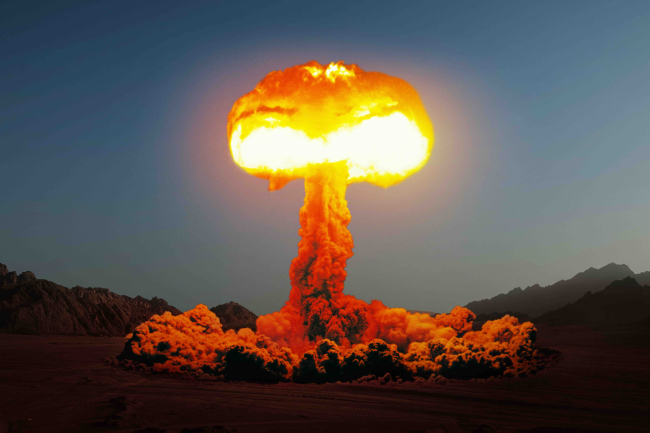
Europe thinks the unthinkable on a nuclear bomb
Poland wants co-operation with France on a nuclear deterrent. That could take many forms.
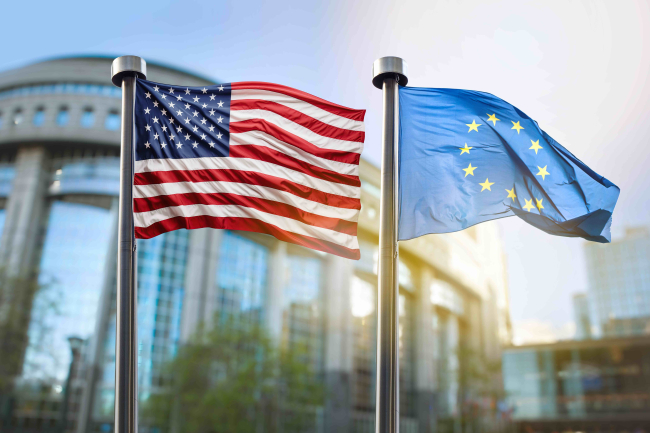
A Transatlantic Defense Industrial Base? Two Contrasting Views
The evolving landscape of global defense cooperation has brought the transatlantic relationship between the United States (US) and Europe into sharp focus. As geopolitical tensions rise and the threat environment becomes more complex, the question of how Europe can best ensure its security while navigating its relationship with the United States has become paramount. This double feature report offers two contrasting views on the dynamics of US-Europe defense industrial relations, highlighting the challenges and opportunities that lie ahead for both parties.
(Replay) US-China-Taiwan Relations: What to expect in the Trump II Era?
Replay of Ifri's Center for Asian Studies' conference "US-China-Taiwan Relations: What to expect in the Trump II era?", held at Ifri on Tuesday 11 March 2025.
Better know a nuke: France
In this episode of The Arms Control Poseur, host Dr Alexander Bollfrass is joined by nuclear policy experts Héloïse Fayet, Emmanuelle Maitre and Dr Liviu Horovitz to discuss the history and the current trajectory of France's nuclear arsenal.
Ukraine: A Year of Uncertain Peace - Politique étrangère, Vol. 90, No. 1, Spring 2025
During his election campaign, Donald Trump promised to settle the war in Ukraine in 24 hours. As the American president settles into the White House, different options are emerging for the future of this conflict. Some are more likely than others, but none can be ruled out. European countries appear increasingly divided over Russia, and the European Union risks paying a high price if it fails to come up with a solid common strategy.
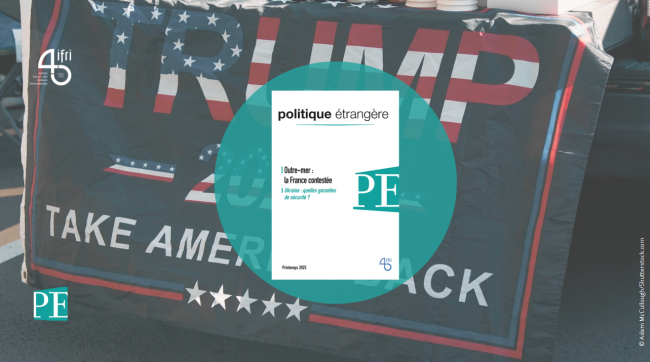
Trump 2: Challenges for the US Military Posture - Politique étrangère, Vol. 90, No. 1, Spring 2025
The distribution of operational leverage points in US strategy has changed significantly over the past two decades, with a sharp reduction. Donald Trump's distancing and repeated criticism of traditional US alliances threaten to undermine the entire architecture of the US presence in the world, beyond the concrete, real and, in particular, industrial impasses of America's military posture.

I see some degree of — I don’t want to say panic — but really alarmed Europeans who realize they need to stick together as much as possible.
If the Europeans want to step up and make up for the loss of American aid to Ukraine, it needs to happen now, they need to put the money on the table; they need to pass on the orders to the defense industry.
Europe is lacking ammunition, we’re lacking replacement parts, we’re lacking readiness.
quoted by Lisa Bryant for Voice of America.
France Contested in Overseas Territories - Politique étrangère, Vol. 90, No. 1, Spring 2025
New Caledonia, Mayotte: France's overseas territories were severely shaken in 2024. Beyond explanations of the economic situation, the place of these overseas territories in French policies and strategies is once again being called into question.
Are France's overseas territories the remnants of an outdated colonialism? Or, on the contrary, are they supports for an extended French presence that the opening-up of the world makes indispensable, and barriers raised here and there against the appetites of new powers? In any case, what policies should the Hexagone pursue in these regions, to promote better development and more effective integration into their environment? And is the legal status of these overseas territories untouchable?
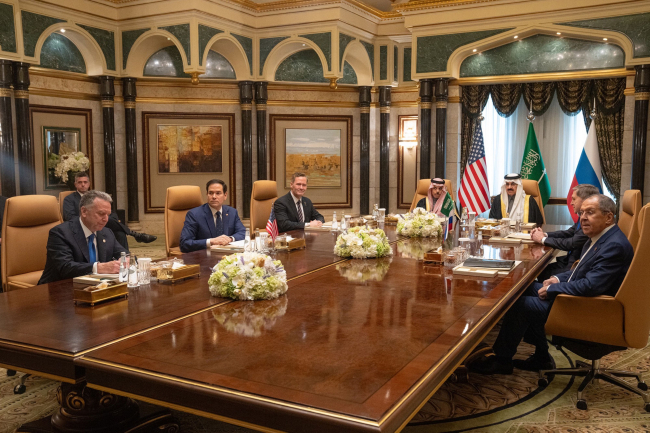
How the US under Trump Became a Strategic and Ideological Adversary of Europe
The Europeans' worst security nightmare seems to be coming true: on Tuesday, February 18, 2025, U.S. Secretary of State Marco Rubio and Russian Foreign Minister Sergey Lavrov met in Saudi Arabia to initiate the normalization of relations between their two countries. The meeting also aimed to set up peace negotiations for Ukraine. However, despite having the potential to affect the entire continent, the discussions took place without the Europeans or the Ukrainians being present.

Merz's statement now needs to be followed up in the long term at political level, on both the French and German sides. It's been on the table for five years, and if we don't talk about it now, when Europe is in danger, we'll never talk about it.

cited by Politico.

The China-Russia Partnership and the Ukraine War: Aligned but not allied
China and Russia maintain a strategic partnership rooted in shared opposition to the U.S. and liberal democracies, but their relationship is shaped more by pragmatism than trust.
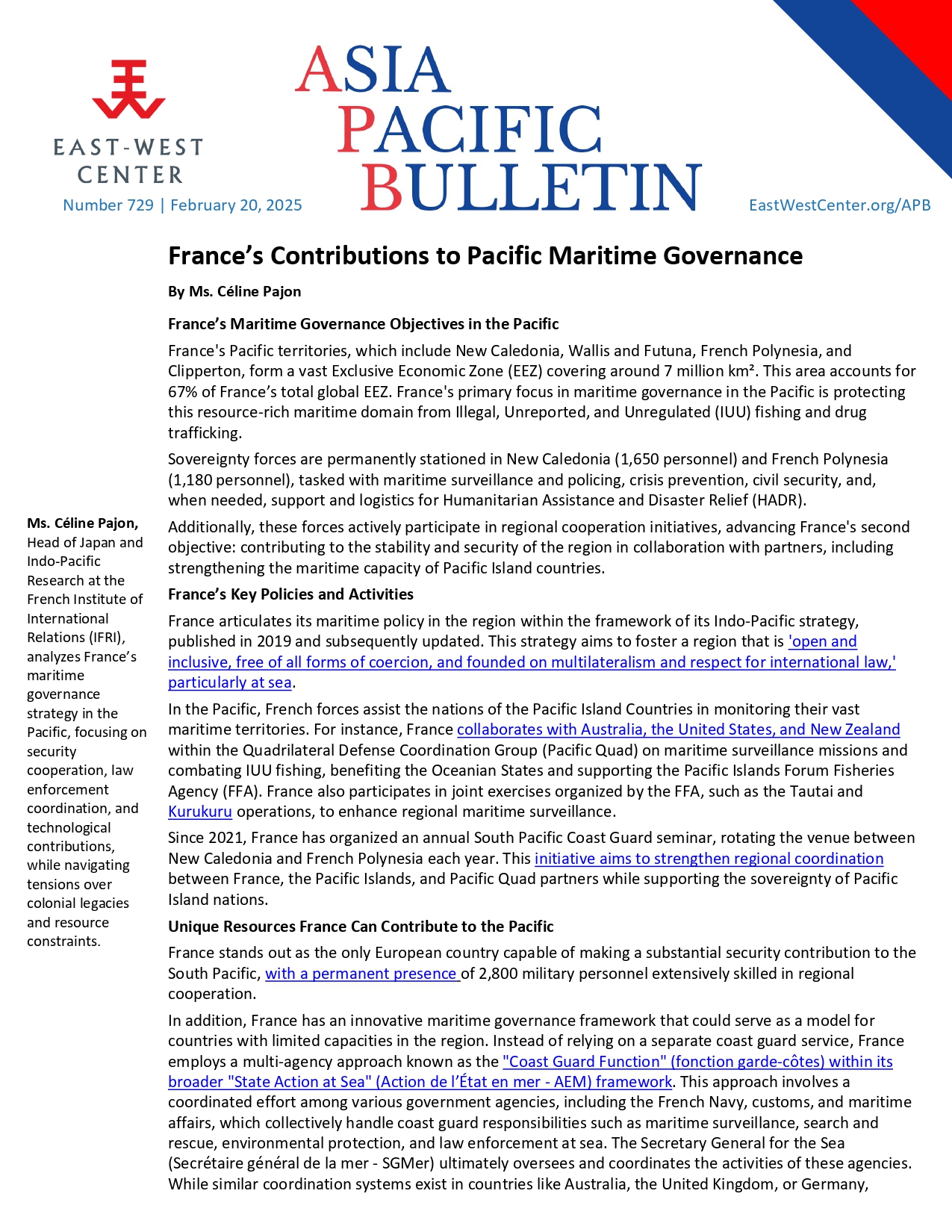
France’s Contributions to Pacific Maritime Governance
France stands out as the only European country capable of making a substantial security contribution to the South Pacific, with a permanent presence of 2,800 military personnel extensively skilled in regional cooperation.
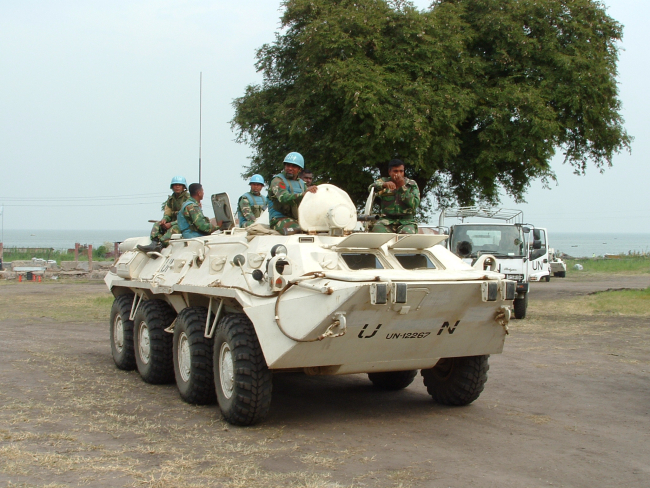
The United Nations Mission in Congo or the exemplary uselessness of the United Nations peacekeepers
During the M23 conflict in 2012-2013 in the Democratic Republic of Congo (DRC), the United Nations (UN) took the diplomatic initiative (by initiating the Addis Ababa agreement) and the military initiative (by launching a coordinated counter-offensive with the Congolese army). Since the resurgence of this conflict in 2022, the United Nations, which still has more than 10,000 peacekeepers deployed in eastern DRC, no longer plays any role.
Naval Power and Maritime Economy: an interview with Admiral Nicolas Vaujour (Chief of Staff of the French Navy)
On the sidelines of the Paris Naval Conference 2025, on February 4, 2025, organized by Ifri and the French Navy (Marine nationale), Admiral Nicolas Vaujour, Chief of Staff of the French Navy share insights on the crucial role that naval power plays in support of maritime economy.
How do maritime companies cooperate with the navies? An interview with Evan FUERY, EQUINOR
On the sidelines of the Paris Naval Conference 2025, on February 4, 2025, organized by Ifri and the French Navy (Marine nationale), Evan FUERY, Senior Vice-President for Corporate Security and Crisis Management, EQUINOR, shares insights on how maritime companies collaborate with the navies to secure maritime economy.
Naval Power and Maritime Economy: Rear Admiral Olivier Berdal, Chief of the Royal Norwegian Navy
On the sidelines of the Paris Naval Conference 2025, on February 4, 2025, organized by Ifri and the French Navy (Marine nationale), Rear Admiral Olivier Berdal, Chief of the Royal Norwegian Navy, shares insights on the crucial role that naval power plays in support of maritime economy.
Naval Power and Maritime Economy: an interview with Admiral Sir Ben Key, First Sea Lord, Royal Navy
On the sidelines of the Paris Naval Conference 2025, on February 4, 2025, organized by Ifri and the French Navy (Marine nationale), Admiral Sir Ben Key, First Sea Lord, Royal Navy, shares insights on the crucial role that naval power plays in support of maritime economy.
Europe Uncovered?
As Russia continues to threaten Europe, the Trump administration is making no secret of its desire to withdraw—at least partially—from the defense of the Old
Continent in order to focus on strategic competition with China. It is thus putting pressure on its European allies to increase their investment in the military sector. The NATO Summit in The Hague in June 2025 resulted in ambitious commitments by member states to increase their defense spending.
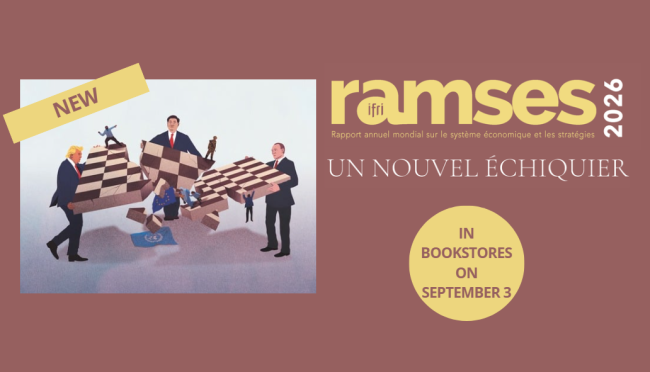
Ramses 2026. A New Chessboard
A world chessboard chopped up by the vertigo of power...
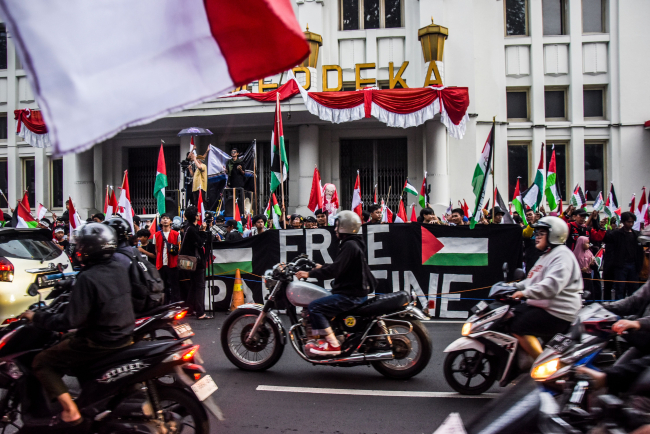
Indonesia and the Palestinian Cause
During his inaugural presidential speech on October 20, 2024, Indonesia’s incumbent president, Prabowo Subianto, iterated certain principles central to the philosophical foundation of the Indonesian nation. He noted Indonesia’s longstanding foreign policy of non-alignment or “bebas dan aktif” (free and active) and its aversion to military pacts.
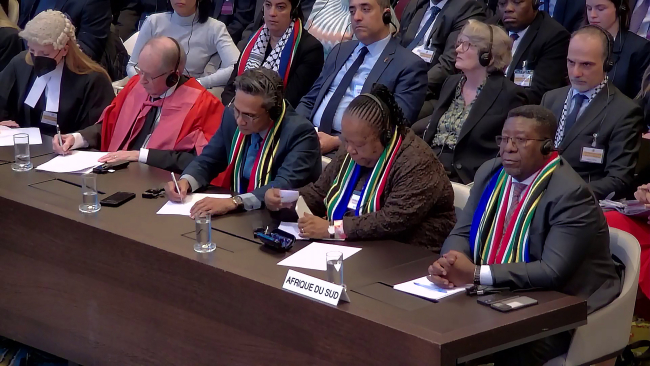
Middle Power Lawfare : South Africa, International Justice, and the Gaza Crisis
The intensification of violence in Gaza following Hamas’s 7 October 2023 Al Aqsa Flood attack and Israel’s military response prompted a broader reassessment of global diplomacy. Longstanding geopolitical alignments were disrupted, and questions about humanitarian obligations, institutional accountability, and the limits of state conduct returned to the centre of international debate.
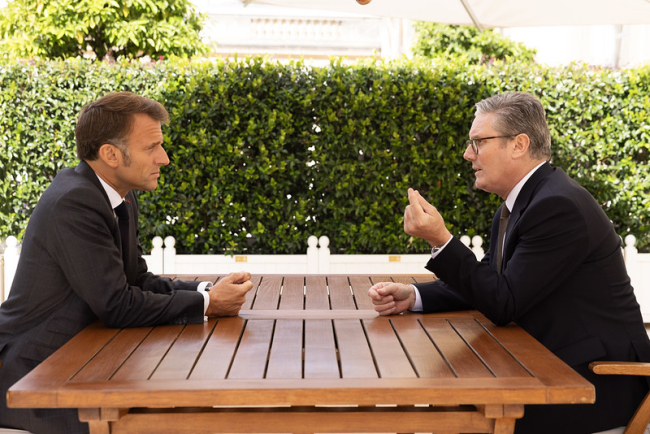
How should Britain and France cooperate to realise the Northwood Declaration?
During his state visit to the United Kingdom (UK) last week, Emmanuel Macron, President of France, signed a joint declaration with Sir Keir Starmer, Prime Minister, on nuclear cooperation between Britain and France. The Northwood Declaration highlights that while both countries’ nuclear arsenals remain sovereign, cooperation on nuclear deterrence can ‘contribute significantly’ to the security of the North Atlantic Treaty Organisation (NATO) and the Euro-Atlantic region.

The Evolving Role of Nuclear Rhetoric in Iran’s Strategic Calculus
How has the Iranian strategic discourse about nuclear weapons and deterrence evolved?
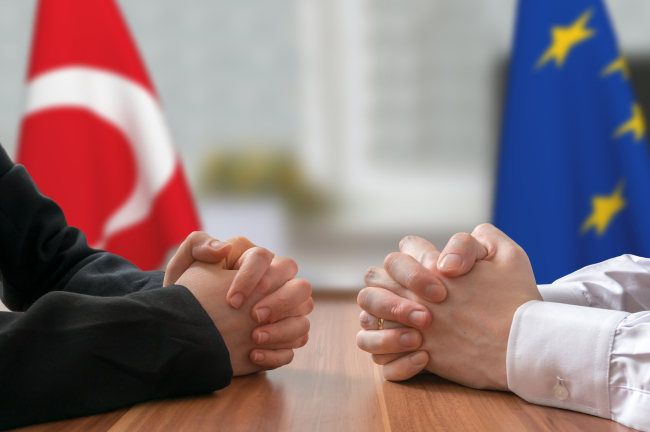
Turkey and France - Allies or Rivals: Opportunities to be Seized
As international relations have become increasingly unpredictable, the quest is to find a semblance of normality. Alliances are shifting as interests are changing. The so-called order established after the Second World War is being shattered by those who have given so much to create it. Global relations are being transformed by countries that wish to follow the rules and others that want to circumvent or ignore them. In this uncertain environment, it is therefore all the more crucial to find stable allies.
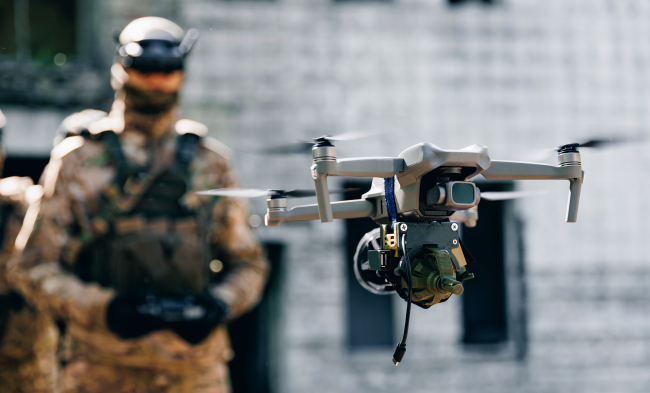
Design, Destroy, Dominate. The Mass Drone Warfare as a Potential Military Revolution
The widespread use of drones observed in Ukraine—both in terms of the scale of the fleets deployed and their omnipresence in the operations of both belligerents—appears to meet the conditions of a genuine military revolution.
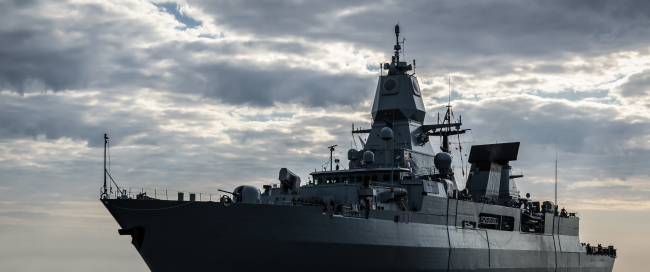
The Hunt for Economic Security: The Role of Navies in Deterring Threats to the Maritime Economy
The maritime domain is currently faced with a wide variety of threats, such as climate change, economic warfare, shadow fleet operations, protection of critical infrastructures, and illicit activities ranging from illegal fishing to piracy. Navies suffer from inherent limitations when deterring threats to the global maritime economy: their global presence and permanence limits their credibility in terms of deterrence, their focus usually set on immediate deterrence, implementing deterrence by punishment in and from the naval domain is difficult and costly.
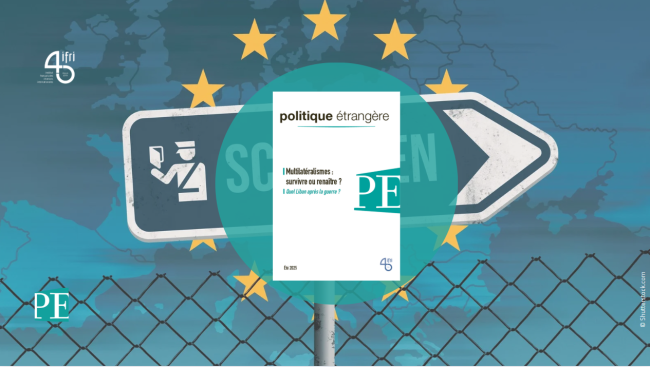
The "Europe of Internal Security": An Unknown Quantity - Politique étrangère, Vol. 90, No. 2, Summer 2025
The new European Internal Security Strategy, unveiled by the European Commission in April 2025, provides an opportunity to shine a light on a little-known policy. To mitigate the problems created by freedom of movement, substantial additions have been made to European internal security policy over the last few years. The European Union is constantly striving to become stronger in order to combat crime, terrorism, illegal immigration, and hybrid threats more effectively.

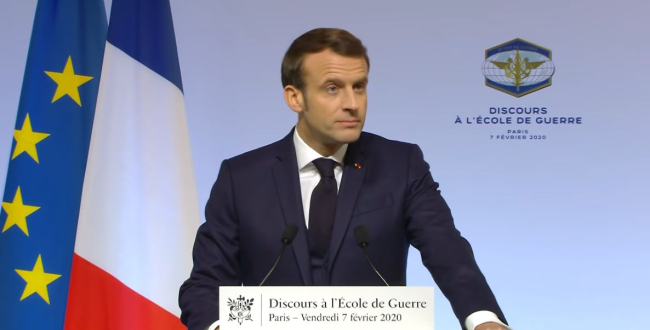
France to spell out post-Brexit nuclear weapons strategy
France, the European Union's sole nuclear power since Britain's exit from the bloc, will unveil Friday how it intends to use its atomic arsenal as a deterrent in an increasingly unstable world.

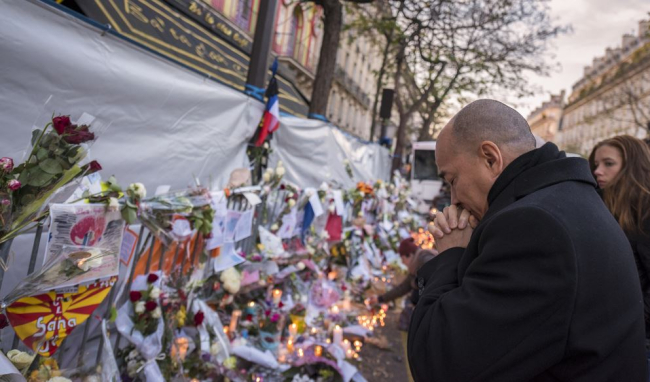
Jihadist Prisoners: The Fear of Recidivism
On July 16, Djamel Beghal is expected to be released from the Rennes-Vezin prison in the west of France. Beghal is a well-known figure in the European jihadist sphere. Born in Algeria in 1965, he settled in France in 1987. Ten years later, he moved to the United Kingdom with his French wife and their children. In November 2000, the family left for Afghanistan, a country then governed by the Taliban.

Missiles of March: A political means of last resort for Putin
President Vladimir Putin’s extra-heavy emphasis on new strategic missile systems in his March 1 address to parliament was quite unexpected and rather out of character.
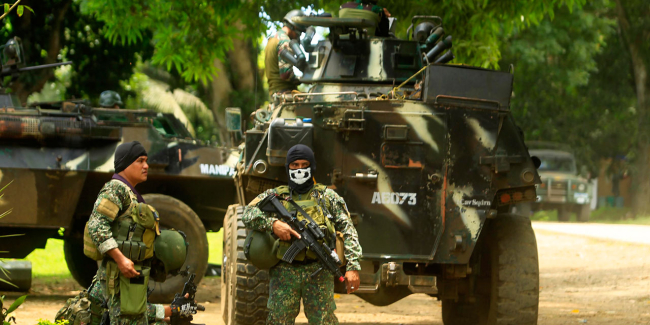
Menace islamiste, loi martiale, ... que se passe-t-il aux Philippines?
Philippines' President wants to limit islamist groups' capacity after several attacks in the South of the country.

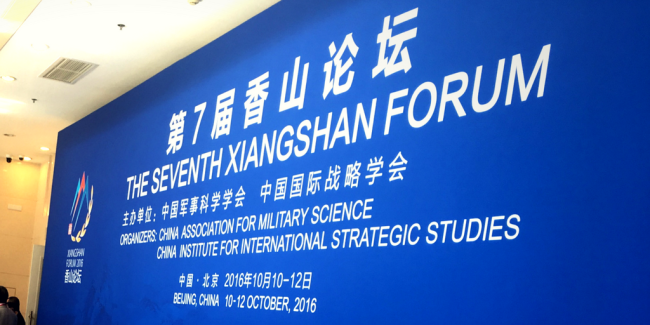
At the 2016 Xiangshan Forum, China Outlines a Vision for Regional Security Governance
Beijing has a plan for a new regional security architecture, and it’s not based around alliances.
France wants to feel safe – whatever it takes. But what if it takes too much?
Opinion column published in "The Globe and Mail"

In France, are soldiers outside the Eiffel Tower and the Louvre really worth it?
Sentinel represents a watershed development in French military operations. For the first time since the end of the Cold War, the number of French army soldiers actively deployed in metropolitan France roughly equals that of overseas operations. But the military establishment here is far from unified on the value of an operation often seen as a costly and superficial means of reassuring civilians and tourists at the expense of substantive improvement to national security.

NATO wrestles with internal divisions ahead of Warsaw summit
The alliance is struggling to assemble four battalions to safeguard its eastern flank from a possible Russian attack. In addition, many member states are falling short of their financial commitments to the alliance.
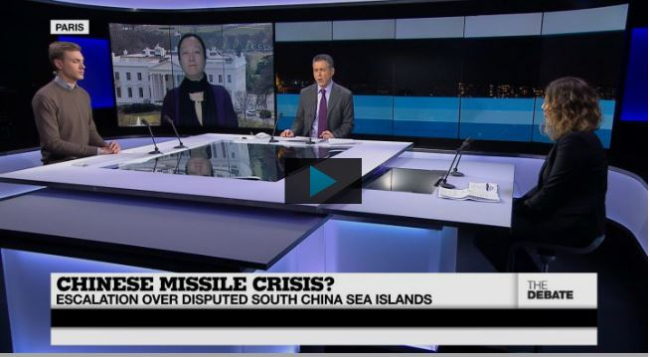
Chinese missile crisis? Escalation over disputed China Sea islands
Reports have emerged that China has set up a missile launch base on Woody Island, part of an archipelago disputed with Taiwan and Vietnam. This comes just as the US President was wrapping up an ASEAN summit to strengthen ties after the recent Trans-Pacific Partnership trade deal. How will this shape policy not only among Washington's traditional allies in the region but also in countries like Vietnam? Once again, a war-weary US is being called upon and has to look at the broader picture.

China quiere aumentar su protagonismo en Oriente Próximo
Después de haber rehuido durante años implicarse en una región que considera un avispero, China quiere finalmente mostrarse como un participante más activo en Oriente Medio. La visita que el presidente chino, Xi Jinping, comienza este martes a Arabia Saudí, Irán y Egipto señala la creciente importancia que Pekín concede a la zona, tanto desde el punto de vista económico como de seguridad, y representa un paso más en su estrategia para presentarse como una alternativa al modelo estadounidense de potencia mundial.
Ifri, a foundation recognized as being of public utility, relies largely on private donors – companies and individuals – to guarantee its sustainability and intellectual independence. Through their funding, donors help maintain the Institute's position among the world's leading think tanks. By benefiting from an internationally recognized network and expertise, donors refine their understanding of geopolitical risk and its consequences on global politics and the economy. In 2026, Ifri partners with over 90 French and international companies and organizations.

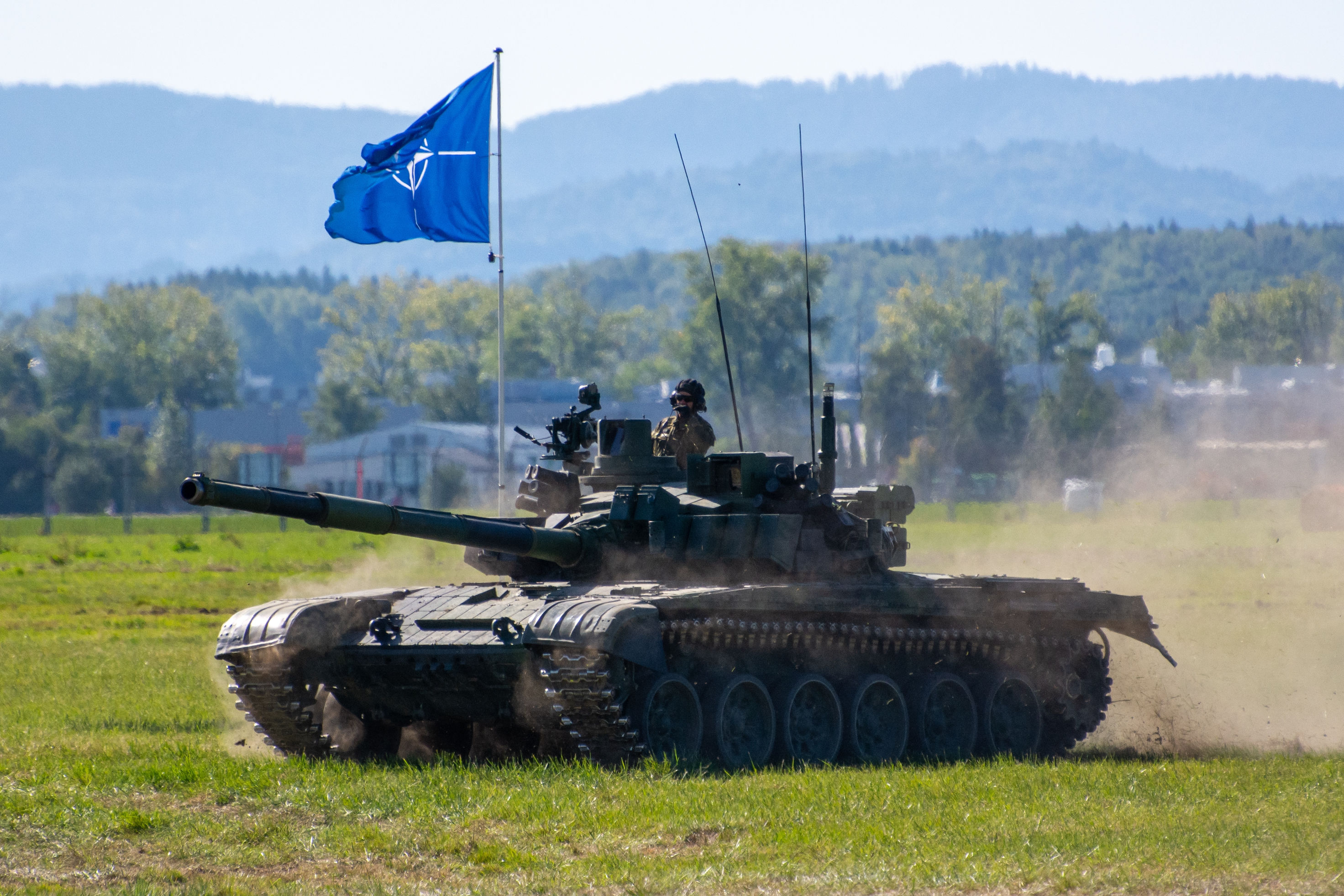
The European & Transatlantic Security Program aims to contribute to the strategic debate by developing analyses around three main axes: European defense and the security architecture of the European continent, institutional and strategic links between the Treaty Organization of North Atlantic (NATO) and the European Union (EU), as well as the evolution of the transatlantic relationship.
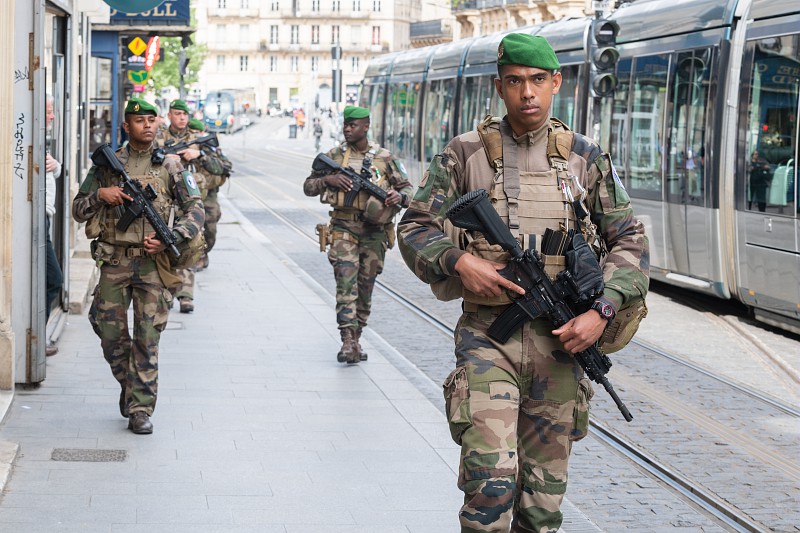
The distinction between internal and external threats is often exaggerated, as the borders are so porous. Conflicts taking place thousands of kilometers from France can have tragic resonances on national territory. Radicalization, terrorism and even organized crime have an international dimension that cannot be ignored.
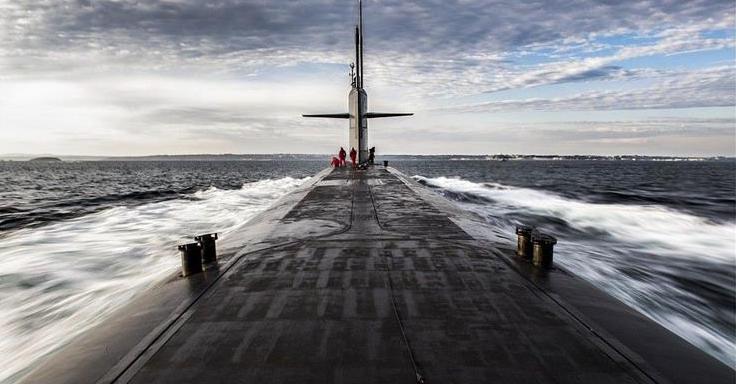
The conflicts in Europe, Asia and the Middle East demonstrate a return of nuclear power to the balance of power. Arsenals are being modernized and expanded, while arms control is collapsing. This research program aims to analyze these phenomena.
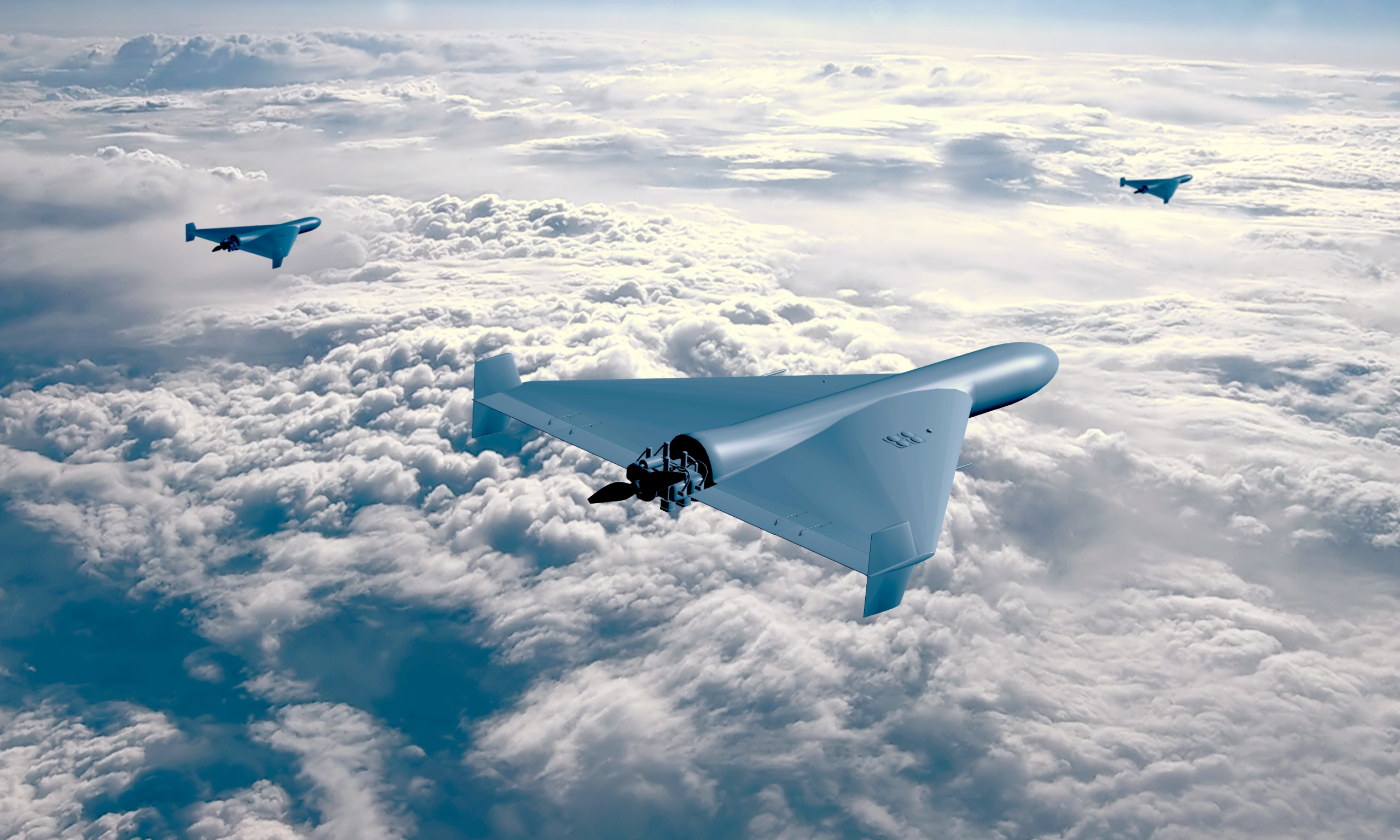
The Observatory of Future Conflicts is a research program carried out by the French Institute of International Relations and the Foundation for Strategic Research on behalf of the three army headquarters aimed at studying developments in tensions and armaments at the horizon 2040 in a transversal perspective, taking into account the issues of each army.
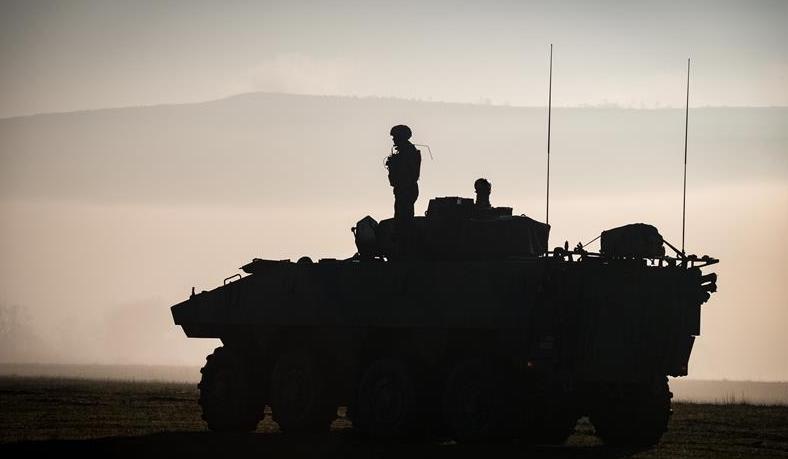
Heir to a tradition dating back to the founding of Ifri, the Security Studies Center provides public and private decision-makers as well as the general public with the keys to understanding power relations and contemporary modes of conflict as well as those to come. Through its positioning at the juncture of politics and operations, the credibility of its civil-military team and the wide distribution of its publications in French and English, the Center for Security Studies constitutes in the French landscape of think tanks a unique center of research and influence on the national and international defense debate.
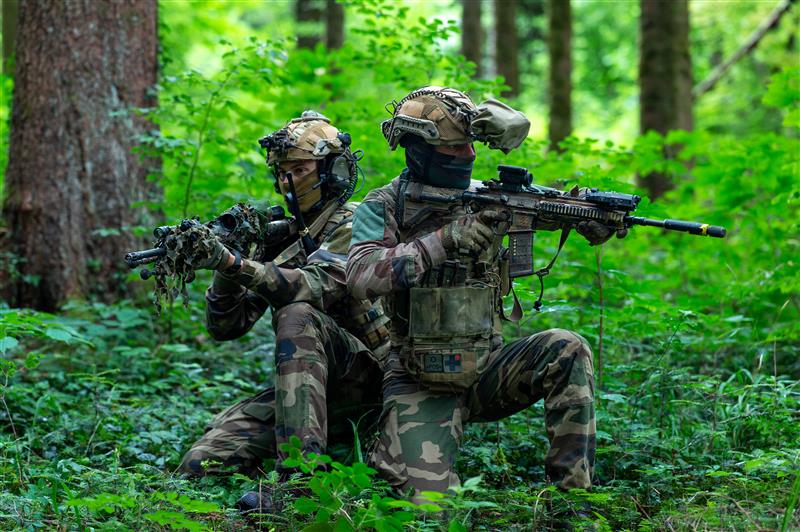
The Defense Research Unit is a program that aims at stimulating the strategic debate by dealing with subjects at the junction of the “technico-operational” and the “political-strategic”. A unique structure in France, it brings together civilian researchers and “military fellows” from each of the three armies to produce work on defense policies, the capability and strategic adaptation of armies, and foresight on tomorrow's conflicts.