

What Is Dividing the West?
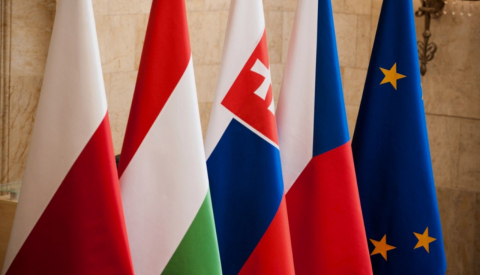
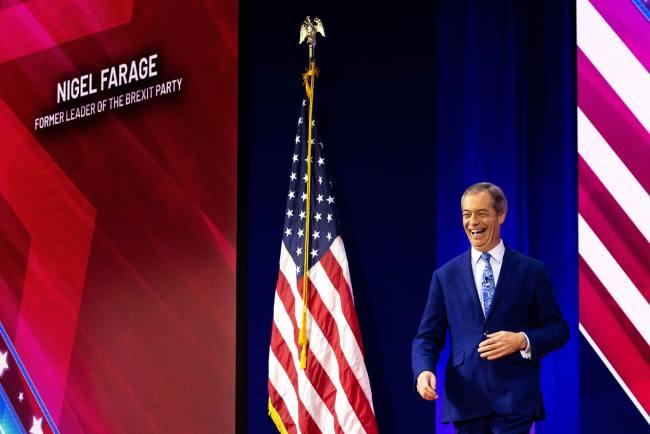
Once united by shared values and strategic interests, the West is increasingly fractured along ideological lines. Just as illiberal politicians have spent years building an international reactionary movement, their liberal counterparts must foster transatlantic dialogue to forge a common democratic vision.


How Will the Trump Presidency Change EU-China Relations?
Over the past few years, European countries have started to line up with the United States on China policy. But now, as Donald Trump destroys the trust European countries had in America, China is stepping up, promising stability and consistency.
Migrations Between Mexico and the United States: More of the Same or a Headlong Rush?
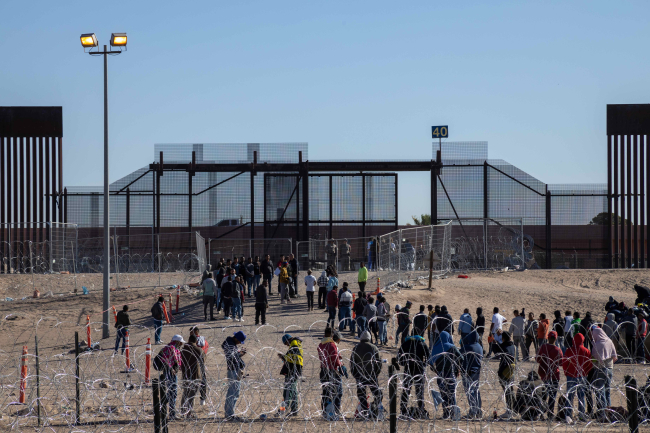
As Trump prepares to tighten border controls with Mexico and carry out mass deportations of undocumented immigrants, Mexico is questioning the economic consequences of this migration policy and expects to have to negotiate the issue in connection with the tariffs imposed by the Trump administration.

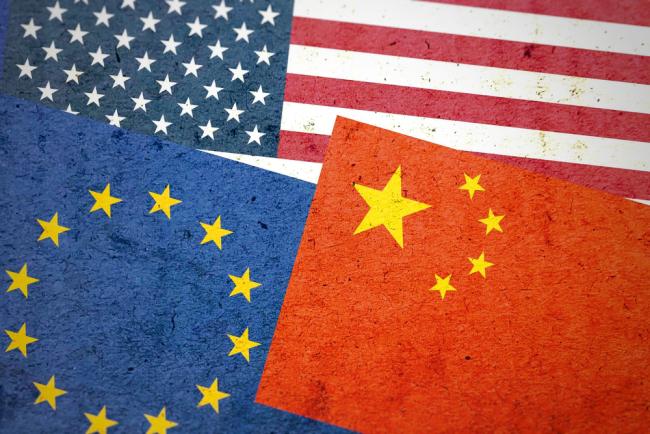
Trump-battered Europe eyes China with launch of diplomatic flurry to Beijing
EU officials and European national representatives are on overlapping visits but each will be asking for something slightly different
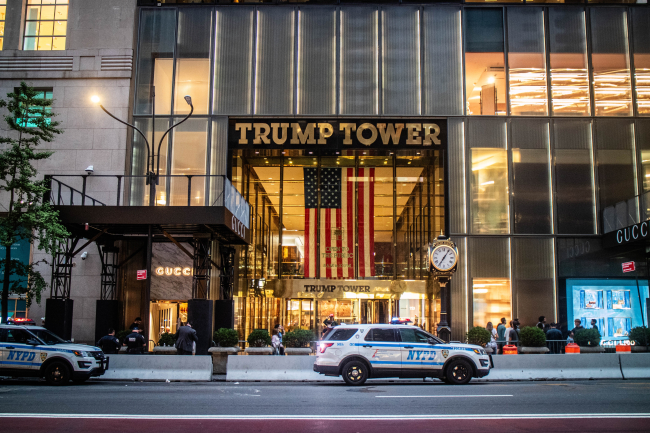
Donald Trump v. the States: the Case of New York
While the disruptive policies of the second Trump administration are being implemented at the federal level and on the international stage, they are also being felt in the federal states and major cities across the country. In the spring of 2025, several cases involving the state and city of New York demonstrate that the president’s attacks on environmental protection, the separation of powers, freedom of speech, etc., are also being carried out at the local level.

The European Space Model: Renewing Ambition in a Changing Strategic Landscape
The European space model, based on science, cooperation and trade, is now being undermined by changes in international relations and the economic upheavals brought about by New Space. In light of the war in Ukraine and American disengagement, Europe needs to rethink its strategy by adding a fourth pillar dedicated to defense, in order to strengthen its sovereignty and deter possible aggression against the continent.
(Replay) US-China-Taiwan Relations: What to expect in the Trump II Era?
Replay of Ifri's Center for Asian Studies' conference "US-China-Taiwan Relations: What to expect in the Trump II era?", held at Ifri on Tuesday 11 March 2025.

Merz's statement now needs to be followed up in the long term at political level, on both the French and German sides. It's been on the table for five years, and if we don't talk about it now, when Europe is in danger, we'll never talk about it.

cited by Politico.

AI showcase pays off for France, but US tech scepticism endures
France is staking its claim as an AI powerhouse. At the AI Action Summit in Paris this week, global leaders, tech innovators, and policymakers converged to chart the future of artificial intelligence - backed by major investments and bold ambitions for Europe’s leadership in the field. RFI breaks down the key takeaways.
Will Trumpian Authoritarianism Lead to a Constitutional Crisis?
Since his return to the White House on January 20, 2025, President Donald Trump has signed around sixty executive orders to implement his political agenda. Numerous other measures have also been introduced by the White House and the new Department of Government Efficiency (DOGE) as part of these orders.
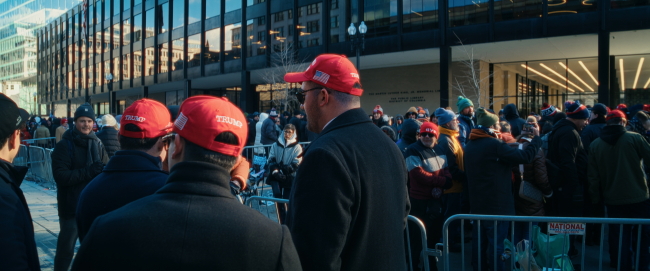
From Conservative Nationalists to Tech-Libertarians: Far-Right Ideologies in the Trump 2 Administration
The officials and advisers of the Trump 2 administration represent diverse ideological currents, some of which are relatively new to Washington.
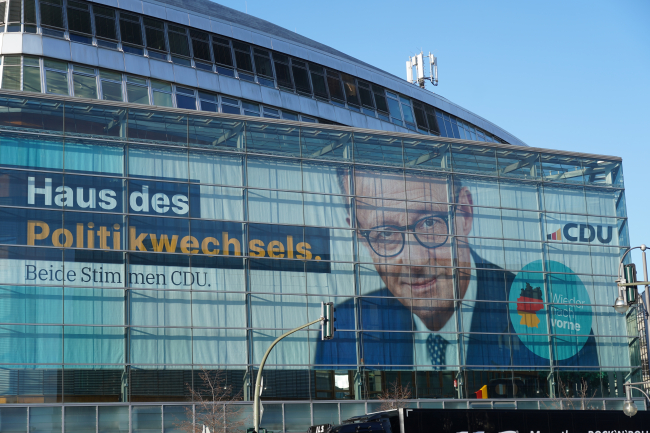
Germany in the Electoral Campaign to the Early Elections on February 23 - The Challenges of a high-risk Voting
One month before the early Federal Elections in Germany, which will take place on February 23, 2025, after the "Traffic light coalition" imploded on November 6, 2024, the political landscape in Germany appears to be relatively stable despite the rise of the far-right Alternative for Germany (AfD).
Trump’s Indo-Pacific and European Strategies: Change or Continuity?
An interview with Kelly Grieco, Senior Fellow at the Stimson Center, in which she explains what changes and continuities might the future Trump administration bring to U.S. alliances and Indo-Pacific strategy.
Taiwan's Security: Challenges Ahead and the Impact of a Trump Administration
An interview with I-chung Lai, President, Prospect Foundation, in which he explains how Taiwan's security environment has evolved and what to expect from the next Trump administration.

Populism and International Relations
Populism is flourishing, in Europe and elsewhere: a populist holds power today in Argentina and perhaps tomorrow in the United States. What does its spread say about our societies? And how is it shaping them, where populists rule? Do their economic policies stand any chance of success? Do their foreign policies have a greater impact on the world around them or at home? If “Trump 2.0” comes to be, will he have a free hand? If so, what can we expect?

“Broken” Franco-German tandem needs Tusk and Trump
As the vital relationship between Franco-German leaders Olaf Scholz and Emmanuel Macron appears “broken”, hopes for a sustainable fix rest on the Weimar Triangle and even the return of an old nemesis.
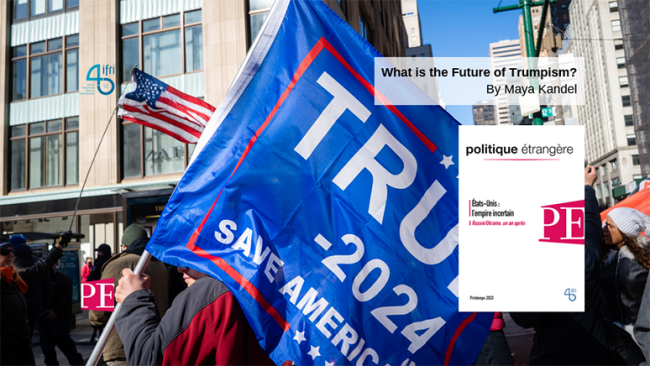
What Is the Future of Trumpism?
Donald Trump's presidency allowed the most radical wing of the Republicans to seize hold of the party.
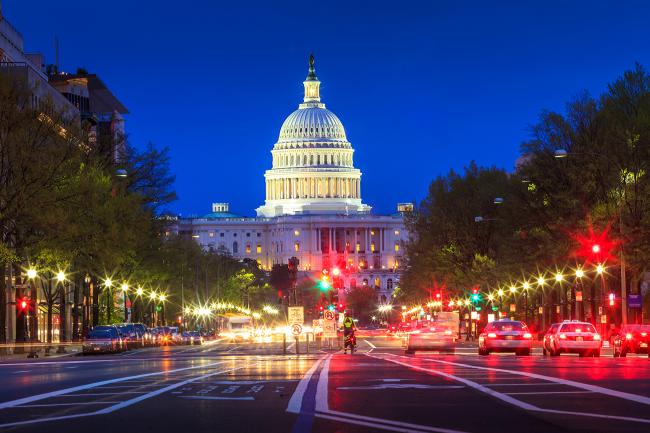
The U.S. Political Landscape Two Months Before Midterms. Can the Democrats Avoid Defeat?
The Biden Administration has succeeded this summer in passing several important pieces of legislation. In addition to progressive societal measures that break with the Supreme Court's rulings, the Administration has focused on the economy and the environment: the CHIPS Act and the Inflation Reduction Act promote the relocation of semiconductor and electric vehicle battery plants.
The China dilemma from Trump to Biden: one consensus and three worldviews
The United States underwent a fundamental transformation in its stance on China during the Trump presidency.
Towards the Second Crusade?
Europeans first grew aware of a possible pandemic exactly one year ago. The wave is here. It has submerged the world, claiming many lives and causing tremendous collateral damage.
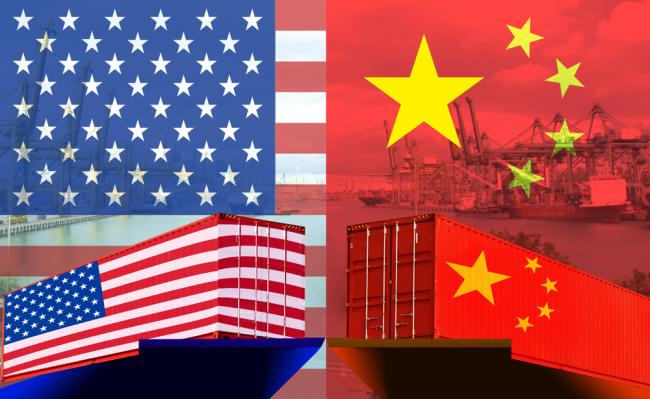
The US-China Trade War: What Is the Outcome after the Trump Presidency?
One of Donald Trump’s campaign promises in 2016 was to end China’s “cheating” on trade and to reduce America's trade deficit by imposing significant tariffs on U.S. imports of Chinese products. This study draws up a first assessment of his policy - and of the "trade war" which stemmed from it.
The Biden-Harris Election: A Respite In View Of What?
I am writing this seventh letter on Sunday, November 8. Yesterday, the world press proclaimed the victory of Joe Biden and Kamala Harris. However, Donald Trump has filed lawsuits in several states, which few people believe have any chance of succeeding. At this point, then, the present occupant of the White House can be said to have joined the narrow circle of one-term presidents. Other immediate observations come to mind.
The American Elections and Beyond
The next few years will be tumultuous ones in the United States. The dependency of foreign policy on domestic policy is unlikely to diminish. Whether in the rivalry with China or the predominance of Israeli interests in Middle East policy, for example, it is hard to imagine Biden taking a big step backward. Many Europeans want to believe that a victory by Obama’s former vice president will signal a return to the good old days of transatlantic consultation and multilateralism.
Justice and Might
Looking back on the last few weeks, a famous quote by Goethe (from his report on the siege of Mainz in 1793) came to mind: “Better to commit an injustice than to countenance disorder.” In other words, disorder engenders more injustice than it eradicates. But, if one word characterizes the world at the end of summer 2020, it is disorder.
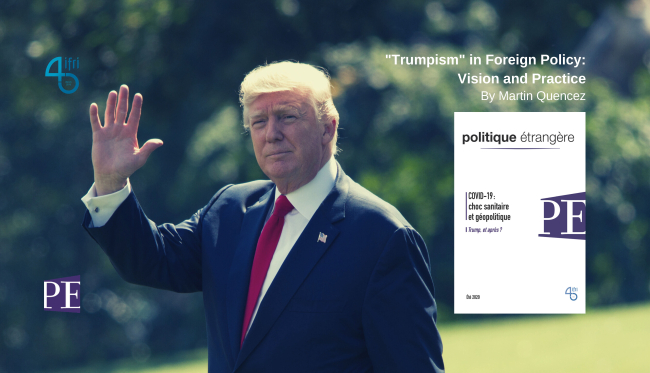
“Trumpism” in Foreign Policy: Vision and Practice
In 2016, Donald Trump ran as the candidate for change, and, once elected, he set about deconstructing the legacy of his predecessors.
COVID-19: A Public Health and Geopolitical Shock
The COVID-19 crisis has hit the countries of the European Union (EU) hard.
What Will US Foreign Policy Look Like After 2020?
The results of the US presidential election in November 2020 are very uncertain.
Does the conservative media unanimously support Trump's 2020 bid?
From the 1920s to the 1980s, the American press followed strict discursive practices based on objectivity and fairness. Starting in the 1930s, the country's political center of gravity was on the liberal side and there were few overtly conservative media.
Trump's trade policy: pushing back against China
Although not akin to the protectionist policies practiced by the United States through the 1930s, the trade war launched by the Trump administration since early 2018 challenges the principles and institutions of free trade.

US Foreign Policy: Mr. Trump's Foreboding Vision
Since Donald Trump’s rise to power, American foreign policy has become more unpredictable. Nonetheless, several coherent strategies stand out, in particular those that advocate a nationalist approach. An examination of Trump’s entourage also reveals some more conventional figures, who may exert some degree of influence. However, there may yet be surprises to come.
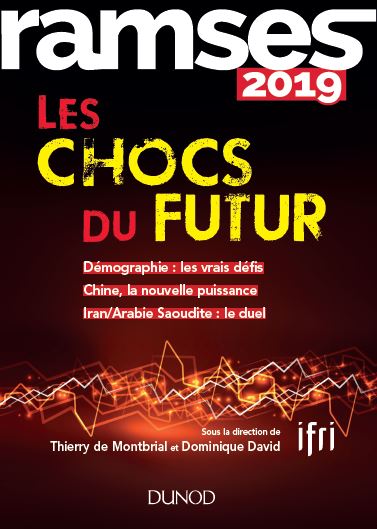
RAMSES 2019. The Clashes of the Future
RAMSES 2019. The Clashes of the Future, written by Ifri's research team and external experts, offers an in-depth and up-to-date analysis of global geopolitics.
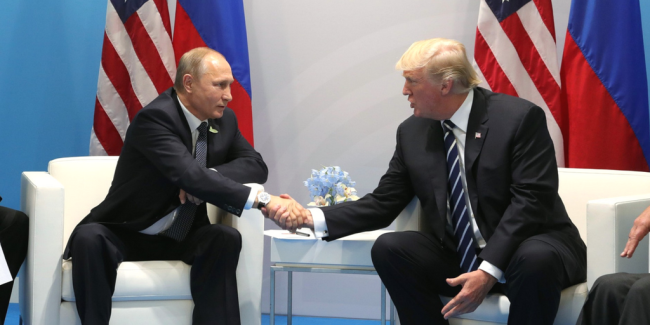
In Helsinki, Putin Can Grant Trump Great Success, of Sorts
The July 16, 2018, face-to-face between President Trump and Russian President Vladimir Putin is both entirely natural and extremely unconventional, very encouraging and deeply disturbing.
Bad cop, Bad cop : la nomination de Mike Pompeo et John Bolton
Benjamin Haddad, a Research Fellow at the Hudson Institute in Washington D.C., reviews Mike Pompeo's appointment as the new U.S. Secretary of State and John Bolton's recent nomination as National Security Advisor. According to Haddad, U.S. President Donald Trump has appointed two lawyers known for their hawkish and interventionist stands on foreign policy and security matters. He thus explains what official policies are to be expected on Iran, North Korea and Russia.
Trump's Tax Reform and Trade Policy: Renewables Spared, Oil Industry Wins
The energy sector is one where the break between the Trump and Obama administrations is the most pronounced. The three officials in charge, Rick Perry at the Department of Energy (DoE), Scott Pruitt at the Environmental Protection Agency (EPA) and Ryan Zinke at the head of the Department of the Interior (DoI), share the same indifference to the issue of climate change, the same will to encourage oil and gas production in the USA in order to bring an era of American “energy dominance”, the same desire to promote the extraction of “beautiful, clean coal”, to paraphrase President Trumps’s State of the Union address, and the same deep mistrust of renewable energies such as wind and solar.
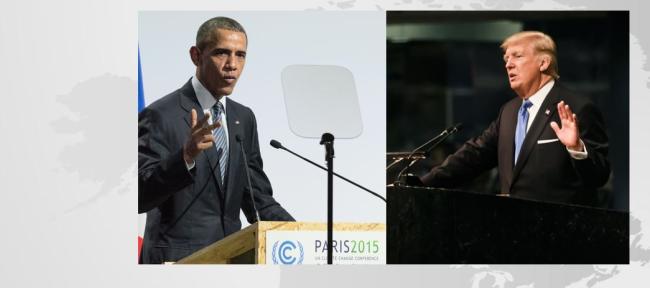
US Energy and Environmental Policies. From Obama to Trump. Continuities and Divergences
President Trump’s administration is characterized by its systematic denial and repealing of measures from his predecessor, be it in foreign policy or domestic policy. This is particularly the case for the energy and environmental policies. There is however a continuity from one administration to another: the steady rise of US hydrocarbon production and the development of the US as a global leader in oil and gas production and in the near future, their exports to global markets.

International Order and Trump’s America
Donald Trump is disrupting the established world order. But, despite his provocative declarations, is he really looking to challenge it?
Iraq after Daesh
Going beyond the numerous claims of rupture, is Trump overturning the international order and the place occupied in it by the United States?
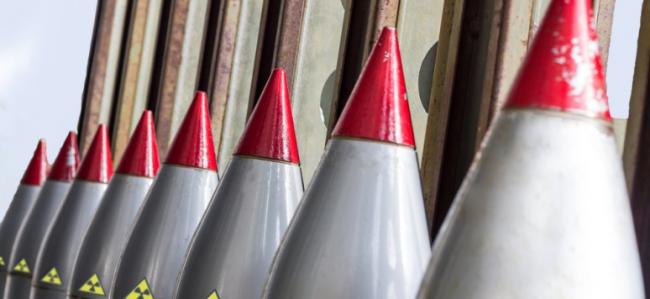
La guerre nucléaire limitée : un renouveau stratégique américain
Over the past few years, a debate on possible scenarios of limited nuclear weapons use has surfaced again in the United States. Russian nuclear saber-rattling since 2014 and the growing tensions in the Korean peninsula have led Washington to reassess its own ability to deter, or respond to, such a limited use of nuclear weapons.
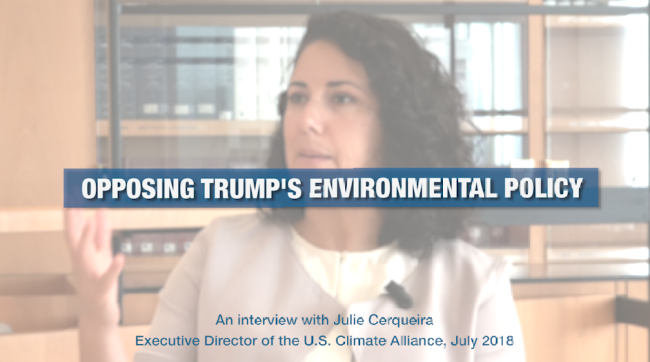
Opposing Trump's Environmental Policy
An interview with Julie CERQUEIRA, Executive Director of the U.S. Climate Alliance.
Jeremy SHAPIRO - Trump: One Year After The Election
Has Trump changed his views of transatlantic relations? What should Europeans do? Is Trump's Russia policy dictated by the Russia probe?
Michala MARCUSSEN - Trump: One Year After The Election
Is the American economy doing well? Will the Tax Reform change this? How could the bond markets evolve in 2018?
Jeffrey GOLDBERG - Trump: One Year After The Election
3 questions to Jeffrey GOLDBERG, Editor in Chief, The Atlantic
Karlyn BOWMAN - Trump: One Year After The Election
3 questions to Karlyn BOWMAN, Senior Fellow, American Entreprise Institute
Where is the U.S. nuclear arsenal headed?
An interview with Jon WOLFSTHAL, nonresident scholar, Nuclear Policy Program, Carnegie Endowment for International Peace
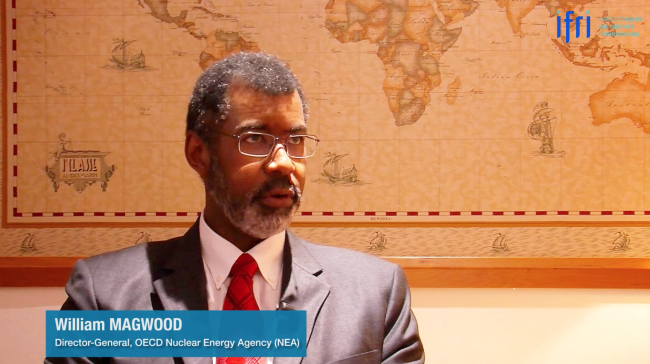
Nuclear Energy in the United States: an Appraisal
An interview with William D. Magwood, IV, Director-General of the OECD Agency for Nuclear Energy
Donald Trump's challenge to American democracy and the western alliance
On April 27, 2017, Ifri hosted David FRUM (former speechwriter for President George W. Bush, senior editor for The Atlantic magazine) to discuss Donald Trump's challenge to American democracy and the western alliance.
Siloviki: What Influence on Russia's Domestic and Foreign Policy?
3 questions to Mark GALEOTTI, Senior Researcher at the Institute of International Relations Prague, Director of Mayak Intelligence consultancy.
What evolution of US-Russia relationship after Trump’s election? A Russian point of view
3 questions to Andrey KORTUNOV, Director General of the Russian International Affairs Council (RIAC).
What evolution of US-Russia relationship after Trump’s election? An American point of view
3 questions to Stephen SZABO, Executive Director, Transatlantic Academy.
Ifri, a foundation recognized as being of public utility, relies largely on private donors – companies and individuals – to guarantee its sustainability and intellectual independence. Through their funding, donors help maintain the Institute's position among the world's leading think tanks. By benefiting from an internationally recognized network and expertise, donors refine their understanding of geopolitical risk and its consequences on global politics and the economy. In 2026, Ifri partners with over 90 French and international companies and organizations.