
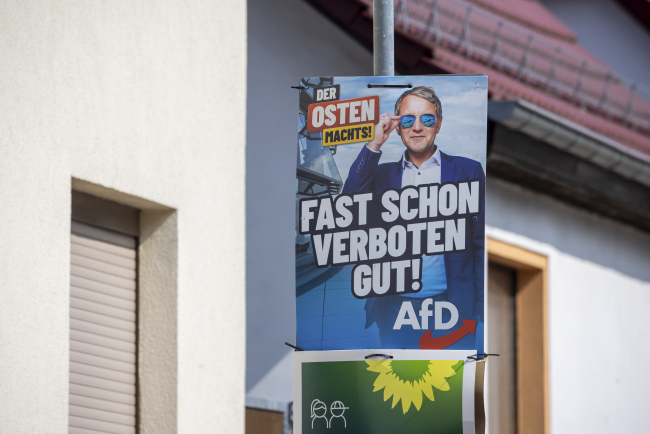
State Elections in Thuringia, Saxony and Brandenburg - Extreme Parties on the Rise?
The Alternative for Germany (AfD) became Germany's strongest political force in the regional elections in Thuringia and Saxony.
NATO: 75 Years of Strategic Solidarity (replay)
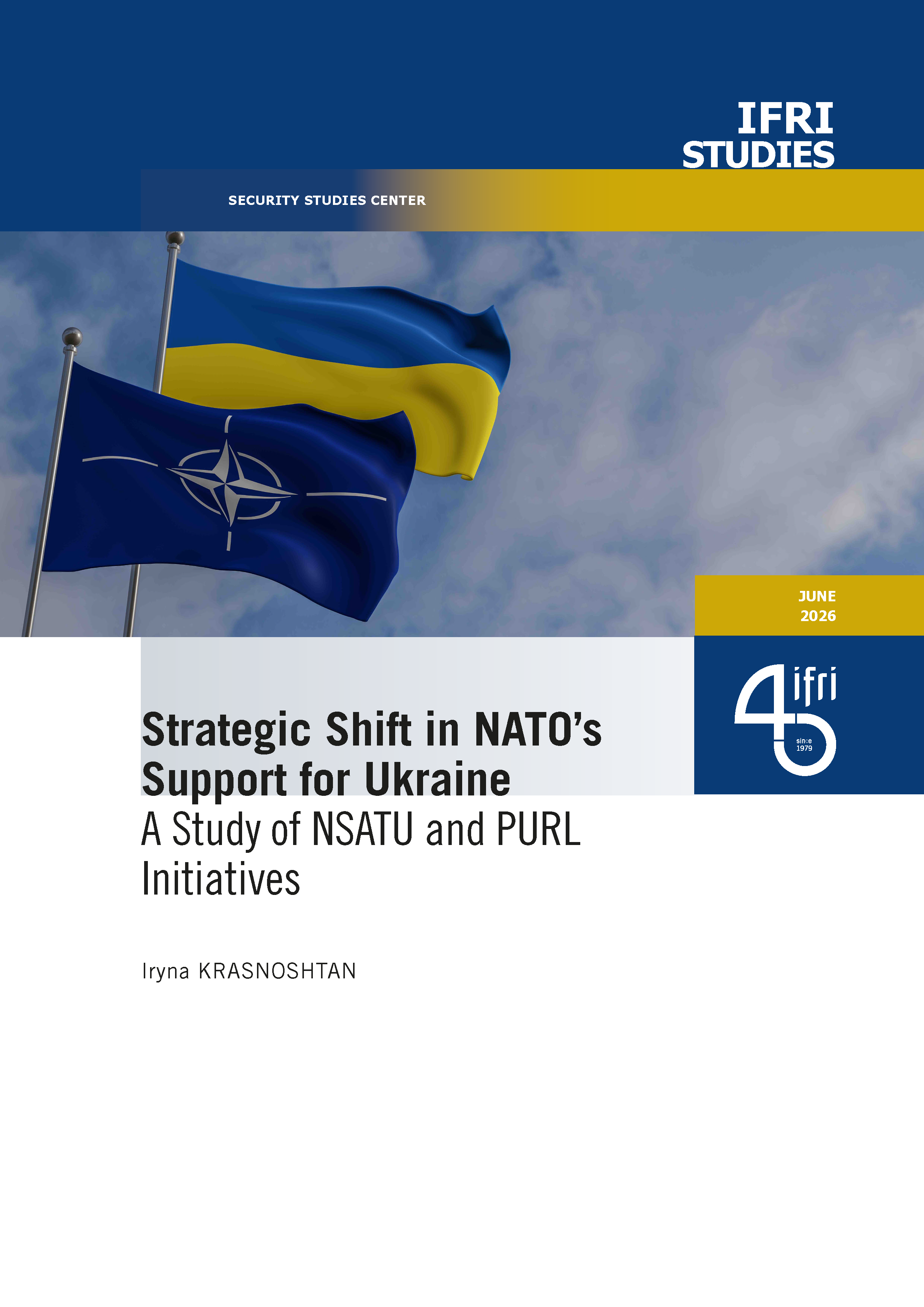
The war in Ukraine, burden-sharing between Allies, U.S. disengagement from Europe, new areas of conflict... At a time when the Alliance has just celebrated its 75th anniversary and the Stoltenberg era is drawing to a close after ten years at the head of the organization, NATO's agenda bears witness to the diversity of its areas of action, as well as to the different perceptions of the Allies on these issues.
In the wake of the Washington summit, this conference of diplomats, military officers and researchers aims to analyze the short- and medium-term prospects for the Atlantic Alliance.

Towards a European Nuclear Deterrent
While major European powers may have to contemplate nuclear deterrence without America, the national flexibility and European financial support required to make it feasible is currently difficult to imagine.

The Troubled Reorganization of Critical Raw Materials Value Chains: An Assessment of European De-risking Policies
With the demand for critical raw materials set to, at a minimum, double by 2030 in the context of the current energy transition policies, the concentration of critical raw materials (CRM) supplies and, even more, of refining capacities in a handful of countries has become one of the paramount issues in international, bilateral and national discussions. China’s dominant position and successive export controls on critical raw materials (lately, germanium, gallium, rare earths processing technology, graphite, antimony) point to a trend of weaponizing critical dependencies.
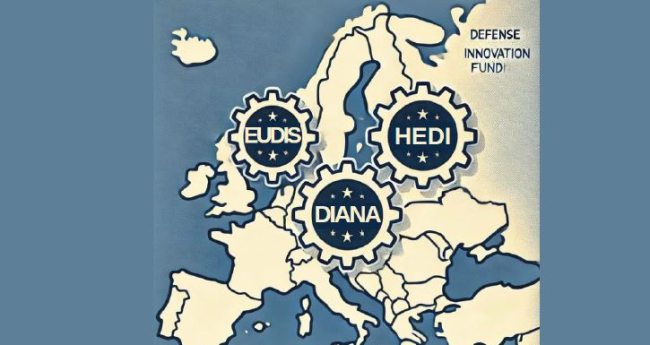
EUDIS, HEDI, DIANA: What's behind Three Defense Innovation Acronyms?
In Europe, with Russia’s war of aggression against Ukraine showing little sign of abating, a persistent gap remains between security needs and defense spending. According to a 2006 commitment enshrined at the 2014 Wales NATO summit, the North Atlantic Treaty Organization (NATO) members should disburse no less than 2% of their national gross domestic product (GDP) on defense, out of which 20% is to be spent on equipment and research and development. In 2024, only 23 Allies out of 32 are expected to meet or exceed this target, though a significant improvement from only three in 2014. This total includes the United States (US) devoting 3.38% of its GDP to defense, constituting almost 70% of all NATO member defense spending combined.

Artificial Intelligence, or The Race for Power
Artificial intelligence (AI) is here to stay, and its use is spreading at a rate that is difficult to comprehend.
Ditching U.S. Nuclear Protection in Europe: Will It Trigger a Nuclear Arms Race?
What if France takes over the U.S. role in providing nuclear deterrence for Europe? What happens to U.S. nuclear weapons stationed on the European continent? Could France’s increased nuclear security role lead to proliferation and a new arms race? Join us as we delve into European nuclear security, the Iranian nuclear program, and the roles of Russia and China in supporting Iran.
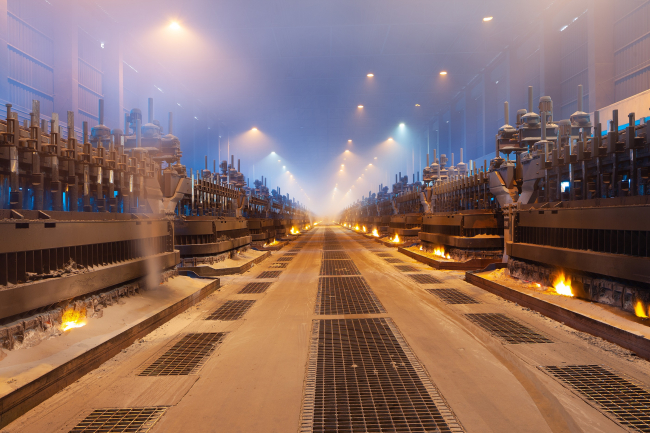
The Aluminum Value Chain: A Key Component of Europe’s Strategic Autonomy and Carbon Neutrality
The United States of America (US), Canada and the European Union (EU) all now consider aluminum as strategic. This metal is indeed increasingly used, especially for the energy transition, be it for electric vehicles (EVs), electricity grids, wind turbines or solar panels.


Ariane 6 launch returns in-house space access to Europe’s armed forces
Europe restored sovereign access to space with the first launch of the Ariane 6 heavy-lift rocket on Tuesday, after years of delays and retirement of the previous launcher had left the continent without guaranteed access to orbit, and kept a French spy satellite grounded.

The Artemis Accords: An American Strategy for Lunar Governance
The Artemis Accords provide a framework for international cooperation in space exploration as part of the U.S. lunar program. They are part of a coherent strategy.
Europe's Space Sector: Caught in a Strategic Stranglehold
Europe's space sector is currently faced with great difficulties, marked by the temporary loss of autonomous access to space, strong competition from the USA, and the transformation of the satellite market.
Europe: Turning to the Union to Respond to Citizens
To deal with the internal and external challenges of a new era, the European Union must reform its institutions: review Member States' right of veto, strengthen the Commission, and take action on foreign policy and security matters, energy, the single market and the economy, social policy, health and immigration—while at the same time considering expansion. This is the only way for the Union to preserve the values of freedom and democracy that underlie European integration.
European Union: A Geopolitical Illusion?
The European Union (EU) is holding firm in the face of the war in Ukraine—perhaps better than expected. But what long-term effects will the war have on European institutions and policies? The institutions will need to be changed to cope with the forthcoming expansions. The EU has certainly made progress toward common industrial and technological policies. But will this dynamic do away with a conception of strategic autonomy, encompassing both diplomacy and strategy? The European Union, which will undoubtedly be a key mover of future changes for the continent, remains largely uncertain in terms of its future configurations.
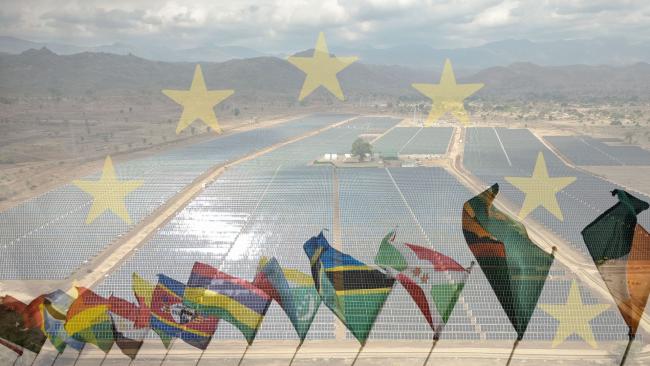
A framework for a Win-Win Europe-Africa Energy and Climate Partnership
North-South tensions are exacerbated at a time of unprecedented turmoil for both Europeans and Africans. European polycrises (geopolitical, energy-related and economic) echo the systematic vulnerability of Africans, which is reinforced by external shocks.
Türkiye’s Stifled Ambitions
As its elections have unfolded this spring, Türkiye has again shown itself to be symptomatic of the times. Across the world, numerous political regimes oscillate between democratic forms of government and an authoritarian concentration of power; impressive periods of growth give way to inflation and recession; and international deregulation gives rise to widespread diplomacy in an effort to juggle a myriad of shifting political loyalties. Faced with the war in Ukraine, Ankara is playing a strong hand by enlarging its areas of presence and intervention. Türkiye is more important to its partners than ever, independent of its eventual domestic trajectory.
Western discourse predicted the advent of Chinese dominance in the very short term, but events have taken a rather different turn. The drivers that enabled the unprecedented growth of recent decades seem to have run out of steam. Moreover, the outcome of Beijing’s economic strategies is still uncertain, in a context shaped primarily by U.S. policies. China’s influence in the future will be considerable, but the direction its rebound will take remains unclear.
For Europeans, the events in Ukraine and the thorny issue of the Sino-American rivalry cannot paper over the other security problems we face: On what common vision of our history and future will we build the Europe of tomorrow? Has drug trafficking already changed the nature of our societies? Can we afford to turn away from instances of destabilization in Africa, from the Horn to the Sahel?
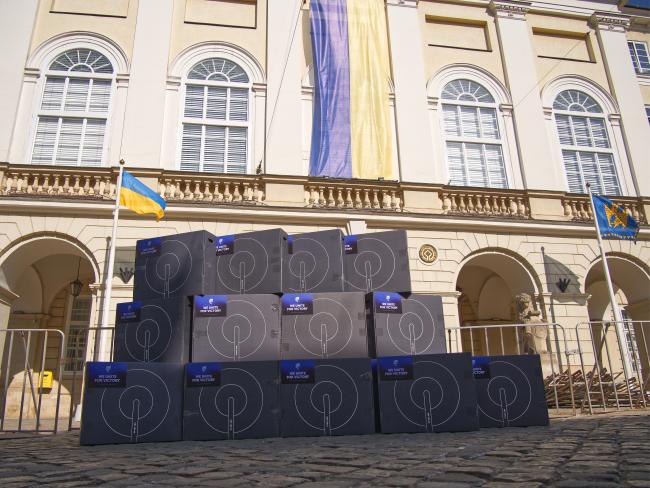
How the War in Ukraine is Changing the Space Game
The war in Ukraine has become a showcase for the new commercial paradigm emerging in the space sector (New Space). As such, it seems to confirm the relevance of adaptation efforts led by the United States – more specifically the Pentagon – since the mid-2010s.
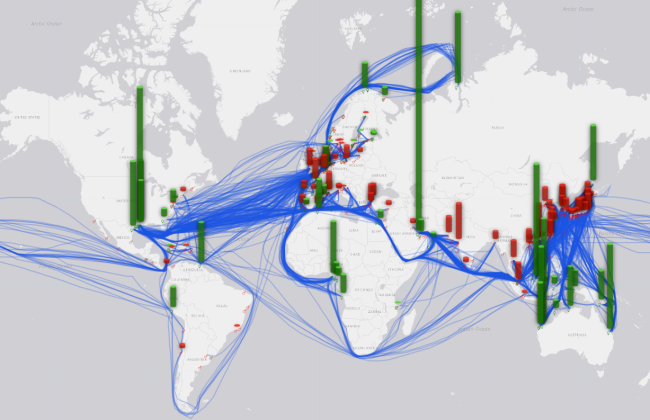
The Strategic Repositioning of LNG: Implications for Key Trade Routes and Choke Points
2022 saw the climax so far of the weaponization of energy. Following its geopolitical demise, Russia has undertaken its own gas amputation, moving from a super energy power status to a diminished role with uncertain prospects and only hard options left.
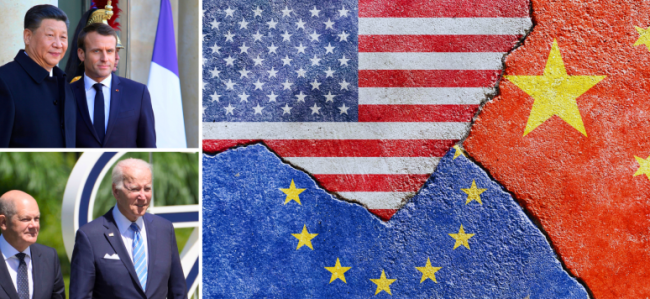
China/United States: Europe off Balance
As French President Emmanuel Macron (accompanied by Ursula von der Leyen) is on a state visit to China, some twenty Ifri researchers decipher the stakes of the U.S./China/Europe strategic triangle.
Food Systems in the Pacific: Addressing Challenges in Cooperation with Europe
More frequent climate disasters, rising sea levels, the economic fallout of Covid-19 lockdowns, border closures, supply chain constraints, and the global impact of the war in Ukraine have aggravated the challenge of maintaining sustainable and resilient food systems for Pacific Island Countries (PICs).
Rebooting the Entente: An Agenda for Renewed UK-France Defense Cooperation
The Franco-British Summit on March 10th, 2023, will mark a much-needed reset in bilateral cooperation, following years of strained relations. With a recently re-elected French president and a new British Prime minister, both sides are committed to making this summit a success and re-launching a positive agenda for bilateral cooperation. The summit, the first since Sandhurst in 2018, will focus on three key topics: migration, energy, and foreign policy. Defense cooperation will also be addressed, as it remains the cornerstone of the bilateral relationship, though it may take a less prominent part than on previous occasions.
Support independent French research
Ifri, a foundation recognized as being of public utility, relies largely on private donors – companies and individuals – to guarantee its sustainability and intellectual independence. Through their funding, donors help maintain the Institute's position among the world's leading think tanks. By benefiting from an internationally recognized network and expertise, donors refine their understanding of geopolitical risk and its consequences on global politics and the economy. In 2026, Ifri partners with over 90 French and international companies and organizations.