



Central Banks: Challenges and Tools in Geopolitical Rivalries
Central banks have become major strategic players in international economic balances. Faced with systemic crises (2008, Covid-19), the major central banks have developed unprecedented coordination of their interventions, fostering the emergence of the “Jackson Hole consensus.”
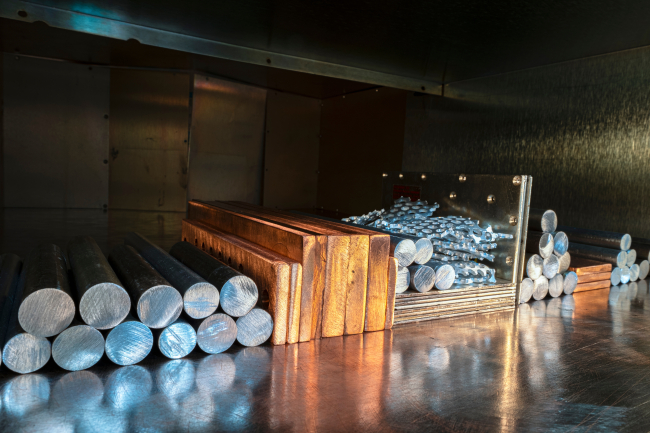
Financial Tools for Boosting Resilience of CRM Value Chains and Strategic Stockpiling
Critical Raw Material (CRM) value chains are more vulnerable than ever and entire vital industries in Europe are now at risk if supplies are not secured through strategic and urgent actions, given mounting geopolitical confrontation, resource nationalism, growing demand and limited supply increase.

Main Battle Tank: Obsolescence or Renaissance?
Since February 2022, Russian and Ukrainian forces combined have lost more than 5,000 battle tanks, a much higher volume than all the European armor combined. Spearhead of the Soviet doctrine from which the two belligerents came, tanks were deployed in large numbers from the first day and proved to be a prime target for UAVs that became more numerous and efficient over the months. The large number of UAV strike videos against tanks has also led a certain number of observers to conclude, once again, that armor is obsolete on a modern battlefield. This approach must, however, be nuanced by a deeper study of the losses and their origin, UAVs rarely being the sole origin of the loss itself, often caused by a combination of factors such as mines, artillery or other anti-tank weapons.

Mind the Deterrence Gap: Assessing Europe’s Nuclear Options
Europe must urgently confront a new nuclear reality. In recent years, Russia’s nuclear-backed revisionism has reintroduced nuclear coercion and the threat of nuclear escalation to the continent, underscoring the importance of credible nuclear deterrence. At the same time, Europe’s traditional reliance on US extended nuclear deterrence appears politically more fragile than at any point since the Cold War. Together, these developments require Europeans to think about their nuclear options.

Governing in coalitions: Commonplace throughout Europe, an oddity for France
French President Emmanuel Macron will have to rule with only a relative majority in Parliament – an anomaly in recent French history, but a common practice in Europe.

The Sustainability of Space Operations: An Opportunity for European Leadership?
As space becomes a key arena for power projection strategies, while facing growth and diversification of orbital activities, the concept of “space sustainability” is emerging as a new framework of analysis for space governance.

'Russia holds a decisive edge in terms of manpower, firepower and mobilization capacity'
Three researchers at the French Institute of International Relations, Dimitri Minic, Tatiana Kastouéva-Jean and Paul Maurice, are urging Europe to intensify its power dynamic with Moscow. The French Institute of International Relations (IFRI) published a report on Tuesday, November 4, that highlights Europe's vulnerabilities in the event of a high-intensity conflict with Russia.
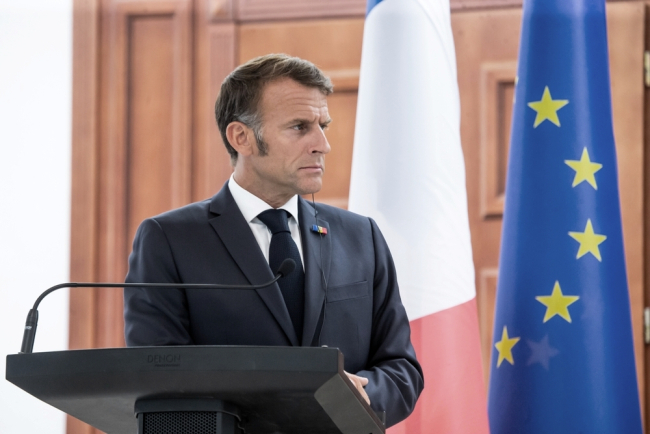
Taking the Pulse: Does France's Political Crisis Weaken Europe's Geopolitical Hand?
While the EU tries to navigate a myriad international challenges, France is experiencing historic political disarray. What impact will instability in Paris have on Europe's geostrategic capacity?
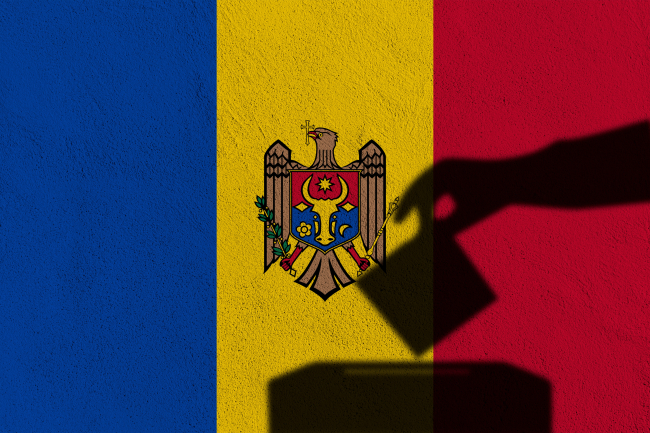
Moldova's Crucial Parliamentary Election. What's at Stake?
On the occasion of Moldova’s National Day, August 27, 2025, Chișinău hosted a high-level European delegation composed of Emmanuel Macron, Friedrich Merz and Donald Tusk, who sought to reaffirm their support for the country’s sovereignty and pro-European course. This unprecedented and highly symbolic visit took place at a pivotal moment. Moldova is preparing for decisive parliamentary elections on September 28, whose stakes extend far beyond the national framework.
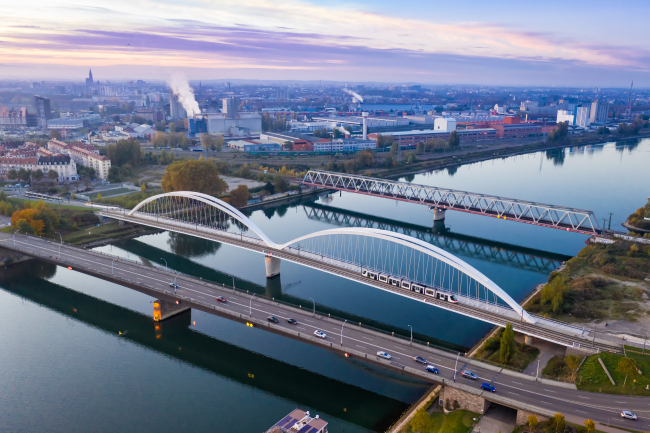
Imaginary and Reality of the Franco-German border: a Laboratory for Europe of tomorrow
In Europe, the question of borders is a central issue. According to the European Parliament, border regions cover around 40% of the European Union (EU) territory, concentrate 30% of its population and produce nearly a third of its gross domestic product.
Main Battle Tank: Obsolescence or Renaissance?
Since February 2022, Russian and Ukrainian forces combined have lost more than 5,000 battle tanks, a much higher volume than all the European armor combined. Spearhead of the Soviet doctrine from which the two belligerents came, tanks were deployed in large numbers from the first day and proved to be a prime target for UAVs that became more numerous and efficient over the months. The large number of UAV strike videos against tanks has also led a certain number of observers to conclude, once again, that armor is obsolete on a modern battlefield. This approach must, however, be nuanced by a deeper study of the losses and their origin, UAVs rarely being the sole origin of the loss itself, often caused by a combination of factors such as mines, artillery or other anti-tank weapons.
Mind the Deterrence Gap: Assessing Europe’s Nuclear Options
Europe must urgently confront a new nuclear reality. In recent years, Russia’s nuclear-backed revisionism has reintroduced nuclear coercion and the threat of nuclear escalation to the continent, underscoring the importance of credible nuclear deterrence. At the same time, Europe’s traditional reliance on US extended nuclear deterrence appears politically more fragile than at any point since the Cold War. Together, these developments require Europeans to think about their nuclear options.
The Sustainability of Space Operations: An Opportunity for European Leadership?
As space becomes a key arena for power projection strategies, while facing growth and diversification of orbital activities, the concept of “space sustainability” is emerging as a new framework of analysis for space governance.
Taking the Pulse: Does France's Political Crisis Weaken Europe's Geopolitical Hand?
While the EU tries to navigate a myriad international challenges, France is experiencing historic political disarray. What impact will instability in Paris have on Europe's geostrategic capacity?
Moldova's Crucial Parliamentary Election. What's at Stake?
On the occasion of Moldova’s National Day, August 27, 2025, Chișinău hosted a high-level European delegation composed of Emmanuel Macron, Friedrich Merz and Donald Tusk, who sought to reaffirm their support for the country’s sovereignty and pro-European course. This unprecedented and highly symbolic visit took place at a pivotal moment. Moldova is preparing for decisive parliamentary elections on September 28, whose stakes extend far beyond the national framework.
Imaginary and Reality of the Franco-German border: a Laboratory for Europe of tomorrow
In Europe, the question of borders is a central issue. According to the European Parliament, border regions cover around 40% of the European Union (EU) territory, concentrate 30% of its population and produce nearly a third of its gross domestic product.
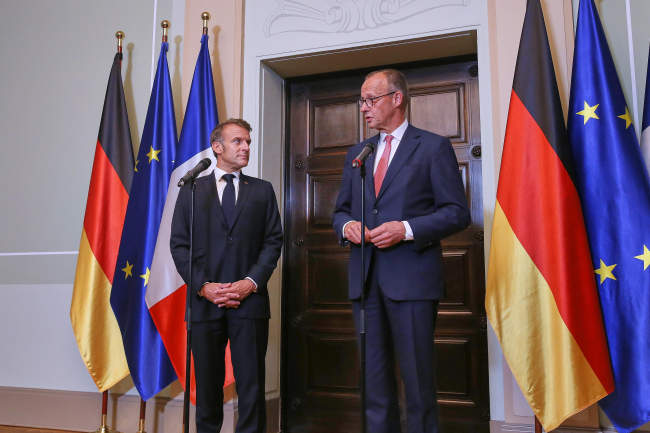
A Franco-German “Reset”? The Ambitions of the Franco-German Council of Ministers. Challenges of Joint Leadership in Europe
As a Catholic from the Rhineland, Friedrich Merz is heir to the CDU’s Franco-German policy, from Konrad Adenauer to Helmut Kohl and Wolfgang Schäuble. While Franco-German rhetoric and reflexes are deeply ingrained in him, their results must nevertheless be put into perspective.
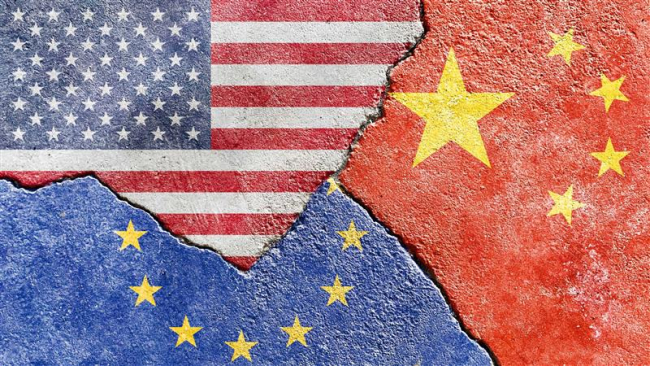
Quest for Strategic Autonomy? Europe Grapples with the US - China Rivalry
Building on the 2020 European Think Tank Network on China (ETNC) report, which assessed Europe’s positioning amid the strategic rivalry between the United States and China, this edition re-examines the geopolitical landscape in light of the Covid-19 pandemic, Russia’s war in Ukraine and Donald Trump’s return to the White House. This report features 22 national chapters and one dedicated to the EU, analysing the evolution of Europe’s relations with Washington and Beijing, the range of approaches to dealing the US-China rivalry and how these are expected to evolve.
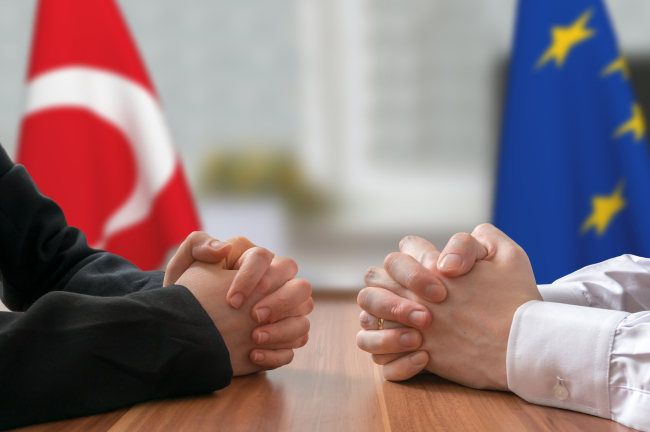
Turkey and France - Allies or Rivals: Opportunities to be Seized
As international relations have become increasingly unpredictable, the quest is to find a semblance of normality. Alliances are shifting as interests are changing. The so-called order established after the Second World War is being shattered by those who have given so much to create it. Global relations are being transformed by countries that wish to follow the rules and others that want to circumvent or ignore them. In this uncertain environment, it is therefore all the more crucial to find stable allies.
European Startups and Generative AI: Overcoming Big Tech Dominance
Europe is at a crossroads. Faced with the domination of American Big Tech across the entire generative Artificial Intelligence (AI) value chain, from foundation models to cloud infrastructure, distribution channels, and open source, it risks long-term technological and economic decline. Yet generative AI also represents a major opportunity for economic transformation, with a potential value estimated at 1.5 times France’s gross domestic product (GDP). To turn it into a driver of renewal, Europe must move beyond the illusion of total technological independence and instead build an ecosystem that leverages Big Tech resources while strengthening its own innovation capabilities.

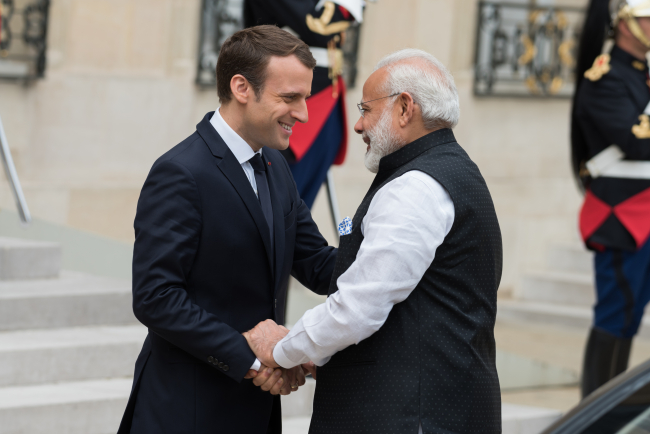
India's Modi heads to Paris as co-chair of AI summit
Indian Prime Minister Narendra Modi is visiting France from Monday as co-chair of an international summit on artificial intelligence in Paris that is expected to be attended by industry leaders, including executives from OpenAI and DeepSeek.

Will Europe's pivot to Asia have any teeth?
Spurred by fears of a ‘new Ukraine’ in East Asia, European powers are ramping up their presence in the Indo-Pacific.

Ariane 6 launch returns in-house space access to Europe’s armed forces
Europe restored sovereign access to space with the first launch of the Ariane 6 heavy-lift rocket on Tuesday, after years of delays and retirement of the previous launcher had left the continent without guaranteed access to orbit, and kept a French spy satellite grounded.
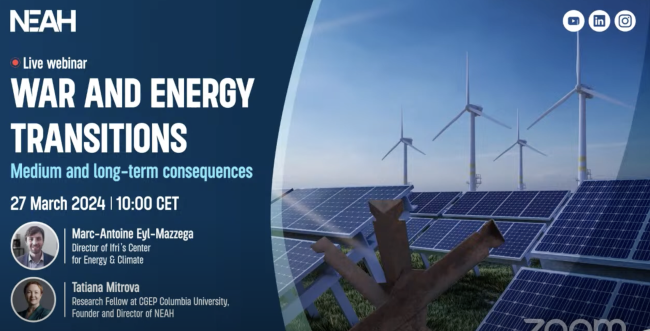
War and energy transitions: medium and long-term consequences
In a world already threatened by climate change, wars bring an additional component of instability. How do armed conflicts impact the energy transition, and what can be done about this? Learn more from the discussion featuring Marc-Antoine Eyl-Mazzega, Director of Ifri’s Center for Energy & Climate, moderated by Tatiana Mitrova, NEAH Founder and Director.

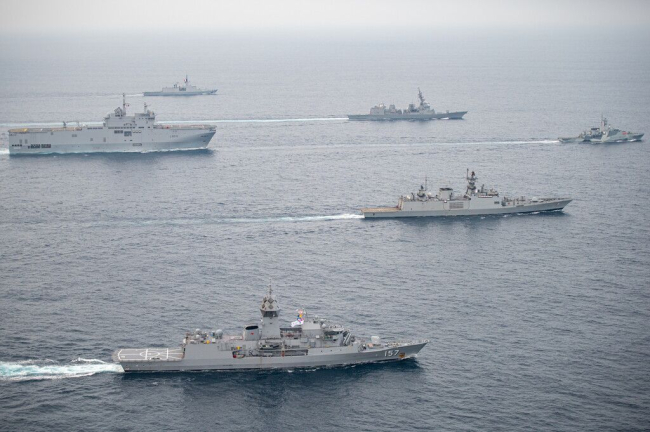
Europe Yearns to Be an Indo-Pacific Player
There is a war on at home, but Europe’s strategic and naval aspirations are on the far side of the world. After years in search of a geopolitical identity, Europe is aiming to become a much bigger player in one of the most contentious spaces in international relations: maritime security, including in Asia.
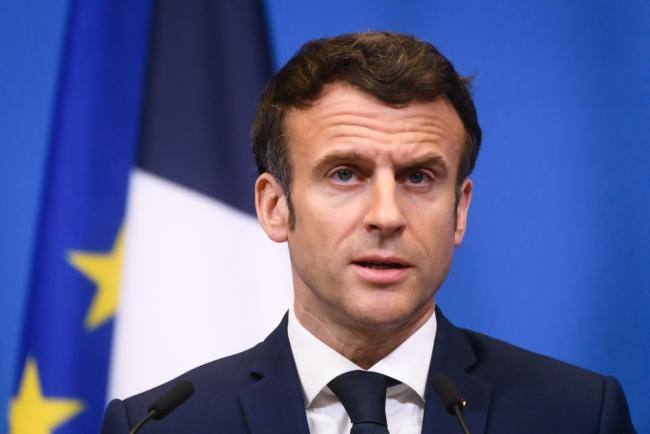
Is Macron’s ‘European Political Community’ a realistic prospect?
France’s presidency of the EU ends on June 30 with Emmanuel Macron’s new big idea, a “European Political Community”, hanging in the balance. This community would encompass EU membership candidates like Ukraine and possibly ex-member Britain. For some observers, the French president’s idea offers a way to bring countries into the European project while the long accession process takes its course. Others argue that Macron’s plan offers few clear objectives.
Governing in coalitions: Commonplace throughout Europe, an oddity for France
French President Emmanuel Macron will have to rule with only a relative majority in Parliament – an anomaly in recent French history, but a common practice in Europe.
Will the European presidency help Macron secure a second term?
The French president, whose leadership will be challenged in April, may seek reforms as he guides the EU. With months to go until its presidential election, France took on the rotating presidency of the European Council on January 1.

France welcomes Germany’s new ‘pro-European’ coalition agreement
The coalition deal struck between three parties that will form Germany’s next government is very much in line with France’s own ambitions and priorities, including its vision of a more federal EU.

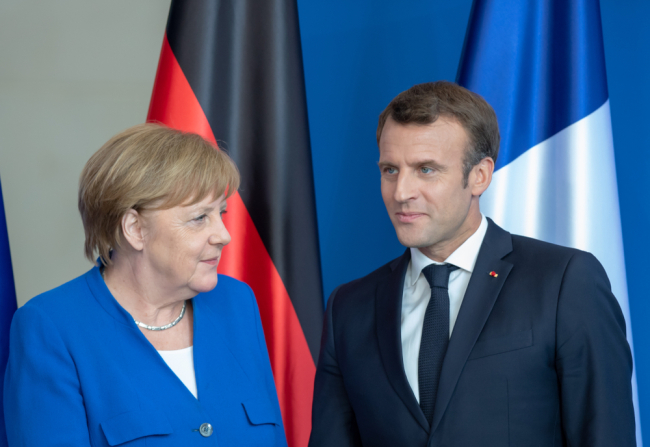
France prepares for Departure of Sometimes Reluctant Partner and Rival Merkel
Macron set to become the uncontested leader of Europe with German chancellor’s exit. Chancellor Angela Merkel was not naturally inclined to focus on Franco-German relations. “She comes from the former East Germany, and her experience was of east bloc countries, especially Russia, ” says Sabine Rau, Paris bureau chief for the German public television network WRD.
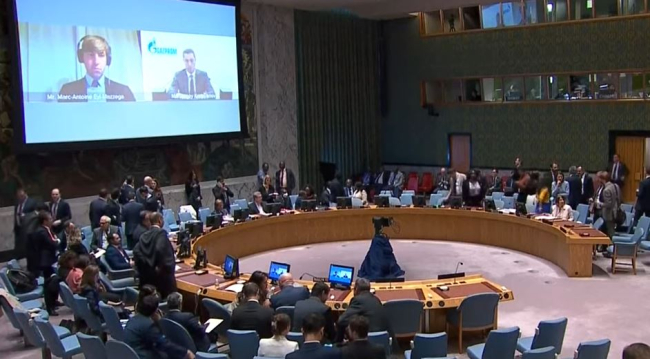
U.N. Security Council meets on Nord Stream at Russia's request
Remarks by Marc-Antoine Eyl-Mazzega, director of Ifri's Center for Energy & Climate, on the occasion of the meeting of the U.N. Security Council on Nord Stream at Russia's request, on September 30, 2022.
Toward a New European Security Order? Foreign Policy Shifts in Response to Russia’s War on Ukraine (webinar)
This online discussion takes stock of how Russia’s invasion of Ukraine has changed national foreign and security policies and how these shifts affect Europe’s security architecture.
Neutrality and non-alignment after the Russian Invasion of Ukraine
The Russian invasion of Ukraine has reignited discussions about the status of neutrality and non-alignment in several parts of Europe.
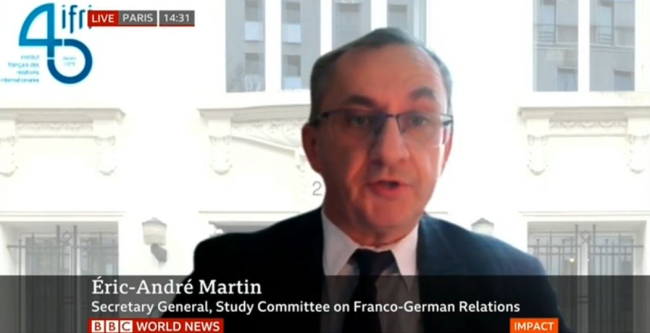
Macron-Scholz meeting - Insights from Éric-André Martin on BBC World
The first meeting between French President Emmanuel Macron and German Chancellor Olaf Scholz occurred on Friday, December 10, 2021, in Paris. An important visit for both Germany and France and an opportunity to relaunch the Franco-German couple since Angela Merkel’s departure from the German chancellery.
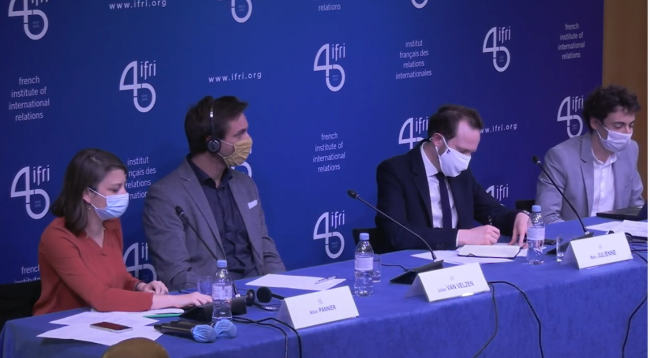
Video replay - Space and Quantum Technologies: What Strategies and Industrial Models for Europe?
Watch the video replay of the conference organized by Ifri's Geopolitics of Technology program on November 18, 2021.

Digitalization in the (post) COVID World: Views from Japan and Europe
The COVID-19 crisis has highlighted the importance of accelerating the digital transformation of both the industry and the society.
Rethinking Health Governance in the COVID era: Visions from Europe and Japan
The COVID-19 pandemics has highlighted the significance, as well as the deep crisis of the health governance system.
New research initiative : European space governance
Eric André Martin, coordinator of the research initiative on European space governance associating Ifri, Deutsche Gesellschaft für Auswärtige Politik (DGAP) and Istituto Affari Internazionali (IAI), presents the European project. The video also looks at China's rise as an international space power. The report was written by researcher Marc Julienne.
Trade, Investments, Technology, Climate Change, Human Rights: How should the EU Deal with China?
Ifri, the Austro-French Centre for Rapprochement in Europe and Konrad Adenauer Foundation Multilateral Dialogue organized a videoconference called "Trade, Investments, Technology, Climate Change, Human Rights: How should the EU Deal with China? " on October 27, 2020.
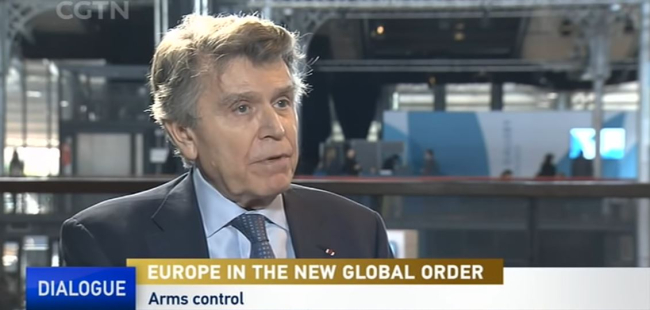
Europe's position in the new world order
Thierry de Montbrial, Executive Chairman of Ifri, is interviewed by Yang RUI for China Global Television Network (CGTN), on the sidelines of the Paris Peace Forum, November 2019. He analyzes the position of Europe in a world dominated by the Chinese-American competition.
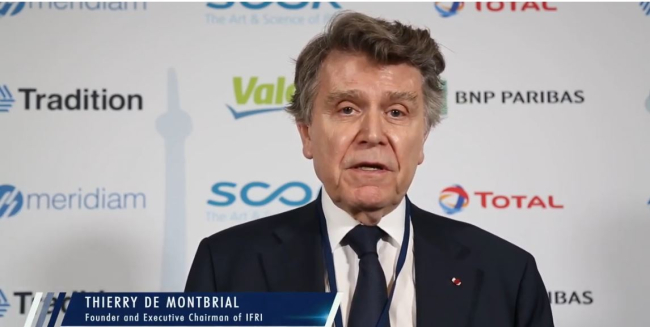
Does a European diplomacy exist?
An interview with Thierry de Montbrial, Founder and Executive Chairman of the Ifri, on the occasion of his participation in the Trilateral Commission.
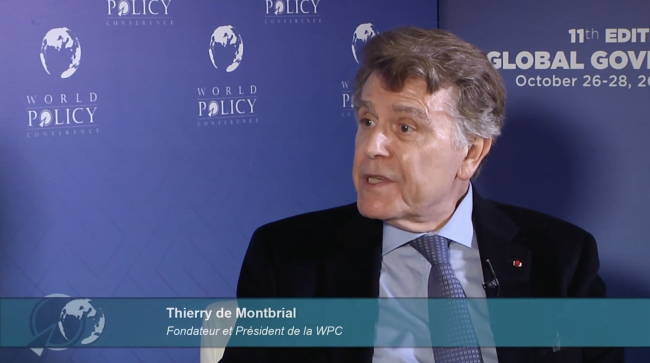
WPC 2018 - Statement by Thierry de Montbrial
Thierry de Montbrial makes a statement on the 11th edition of the World Policy Conference (WPC) held from October, 26-28, 2018, in Rabat, Morocco.
An interview led by John Andrews, contributing editor, The Economist.
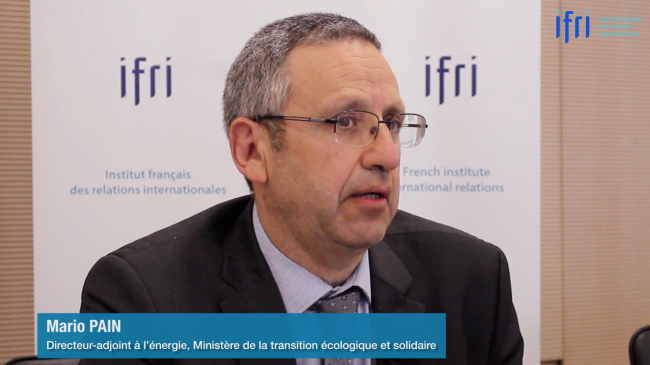
The Transformation of the Electricity French System in 2030 - Mario Pain
Deputy Director, Ministère de la transition écologique et solidaire, describes the main challenges for the French energy system at the 2030 horizon and highlights the need to find the right balance between EU harmonization and national measures to achieve energy transition at the lowest cost.
Support independent French research
Ifri, a foundation recognized as being of public utility, relies largely on private donors – companies and individuals – to guarantee its sustainability and intellectual independence. Through their funding, donors help maintain the Institute's position among the world's leading think tanks. By benefiting from an internationally recognized network and expertise, donors refine their understanding of geopolitical risk and its consequences on global politics and the economy. In 2026, Ifri partners with over 90 French and international companies and organizations.
