
A Franco-German “Reset”? The Ambitions of the Franco-German Council of Ministers. Challenges of Joint Leadership in Europe
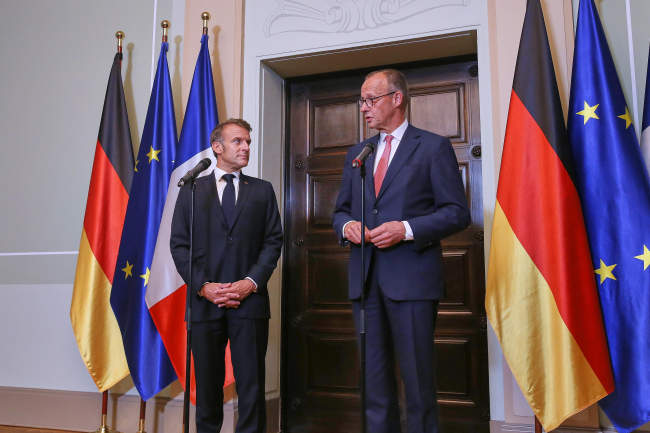
As a Catholic from the Rhineland, Friedrich Merz is heir to the CDU’s Franco-German policy, from Konrad Adenauer to Helmut Kohl and Wolfgang Schäuble. While Franco-German rhetoric and reflexes are deeply ingrained in him, their results must nevertheless be put into perspective.


U.S. tariffs take center stage but China and the EU are quietly clashing
The U.S. tariff saga has stolen global spotlight from trade tensions between China and the European Union, which are now heating up.
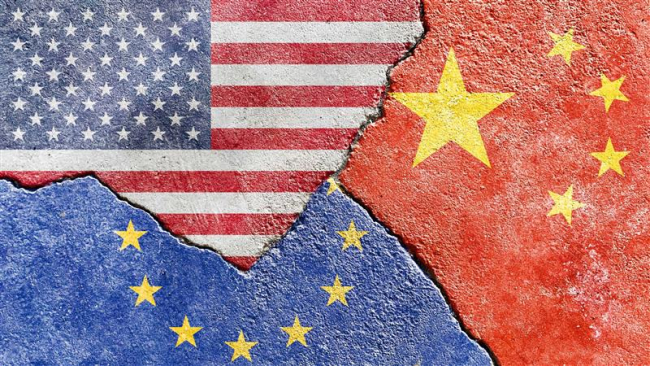
Quest for Strategic Autonomy? Europe Grapples with the US - China Rivalry
Building on the 2020 European Think Tank Network on China (ETNC) report, which assessed Europe’s positioning amid the strategic rivalry between the United States and China, this edition re-examines the geopolitical landscape in light of the Covid-19 pandemic, Russia’s war in Ukraine and Donald Trump’s return to the White House. This report features 22 national chapters and one dedicated to the EU, analysing the evolution of Europe’s relations with Washington and Beijing, the range of approaches to dealing the US-China rivalry and how these are expected to evolve.
Replay - Europe in turbulence: navigating a new world order without the United States?
A webinar organized by the Austro-French Centre for Rapprochement in Europe (ÖFZ) and the French Institute of International Relations (Ifri), on June 25, 2025. The foundations of the post-1945 international order, long anchored by U.S. leadership, are shifting. Amid intensifying geopolitical rivalry, democratic backsliding, and strategic fatigue in Washington, the question arises: what if the United States no longer plays its pivotal role in international security? Simultaneously, the Global South is asserting new political and economic agency, complicating the old binaries of West vs. Rest. For Europe, this landscape is both a challenge and an inflection point.
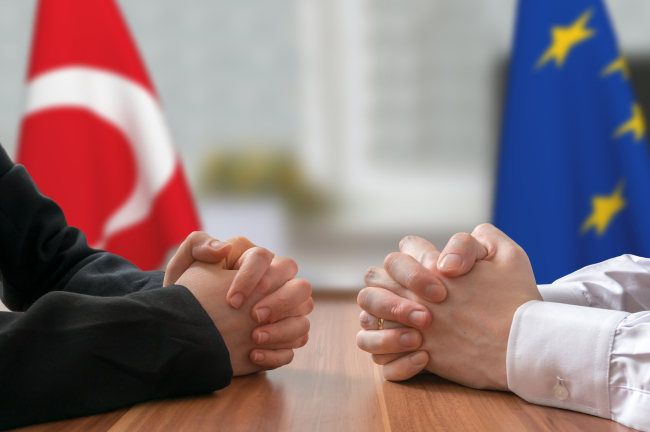
Turkey and France - Allies or Rivals: Opportunities to be Seized
As international relations have become increasingly unpredictable, the quest is to find a semblance of normality. Alliances are shifting as interests are changing. The so-called order established after the Second World War is being shattered by those who have given so much to create it. Global relations are being transformed by countries that wish to follow the rules and others that want to circumvent or ignore them. In this uncertain environment, it is therefore all the more crucial to find stable allies.
European Startups and Generative AI: Overcoming Big Tech Dominance
Europe is at a crossroads. Faced with the domination of American Big Tech across the entire generative Artificial Intelligence (AI) value chain, from foundation models to cloud infrastructure, distribution channels, and open source, it risks long-term technological and economic decline. Yet generative AI also represents a major opportunity for economic transformation, with a potential value estimated at 1.5 times France’s gross domestic product (GDP). To turn it into a driver of renewal, Europe must move beyond the illusion of total technological independence and instead build an ecosystem that leverages Big Tech resources while strengthening its own innovation capabilities.


How Will the Trump Presidency Change EU-China Relations?
Over the past few years, European countries have started to line up with the United States on China policy. But now, as Donald Trump destroys the trust European countries had in America, China is stepping up, promising stability and consistency.
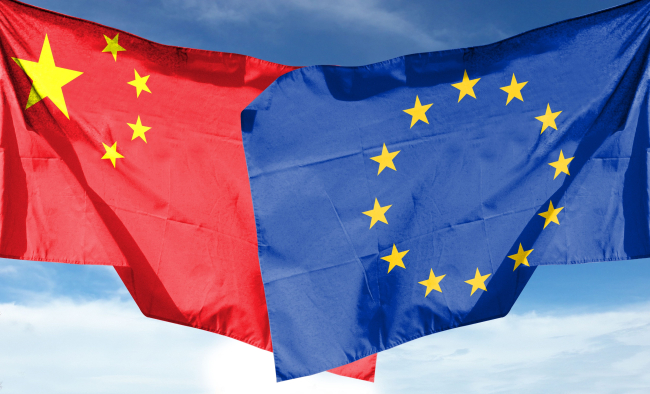
China-EU ties reach half century: 4 things to know
Will Trump 2.0 push the two combative sides to find common ground?
Germany 'back on track' says Merz, unveiling new coalition
Yinka Oyetade speaks to Jeanette Süß, Research Fellow on the Study Committee on Franco-German Relations at the French Institute of International Relations about the German coalition and the challenges faced by the new government.
How the US under Trump Became a Strategic and Ideological Adversary of Europe
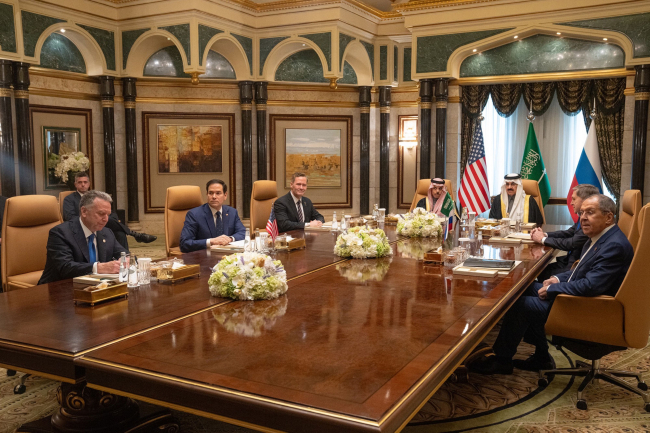
The Europeans' worst security nightmare seems to be coming true: on Tuesday, February 18, 2025, U.S. Secretary of State Marco Rubio and Russian Foreign Minister Sergey Lavrov met in Saudi Arabia to initiate the normalization of relations between their two countries. The meeting also aimed to set up peace negotiations for Ukraine. However, despite having the potential to affect the entire continent, the discussions took place without the Europeans or the Ukrainians being present.
How the US under Trump Became a Strategic and Ideological Adversary of Europe
The Europeans' worst security nightmare seems to be coming true: on Tuesday, February 18, 2025, U.S. Secretary of State Marco Rubio and Russian Foreign Minister Sergey Lavrov met in Saudi Arabia to initiate the normalization of relations between their two countries. The meeting also aimed to set up peace negotiations for Ukraine. However, despite having the potential to affect the entire continent, the discussions took place without the Europeans or the Ukrainians being present.
The China-led AIIB, a geopolitical tool?
The establishment of the Asian Infrastructure Investment Bank (AIIB) in 2016, on a Chinese initiative, constituted an attempt to bridge the gap in infrastructure financing in Asia. However, it was also perceived in the West as a potential vehicle for China’s geostrategic agendas, fueling the suspicion that the institution might compete rather than align with existing multilateral development banks (MDBs) and impose its own standards.
A Transatlantic Defense Industrial Base? Two Contrasting Views
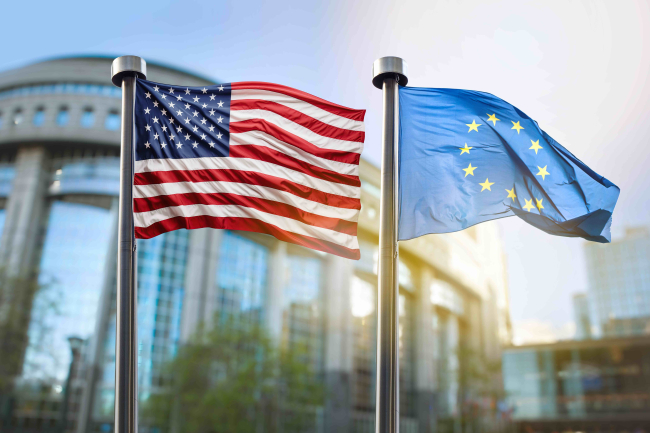
The evolving landscape of global defense cooperation has brought the transatlantic relationship between the United States (US) and Europe into sharp focus. As geopolitical tensions rise and the threat environment becomes more complex, the question of how Europe can best ensure its security while navigating its relationship with the United States has become paramount. This double feature report offers two contrasting views on the dynamics of US-Europe defense industrial relations, highlighting the challenges and opportunities that lie ahead for both parties.
The China-Russia Partnership and the Ukraine War: Aligned but not allied
China and Russia maintain a strategic partnership rooted in shared opposition to the U.S. and liberal democracies, but their relationship is shaped more by pragmatism than trust.
Technical Standards, Soft Connectivity and China’s Belt and Road: Towards greater convergence or fragmentation?
As the intensification of geopolitical competition points toward increased global fragmentation, the definition of technical standards for future markets and industries will play an important role in determining just how deep the fissures will run.
Taking the Pulse: Has Political Deadlock in Member States Become a Strategic Problem for the EU?
At a pivotal moment for the EU, several of its member states are experiencing domestic political and economic crises. Is this hindering collective EU action in response to the challenges posed by Russia, China, and Trump’s administration?
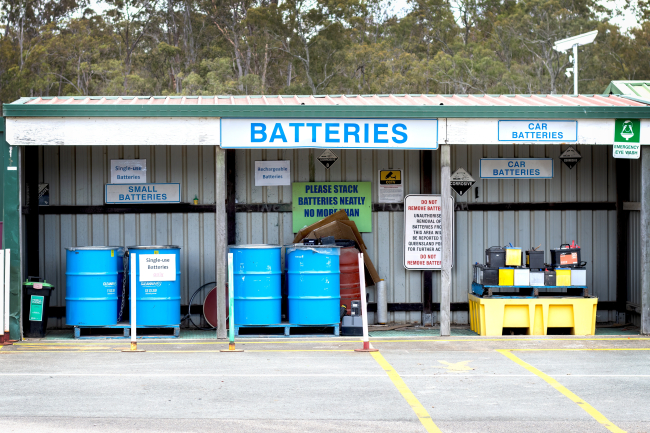
Europe’s Black Mass Evasion: From Black Box to Strategic Recycling
EV batteries recycling is a building block for boosting the European Union (EU)’s strategic autonomy in the field of critical raw minerals (CRM) value chains. Yet, recent evolutions in the European EV value chain, marked by cancellations or postponements of projects, are raising the alarm on the prospects of the battery recycling industry in Europe.
China’s Mature Node Overcapacity: Unfounded Fears
China is decoupling from, not flooding, the global mature-node semiconductor market. As China increasingly pursues industrial policies encouraging domestic chip production, its own growing chip demand will prevent a direct flood of cheap Chinese chips on foreign shores. However, as Beijing achieves its goal of decreasing the reliance of domestic downstream manufacturers on foreign chips, European and American mature-node semiconductor companies will feel the ripple effects of an increasingly “involuted” Chinese chip ecosystem.
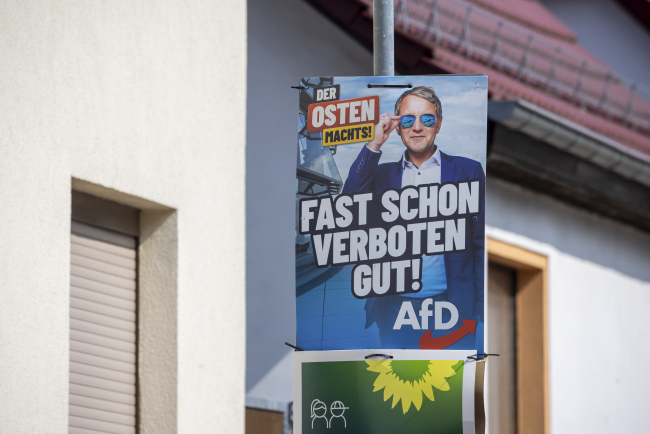
State Elections in Thuringia, Saxony and Brandenburg - Extreme Parties on the Rise?
The Alternative for Germany (AfD) became Germany's strongest political force in the regional elections in Thuringia and Saxony.
Towards a European Nuclear Deterrent
While major European powers may have to contemplate nuclear deterrence without America, the national flexibility and European financial support required to make it feasible is currently difficult to imagine.

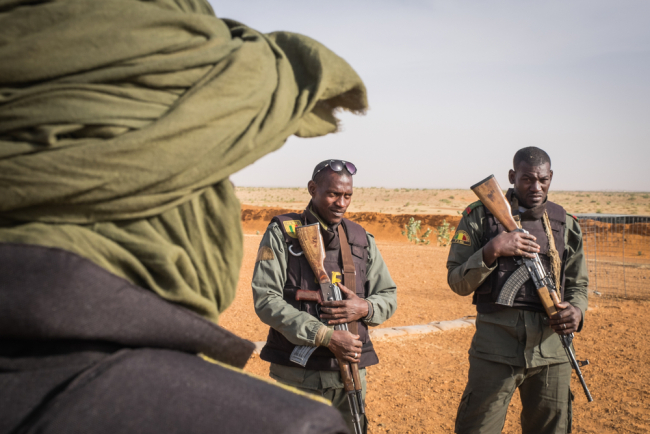
Army colonel sworn in as Mali president as tensions with Paris grow
Assimi Goïta vows to uphold republican regime and democracy in Mali.

French Complain of Germany's 'Political Infidelity'
"Thirty years of infidelity" is how France's current affairs magazine Marianne describes Germany's relationship with France. An issue this month was devoted to how Germany has been "fleecing France" for years.

Russia’s spat with EU puts relations into deep-freeze
Kremlin stance is blow to European countries which favour outreach to Moscow. Russia’s combative treatment of the EU’s top diplomat during a landmark trip there has triggered a political outcry — but little expectation that the European bloc will end divisions over how to handle the Kremlin.

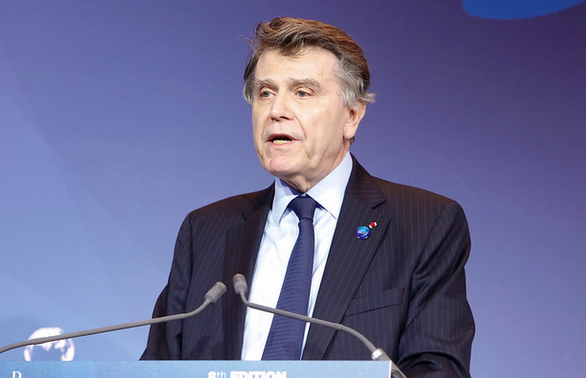
Hubris, Black Swans and the Future of Europe
European Council meetings are seldom exciting. But last week’s virtual gathering showed once again that, despite fears, Europe is moving forward in the most serious crises.


NATO Took Some Knocks But Survives Its 70th Anniversary Party
NATO’s 70th turned out to be less like a birthday party and more a Thanksgiving dinner for a large dysfunctional family: Not all of them got on, a few snide remarks were made, but in the end everyone seemed to accept they’re stuck with each other. “We had a very successful meeting,” said an evidently relieved Chancellor Angela Merkel of Germany, citing the unity she had seen among the alliance’s 29 leaders. “So I’m very pleased.”

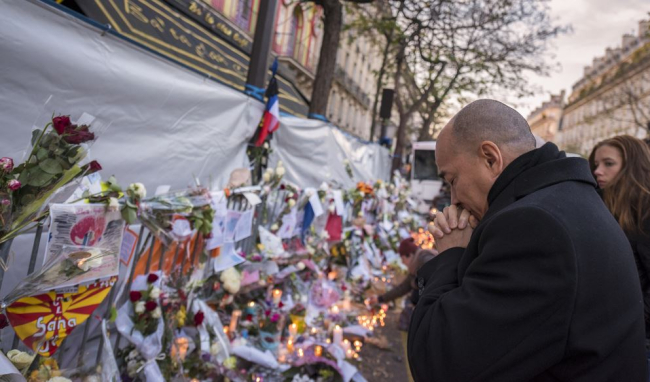
Jihadist Prisoners: The Fear of Recidivism
On July 16, Djamel Beghal is expected to be released from the Rennes-Vezin prison in the west of France. Beghal is a well-known figure in the European jihadist sphere. Born in Algeria in 1965, he settled in France in 1987. Ten years later, he moved to the United Kingdom with his French wife and their children. In November 2000, the family left for Afghanistan, a country then governed by the Taliban.
Reforming the EU electricity markets - Florian ERMACORA
Florian Ermacora, Head of the Internal Energy Market Unit in DG Energy, explains how the Clean Energy Package will improve the functioning of the internal electricity market, and how the new market design will help integrating larger shares of renewables.
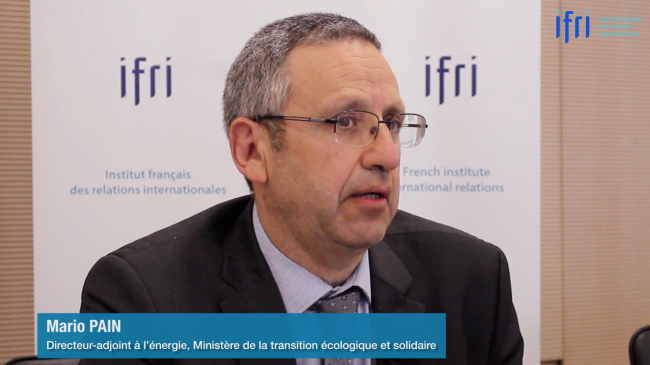
The Transformation of the Electricity French System in 2030 - Mario Pain
Deputy Director, Ministère de la transition écologique et solidaire, describes the main challenges for the French energy system at the 2030 horizon and highlights the need to find the right balance between EU harmonization and national measures to achieve energy transition at the lowest cost.
Building Bridges Conversation Series - Ireland & the Netherlands
This new episode of the Building Bridges Conversation Series is part of the "Building Bridges" project, which aims to foster debate on the future of the European Union and offer top quality analyses on how each member state perceives the EU. In this video, Vivien Pertusot, coordinator of the project, discusses with Marie Cross from the Institute of International and European Affairs (Ireland) and Adriaan Schout from Clingendael (the Netherlands).
Building Bridges Conversation Series - Luxembourg & Spain
This new episode of the Building Bridges Conversation Series is part of the "Building Bridges" project, which aims to foster debate on the future of the European Union and offer top quality analyses on how each member state perceives the EU. In this video, Vivien Pertusot, coordinator of the project, discusses with Guido Lessing from the Centre d’études et de recherches européennes (Luxembourg) and Charles Powell from Real Instituto Elcano (Spain).
Building Bridges Conversation Series - Bulgaria & Denmark
This new episode of the Building Bridges Conversation Series is part of the "Building Bridges" project, which aims to foster debate on the future of the European Union and offer top quality analyses on how each member state perceives the EU. In this video, Vivien Pertusot, coordinator of the project, discusses with Maja Kluger Rasmussen from Think Europa (Denmark) and Antoinette Primatarova from the Centre for Liberal Strategies (Bulgaria).
Building Bridges Conversation Series - Slovakia & Poland
This first episode of the Building Bridges Conversation Series is part of the "Building Bridges" project, which aims to foster debate on the future of the European Union and offer top quality analyses on how each member state perceives the EU. In this video, Vivien Pertusot, coordinator of the project discusses with Ana Benje from Comenius University (Slovakia) and Nathan Dufour from PISM (Poland).
Support independent French research
Ifri, a foundation recognized as being of public utility, relies largely on private donors – companies and individuals – to guarantee its sustainability and intellectual independence. Through their funding, donors help maintain the Institute's position among the world's leading think tanks. By benefiting from an internationally recognized network and expertise, donors refine their understanding of geopolitical risk and its consequences on global politics and the economy. In 2026, Ifri partners with over 90 French and international companies and organizations.